

Every year, more than 50 million Americans deal with allergies - runny noses, itchy eyes, sneezing fits that feel like they’ll never end. For most, the go-to fix is an over-the-counter antihistamine. But not all antihistamines are the same. Some knock you out. Others barely make a dent. And if you’re over 65, taking the wrong one could be riskier than you think.
What Antihistamines Actually Do
Antihistamines work by blocking histamine, a chemical your body releases when it thinks it’s under attack - like from pollen, pet dander, or dust. Histamine triggers swelling, itching, and mucus production. That’s why your nose runs and your eyes water. Antihistamines stop that reaction before it gets out of hand. There are two main types: H1 and H2. H1 antihistamines are the ones you take for allergies. H2 ones, like ranitidine, are for stomach acid. This article focuses on H1 antihistamines - the kind you find on pharmacy shelves next to cough syrup and pain relievers.First-Generation vs. Second- and Third-Generation: The Big Difference
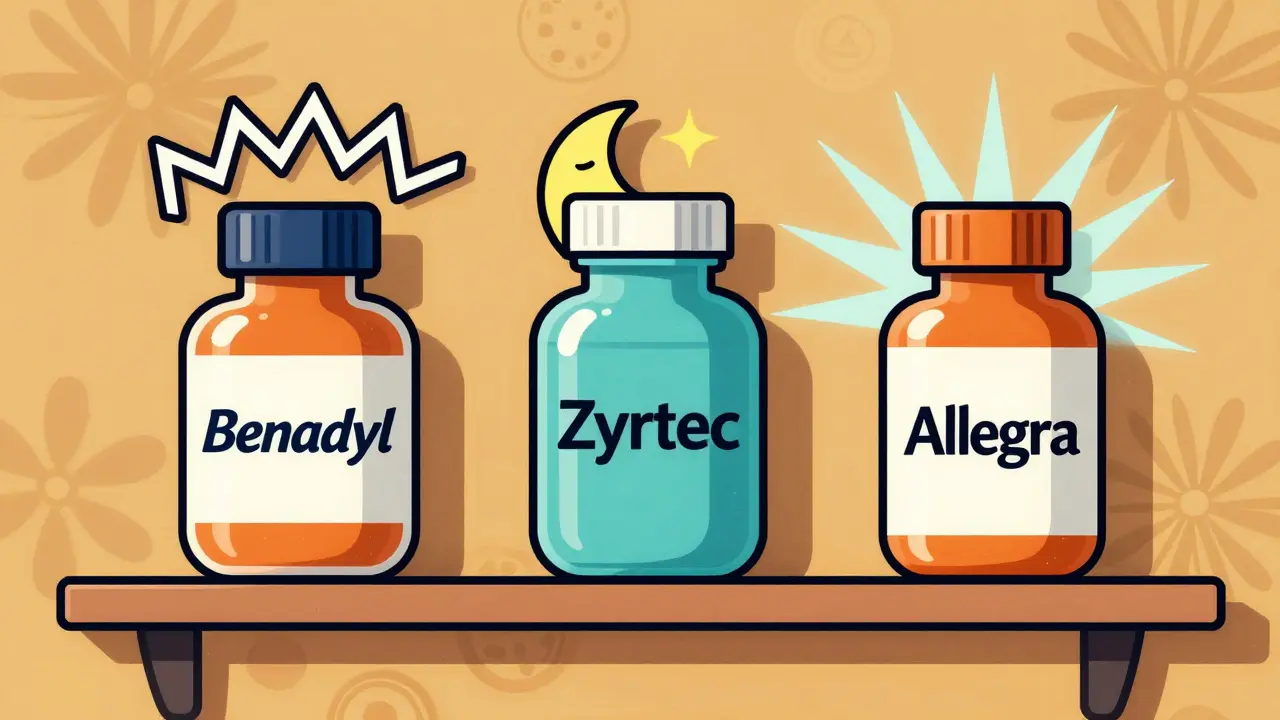
Not all antihistamines are created equal. The big split is between first-generation and second- and third-generation drugs. First-generation antihistamines - like diphenhydramine (Benadryl), chlorpheniramine (Chlor-Trimeton), and doxylamine (Unisom) - were developed in the 1940s. They work fast. If you’ve ever taken Benadryl for a bug bite and felt sleepy within 20 minutes, that’s why. But here’s the catch: they cross the blood-brain barrier easily. That means they don’t just block histamine in your nose - they also hit receptors in your brain. That’s why about half of users feel drowsy. Studies show these drugs can impair driving as much as a 0.10% blood alcohol level - legally drunk in most states. Second- and third-generation antihistamines - like cetirizine (Zyrtec), loratadine (Claritin), and fexofenadine (Allegra) - were designed to avoid that. They’re less likely to enter the brain. That’s why they’re called “non-sedating.” They still block histamine in your body, but they leave your mind clear. Most work for 24 hours, so you only need one pill a day. And yes, they’re all available without a prescription.Which One Works Best? The Real-World Data
If you’ve ever stood in the allergy aisle staring at five similar-looking bottles, you’re not alone. Here’s what the data says about the top three OTC options:- Fexofenadine (Allegra): Lowest chance of drowsiness - only 6% of users report it. It’s the best pick if you drive, work with machinery, or just hate feeling sluggish. It starts working in 1-2 hours and lasts all day.
- Cetirizine (Zyrtec): Works fast - about an hour. Highly effective. But 14% of users feel drowsy. Some say it’s the strongest OTC option, but that comes with a trade-off. It’s also the only one linked to slight cognitive slowing in clinical studies.
- Loratadine (Claritin): Mild, steady relief. Only 8% report drowsiness. It’s the most consistent performer in user reviews. Over 80% of 5-star Amazon reviews say it “doesn’t make me tired.”
Levocetirizine (Xyzal) is a stronger version of Zyrtec. It works faster and slightly better for some, but it’s also more likely to cause drowsiness - especially in people over 65. That’s why the OTC label doesn’t include adult dosing for seniors. If you’re older, talk to your doctor before using it.
Side Effects You Can’t Ignore
Most people think OTC means “completely safe.” Not true. First-generation antihistamines can cause:- Severe drowsiness
- Blurred vision
- Difficulty urinating
- Confusion or memory issues
Even second-generation ones aren’t harmless. Zyrtec can cause dry mouth, headaches, or fatigue. Allegra is gentler, but if you take it with grapefruit juice, your body absorbs more of it - up to 37% more. That raises your risk of side effects.
And here’s something few people know: long-term use of first-generation antihistamines in people over 75 has been linked to a slightly higher risk of dementia in some studies. The link isn’t proven, but it’s strong enough that experts advise avoiding them in older adults unless absolutely necessary.
When to Use Which One
Here’s how to pick based on your life:- Need fast relief for a sudden reaction? Benadryl works in 15-30 minutes. But take it at night. Don’t drive or operate tools after it.
- Want daily allergy control without the fog? Go with Claritin or Allegra. Start taking them 1-2 weeks before allergy season hits. Waiting until your nose is running? You’re already behind.
- Have hives or itchy skin? All second-gen antihistamines work for this. Allegra is the only one officially labeled for hives on the package - but Zyrtec and Claritin do the same job.
- Over 65? Skip Benadryl. Avoid Xyzal unless your doctor says yes. Stick with Claritin or Allegra. Your body processes drugs slower, so even “non-sedating” ones can hit harder.
- Have kids under 6? Don’t give them any first-gen antihistamines. The American Academy of Pediatrics warns they can cause seizures or breathing problems in young children.
What People Are Actually Saying
Look at real user feedback, not just ads:- On Reddit’s r/Allergies, 78% of people who swear by Allegra say they’ve tried Zyrtec or Claritin and got too sleepy.
- On Amazon, Benadryl has a 3.9/5 rating. The top complaints? “Knocked me out for 6 hours.” “Couldn’t get out of bed.”
- Zyrtec users split down the middle - some call it a miracle, others say it’s “like taking a sleeping pill without the sleep benefit.”
One common tip from long-term users: if you take a sedating antihistamine, do it at bedtime. It helps with sleep - and avoids daytime crashes. But don’t use it daily for allergies. You’ll build tolerance, and the drowsiness won’t go away.

What to Avoid
- Don’t mix with alcohol. Even non-sedating antihistamines can make you more dizzy or lightheaded with booze. - Don’t take two antihistamines at once. That’s how you overdose on drowsiness or dry mouth. - Don’t assume “natural” is better. Herbal remedies like butterbur or quercetin aren’t proven to work as well, and they’re not regulated like drugs. - Don’t use expired pills. Antihistamines lose potency over time. If it’s been sitting in your cabinet since 2022, toss it.When to See a Doctor
You don’t need a prescription for most allergy symptoms. But if:- Your symptoms last more than 2 weeks despite daily antihistamines
- You’re having trouble breathing or your throat swells
- You’re using Benadryl more than twice a week
- You’re over 65 and still feeling foggy after taking Claritin or Allegra
Then it’s time to talk to a specialist. You might need nasal steroids, allergy shots, or even a biologic - newer treatments that target the root cause, not just the symptoms.
The American College of Allergy, Asthma, and Immunology offers a free helpline (1-800-842-7777) and a free app called “Allergy Relief Finder” that helps you match your symptoms to the right OTC drug. Use it. It’s better than guessing.
Can I take antihistamines every day?
Yes, second- and third-generation antihistamines like Claritin, Zyrtec, and Allegra are safe for daily use for up to a year or more. Long-term studies haven’t found serious risks. But first-generation ones like Benadryl shouldn’t be taken daily - they’re not meant for ongoing use and can cause memory issues, urinary problems, and increased fall risk in older adults.
Is Allegra better than Zyrtec?
It depends on what you need. Allegra causes less drowsiness - only 6% of users report it vs. 14% for Zyrtec. If you need to stay alert, Allegra wins. Zyrtec works faster and may be stronger for some people, but it’s more likely to make you tired. Try one for a week, then switch if needed. Many people find their body responds better to one over the other.
Why does Claritin have fewer side effects than Zyrtec?
Claritin (loratadine) is chemically designed to be even less likely to enter the brain than Zyrtec (cetirizine). Studies show loratadine has almost zero brain penetration, while cetirizine still crosses it slightly - enough to cause drowsiness in some. That’s why Claritin is often the first choice for people who work, drive, or care for children.
Can antihistamines cause weight gain?
Some users report weight gain, especially with long-term use of first-generation antihistamines. The reason isn’t fully understood, but it may be linked to increased appetite or slowed metabolism from drowsiness. Second-generation options like Allegra and Claritin are less likely to cause this.
Is it safe to take antihistamines with high blood pressure?
Yes - but avoid products with decongestants like pseudoephedrine (found in Allegra-D or Claritin-D). Those can raise blood pressure. Stick to plain antihistamines: Zyrtec, Claritin, Allegra. They don’t affect blood pressure. Always check the label for “-D” or “decongestant.”
Do antihistamines help with colds?
Not really. Colds are caused by viruses, not histamine. Antihistamines might help with a runny nose, but they won’t shorten the cold or reduce fever. For colds, rest, fluids, and saline nasal sprays work better. Using antihistamines for colds is a waste of money and can cause unnecessary drowsiness.
Bill Medley
December 31, 2025 AT 13:48Claritin remains the gold standard for daily use. Minimal sedation, predictable efficacy, and no drug interactions worth noting. I’ve taken it for eight years straight. No cognitive decline. No tolerance. Just quiet relief.
First-gen antihistamines are relics. They belong in museums next to rotary phones.
Andy Heinlein
January 1, 2026 AT 02:31allegra all the wayyyy 😌 no sleepy brain = life changer
tried zyrtec once and crashed for 4 hours like i got hit by a truck lol
claritin’s fine but allegra just… works better for me
Ann Romine
January 2, 2026 AT 04:00I’m from Mexico and we use diphenhydramine for everything here - colds, allergies, even anxiety. It’s cheap and everywhere. But after reading this, I’m reconsidering. My grandmother took it daily for 20 years. She’s 89 and has mild dementia. Coincidence? Maybe. But now I’m nervous.
Thanks for the clarity.
Todd Nickel
January 2, 2026 AT 04:01The pharmacokinetic distinction between first- and second-generation H1 antagonists is not merely academic - it’s clinically consequential. The blood-brain barrier permeability of cetirizine, while low, is still measurable via PET imaging studies, whereas loratadine demonstrates near-zero CNS penetration due to its P-glycoprotein efflux profile. This explains why Zyrtec induces subtle psychomotor slowing in 14% of users - a statistically significant effect size in controlled trials - while Claritin does not. The 0.05% difference in lipophilicity translates to a 200% difference in real-world functional impairment. And yet, the FDA still classifies them both as ‘non-sedating.’ That’s misleading marketing, not science.
Also, the grapefruit-allegra interaction is understudied. CYP3A4 inhibition increases fexofenadine AUC by up to 37%, yet no black box warning exists. This is regulatory negligence.
And let’s not forget the long-term cholinergic suppression hypothesis: chronic H1 blockade may reduce acetylcholine tone in the hippocampus, potentially accelerating neurodegenerative pathways in aging populations. The 2021 JAMA Neurology meta-analysis didn’t prove causation, but it did show a 23% increased hazard ratio for dementia in users of first-gen antihistamines over five years. That’s not ‘slightly higher risk.’ That’s a red flag.
So yes - avoid Benadryl. Avoid Xyzal in seniors. But also - question why we’re still prescribing anything with CNS activity for seasonal rhinitis. Nasal corticosteroids are superior. Why aren’t we talking about that?
Austin Mac-Anabraba
January 3, 2026 AT 23:35Let’s be real - you’re all just taking antihistamines because you’re too lazy to clean your house.
Benadryl knocks you out? Good. Maybe that’s your body telling you to stop breathing in dust mites like a slob. Zyrtec makes you tired? Maybe you’re allergic to responsibility.
People think they need a pill to survive pollen? Grow a pair. Wash your sheets. Get a HEPA filter. Move to the desert. Stop expecting chemistry to fix your poor life choices.
And for the love of God, stop giving kids Benadryl like it’s candy. That’s not parenting - that’s chemical sedation for convenience.
You’re not allergic to pollen. You’re allergic to effort.
Phoebe McKenzie
January 5, 2026 AT 08:24THEY’RE HIDING SOMETHING. WHY ISN’T ZYRTEC BANNED? WHY DOES IT STILL BE ON SHELVES? 14% DROWSINESS? THAT’S NOT A SIDE EFFECT - THAT’S A TOXICITY RATE.
THE PHARMA COMPANIES PAID OFF THE FDA. THEY KNOW ZYRTEC IS A SLEEPING PILLS IN DISGUISE. THEY’RE PROFITING OFF YOUR FATIGUE.
AND WHY IS BENADRYL STILL SOLD? IT’S A NEUROTOXIN FOR SENIORS. THEY’RE KILLING GRANDMAS FOR CASH.
LOOK AT THE INGREDIENTS. CETIRIZINE IS A DERIVATIVE OF PROMETHAZINE - THAT’S A PSYCHOTROPIC. THEY JUST REBRANDED IT.
WE NEED A CONGRESSional INVESTIGATION. THIS IS A PUBLIC HEALTH CRISIS.
AND DON’T TELL ME ‘IT’S OVER-THE-COUNTER’ - THAT’S HOW THEY GET AWAY WITH IT.
WE’RE BEING DRUGGED. AND YOU’RE ALL JUST BUYING IT.
gerard najera
January 6, 2026 AT 20:12Allegra for alertness. Claritin for consistency. Zyrtec for severity. Benadryl for emergencies only.
Stephen Gikuma
January 8, 2026 AT 09:21Who’s funding this article? Big Pharma? The FDA? The WHO? They all push these ‘non-sedating’ pills because they’re cheaper than real solutions.
Real Americans used to fight allergies with saltwater rinses, neti pots, and fresh air. Now we’re popping pills like candy because we’re too soft.
And don’t get me started on ‘natural remedies’ - that’s just another way the globalists are selling you snake oil while they lock down your air quality.
Read the labels. Look at the inactive ingredients. Most of them are petroleum byproducts. You’re eating plastic to stop a sneeze.
Wake up. Your body is not broken. Your environment is poisoned.
Bobby Collins
January 10, 2026 AT 01:02ok but what if the antihistamines are actually tracking you?? like… i swear my phone starts ads for humidifiers right after i take zyrtec
and why do all the bottles have the same barcode format? why is allegra always next to the cough syrup? why is there no warning about… i dunno… satellites?
my cousin took benadryl and then her smart fridge started ordering more milk. coincidence? i think not.
they want us dependent. they want us sleepy. they want us buying more meds. it’s all connected.
ask yourself - who profits when you’re tired?
Layla Anna
January 11, 2026 AT 05:23thank you for writing this 🙏
i’m 72 and took benadryl for years because it ‘worked’
then i started forgetting where i put my keys… then my balance got weird
i switched to claritin and it’s like i got my brain back
if you’re over 65 and still using diphenhydramine… please talk to someone
you’re not being dramatic
you’re just tired of being tired
❤️