

What Is Aspirin-Exacerbated Respiratory Disease?
Aspirin-Exacerbated Respiratory Disease, or AERD, is a chronic condition that affects adults with asthma and nasal polyps. When these patients take common pain relievers like aspirin or ibuprofen, their breathing can suddenly worsen-sometimes severely. This isn’t just an allergy. It’s a complex immune response tied to how the body processes certain chemicals. The condition is also called Samter’s Triad because it involves three things: asthma, recurring nasal polyps, and reactions to aspirin or other NSAIDs. About 7% of all adult asthmatics have AERD, and among those with nasal polyps, the number jumps to 14%. Most people start showing symptoms between ages 20 and 50, and women are slightly more likely to be affected.
How Do You Know If You Have AERD?
There’s no single blood test or scan that confirms AERD. Diagnosis comes down to your medical history. If you’ve had asthma since adulthood, developed nasal polyps that keep coming back after surgery, and notice your breathing gets worse after taking aspirin, ibuprofen, or naproxen, you likely have AERD. Symptoms usually show up within 30 to 120 minutes after taking the medication. You might get nasal congestion, wheezing, coughing, or even a drop in oxygen levels. Some people describe it as feeling like their throat is closing.
When the history isn’t clear, doctors may perform an aspirin challenge. This is done in a controlled medical setting, like an allergy clinic or hospital, where staff can respond quickly if something goes wrong. You start with a tiny dose of aspirin-around 20 to 30 milligrams-and the dose is doubled every 90 to 120 minutes until you reach 325 mg, or until symptoms appear. The whole process takes about five to six hours. If you react, that confirms AERD. Blood tests can help support the diagnosis: high eosinophil counts (over 500 cells/μL) and elevated urinary leukotriene E4 levels are common in AERD patients.
Why Do NSAIDs Trigger These Reactions?
It’s not about being allergic to aspirin like you’re allergic to peanuts. Instead, AERD is caused by a breakdown in how your body handles inflammation. Normally, when tissue gets inflamed, your body uses an enzyme called COX-1 to make protective chemicals. NSAIDs block COX-1, which sounds helpful-but in people with AERD, this forces the body to shift toward making more inflammatory substances called cysteinyl leukotrienes. These chemicals cause swelling in the airways, increase mucus, and attract eosinophils (a type of white blood cell). That’s why your nose gets stuffed up, your polyps grow, and your asthma flares. It’s a cascade of inflammation that doesn’t stop just because you avoid NSAIDs.
What Are the Treatment Options?
There’s no cure for AERD, but there are ways to take control. The first step is avoiding NSAIDs. But here’s the catch: avoiding them doesn’t stop the disease. Polyps still grow, asthma still flares. That’s why medical management is key.
For nasal symptoms, high-volume steroid sinus rinses with budesonide (50-100 mg twice daily) can shrink polyps by 30-40% in eight weeks. Intranasal sprays like fluticasone help too, improving congestion scores by 35% after three months. For asthma, a combination inhaler with fluticasone and salmeterol (250/50 mcg) is standard. It typically boosts lung function by 15-20%.
If those aren’t enough, doctors may turn to leukotriene modifiers. Zileuton blocks the production of leukotrienes and works well for about 28% of patients. Montelukast (Singulair) is easier to take but only helps 15% significantly. For severe cases, biologics are changing the game. Dupilumab, given as a shot every two weeks, reduces polyp size by 55% and improves quality of life scores by 40% in 16 weeks. Mepolizumab cuts eosinophil levels by 85% and lowers the chance of needing another sinus surgery by over half.
Aspirin Desensitization: The Game-Changer
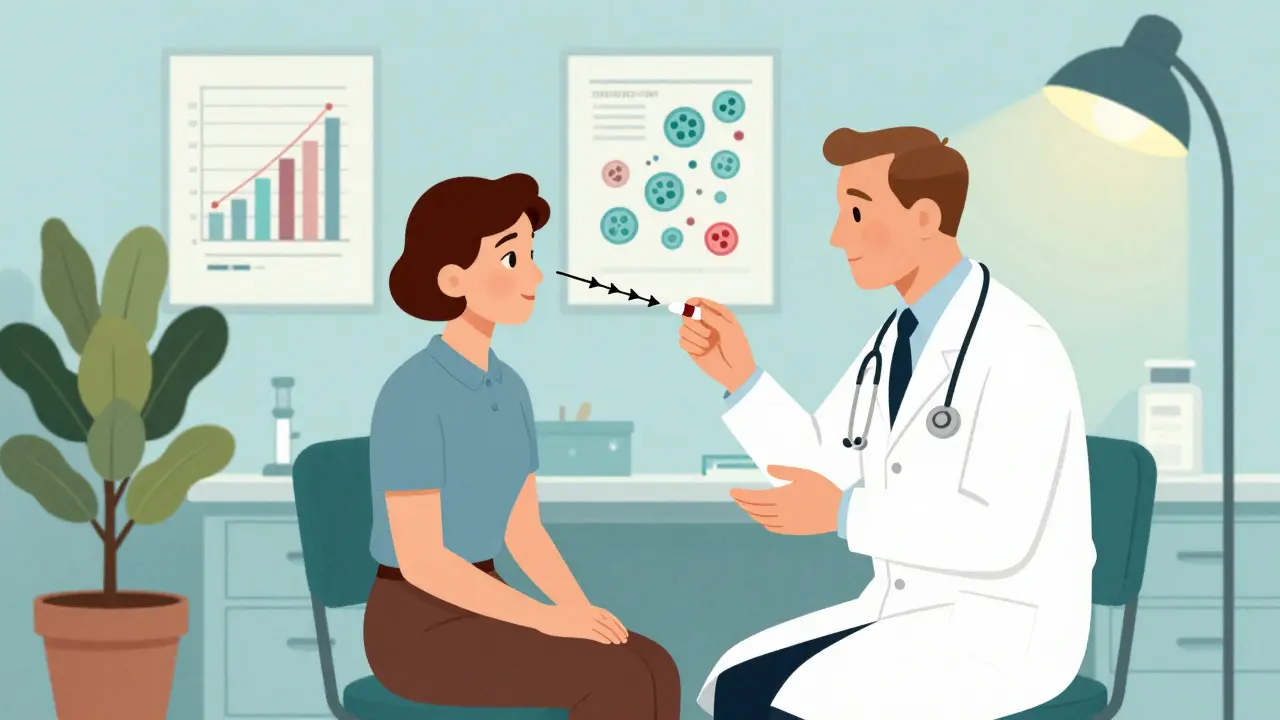
If you’ve had multiple sinus surgeries and still struggle with polyps and breathing, aspirin desensitization is the most effective long-term treatment. It sounds counterintuitive-you have a reaction to aspirin, so why give you more? But here’s how it works: under strict medical supervision, you’re slowly given increasing doses of aspirin over two days until your body stops reacting. Once you’re desensitized, you take a daily high dose-650 mg twice a day.
This isn’t just about tolerating aspirin. It changes the disease itself. Studies show that after desensitization and daily aspirin, patients need oral steroids less often-down from 4.2 bursts per year to just 1.1. Nasal polyps come back in only 35% of patients two years after surgery, compared to 85% without desensitization. Smell returns for many: 82% of desensitized patients report major improvement in their ability to smell, compared to only 35% who don’t undergo the procedure.
The procedure works best when done after sinus surgery. Combining functional endoscopic sinus surgery (FESS) with aspirin desensitization cuts polyp recurrence to 25-30% at two years. Without desensitization, recurrence is 60-70%. Experts agree: if you need surgery for polyps and have AERD, you should be offered desensitization.
Who Can’t Have Desensitization?
It’s not for everyone. If you have uncontrolled heart disease, active peptic ulcers, or a history of serious GI bleeding, the risks outweigh the benefits. Also, if you can’t commit to taking aspirin every single day without missing doses, it won’t work. Missing two or three days in a row means you lose the desensitization-and you’ll need to go through the whole process again. About 22% of people on long-term aspirin get stomach issues, so doctors may add a proton-pump inhibitor to protect the gut.
Some patients simply can’t access the treatment. There are only about 35 specialized AERD centers in the U.S., mostly in big cities. Rural patients often can’t get within 100 miles of one. Telemedicine has helped, but the actual desensitization must be done in person, with emergency equipment on hand. Only a small fraction of allergists feel confident managing AERD, so finding the right provider is part of the challenge.
What’s New in AERD Treatment?
The field is moving fast. In 2023, researchers found that combining dupilumab with daily aspirin gives even better results than either alone-78% of patients saw meaningful improvement in symptoms. A new drug called tipelukast, which targets two inflammatory pathways at once, is showing promise in early trials. It reduced leukotriene levels by 60% in 12 weeks with few side effects.
Biologics are becoming more accessible since dupilumab got FDA approval for nasal polyps in 2022. Usage jumped from 12% to 38% of eligible patients in just 18 months. But cost remains a barrier. Many patients with household incomes under $50,000 say they can’t afford these monthly injections. Insurance coverage varies widely.

Living With AERD: Real-Life Tips
Patients on forums like AERD Warriors and Reddit’s r/SamtersTriad share practical advice. Many use saline rinses with a drop of tea tree oil to fight fungal growth in sinuses. Others take aspirin with food to avoid stomach upset. A big warning: check all over-the-counter cold and pain meds. Many contain hidden NSAIDs like ibuprofen or naproxen. Always read labels. Even topical creams can trigger reactions in some.
One common story: someone who hadn’t smelled coffee in 10 years suddenly could after desensitization. Another, who used to miss work every time polyps flared, now runs marathons. But it’s not easy. The aspirin challenge can be scary. About a third of patients say the procedure itself was the hardest part. Still, most say it was worth it.
What’s the Long-Term Outlook?
AERD is lifelong, but it doesn’t have to control your life. With the right combination of surgery, daily aspirin, biologics, and careful medication management, most patients can live with minimal symptoms. Studies estimate that integrated care can save $87,000 per patient over a lifetime by cutting hospital visits and surgeries. But access is uneven. If you suspect you have AERD, don’t wait. Find a specialist. Ask about desensitization. It’s not a quick fix-but it’s the closest thing we have to turning the tide on this disease.
Can you outgrow AERD?
No, AERD is a lifelong condition. It typically starts in adulthood and doesn’t go away on its own. Even if symptoms improve with treatment, the underlying immune dysfunction remains. Stopping daily aspirin or skipping follow-up care can lead to rapid return of polyps and asthma symptoms.
Is it safe to take acetaminophen (Tylenol) if you have AERD?
Yes, acetaminophen is generally safe for people with AERD because it doesn’t strongly inhibit COX-1. Most patients tolerate it well. However, a small number report mild reactions at high doses (over 1,000 mg at once), so it’s best to start with a low dose and monitor. Always check with your doctor before making changes.
How long does aspirin desensitization take?
The full desensitization process usually takes two consecutive days, with doses given every 90 to 120 minutes. Most patients complete it within 10 to 12 hours total. Afterward, you’ll start daily aspirin therapy immediately. You’ll need to stay under observation for at least an hour after the final dose to ensure no delayed reaction.
Do you still need sinus surgery after desensitization?
Many patients still need surgery before starting desensitization, especially if polyps are blocking sinuses or causing chronic infections. After desensitization, the need for repeat surgeries drops dramatically-from 85% to 35% within two years. Some patients may need one or two more procedures over their lifetime, but far fewer than without treatment.
Can children get AERD?
AERD is extremely rare in children. It almost always develops in adulthood, typically between ages 20 and 50. If a child has asthma and nasal polyps, other conditions like cystic fibrosis, primary ciliary dyskinesia, or allergic fungal sinusitis are more likely causes. AERD is not something that develops from childhood allergies.
What happens if you miss a day of aspirin?
Missing one day usually doesn’t cause problems. But if you miss two or three consecutive days, your body can lose the desensitized state. That means if you take aspirin again, you could have a reaction similar to before. In about 68% of cases, you’ll need to go through the full desensitization process again. That’s why consistency is critical-set phone reminders or use pill organizers.
Are there natural alternatives to aspirin therapy?
There are no proven natural alternatives that match the effectiveness of daily aspirin for AERD. Supplements like omega-3s or turmeric may help reduce general inflammation, but they don’t target the specific leukotriene pathway driving AERD. Relying on them instead of medical treatment can lead to worsening symptoms and more surgeries. Always discuss supplements with your doctor-they can interact with biologics or steroids.
Next Steps: What to Do If You Suspect AERD
If you have asthma and nasal polyps that keep coming back, and you’ve noticed breathing problems after taking ibuprofen or aspirin, talk to your allergist or ENT specialist. Ask if AERD is possible. Request a referral to a center that performs aspirin challenges and desensitization. Bring a list of all medications you’ve taken when symptoms flared. Don’t assume it’s just bad asthma-it might be AERD, and there’s a proven path to better control.
Angela Goree
January 4, 2026 AT 07:49Palesa Makuru
January 4, 2026 AT 08:35Hank Pannell
January 6, 2026 AT 04:25Lori Jackson
January 7, 2026 AT 10:19erica yabut
January 8, 2026 AT 23:34Wren Hamley
January 9, 2026 AT 12:25Sarah Little
January 11, 2026 AT 09:06innocent massawe
January 11, 2026 AT 19:18