
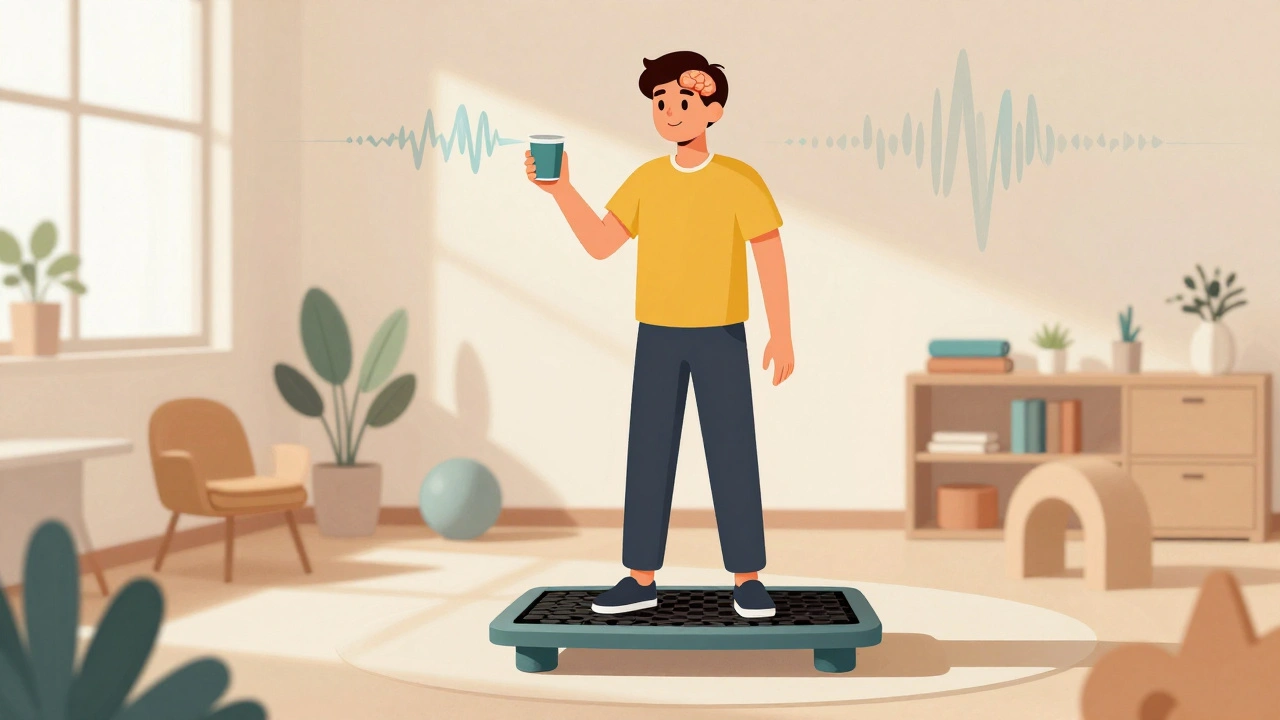
When your body doesn’t move the way you want it to - when your steps wobble, your speech slurs, or your hand trembles while trying to hold a cup - it’s not just clumsiness. It’s ataxia. This isn’t a single disease. It’s a symptom of something deeper going wrong in the brain’s coordination center: the cerebellum. And while there’s no cure for most forms of ataxia, there is real, measurable hope through targeted neurological rehabilitation.
What Exactly Is Ataxia?
Ataxia means loss of coordination. It’s when your brain can’t properly time or direct your muscles. You might walk like you’re drunk, even when sober. You might drop things. Your voice might sound slurred. Your eyes might jump uncontrollably. These aren’t random mistakes. They’re signs your cerebellum - the part of your brain that fine-tunes movement - is damaged or degenerating. There are three main types:- Hereditary ataxia: Passed down through genes. Friedreich’s ataxia is the most common, usually starting between ages 5 and 25. Symptoms slowly get worse over time.
- Acquired ataxia: Comes on suddenly due to something like a stroke, head injury, infection, or vitamin B12 deficiency. If caught early, this type can often improve or even fully reverse.
- Idiopathic late-onset cerebellar ataxia (ILOCA): No clear cause. Starts after age 50 and gets worse slowly. It’s one of the most common forms in older adults.
Studies show that 98% of people with ataxia have trouble walking steadily. Over 90% have slurred speech. And 85% struggle with eye control. These aren’t rare side effects - they’re the rule.
Why Rehabilitation Works When Medication Doesn’t
Here’s the hard truth: there are no drugs that stop ataxia from getting worse in most cases. The 2022 American Academy of Neurology guidelines say it plainly - no disease-modifying therapies exist for most types. That’s where rehabilitation steps in. Not to cure, but to reclaim. To help you walk again. To speak clearly. To eat without spilling. To live independently. A 2021 Cochrane review of 37 studies found that people who did proper neurological rehab improved their daily function by 25-40%. That’s not a small gain. That’s the difference between needing help to get dressed and doing it yourself. The key? It’s not generic physical therapy. It’s task-specific training. That means practicing real-life movements over and over - stepping over a curb, reaching for a shelf, standing on one foot while talking. Not just leg lifts on a machine. One 2022 trial showed task-specific training led to 35% better results than traditional PT. Why? Because your brain learns by doing - not by exercising in isolation. Repetition rewires damaged pathways. It builds new ones.What Does Real Ataxia Rehab Look Like?
Effective rehab isn’t a one-size-fits-all program. It’s built around your type of ataxia and your goals. Phase 1 (Weeks 1-4): Stability first. You start with sitting and standing balance. Therapists use tools like foam pads or balance boards. You might practice standing while doing simple math or naming objects - dual-task training. This trains your brain to handle distractions, which is crucial in real life. Phase 2 (Weeks 5-8): Moving with control. You begin walking with obstacles - cones, steps, uneven surfaces. You learn to turn safely. You practice picking up objects while standing. Progress is tracked using the Scale for the Assessment and Rating of Ataxia (SARA), a tool doctors use to measure improvement. Phase 3 (Weeks 9-12): Real-world function. You practice going to the grocery store, using public transit, or cooking. You learn fall prevention strategies. You train with assistive devices if needed - canes, walkers, or even specialized footwear. The most effective programs use real-time biofeedback. Wearable sensors track your gait. Screens show you how steady you are as you walk. You see your progress. That visual feedback helps your brain adjust faster. Systems like the NeuroCom SMART Balance Master or APDM Opal sensors give data doctors can’t get from just watching you.What Doesn’t Work - And Why
Not all rehab helps. Some methods actually make things worse. Constraint-induced movement therapy - used for stroke patients - forces the weaker side to work harder. But in ataxia, the problem isn’t weakness. It’s timing. Forcing movement without control increases tremors and instability. One study found it worsened symptoms in 68% of ataxia patients. Robotics-assisted gait training? Great for stroke recovery. Less so for cerebellar ataxia. A 2023 trial showed only 12% of ataxia patients got meaningful improvement. The machines move you. But you need to learn how to move yourself. Even common advice like “just walk more” can backfire. Without proper form and feedback, you’re reinforcing bad patterns. That’s why finding a therapist who knows ataxia is critical.
The Therapist Gap
There’s a hidden crisis: most therapists have never treated ataxia. The CRED certification (Cerebellar Rehabilitation and Evaluation Dynamics) is the gold standard. It requires 120 hours of specialized training. As of December 2023, only 327 physical therapists in the U.S. have it. That means in rural areas, one certified therapist serves 458 patients. In cities, it’s 1 per 87. Many patients get stuck with therapists who don’t know the difference between ataxia and Parkinson’s. They’re given exercises that don’t match the condition - and end up worse. One Reddit user, ‘AtaxiaWarrior87’, spent eight months with generic PT that made their symptoms worse. Then they found a CRED-certified therapist. In 10 weeks, their SARA score dropped from 18 to 12 - a major improvement.Technology Is Changing the Game
New tools are making rehab more effective - and more accessible. The Cerebello wearable, cleared by the FDA in 2023, uses targeted neuromodulation to reduce hand tremors. In trials, users improved upper limb function by 32%. Virtual reality systems like CAREN simulate real-world challenges - walking on icy paths, dodging moving objects - in a safe, controlled environment. One study found patients were 28% more engaged than with traditional therapy. Telehealth is another lifeline, especially for people in remote areas. A 2023 survey showed 70% of rural patients were satisfied with virtual rehab sessions. Home exercise programs, followed by 68% of consistent users, also deliver measurable results. But here’s the catch: these tools cost $120,000 to $350,000 per system. Only 15% of rehab centers have them.Insurance, Cost, and the Hidden Barriers
Rehab works - but it’s expensive and hard to get. In the U.S., a single session costs $120-$250. Insurance covers about 65% of medically necessary care. But Medicare and private insurers often cap visits at 10-20, regardless of need. That’s not enough for ataxia. One patient shared on Reddit: “Insurance cut me off at 20 visits. I paid $3,200 out of pocket to keep going.” The National Ataxia Foundation’s 2023 audit found that 63% of patients faced insurance denials. Forty-one percent said their therapists didn’t know how to treat ataxia. And 62% of families weren’t properly trained to help at home. The average annual out-of-pocket cost per patient is $2,450. For households earning under $50,000 - 31% of ataxia patients - that’s a huge burden.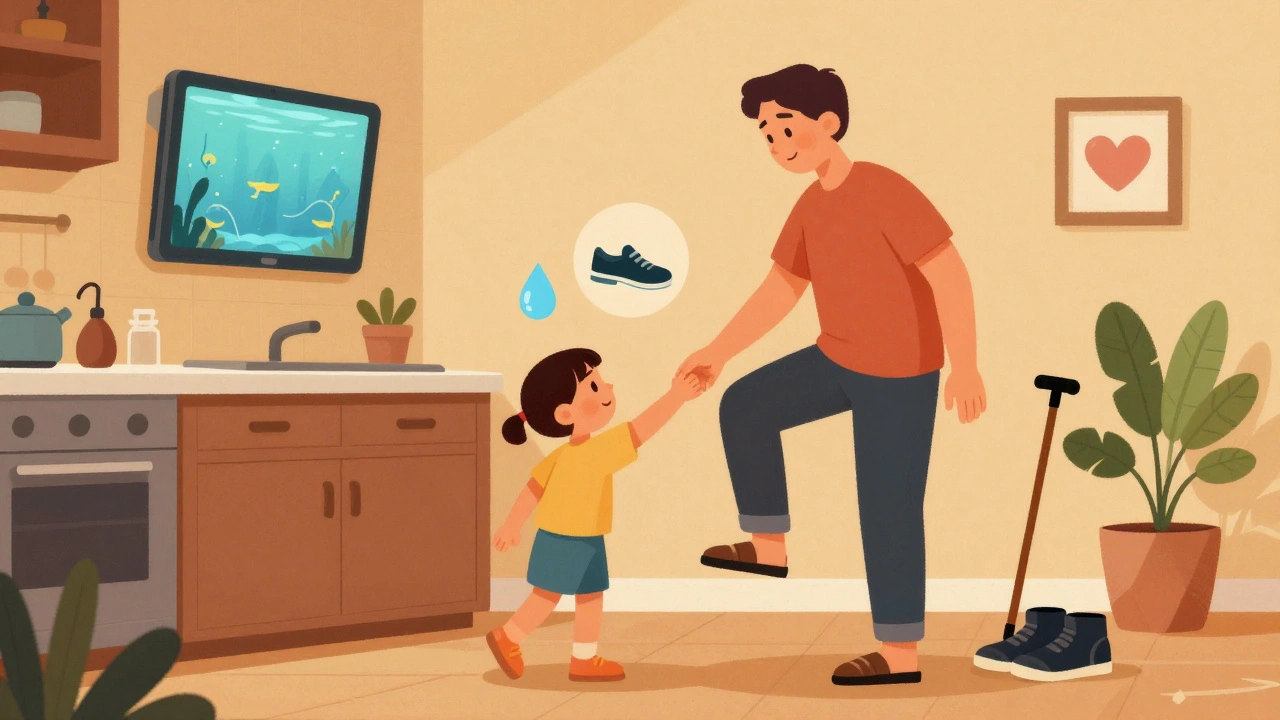
What Patients Say Works
Real-world feedback from over 1,200 patients tells us what actually helps:- 78% improved walking stability after 12 weeks of intensive rehab.
- Fall frequency dropped from 3.2 per week to 0.7.
- 82% could button clothes or use utensils again.
- Aquatic therapy scored 4.3 out of 5 for effectiveness - water reduces gravity, making movement safer and easier.
- Home programs kept people progressing even after formal therapy ended.
The common thread? Consistency. Repetition. Real practice. Not passive treatment.
The Future: What’s Coming Next
Research is moving fast. A 2024 study in Brain Stimulation showed combining non-invasive brain stimulation (ctDCS) with physical therapy improved SARA scores 22% more than therapy alone. The Ataxia Global Research Consortium is running the largest rehab trial ever - testing intensive vs. spaced-out therapy across 15 sites with 400 people. Results come in late 2025. AI-powered home systems are in development. Imagine a device that watches your movements, gives real-time feedback, and adjusts exercises automatically. It could bring expert-level rehab to your living room. But there’s a looming problem: a global shortage of 1.2 million neurorehab specialists. Ataxia expertise is even rarer. Without policy changes to improve reimbursement and training, the National Ataxia Foundation predicts 65% of patients will lose access to proper care by 2030.Your Next Steps
If you or someone you love has ataxia:- Ask your neurologist for a referral to a certified ataxia therapist. Look for CRED or similar specialized training.
- Insist on using the SARA scale to track progress - not just “feeling better.”
- Push back on insurance limits. Get a letter from your doctor explaining why more sessions are medically necessary.
- Start a home program. Even 15 minutes a day of balance and coordination drills helps.
- Join a support group. Ataxia UK, the National Ataxia Foundation, and Reddit’s r/ataxia community are full of people who’ve been there.
Ataxia doesn’t define you. But how you respond to it - the rehab you seek, the questions you ask, the persistence you show - that does.
Can ataxia be cured?
There is no cure for most forms of ataxia, especially hereditary types. However, acquired ataxia - caused by things like stroke, vitamin deficiency, or alcohol use - can sometimes be reversed if the underlying cause is treated quickly. For all types, rehabilitation can significantly improve function, safety, and quality of life, even if the condition continues to progress.
How long does neurological rehab for ataxia take?
Most structured programs last 6 to 12 weeks with sessions 3-5 times per week. But rehab is not a short-term fix. For progressive forms like Friedreich’s ataxia, therapy is lifelong. Even after formal therapy ends, daily home exercises are essential to maintain gains. Some people see improvements in weeks; others need months. Consistency matters more than speed.
Is aquatic therapy effective for ataxia?
Yes. Water reduces the effects of gravity, making it easier to practice balance and movement without falling. Many patients report less pain and more confidence in the pool. A 2023 survey rated aquatic therapy 4.3 out of 5 for effectiveness. It’s especially helpful for people with severe balance issues or joint pain.
Why do some therapists make ataxia worse?
Many therapists are trained for stroke or Parkinson’s, not ataxia. Ataxia isn’t about muscle weakness - it’s about timing and coordination. Exercises that force strength or repetition without control can overload the cerebellum, increasing tremors and instability. Always ask if your therapist has specific training in cerebellar disorders.
Can I do rehab at home?
Absolutely. Home programs are critical for long-term success. Simple exercises like standing on one foot, walking heel-to-toe, or reaching for objects while balancing can be done daily. Use a chair for support. Record your progress. A 2023 study found 68% of patients who stuck with home exercises saw measurable improvement. You don’t need expensive gear - just consistency.
What should I ask my doctor about rehab?
Ask: 1) What type of ataxia do I have? 2) Can you refer me to a therapist with specialized ataxia training? 3) Will you use the SARA scale to track my progress? 4) Are there clinical trials or new therapies I might qualify for? 5) Can you write a letter explaining why I need more than 20 therapy visits? Being specific helps you get the right care.
john damon
December 11, 2025 AT 05:23Aman deep
December 12, 2025 AT 02:09Monica Evan
December 12, 2025 AT 05:49Taylor Dressler
December 13, 2025 AT 17:36Jean Claude de La Ronde
December 14, 2025 AT 17:24Jim Irish
December 15, 2025 AT 09:48Mia Kingsley
December 15, 2025 AT 22:36Katherine Liu-Bevan
December 17, 2025 AT 12:45Courtney Blake
December 19, 2025 AT 08:31Lisa Stringfellow
December 19, 2025 AT 15:35Kristi Pope
December 21, 2025 AT 03:36Eddie Bennett
December 21, 2025 AT 12:00Aidan Stacey
December 23, 2025 AT 11:05Sylvia Frenzel
December 23, 2025 AT 19:23