
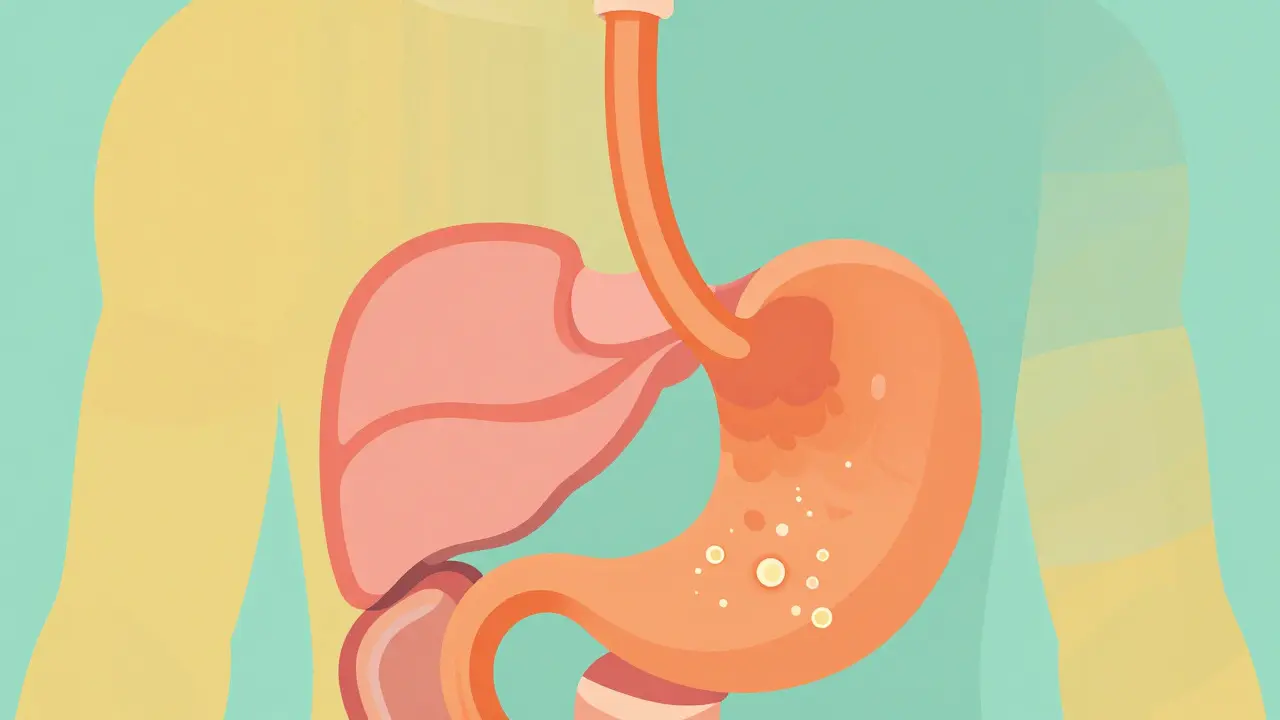
Imagine your esophagus-the tube that carries food from your mouth to your stomach-slowly changing its skin. Instead of the tough, flat lining it’s supposed to have, it starts growing a different type of tissue, similar to what lines your intestines. This isn’t just a minor irritation; it’s a condition called Barrett's Esophagus, which is a precancerous condition where the normal lining of the esophagus changes due to chronic acid reflux. For most people, this change stays harmless. But for some, it can lead to a serious threat: esophageal adenocarcinoma, a aggressive form of cancer that develops in the lower part of the esophagus. The good news? We have powerful tools to stop this progression before it starts. If you’ve been diagnosed with Barrett’s or are worried about your risk because of long-term heartburn, understanding the difference between simple monitoring and active treatment like radiofrequency ablation, a procedure that uses heat energy to destroy abnormal cells in the esophagus is crucial. Let’s break down what this means for your health, your risks, and your options.
What Exactly Is Barrett’s Esophagus?
To understand why doctors worry about Barrett’s, you first need to know how it forms. Most cases start with gastroesophageal reflux disease (GERD), a chronic digestive disorder where stomach acid frequently flows back into the esophagus. When this happens week after week, year after year, the acid burns the delicate squamous cells that line the esophagus. In response, the body tries to protect itself by swapping those cells for tougher columnar cells-the kind found in the gut. This swap is called metaplasia. While this might sound like a smart survival tactic, these new cells aren’t built to handle the environment of the esophagus perfectly. Over time, they can mutate. According to the American Cancer Society, cases of esophageal adenocarcinoma have skyrocketed by over 600% in Western populations since the 1970s, largely driven by this underlying condition. Currently, about 5.6% of adults in the U.S. live with Barrett’s Esophagus. That’s roughly 3.3 million people. The scary part? Only about 10-15% of people with chronic GERD actually develop it, meaning many high-risk individuals are walking around unaware.
Who Is at Risk? Identifying the Warning Signs
You might be wondering if you’re in the danger zone. Research points to several clear risk factors. If you have heartburn symptoms at least once a week for more than five years, your risk jumps significantly. Age also plays a role; the prevalence hits 6.1% for people over 50. Men are two to three times more likely to develop it than women, and white individuals face higher odds compared to other racial groups. Other major contributors include:
- Obesity: Specifically abdominal fat, which puts pressure on the stomach and pushes acid upward.
- Smoking: Tobacco use weakens the lower esophageal sphincter, the valve that keeps acid down.
- Family History: If a close relative has Barrett’s or esophageal cancer, your risk increases dramatically.
- Hiatal Hernia: A condition where part of the stomach pushes up into the chest cavity.
Understanding Dysplasia: The Critical Turning Point
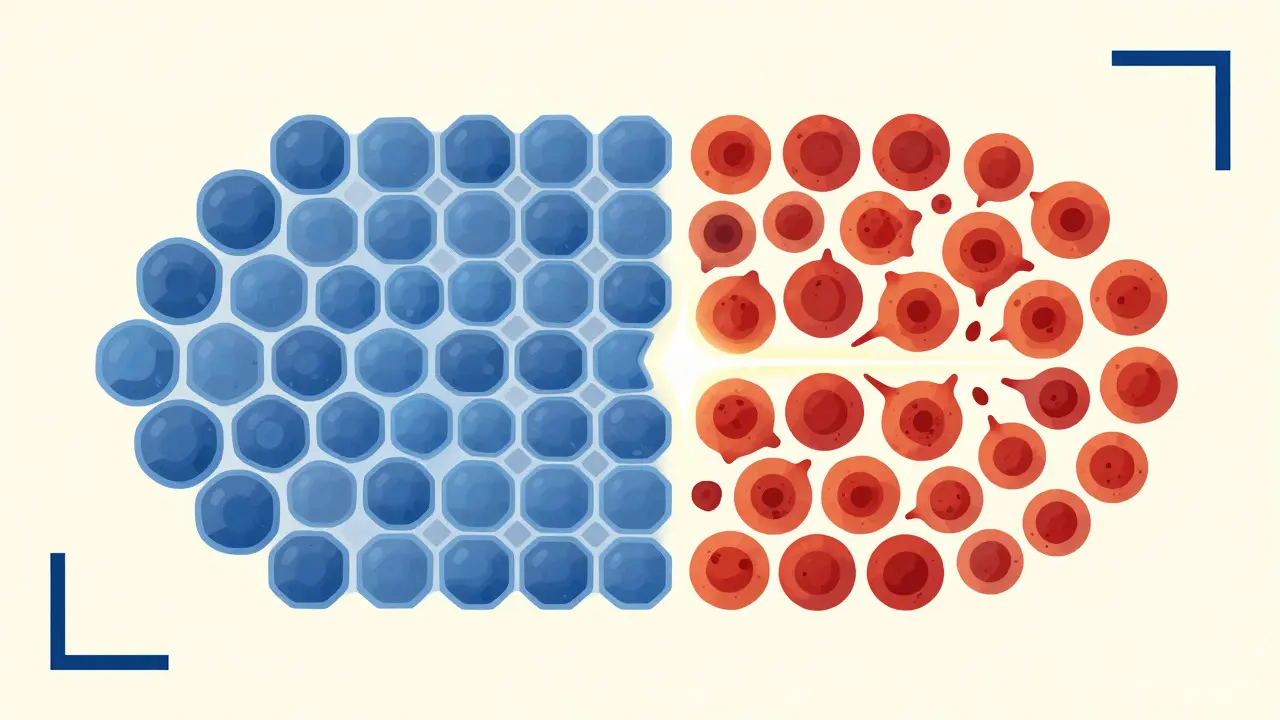
Not all Barrett’s Esophagus is created equal. Doctors classify it based on whether the cells show signs of becoming cancerous, a state known as dysplasia, a pre-cancerous change in the appearance and organization of cells. This is where the conversation shifts from "watch and wait" to "take action."
There are two main grades of dysplasia:
- Low-Grade Dysplasia (LGD): The cells look slightly abnormal but aren’t quite cancer yet. The risk of progressing to cancer is about 5 times higher than non-dysplastic Barrett’s.
- High-Grade Dysplasia (HGD): The cells look very abnormal and are just one step away from invasive cancer. Without treatment, the chance of developing esophageal adenocarcinoma within a few years ranges from 23% to 40%.
Ablation Options: How We Destroy Abnormal Cells
If you have dysplasia, the goal is complete eradication of intestinal metaplasia (CEIM). There are several ways to do this, but not all are equal. Here’s a breakdown of the current standards.
Radiofrequency Ablation (RFA)
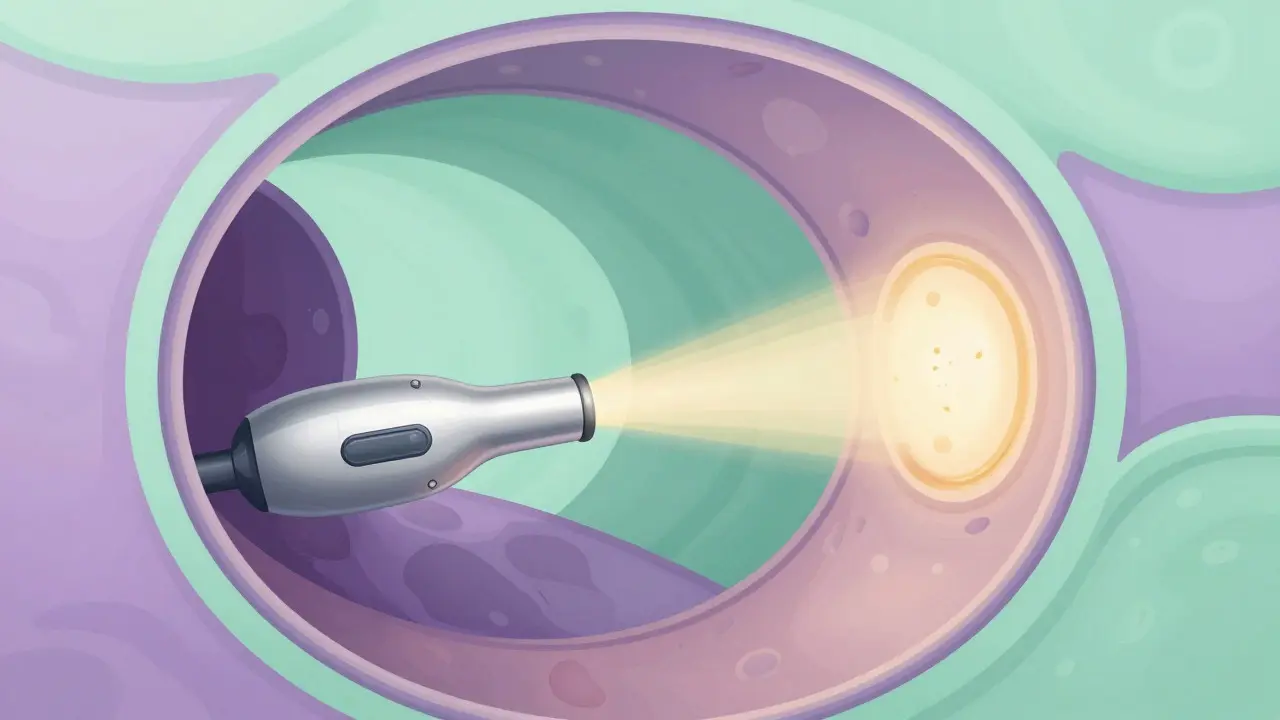
RFA is currently the gold standard. During this procedure, a catheter delivers controlled heat energy to the esophageal lining, destroying the abnormal cells while sparing deeper tissues. Systems like the HALO360 are used for circumferential treatment. In large studies, RFA achieved complete eradication of dysplasia in nearly 88% of cases at 12 months. It’s effective, relatively safe, and doesn’t require hospitalization. However, it does carry a small risk of strictures (narrowing of the esophagus), occurring in about 6% of patients, which may require dilation procedures to fix.
Cryoablation
This method uses extreme cold instead of heat. Devices like the Barrx CryoBalloon spray nitrous oxide to freeze the tissue to -85°C. It’s particularly useful for patients who already have strictures or haven’t responded well to RFA. While slightly less effective overall (around 82% eradication rate in recent trials), it has a lower stricture rate, making it a safer option for certain complex cases.
Photodynamic Therapy (PDT)
PDT involves injecting a light-sensitive drug that activates when exposed to laser light. It was popular in the past but has fallen out of favor. Why? It requires 48 hours of strict light avoidance (you literally have to stay in the dark) and carries a higher risk of side effects, including skin sensitivity and strictures. Today, it’s rarely used unless other options fail.
Endoscopic Mucosal Resection (EMR)
If there’s a visible lump or lesion, doctors often remove it first using EMR. This provides a tissue sample for precise pathology and removes the bulk of the problem. After EMR, ablation (usually RFA) is typically performed on the remaining flat Barrett’s tissue to ensure nothing is left behind.
| Method | Eradication Rate | Stricture Risk | Best For |
|---|---|---|---|
| Radiofrequency Ablation (RFA) | ~88-91% | ~6% | First-line treatment for dysplasia |
| Cryoablation | ~82% | ~2.8% | Prior strictures or failed RFA |
| Photodynamic Therapy (PDT) | ~77% | ~17% | Rescue therapy only |
| Endoscopic Mucosal Resection (EMR) | N/A (Removal) | Low | Visible nodules or lesions |
The Real Patient Experience: What to Expect
Knowing the stats is one thing; living through the process is another. Patients report mixed experiences. On support forums, about 68% of people say RFA successfully eradicated their Barrett’s, usually requiring 2-3 sessions. But 32% experienced strictures that needed dilation-a procedure where a balloon is inflated inside the esophagus to widen it. Many describe the chest pain during dilation as worse than the original heartburn. Cost is another concern. An RFA session can cost upwards of $12,000, though insurance often covers it if dysplasia is confirmed. One patient shared that after three sessions totaling over $12,000, they achieved clearance but endured four dilation procedures. Despite the hassle, many report significant quality-of-life improvements. As one user noted, "Two years after cryoablation, my chronic cough from reflux disappeared completely." The key is realistic expectations: ablation cures the precancerous tissue, but it doesn’t always cure the underlying GERD. You’ll likely still need proton pump inhibitors (PPIs) to manage acid and prevent recurrence.
Future Directions and Final Thoughts
The landscape of Barrett’s treatment is evolving fast. New technologies like AI-assisted endoscopy are helping doctors spot dysplasia with 94% accuracy, far better than the human eye alone. Combined therapies, such as using high-dose PPIs alongside RFA, have shown to reduce recurrence rates significantly. With optimized care, experts project a 45% reduction in esophageal cancer mortality by 2035. If you have chronic reflux, don’t ignore it. Get screened. If you have Barrett’s without dysplasia, regular surveillance is key. If you have dysplasia, ask about ablation. Early detection and modern treatment turn a potentially fatal diagnosis into a manageable condition. Your esophagus deserves a fighting chance.
Is Barrett's Esophagus considered cancer?
No, Barrett's Esophagus is not cancer. It is a precancerous condition. However, it is the primary risk factor for esophageal adenocarcinoma. Most people with Barrett's never develop cancer, but the risk increases if dysplasia (abnormal cell growth) is present.
How effective is radiofrequency ablation for Barrett's Esophagus?
Radiofrequency ablation (RFA) is highly effective, achieving complete eradication of dysplasia in approximately 88-91% of cases. It is considered the gold standard treatment for low-grade and high-grade dysplasia associated with Barrett's Esophagus.
What are the side effects of Barrett's ablation?
Common side effects include chest pain, difficulty swallowing, and fatigue. A more serious complication is esophageal stricture (narrowing), which occurs in about 6% of RFA patients and may require dilation procedures. Cryoablation has a lower stricture rate but may be slightly less effective initially.
Do I need lifelong medication after ablation?
In most cases, yes. Ablation removes the abnormal Barrett's tissue, but it does not cure the underlying acid reflux (GERD) that caused it. Continued use of proton pump inhibitors (PPIs) is essential to suppress acid and prevent the Barrett's tissue from returning.
When should I get screened for Barrett's Esophagus?
Screening is recommended for white men over 50 with chronic GERD, especially if you have additional risk factors like obesity, smoking history, or a family history of Barrett's or esophageal cancer. Talk to your doctor if you have weekly heartburn symptoms lasting more than five years.