
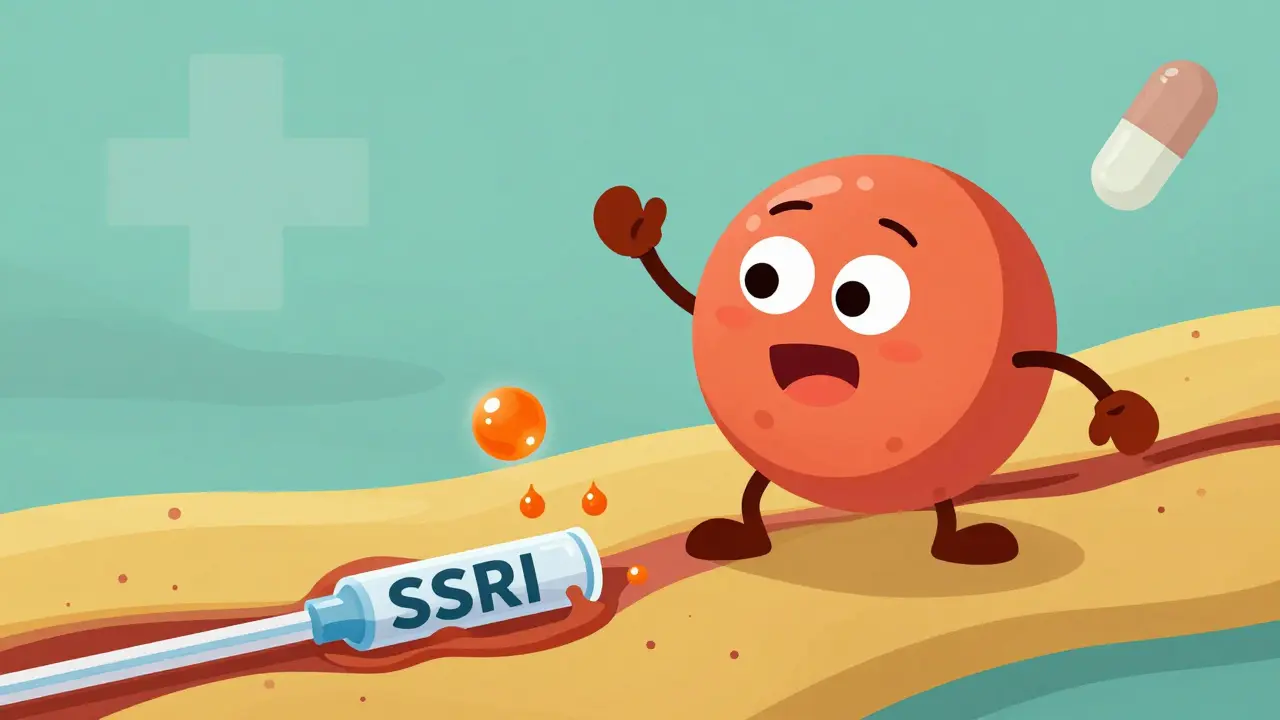
Many people take SSRIs to manage depression or anxiety, but few know these medications can quietly increase the risk of bleeding. It’s not a rare side effect - it’s built into how SSRIs work. If you’ve noticed you bruise more easily, bleed longer from cuts, or had unexplained nosebleeds since starting an SSRI, you’re not imagining it. The science behind this is clear: SSRIs interfere with platelets, the tiny blood cells that stop bleeding. And not all SSRIs are created equal when it comes to this risk.
How SSRIs Disrupt Your Blood’s Stopping Power
SSRIs like fluoxetine, sertraline, and paroxetine work by blocking the reuptake of serotonin in the brain. That’s good for mood - but serotonin isn’t just a brain chemical. About 99% of your body’s serotonin is stored in platelets. These platelets need serotonin to stick together and form clots when you get injured. When SSRIs block the serotonin transporter on platelets, they drain away that serotonin. Studies show platelets in people taking paroxetine can lose over 80% of their serotonin content. Without it, platelets can’t respond properly to injury.
Think of it like this: when you cut your finger, platelets rush to the site and release serotonin to tell other platelets to come help. If they’re low on serotonin, they can’t call for backup. The result? Slower clotting, longer bleeding, more bruising. This isn’t theoretical. Lab tests confirm it - platelets from SSRI users show weaker aggregation, even when the person feels fine otherwise.
Not All SSRIs Are the Same
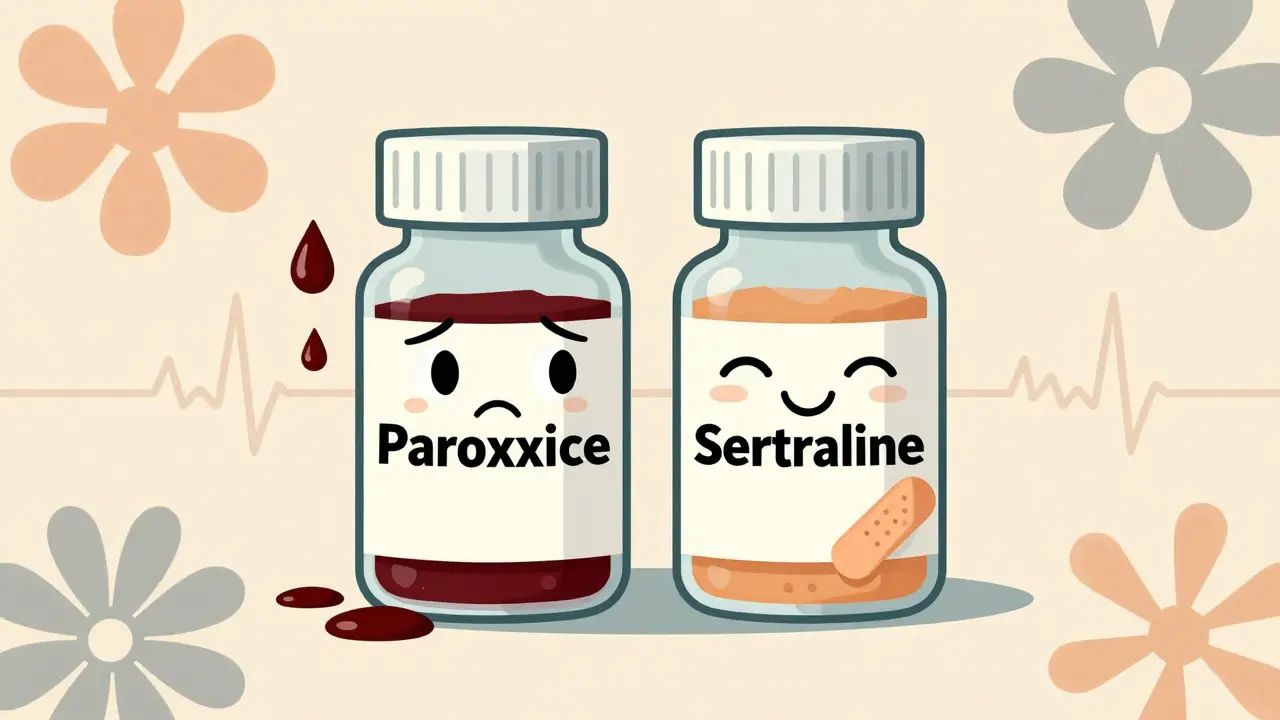
Some SSRIs are much more likely to cause bleeding than others. It comes down to how tightly they bind to the serotonin transporter. Paroxetine has the strongest binding (Ki = 0.17 nM), followed by fluvoxamine. That means they block serotonin reuptake more completely - and wipe out platelet serotonin faster. Sertraline and citalopram bind less tightly, so their effect is milder.
Real-world data backs this up. People taking paroxetine are 40-50% more likely to have upper GI bleeding than those on other antidepressants. Sertraline users? Only 20-30% higher risk. A 2022 analysis of FDA reports showed 18.7% of paroxetine users reported easy bruising - compared to just 9.2% of sertraline users. Reddit users with SSRI-related bleeding complaints were 74% more likely to be on paroxetine than sertraline. It’s not just anecdotal - it’s measurable.
When SSRIs and Other Drugs Mix - The Real Danger
Most bleeding events don’t happen from SSRIs alone. They happen when SSRIs team up with other drugs that also thin the blood. Take NSAIDs like ibuprofen or naproxen. They irritate the stomach lining and stop clotting proteins from working. Combine them with an SSRI, and your bleeding risk jumps 4.5 times, according to a 2013 study. Even worse? Taking SSRIs with blood thinners like warfarin, apixaban, or rivaroxaban. A 2024 meta-analysis found this combo increases major bleeding risk by 35% compared to blood thinners alone.
Here’s the twist: not every combination is equally dangerous. A 2023 study looked at heart patients on powerful antiplatelet drugs like ticagrelor after stent placement. Even though they were all on SSRIs, there was no spike in bleeding. Why? Because those antiplatelet drugs work differently - they target the P2Y12 receptor, not serotonin. So if your body is already being kept from clotting by a different mechanism, the SSRI’s effect gets lost in the noise. But that doesn’t mean you’re safe - it just means context matters.
Who’s Most at Risk?
If you’re over 65, have high blood pressure, kidney or liver problems, a history of ulcers or GI bleeding, or take multiple medications that affect clotting, you’re in the high-risk group. Doctors use a tool called HAS-BLED to score this. A score of 3 or higher means you need extra caution. That’s not a reason to stop your SSRI - but it’s a red flag to talk about alternatives.
People with depression who also have heart disease or are on anticoagulants after a stroke or surgery are especially vulnerable. One study found 63% of doctors had seen SSRI-related bleeding during minor procedures like dental work or skin biopsies. Only 22% of them stopped the SSRI - but many didn’t realize the connection until it was too late.
What to Do If You’re on an SSRI
If you’re on an SSRI and concerned about bleeding, here’s what you can do:
- Check which SSRI you’re on. If it’s paroxetine or fluvoxamine, ask your doctor if switching to sertraline or citalopram makes sense. Both are just as effective for depression but carry lower bleeding risk.
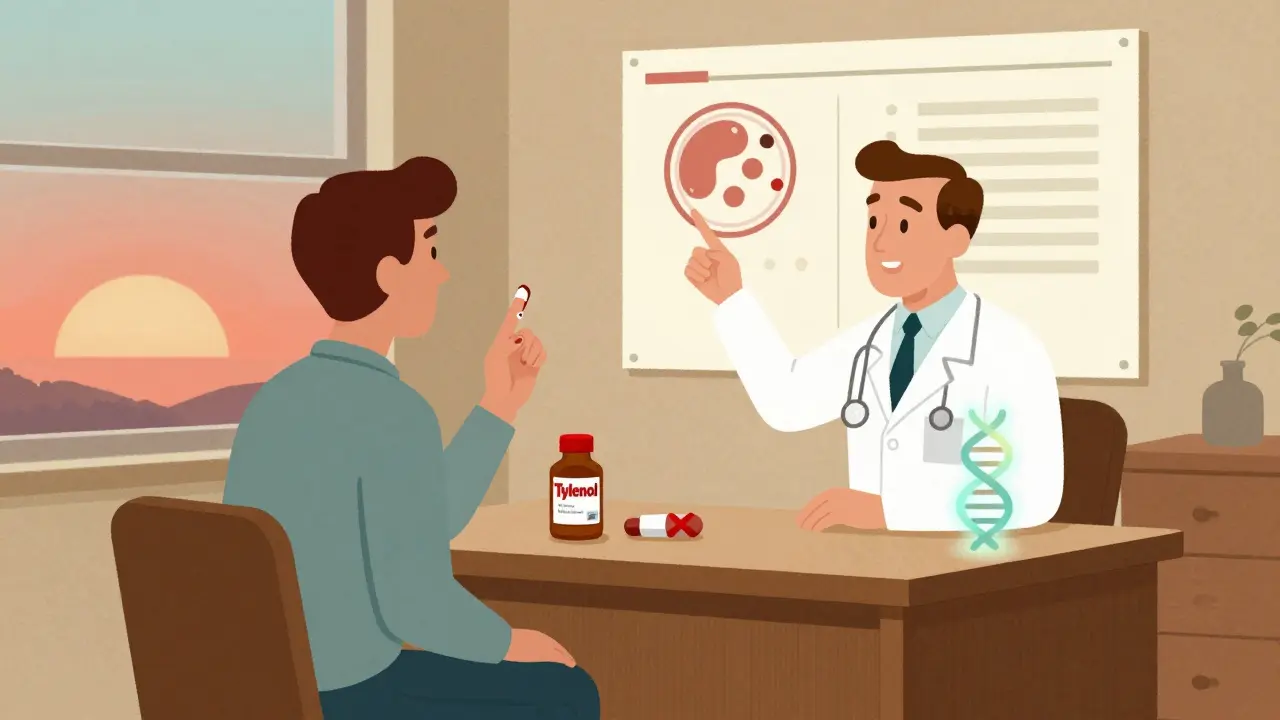
- Avoid NSAIDs. Don’t take ibuprofen, naproxen, or aspirin unless your doctor says it’s safe. Use acetaminophen (Tylenol) for pain instead.
- Tell every doctor you see. Dentists, surgeons, even your physical therapist need to know you’re on an SSRI. For elective procedures like colonoscopies or wisdom tooth removal, you might need to pause your SSRI 5-7 days beforehand - but only under medical supervision.
- Know the warning signs. Black, tarry stools; vomiting blood or material that looks like coffee grounds; unexplained large bruises; bleeding that won’t stop after 10 minutes of pressure - these are emergencies. Call 911 or go to the ER.
For people who need SSRIs but have high bleeding risk, alternatives exist. Bupropion (Wellbutrin) doesn’t affect serotonin at all - so no platelet impact. Mirtazapine (Remeron) works on different receptors and doesn’t interfere with platelet function. Neither is perfect - bupropion can raise blood pressure, mirtazapine can cause weight gain - but they’re options worth discussing.
What’s Changing in 2026?
The medical community is waking up. The FDA issued a safety alert in 2019. EHR systems now flag SSRI-anticoagulant combos. Package inserts for paroxetine now carry a boxed warning for bleeding in people with clotting disorders. But the biggest shift is coming from genetics.
A 2024 study found that people with the S/S version of the 5-HTTLPR gene - which controls serotonin transporter production - have 2.3 times higher bleeding risk on SSRIs than those with the L/L version. That means your genes might tell your doctor whether you’re a high-risk candidate before you even start treatment. The European Medicines Agency is reviewing whether to add genetic testing recommendations to SSRI labels by late 2025.
There’s also early research on platelet-rich plasma injections to temporarily restore clotting function before surgery. It’s experimental, but it shows we’re moving beyond just avoiding SSRIs - we’re learning how to manage the risk smarter.
Don’t Stop Your SSRI Without Talking to Your Doctor
Untreated depression carries its own risks - higher heart disease, worse outcomes after surgery, even increased suicide risk. Stopping your SSRI suddenly can cause withdrawal symptoms or trigger a relapse. The goal isn’t to avoid SSRIs. It’s to use them wisely.
If you’re on an SSRI and have noticed more bruising, longer bleeding, or are scheduled for surgery, talk to your doctor. Ask: "Is this the safest SSRI for me?" "Should I avoid NSAIDs?" "Do I need to pause this before my procedure?"
The answer isn’t always the same. For some, sertraline is the right choice. For others, switching to bupropion makes more sense. The key is knowing your risk - and having a plan.
Can SSRIs cause internal bleeding?
Yes. SSRIs can increase the risk of internal bleeding, especially in the gastrointestinal tract. This includes bleeding in the stomach or intestines, which may show up as black, tarry stools or vomiting material that looks like coffee grounds. The risk is higher with certain SSRIs like paroxetine and when combined with NSAIDs or blood thinners.
Which SSRI has the lowest bleeding risk?
Sertraline and citalopram have the lowest bleeding risk among SSRIs because they bind less tightly to the serotonin transporter on platelets. Paroxetine and fluvoxamine carry the highest risk. For patients with bleeding risk factors, sertraline is often the preferred SSRI choice.
Should I stop taking my SSRI before surgery?
It depends. For procedures with high bleeding risk - like major surgery or spinal taps - doctors often recommend stopping SSRIs 5-7 days beforehand. But for cardiac surgery or procedures where depression relapse is dangerous, guidelines say to continue them. Never stop on your own. Always discuss this with your prescriber and surgeon.
Can I take ibuprofen with an SSRI?
No, it’s not recommended. Combining NSAIDs like ibuprofen or naproxen with SSRIs increases bleeding risk by 4.5 times. Use acetaminophen (Tylenol) instead for pain relief. If you must take an NSAID, talk to your doctor first - they may suggest a stomach-protecting medication like a PPI.
Do all SSRIs affect platelets the same way?
No. SSRIs vary in how strongly they block serotonin reuptake. Paroxetine and fluvoxamine are the strongest inhibitors and carry the highest bleeding risk. Sertraline and citalopram are weaker inhibitors and have lower risk. This difference is based on their binding affinity to the serotonin transporter, not just their brand name.
Final Takeaway
SSRIs save lives by treating depression. But they’re not harmless. Platelet dysfunction is a real, documented side effect - and it’s more common than most people realize. The key isn’t fear. It’s awareness. Know which SSRI you’re on. Know your other medications. Know the signs of dangerous bleeding. And talk to your doctor before making any changes. You don’t have to choose between mental health and physical safety. With the right information, you can have both.
Jarrod Flesch
January 20, 2026 AT 11:04Been on sertraline for 5 years and never had a single bruise I couldn’t explain. But my buddy switched to paroxetine last year and now he’s got a rainbow of bruises from hugging his kids. Wild how one med can do that. 🤯
michelle Brownsea
January 20, 2026 AT 17:35It’s not just SSRIs-it’s the entire pharmaceutical-industrial complex’s refusal to acknowledge that mood-altering chemicals have physical consequences. You’re not ‘just depressed,’ you’re a walking biochemical experiment-and the FDA is fine with that. 🙄
Sangeeta Isaac
January 22, 2026 AT 13:48So basically SSRIs are like giving your platelets a caffeine crash? 😅 I always thought they just made you feel better... turns out they also make your blood kind of lazy. Tylenol over ibuprofen from now on. No more ‘oops, I bled out on the toilet paper’ moments.
Gerard Jordan
January 24, 2026 AT 06:59As a Black man who’s been on antidepressants since college, I’ve had doctors blow off my bruising as ‘just being clumsy.’ This post? Lifesaver. My cousin got hospitalized after a tooth extraction because no one connected the dots. Please share this with your people. We need to stop being dismissed.
Stephen Rock
January 25, 2026 AT 18:32Wow. So SSRIs make you bleed. Who knew? Next you’ll tell me oxygen causes fire.
Uju Megafu
January 27, 2026 AT 10:16Y’all are acting like this is news. In Nigeria, we call this ‘blood thinning’ and we avoid all antidepressants unless you’re literally dying. My aunt took sertraline and bled from her gums for a week. No one told her. Now she’s on herbal tea. Better than dying in a hospital.
Andrew Rinaldi
January 29, 2026 AT 03:37This is exactly why we need better communication between psychiatrists and primary care docs. I’ve seen too many patients get prescribed SSRIs without any bleeding risk assessment. It’s not malice-it’s just fragmented care. We need integrated systems, not silos.
Roisin Kelly
January 29, 2026 AT 16:31So the government lets Big Pharma sell drugs that make you bleed… but you can’t get a prescription for cannabis? Yeah right. This is all a cover-up. They don’t want you to know SSRIs are just slow poison with a smiley face.
Melanie Pearson
January 30, 2026 AT 03:03According to the CDC’s 2023 pharmacovigilance report, SSRIs are associated with a 2.1-fold increase in gastrointestinal hemorrhage in patients over 65, with paroxetine accounting for 58% of those cases. The risk escalates synergistically with concomitant NSAID use, as confirmed by the FDA’s FAERS database. This is not speculative. It is epidemiological fact.
lokesh prasanth
January 31, 2026 AT 19:01paroxetine bad sertraline good
Ashok Sakra
January 31, 2026 AT 22:50my friend took sertraline and cried for 3 weeks then bled from nose. he said it was stress. i said no. it was the pills. now he is off them. he is happier. i am happy. problem solved.
Barbara Mahone
February 2, 2026 AT 15:16I’m a nurse who’s seen this firsthand. A 72-year-old woman on paroxetine and aspirin for heart health bled internally after a minor fall. No one asked about her meds until she was in the OR. This needs to be standard screening. Always ask: ‘What are you taking?’
Philip Williams
February 2, 2026 AT 20:45This is a meticulously researched and clinically vital piece. The distinction between SSRI binding affinities is not widely understood outside of pharmacology circles. I urge all prescribers to incorporate platelet function awareness into their initial patient assessments. Awareness saves lives.
Kelly McRainey Moore
February 4, 2026 AT 06:08Just switched from paroxetine to citalopram last month. No more weird nosebleeds during yoga. Also, no more ‘why do I look like I got into a fight with a pillow?’ Thanks for the heads-up, stranger. 😊