

It’s 3:00 PM. You’re staring at a spreadsheet, your eyes are heavy, and that second cup of coffee feels less like a choice and more like a necessity. You drink it. You finish work. You go home. And then you lie in bed for two hours, staring at the ceiling, wondering why your brain refuses to shut off even though your body is exhausted.
You aren’t alone. Millions of people treat caffeine as a switch they can flip on and off at will. But biology doesn’t work like a light switch; it works like a dimmer with a long lag time. The problem isn’t just that caffeine keeps you awake. It’s that it actively dismantles the architecture of your sleep, making what little rest you get far less restorative. Understanding caffeine cutoff times isn’t about giving up your morning ritual; it’s about respecting the pharmacokinetics of the molecule so you can actually fall asleep when you want to.
The Biology of Why You Can’t Sleep
To understand when to stop drinking coffee, you first have to understand what caffeine is actually doing inside your head. Throughout the day, your body produces a neurotransmitter called adenosine, which is a chemical byproduct of energy consumption that builds up in your brain and creates "sleep pressure". Think of adenosine as a fatigue meter. The longer you are awake, the more adenosine accumulates, binding to specific receptors in your brain to signal that it’s time to rest.
Caffeine is structurally similar to adenosine. It’s essentially an impostor. When you consume caffeine, it slips into those same adenosine receptors and blocks them. It doesn’t remove the adenosine already there; it just prevents new adenosine from binding. This stops the "tired" signal from reaching your consciousness. However, once the caffeine wears off, all that backed-up adenosine floods the receptors at once, leading to a crash.
Dr. Ramkissoon of Houston Methodist Hospital explains that this blocking effect typically begins within 30 minutes of consumption and can last for five hours or longer. The critical issue is that while you might feel alert, your body is still accumulating sleep pressure. If you keep consuming caffeine late in the day, you are essentially holding a dam back against rising water. Eventually, the dam breaks, but not before you’ve spent hours lying awake, unable to access the deep, restorative stages of sleep.
Understanding Half-Life: The 5-Hour Rule
The most important metric in determining your caffeine cutoff time is the half-life, which is the time it takes for the body to eliminate half of the consumed substance from the bloodstream. For caffeine, the Food and Drug Administration (FDA) notes that the standard half-life ranges from 4 to 6 hours for the general population.
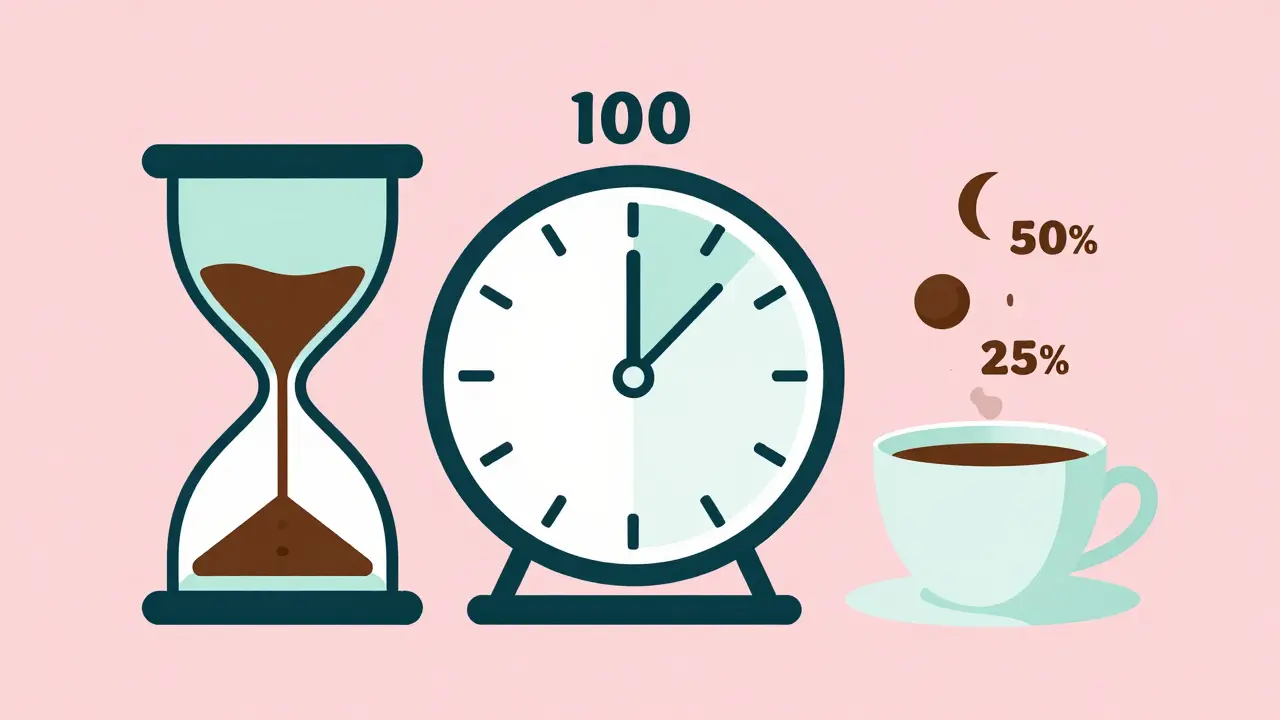
This number is often misunderstood. A half-life of 5 hours does not mean the caffeine is gone after 5 hours. It means that if you drink a cup of coffee with 100 mg of caffeine at 4:00 PM, you still have 50 mg circulating in your system at 9:00 PM. By 2:00 AM, you still have 25 mg active. That remaining amount is enough to interfere with sleep onset latency, which is the time it takes to transition from full wakefulness to sleep.
A comprehensive 2021 review published in Sleep Medicine Reviews analyzed 24 studies and found that caffeine significantly diminishes total sleep time by an average of 45 minutes and reduces sleep efficiency by 7%. Even if you manage to fall asleep, the quality of that sleep is compromised. The study highlighted that middle-aged adults (ages 41-58) show greater sensitivity to these effects than younger adults, suggesting that as we age, our tolerance for late-day caffeine drops precipitously.
Calculating Your Personal Cutoff Time
So, when exactly should you stop? The old advice was to avoid caffeine after noon. Newer data suggests a more precise approach based on dosage. The 2021 Sleep Medicine Reviews analysis quantified dose-specific cutoff times:
- Standard Coffee (107 mg): Requires a minimum 8.8-hour cutoff before bedtime.
- Espresso Shot (63 mg): Requires approximately a 5.2-hour cutoff.
- Pre-workout Supplements (217.5 mg): Require a staggering 13.2-hour cutoff.
- Black Tea: Due to lower concentrations and the presence of L-theanine, no definitive disruptive cutoff was identified in moderate amounts.
If you go to bed at 10:00 PM, an 8.8-hour cutoff means your last cup of coffee should be consumed by 1:12 PM. This aligns closely with the recommendation from the Sleep Foundation, which advises a minimum 8-hour window between caffeine intake and sleep.
| Beverage/Source | Avg. Caffeine Content | Required Cutoff Before Bed |
|---|---|---|
| Standard Drip Coffee (1 cup) | 107 mg | 8.8 hours |
| Espresso (1 shot) | 63 mg | 5.2 hours |
| Energy Drink (e.g., Red Bull) | 80 mg | ~7 hours |
| Pre-Workout Supplement | 217.5 mg | 13.2 hours |
| Dark Chocolate (1 oz) | 20 mg | ~2.5 hours |
Hidden Sources of Caffeine
Many people track their coffee cups but ignore other significant sources of caffeine. The Sleep Foundation reports that 68% of users significantly underestimate caffeine content in non-coffee products. Common culprits include:
- Pain Relievers: Medications like Excedrin contain 65 mg of caffeine per tablet. Taking one at 8:00 PM for a headache is pharmacologically similar to drinking three-quarters of a cup of coffee right before bed.
- Chocolates: Dark chocolate contains varying amounts of caffeine depending on cocoa percentage. A single ounce can hold 20 mg or more.
- Iced Teas and Sodas: Many bottled iced teas contain 30-50 mg per serving, which adds up quickly if consumed throughout the afternoon.
If you are sensitive to caffeine, these hidden doses can push you past your personal threshold, disrupting NREM sleep, which is non-rapid eye movement sleep, characterized by slower brain waves and essential for physical restoration. Recent research in Nature Communications (2025) showed that caffeine induces measurable changes in brain complexity during NREM sleep, preventing the deep, slow-wave activity necessary for feeling refreshed.
Genetics and Individual Metabolism
Not everyone processes caffeine the same way. Genetic variations in the CYP1A2 gene, which is the primary enzyme responsible for metabolizing caffeine in the liver, play a huge role. People with certain variants are "fast metabolizers," clearing caffeine from their systems in 2-4 hours. Others are "slow metabolizers," with half-lives extending to 12 hours or more.
If you drink coffee at 6:00 PM and fall asleep easily at 10:00 PM, you might assume you’re immune to caffeine’s effects. However, you may still be experiencing reduced sleep efficiency. A 2022 review in the American Journal of Managed Care found that while only 6 of 13 studies showed significant increases in waking up after falling asleep, 15 of 18 studies reported significant decreases in overall sleep efficiency. In other words, you might be sleeping, but you aren’t resting well.
For slow metabolizers, the standard 8-hour rule might not be enough. They may need to adhere to a stricter 10-12 hour cutoff. Conversely, fast metabolizers might tolerate a late-afternoon espresso without issue. Knowing your metabolic type can help refine your routine. Companies like 23andMe now offer caffeine metabolism reports, providing personalized data to guide these decisions.
Practical Strategies for Better Sleep
Implementing a strict cutoff time can feel restrictive, especially if you rely on caffeine for afternoon productivity. Here are practical strategies to navigate this:
- Switch to Decaf Early: Starbucks introduced "Evening Brew" decaf, which captured 15% of the after-4-PM market within six months of its launch. Switching to high-quality decaf after 2:00 PM allows you to maintain the ritual without the stimulant load.
- Use Half-Caffeinated Options: Some roasters offer blends with 50% less caffeine. Using these in the afternoon can reduce sleep disruption by 32%, according to the AJMC review.
- Track Your Intake: Apps like Caffeine Zone use algorithms to calculate your current blood caffeine levels based on your weight, gender, and consumption history. 73% of users in a 2022 App Store analysis found these tools helpful for maintaining proper cutoff times.
- Monitor Wearable Data: Devices like Oura Ring and Fitbit now include features that correlate caffeine intake with sleep scores. Oura reported a 41% increase in user engagement when they added personalized caffeine cutoff recommendations to their firmware.
The Future of Personalized Sleep Hygiene
We are moving away from generic advice toward precision sleep medicine. A 2024 study demonstrated that machine learning algorithms incorporating genetic data, age, and baseline sleep patterns can predict optimal caffeine cutoff times with 89% accuracy. The American Academy of Sleep Medicine announced in January 2025 that it will update its clinical guidelines to include beverage-specific recommendations, moving beyond the vague "avoid caffeine late in the day" advice.
As smart home technology evolves, we may see systems that automatically adjust lighting and temperature based on detected caffeine consumption, helping to counteract the alertness signals. Until then, the best tool you have is awareness. By calculating your half-life and respecting the 8-to-10 hour window, you can reclaim your sleep onset and ensure that your nights are as productive as your days.
What is the ideal caffeine cutoff time for most people?
For most adults, a cutoff time of 8 to 10 hours before bedtime is recommended. If you go to bed at 10:00 PM, this means avoiding caffeine after 12:00 PM to 2:00 PM. This window accounts for the 4-6 hour half-life of caffeine, ensuring that less than 25% of the initial dose remains in your system when you try to sleep.
Does decaf coffee affect sleep?
Decaf coffee contains trace amounts of caffeine, typically 2-7 mg per cup compared to 95-100 mg in regular coffee. For most people, this amount is negligible and unlikely to disrupt sleep. However, highly sensitive individuals or those who are slow metabolizers might still experience minor effects if consumed in large quantities right before bed.
How long does it take for caffeine to leave your system completely?
It takes approximately 5 half-lives for a substance to be considered fully eliminated from the body. With a caffeine half-life of 5 hours, it can take up to 25 hours for caffeine to be completely cleared from your system. However, the majority of its disruptive effects wear off after 10-12 hours.
Can you build a tolerance to caffeine's sleep-disrupting effects?
While regular consumers may develop some tolerance to the jittery or anxious feelings associated with caffeine, research shows that the impact on sleep architecture persists. Studies indicate that even habitual drinkers experience reduced sleep efficiency and increased sleep onset latency when consuming caffeine close to bedtime, suggesting that tolerance does not fully protect sleep quality.
Is green tea safer to drink in the afternoon than coffee?
Green tea generally contains less caffeine than coffee (about 20-45 mg per cup vs. 95-100 mg). Additionally, it contains L-theanine, an amino acid that promotes relaxation without drowsiness. This combination may result in a smoother energy boost and potentially less sleep disruption, but it still requires a cutoff time of roughly 6-8 hours before bed for sensitive individuals.