

When someone with celiac disease eats bread, pasta, or even a spoonful of soy sauce, their body doesn’t just react to a bad ingredient-it launches a full-scale attack on its own small intestine. This isn’t a food allergy. It’s an autoimmune disease, and the trigger is gluten, a protein found in wheat, barley, and rye. For about 1 in 100 people worldwide, gluten doesn’t just cause discomfort-it causes lasting damage to the gut lining, leading to malnutrition, fatigue, and long-term health risks if left untreated.
How Gluten Turns Into an Enemy Inside Your Body
Gluten itself isn’t toxic to most people. But in those with celiac disease, it’s the way the immune system responds that makes it dangerous. When gluten enters the digestive tract, it doesn’t fully break down. Instead, stubborn fragments-like the 33-mer gliadin peptide-survive digestion and slip through the gaps between intestinal cells. These gaps open because gluten triggers the release of a protein called zonulin, which loosens the tight junctions that normally keep the gut sealed.
Once these fragments cross into the tissue beneath the gut lining, an enzyme called tissue transglutaminase 2 (TG2) chemically alters them. This change turns the gluten pieces into targets that the immune system recognizes as foreign invaders. If you carry the HLA-DQ2 or HLA-DQ8 genes-which about 95% of celiac patients do-your immune cells latch onto these altered gluten fragments like a lock and key. This activates T-cells that flood the area with inflammatory signals, especially interferon-gamma. The result? The finger-like projections in your small intestine, called villi, begin to flatten. That’s villous atrophy. And when villi shrink, your body can’t absorb nutrients properly.
A 2024 study from McMaster University changed how we think about this process. It turned out the gut lining itself isn’t just a passive barrier-it can actively start the immune response. Cells in the intestinal wall that carry the same genetic markers as immune cells can directly trigger inflammation when they encounter gluten. This means the damage doesn’t just happen because of immune cells attacking from the outside. The gut is part of the problem-and that’s why treatments have been so hard to develop.
Diagnosis: Why It Takes Years for Most People
It takes an average of 6.7 years for someone with celiac disease to get diagnosed. Why? Because symptoms vary wildly. Some people have severe diarrhea and weight loss. Others feel tired all the time, get joint pain, or develop a blistering skin rash called dermatitis herpetiformis. Many have no obvious symptoms at all-just low iron or vitamin D levels that don’t improve with supplements.
Doctors start with a blood test for anti-tissue transglutaminase (tTG-IgA) antibodies. This test is 98% accurate if you’re still eating gluten. But if you’ve already gone gluten-free, the test can give a false negative. That’s why you must keep eating gluten until you’re tested. After a positive blood test, a biopsy of the small intestine during an endoscopy confirms the diagnosis by showing the flattened villi.
Genetic testing for HLA-DQ2 or HLA-DQ8 is also used-not to diagnose, but to rule out. If you don’t have either gene, you almost certainly don’t have celiac disease. That’s why doctors use it to avoid unnecessary biopsies in people with vague symptoms.
Gluten-Free Diet: The Only Treatment That Works
There’s no pill, no injection, no cure-yet. The only treatment that stops the immune attack and lets your gut heal is a strict, lifelong gluten-free diet. That means no wheat, barley, rye, or anything made from them. It also means avoiding hidden sources: soy sauce, malt vinegar, some medications, and even communion wafers.
The legal limit for gluten in products labeled “gluten-free” is 20 parts per million (ppm) in both the U.S. and Europe. That’s tiny-like one drop of water in a full bathtub. But even that small amount can cause damage in sensitive people. Studies show that 30% of diagnosed patients still have symptoms or intestinal damage after going gluten-free, often because of accidental exposure.
Getting started means cleaning out your kitchen. Replace cutting boards, toasters, and utensils that have touched gluten. Use separate jars of peanut butter and butter to avoid cross-contamination. Cook gluten-free foods first, then clean surfaces before preparing anything else. Many people find it easier to buy certified gluten-free products-look for the crossed grain symbol or “GF” on packaging.
Safe grains include rice, quinoa, buckwheat, millet, corn, and oats (only if labeled gluten-free, since oats are often contaminated during processing). Fruits, vegetables, meats, fish, eggs, dairy, nuts, and legumes are naturally gluten-free. But always check labels on packaged foods-even yogurt, salad dressings, and spice blends can contain hidden gluten.
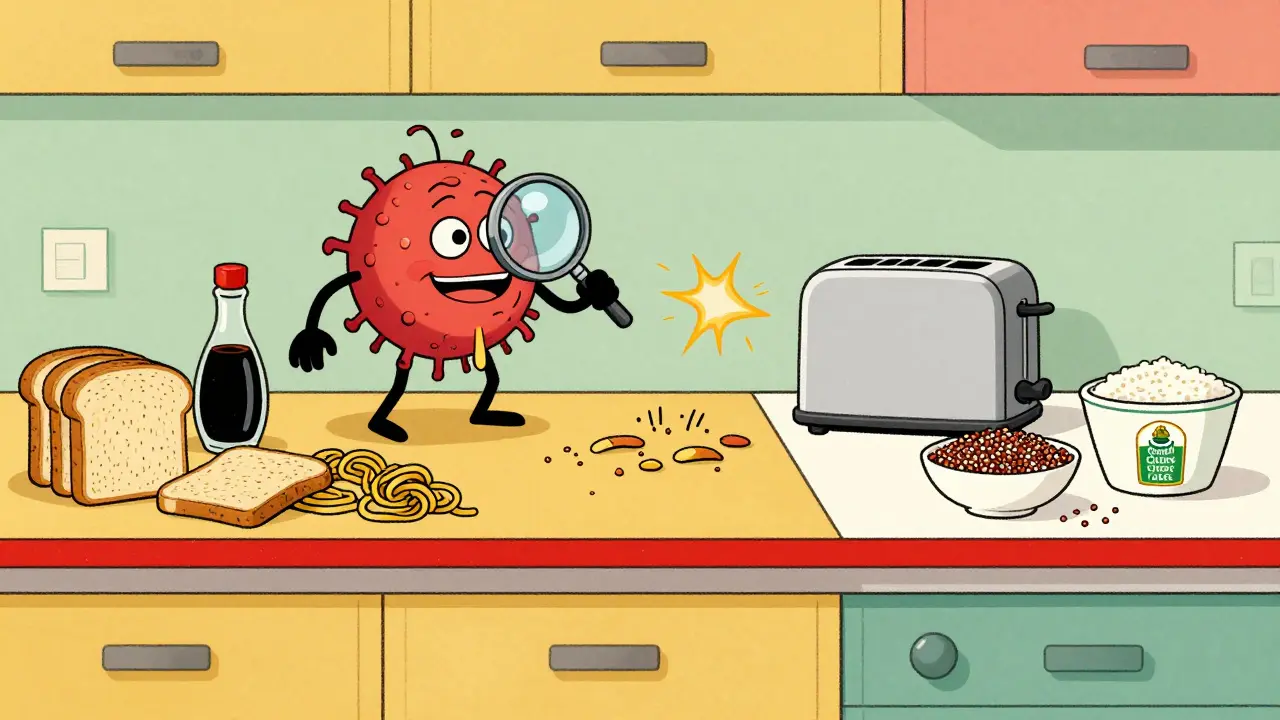
What’s Really in Your Food? Hidden Gluten and Cross-Contamination
One of the biggest challenges isn’t the obvious foods-it’s the sneaky ones. A 2023 survey found that 67% of people with celiac disease have experienced cross-contamination in restaurants. A shared fryer, a toaster used for regular bread, or even a knife that sliced a sandwich can introduce enough gluten to trigger symptoms.
Medications are another blind spot. Only 37% of prescription drugs list gluten content, and many contain starches derived from wheat. Always ask your pharmacist or check the manufacturer’s website. Some supplements use gluten as a filler. If you’re unsure, contact the company directly.
Cost is another hurdle. Gluten-free products cost, on average, 242% more than regular versions. A loaf of gluten-free bread can be $6-$8, while regular bread is $2-$3. But many people find that the health payoff is worth it. After six months on a strict diet, 89% report major symptom improvement. Some even see their villi fully heal-confirmed by a follow-up biopsy.
Living With Celiac: Social, Emotional, and Practical Realities
It’s not just about food. For many, celiac disease changes how they live. One Reddit user wrote: “It took seven years and four doctors before I got diagnosed. I thought I was just ‘sensitive’ to carbs.” Another said: “I stopped going to birthday parties because I was scared of getting sick.”
63% of young adults with celiac say they avoid social events involving food. 58% report moderate to severe emotional stress from the constant vigilance. That’s why support groups matter. Apps like Find Me Gluten Free help locate safe restaurants, and online communities like Beyond Celiac offer advice from people who’ve been there.
Planning ahead helps. Carry gluten-free snacks-granola bars, nuts, fruit-in your bag. Call restaurants ahead of time. Ask if they have a separate prep area. Many chains now offer gluten-free menus, but always double-check. A server might say “we have gluten-free pasta,” but if it’s cooked in the same pot as regular pasta, you’re at risk.
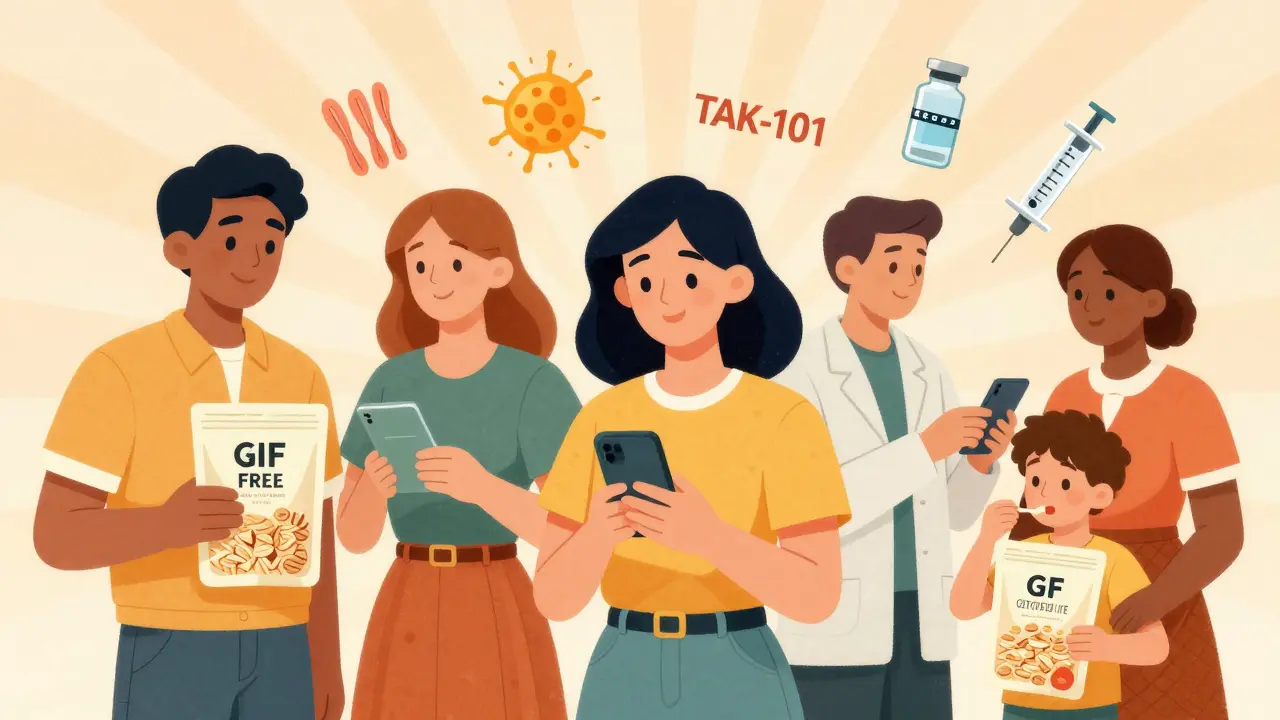
What’s Coming Next? New Treatments on the Horizon
While the gluten-free diet works, it’s not perfect. That’s why researchers are working on alternatives. Three therapies are in advanced trials:
- Nexvax2: A vaccine-like treatment that desensitizes the immune system to gluten. In Phase 2 trials, it reduced symptoms by 42% in patients who still ate gluten.
- Latiglutenase: An enzyme pill that breaks down gluten in the stomach before it reaches the intestine. In one trial, it cut symptoms by 37%.
- TAK-101: A nanoparticle therapy that reprograms immune cells to ignore gluten. In a 2023 study, it reduced intestinal damage by 63%.
Scientists are also testing devices that can detect gluten in food at levels as low as 5 ppm-far more sensitive than current tests. And research into the gut microbiome shows that people with celiac often have different bacteria than those without it. Could adjusting gut flora help manage symptoms? Early studies say maybe.
But for now, the gluten-free diet remains the gold standard. Even if new treatments arrive, they’ll likely be used alongside diet-not replace it. The goal isn’t to eat gluten again. It’s to live without fear of damage.
What You Need to Know Right Now
- If you suspect celiac disease, get tested before going gluten-free.
- Strict, lifelong gluten avoidance is the only proven treatment.
- 20 ppm is the legal limit for gluten-free labeling-but even that can trigger reactions.
- Hidden gluten is everywhere: medications, sauces, cosmetics, and shared kitchen tools.
- Healing takes time. Most see improvement in 6 months, but full gut repair can take years.
- Support groups and apps make daily life easier.
Celiac disease isn’t a trend. It’s a serious, genetic condition that requires real, daily management. But with the right knowledge and tools, it’s entirely possible to live well-without gluten, without fear, and without damage.
Can you outgrow celiac disease?
No. Celiac disease is a lifelong genetic condition. Once diagnosed, you must avoid gluten for life. Even if symptoms disappear, the immune system still reacts to gluten and will continue to damage the intestine. Stopping the diet can lead to long-term complications like osteoporosis, infertility, and intestinal cancers.
Is a gluten-free diet healthy if you don’t have celiac disease?
For people without celiac disease or non-celiac gluten sensitivity, there’s no proven health benefit to going gluten-free. In fact, many gluten-free products are lower in fiber, iron, and B vitamins because they’re made with refined flours. Unless you have a medical reason, cutting out whole grains like wheat and barley can lead to nutrient gaps. Don’t assume gluten-free equals healthier.
Can you eat oats if you have celiac disease?
Pure, uncontaminated oats are safe for most people with celiac disease. But most oats are processed in facilities that also handle wheat, barley, or rye. Only eat oats labeled “gluten-free.” Even then, some people react to avenin, a protein in oats that’s similar to gluten. Start with small amounts and monitor symptoms.
Why do some people still have symptoms after going gluten-free?
About 30% of people with celiac disease continue to have symptoms despite a strict diet. This is often due to accidental gluten exposure-like cross-contamination in restaurants, hidden gluten in medications, or even gluten in cosmetics used on the lips. In rare cases, it could mean another condition like small intestinal bacterial overgrowth (SIBO) or lactose intolerance developed after gut damage. A follow-up with a specialist is needed to find the cause.
Do gluten-free products have to be certified?
No, certification isn’t required by law-but it’s the safest choice. The FDA requires products labeled “gluten-free” to contain less than 20 ppm gluten, but certification programs (like GFCO or NSF) test products more rigorously, often down to 5 ppm. For people with high sensitivity, certified products reduce risk significantly. Look for the crossed grain logo or “Certified Gluten-Free” on packaging.
Aparna karwande
January 8, 2026 AT 05:16Gluten-free is just a Western fad pushed by big pharma and food corporations to sell overpriced rice cakes. In India, we’ve eaten roti and dal for centuries without this nonsense. If your gut can’t handle wheat, maybe it’s your weak digestion-not some genetic curse. Stop being so fragile. We don’t need a biopsy to know what’s real food.
Jessie Ann Lambrecht
January 9, 2026 AT 23:20First off-thank you for writing this with such clarity. I was diagnosed at 28 after 8 years of being told I was ‘just stressed.’ The moment I went gluten-free, my brain fog lifted like a foggy windshield in sunlight. It’s not a diet-it’s a lifeline. And yes, the cost sucks, but I’d rather pay $8 for bread than $800 for a colonoscopy. You’re not alone.
Vince Nairn
January 11, 2026 AT 01:56So let me get this straight-you’re telling me I have to throw out my toaster because someone once made a grilled cheese with regular bread? And now I’m supposed to believe a molecule of gluten can trigger a civil war in my intestines? I mean… okay. I’ll believe it when I see a gluten fairy with a tiny torch and a subpoena.
Also, why is everyone so scared of cross-contamination? I eat off the same plate as my kid who eats PB&J. We’re fine. Maybe your body’s just overly dramatic.
Kyle King
January 12, 2026 AT 03:16Gluten is a government bioweapon disguised as bread. The FDA allows 20ppm because they want us sick. The real cure? A diet of raw meat, sunlight, and no processed food. They don’t want you to know that oats are actually genetically modified to mimic gluten so you keep buying their products. The microbiome study? Fake. All of it. Ask your pharmacist about the wheat starch in your meds-they’re lying.
I’ve been symptom-free for 12 years. I don’t eat gluten. I eat freedom. And I don’t need your certified labels. I have a tinfoil hat and a Wi-Fi jammer.
Emma Addison Thomas
January 13, 2026 AT 03:10I’ve lived with celiac for over a decade now. What struck me most was how little the medical community understood it in the UK when I was diagnosed. My GP thought it was ‘a phase.’ It took a trip to a specialist in London and a biopsy that felt like a medieval torture device to get answers. The isolation is real-but so is the community. I’ve met more kindred spirits through gluten-free meetups than in my entire corporate job.
And yes, the cost is absurd. But I’ve learned to cook. And I’ve learned to say no. Sometimes, the hardest thing isn’t the food-it’s the guilt of not being able to share it.
Mina Murray
January 13, 2026 AT 05:21Everyone’s so obsessed with gluten but no one talks about the glyphosate in wheat. It’s not the protein-it’s the pesticide. The same stuff in Roundup that kills weeds is in your bread. That’s what’s wrecking your gut. The immune system isn’t attacking gluten-it’s attacking the chemical residue. And no one’s testing for it because Monsanto owns the FDA. Check your local water supply. I bet you’re drinking it too.
Also, ‘gluten-free oats’? Bullshit. Oats are naturally gluten-free but they’re contaminated because farmers use wheat as a cover crop. They’re lying to you. And the 20ppm limit? That’s a joke. I’ve had reactions at 5ppm. The science is rigged.
Rachel Steward
January 14, 2026 AT 13:05Let’s be real-celiac isn’t a disease, it’s a metaphor. It’s the body screaming that modern life is a lie. We’ve been fed processed nonsense since birth, told to consume, consume, consume, and now our gut is the canary in the coal mine. Gluten is just the symbol. The real toxin is convenience. The real damage is the illusion that we can outsource our health to corporations and expect our bodies to stay intact.
That’s why people still suffer after going gluten-free-they’re still living the same life. They’re still scrolling at 2am. Still eating ‘healthy’ snacks with 17 unpronounceable ingredients. Still outsourcing their joy to Instagram influencers selling $25 gluten-free muffins.
Healing isn’t about removing gluten. It’s about removing the belief that you’re powerless. Your gut doesn’t need a label. It needs silence. It needs stillness. It needs you to stop blaming the bread and start asking why you’re so afraid to be alone with your hunger.
Jonathan Larson
January 14, 2026 AT 21:13As a physician who has managed numerous celiac cases over three decades, I can affirm with scientific rigor that the pathophysiology described herein is accurate and well-documented. The role of zonulin, TG2, and HLA-DQ2/DQ8 is not speculative-it is empirically validated through peer-reviewed studies spanning the last twenty years. The gluten-free diet remains the only evidence-based intervention. While emerging therapies show promise, none yet replicate the fidelity of dietary exclusion.
It is imperative that patients understand that diagnostic testing must occur prior to dietary modification. A false negative due to premature gluten withdrawal is not merely a diagnostic error-it is a medical misstep with potentially grave long-term consequences. I encourage all clinicians to prioritize this sequence.
Katrina Morris
January 15, 2026 AT 19:26Just wanted to say thank you for this. I’ve been gluten-free for 4 years and still feel like I’m the only one who knows how hard it is to explain to your cousin why you can’t eat her homemade cookies. I carry snacks everywhere. I call restaurants before I go. I cry sometimes. But I’m alive. And I’m not sorry for taking care of myself.
LALITA KUDIYA
January 16, 2026 AT 03:19