
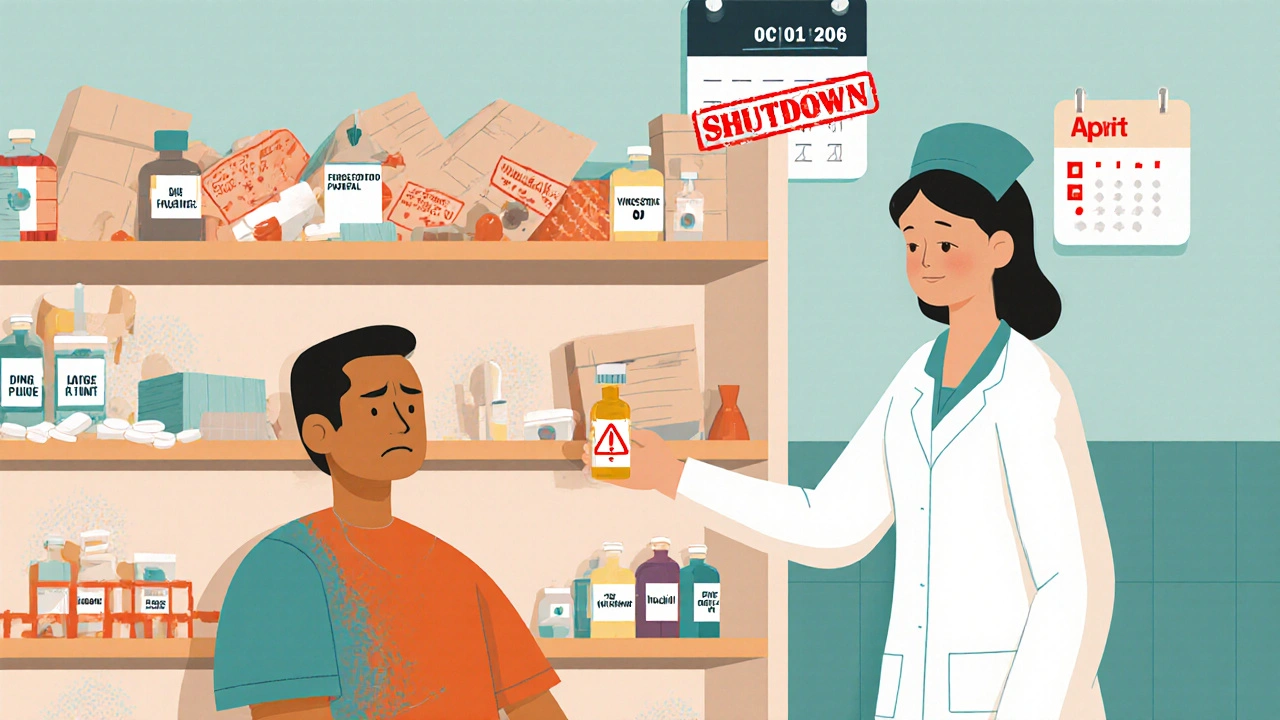
As of November 2025, over 287 drugs are in short supply across the U.S., with nearly half of them being life-saving medications for cancer, heart failure, and severe infections. Hospitals are rationing doses. Pharmacies are turning patients away. And doctors are forced to use less effective alternatives - all because the system that supplies these medicines is breaking down. Congress is finally trying to fix it, but the clock is ticking.
The Two Bills Trying to Stop the Crisis
Two major bills have been introduced in the 119th Congress to directly tackle the growing crisis. The first is the Drug Shortage Prevention Act of 2025 (S.2665), introduced by Senator Amy Klobuchar in August. This bill doesn’t ask for more money or new agencies. It asks manufacturers to speak up sooner.Right now, drug companies aren’t required to tell the FDA until a shortage is already happening - often after production lines have stalled or raw materials ran out. S.2665 changes that. It would force manufacturers to notify the FDA as soon as they see a spike in demand, a supply chain disruption, or a planned production halt for any drug on the critical list. The goal? Give regulators time to step in - find alternate suppliers, fast-track approvals, or warn hospitals before patients are left without treatment.
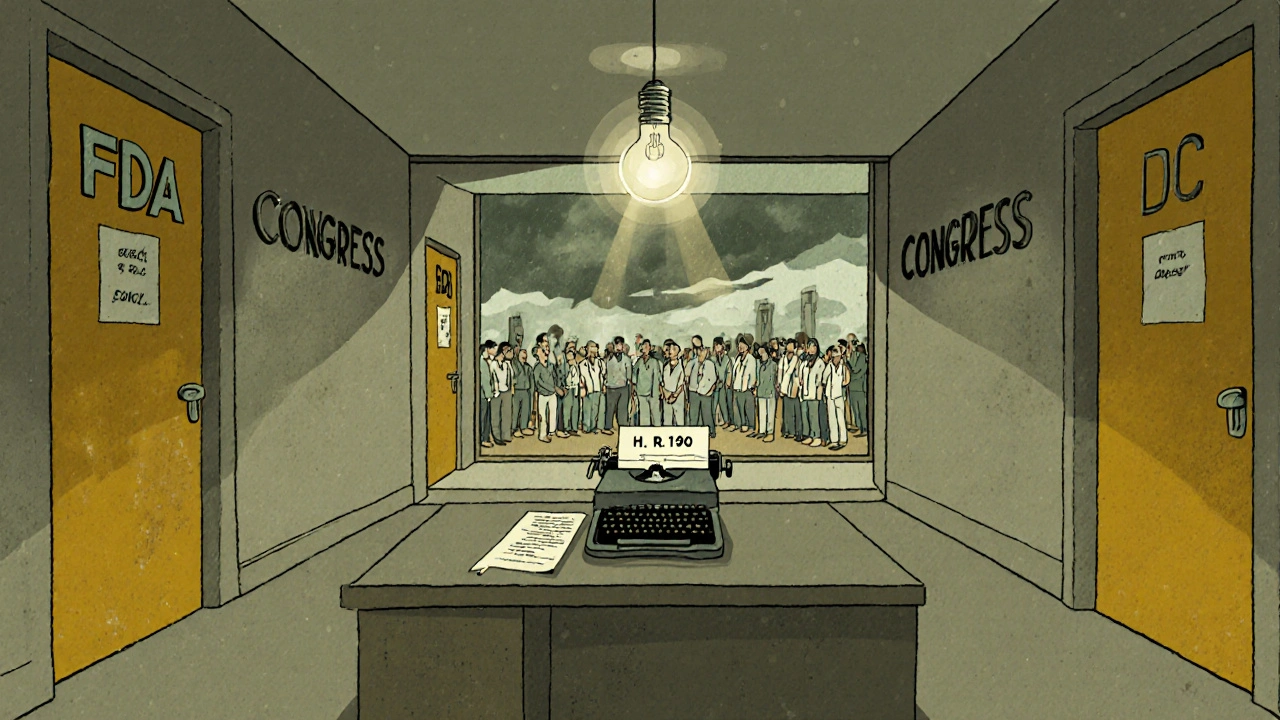
The second bill, Health Care Provider Shortage Minimization Act of 2025 (H.R.1160), takes a different approach. While S.2665 targets medicines, H.R.1160 targets people. There are currently 122 million Americans living in areas with not enough primary care doctors, nurses, or pharmacists. This bill is meant to fix that - but here’s the problem: no one knows how. The full text hasn’t been released. No committee has been assigned. No cost estimate exists. All we have is the title.
Why One Bill Has More Clarity Than the Other
S.2665 is detailed in its intent. It’s tied to the existing Federal Food, Drug, and Cosmetic Act. It would build on the FDA’s Drug Shortage Portal - a tool already used by hospitals to track availability. Experts agree: early warning systems work. In 2022, a voluntary pilot program between the FDA and three major generic drugmakers reduced critical shortages by 32% over 18 months. S.2665 would make that mandatory.H.R.1160? Nothing. No sponsors listed beyond the bill number. No public hearings. No press releases. Even the American Medical Association, which has been screaming about workforce shortages for years, says only 12% of its members even knew the bill existed. That’s not a policy - it’s a placeholder.
The Shutdown That Stopped Everything
The biggest threat to both bills isn’t opposition. It’s silence. Since October 1, 2025, the U.S. government has been shut down - the longest in history. Over 800,000 federal workers are furloughed. The FDA can’t process new applications. The CDC can’t update data. The Drug Shortage Portal? It’s glitching. No one’s there to fix it.Even if S.2665 passes tomorrow, it needs FDA staff to implement it. Who’s going to train manufacturers? Who’s going to monitor compliance? Who’s going to respond when a company says, “We’re seeing a 40% jump in demand for epinephrine”? Right now, no one. The shutdown isn’t just delaying legislation - it’s erasing the capacity to act on it.

Who’s Really Affected?
It’s not just hospitals. It’s you. A 68-year-old with congestive heart failure who can’t get furosemide? Her doctor switches her to a less effective diuretic - and her swelling gets worse. A child with leukemia who needs vincristine? The hospital has to split doses. A diabetic who can’t get insulin because the distributor ran out? They’re forced to ration their last vial.According to the American Hospital Association, 98% of U.S. hospitals reported at least one critical drug shortage in the third quarter of 2025. The same report found that 43% of those shortages lasted over 90 days. That’s not a glitch. That’s a pattern. And it’s getting worse. Generic drug manufacturers - who produce 90% of the nation’s medicines - say 63% of shortages come from manufacturing delays, not lack of demand. That’s why S.2665’s notification rule matters: if you know a plant is about to shut down for maintenance, you can plan ahead.
Why This Isn’t Just About Money
Some think the answer is more funding. But the problem isn’t lack of cash - it’s lack of control. The federal budget deficit hit $1.74 trillion in the last fiscal year. Congress is debating cutting $7.9 billion from foreign aid and $1.1 billion from public media. But they won’t touch the $45 million a year needed to run S.2665 properly.That’s not a funding issue. That’s a priority issue. The Drug Shortage Prevention Act doesn’t need a new bureaucracy. It needs a simple rule: tell us when you’re running low. That’s it. The technology exists. The data systems exist. The FDA already tracks shortages. All it needs is a legal nudge.
H.R.1160? It could be transformative - if it had details. Imagine a program that pays medical students to work in shortage areas for five years in exchange for tuition forgiveness. Or expands telehealth licensing across state lines. Or funds nurse practitioner training in rural counties. Those are real solutions. But without a bill text, they’re just ideas.
What Happens If Nothing Changes?
The American Association of Medical Colleges projects a shortage of 124,000 physicians by 2034. If we don’t fix the pipeline now, we’ll be facing this crisis on two fronts: not enough drugs, and not enough people to give them.Right now, the only thing moving faster than the shortage list is the political gridlock. The proposed continuing resolution to keep the government open through January 30, 2026, doesn’t mention drug shortages once. Not once. The Senate Republicans who wrote it didn’t see it as a priority. Neither did the House.
Without action, the next time a child needs an antibiotic and the pharmacy has none - or a cancer patient’s chemo gets delayed - the blame won’t fall on a manufacturer. It won’t fall on the FDA. It’ll fall on Congress. And the public will remember who did nothing while people suffered.
What Can You Do?
You can’t pass a bill. But you can make your voice heard. Call your representative. Ask: “Where is H.R.1160? What’s in it? Why isn’t it moving?” Demand to know what’s in S.2665 - because if you can’t read the bill, you can’t support it. Share hospital stories. Post on social media. Tell your doctor you’re worried. The more pressure there is, the harder it is for Congress to ignore.This isn’t about politics. It’s about survival. And right now, the system is failing.
What is the Drug Shortage Prevention Act of 2025?
The Drug Shortage Prevention Act of 2025 (S.2665) is a Senate bill that would require pharmaceutical manufacturers to notify the FDA as soon as they anticipate increased demand or supply disruptions for critical drugs. The goal is to give regulators time to respond before patients are left without essential medications. It amends the Federal Food, Drug, and Cosmetic Act and focuses on early warning, not new funding.
Why is H.R.1160 so mysterious?
H.R.1160, the Health Care Provider Shortage Minimization Act of 2025, has no publicly available text, no sponsors listed beyond the bill number, and no committee assignment. While its title suggests it addresses workforce shortages in medicine, experts can’t evaluate its impact because the details haven’t been released. It remains in legislative limbo.
How many drugs are currently in short supply?
As of October 1, 2025, the FDA listed 287 drugs in shortage, with 47% classified as critical - meaning they’re used to treat life-threatening conditions like cancer, heart disease, or severe infections. Many of these are generic drugs, which make up over 90% of U.S. prescriptions.
Is the government shutdown affecting drug shortages?
Yes. The ongoing shutdown - now the longest in U.S. history - has furloughed thousands of FDA workers responsible for monitoring drug supply chains and updating the Drug Shortage Portal. Without staff, even well-intentioned laws like S.2665 can’t be implemented. The system is already degraded, and the longer the shutdown lasts, the harder it will be to recover.
What percentage of hospitals are affected by drug shortages?
According to the American Hospital Association’s October 2025 report, 98% of U.S. hospitals experienced at least one critical drug shortage in the third quarter of 2025. Many reported multiple shortages affecting emergency care, surgery, and cancer treatment.
What’s causing most drug shortages?
The Association for Accessible Medicines reports that 63% of current shortages are caused by manufacturing delays - not lack of demand. These delays often come from quality control issues, raw material shortages, or production shutdowns at overseas facilities. S.2665 targets this by requiring early notification, giving regulators time to intervene.
How many Americans live in areas with too few healthcare providers?
As of September 2025, 122 million Americans live in federally designated Health Professional Shortage Areas (HPSAs), where there aren’t enough primary care doctors, dentists, or mental health providers to meet basic needs. Rural and low-income urban communities are hit hardest.
Will these bills become law?
Right now, it’s unlikely. The government shutdown has frozen nearly all non-essential legislation. Without a resolution by January 30, 2026 - the deadline in the proposed continuing resolution - both bills will expire with the end of the 119th Congress. They would need to be reintroduced in January 2027, delaying any action by over a year.
Gus Fosarolli
November 28, 2025 AT 08:33Meanwhile, H.R.1160 is just a title with a LinkedIn profile. No text? No sponsors? Just vibes and a dream. I’m starting to think the real shortage is of competent adults in D.C.
Evelyn Shaller-Auslander
November 29, 2025 AT 12:27Benedict Dy
November 29, 2025 AT 18:39Emily Nesbit
November 30, 2025 AT 09:00John Power
December 1, 2025 AT 18:50Let’s stop arguing about bills and start funding people. We need more nurses. More pharmacists. More damn staff.
Richard Elias
December 1, 2025 AT 23:17Scott McKenzie
December 2, 2025 AT 01:16S.2665? YES. It’s simple. It’s smart. It’s doable.
But the shutdown? That’s the real killer. No one’s at the FDA to even read the notices. Imagine sending a smoke alarm to a house where no one’s home.
Let’s get the lights back on first. Then we can fix the wiring. 💡
Jeremy Mattocks
December 2, 2025 AT 12:30Paul Baker
December 3, 2025 AT 19:46we could fix this in a year
but nah lets just keep watching ppl suffer while congress takes a vacation
Zack Harmon
December 4, 2025 AT 11:34287 drugs gone. Kids getting half doses. Grandmas on expired heart pills.
And the Senate? They’re debating whether to fund a new statue of a senator who died in 1987.
THIS IS NOT GOVERNMENT. THIS IS A TOMB.
WE ARE DYING BECAUSE THEY’RE TOO LAZY TO TYPE A BILL.
Jeremy S.
December 5, 2025 AT 04:24Jill Ann Hays
December 6, 2025 AT 15:10Mike Rothschild
December 7, 2025 AT 10:41And H.R.1160? If it’s just a title, then it’s not a bill - it’s a political mirage. We need real solutions: loan forgiveness for rural providers, telehealth portability, nurse training grants. Not buzzwords.