
Why Your Generic Drug Price Isn't What You Think It Is
You walk into a pharmacy to pick up your prescription. The pharmacist tells you there is a generic available. You expect it to be cheap. But when you look at the receipt, the price might still sting-or maybe it’s surprisingly low. Why? Because not all generics are created equal in terms of market power.
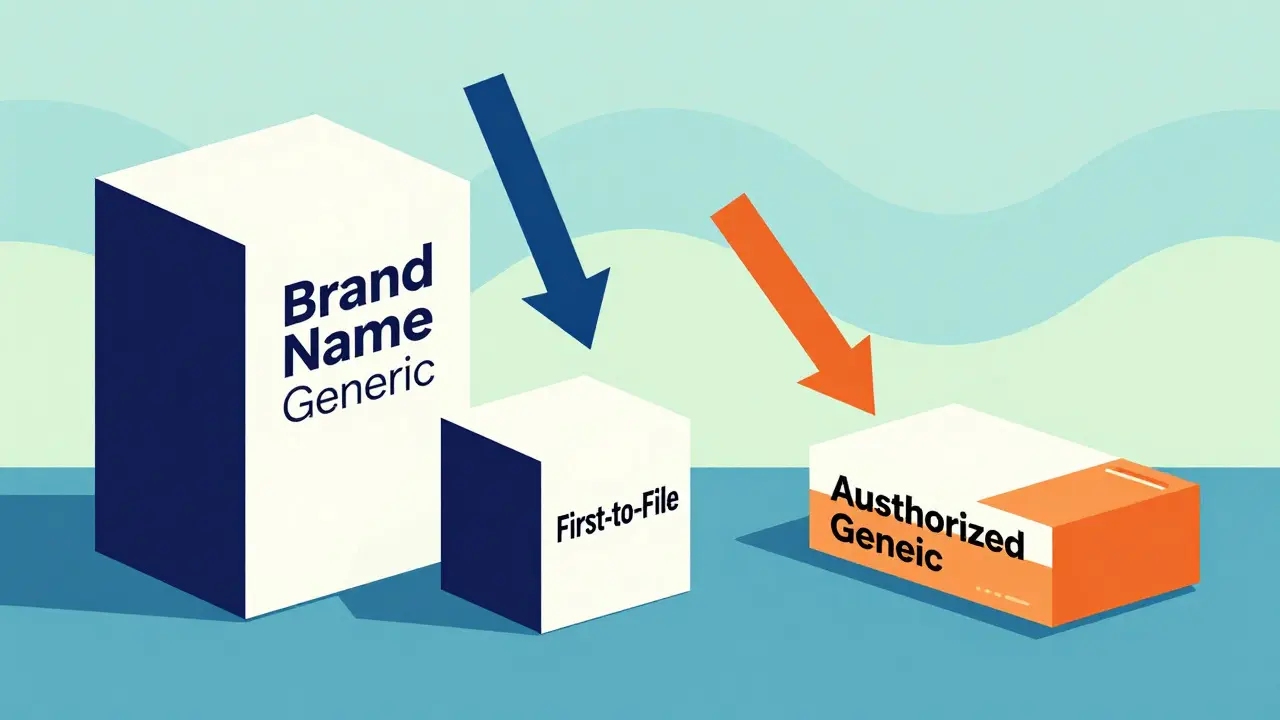
The biggest factor driving that final number isn’t just the cost of making the pill. It’s who is selling it and who else is in the room competing for your business. Specifically, we need to look at two players: the first-to-file generic, which is the manufacturer that was first to submit an Abbreviated New Drug Application (ANDA) and receives 180 days of exclusivity, and the authorized generic, which is a brand-name drug sold without the brand label, typically by the original manufacturer or their licensee.
This isn’t just academic nitpicking. The presence or absence of an authorized generic can swing prices by single-digit percentages that add up to millions for insurers and hundreds for patients. Let’s break down the real cost differences between these two scenarios.
Understanding the Players: ANDA vs. NDA
To understand the price war, you have to understand the rules of the arena. These rules were largely set by the Hatch-Waxman Act of 1984. This law created a balance: it gave brand-name drugs patent protection but also created a shortcut for generics to enter the market via an Abbreviated New Drug Application (ANDA).
The first company to file this ANDA gets a huge reward: 180 days of marketing exclusivity. During this window, they are the only traditional generic allowed to sell the drug. This is the "first-to-file" generic. They have a temporary monopoly on the generic version.
But here is the loophole. The brand-name company holds the original New Drug Application (NDA). They don’t need an ANDA. So, if they want to compete with their own generic challenger during those 180 days, they can launch an "authorized generic." It is chemically identical to the brand name, made by the same people, but sold under a plain white bottle or a different name.
This creates two distinct market structures:
- ANDA-only markets: Only the first-to-file generic is competing against the brand.
- ANDA+AG markets: The first-to-file generic is competing against both the brand AND the authorized generic.
The difference in pricing between these two structures is stark.
Retail Prices: What You Pay at the Counter
If you are paying out of pocket or looking at the cash price before insurance kicks in, the entry of an authorized generic makes a noticeable dent in costs. The Federal Trade Commission (FTC) has studied this extensively. In their analysis of 95 drugs, they found clear patterns.
In an ANDA-only market-where the first-to-file generic is the sole competitor to the brand-the retail price paid to pharmacies drops to about 14% below the corresponding brand-name price. That sounds like a saving, but it’s modest. You’re still paying close to what the brand charges.
Now, introduce an authorized generic into that mix. In an ANDA+AG market, that discount jumps to approximately 18% below the brand price. That extra 4 percentage points might sound small, but in the world of high-cost specialty drugs, it represents significant savings. The FTC’s 2013 report reinforced this, noting that authorized generic competition during the 180-day exclusivity period leads to retail generic prices that are 4% to 8% lower than they would be without that competition.
So, if you are watching your wallet closely, the presence of an authorized generic is generally good news for short-term affordability. It forces the first-to-file generic to lower its prices to keep customers from switching to the brand-backed alternative.
Wholesale Costs: What Pharmacies and Insurers Pay
The story gets even more interesting when we look at wholesale acquisition costs (WAC). This is what pharmacies pay to buy the drug from distributors, and it forms the basis for what many insurers reimburse. Here, the impact of authorized generics is much sharper.
| Market Type | Retail Discount vs Brand | Wholesale Discount vs Brand |
|---|---|---|
| ANDA-Only (First-to-File Only) | ~14% | ~20% |
| ANDA+AG (With Authorized Generic) | ~18% | ~27% |
As the table shows, in an ANDA-only market, the wholesale cost is about 20% below the brand price. But when an authorized generic enters, that wholesale discount widens to 27% below the brand price. That is a 7 percentage point jump. For large health systems and insurance plans buying millions of units, this difference is massive.
The FTC’s 2013 report quantified this further, stating that wholesale generic prices drop by 7% to 14% lower in the presence of authorized generic competition compared to scenarios without it. This suggests that authorized generics are particularly effective at squeezing margins at the wholesale level, likely because they signal to the market that the brand manufacturer is willing to aggressively defend its territory, forcing the first-to-file generic to cut deeper to survive.
The Impact on First-to-File Revenues
If authorized generics are great for consumers and insurers, who loses? The answer is obvious: the first-to-file generic manufacturer. They signed up for 180 days of exclusivity expecting to capture the bulk of the generic market share. When an authorized generic launches, that expectation shatters.
The revenue hit is severe. According to the FTC, authorized generic competition reduces the first-filer’s revenues by 40% to 52% during the exclusivity period. Imagine working hard to win a contract, only to have the client’s former partner show up and steal half your business on day one. That is the reality for these generic firms.
And the pain doesn’t stop after the 180 days. The FTC documented that this revenue impact persists for 30 months following the exclusivity period. Once patients switch to the cheaper authorized generic or become accustomed to the lower price point, it is hard for the first-to-file generic to regain its footing, even after the authorized generic leaves or other competitors enter.
This raises a critical question: Does this financial penalty discourage companies from filing ANDAs in the first place? If the prize is cut in half, why bother challenging the patent?
Does Competition Kill Innovation Incentives?
This is the central debate in pharmaceutical policy. Critics argue that authorized generics undermine the Hatch-Waxman Act’s incentive structure. If the 180-day exclusivity period-which Dr. Robin Feldman, a pharmaceutical policy expert, notes can be worth "several hundred million dollars"-is devalued by brand manufacturers launching their own generics, then fewer companies will challenge patents. Fewer challenges mean brand drugs stay off-patent longer, keeping prices high for everyone.
However, the data doesn’t support this fear. The FTC’s comprehensive analysis found no evidence that authorized generic competition measurably reduced the number of patent challenges by generic firms. Companies are still lining up to file ANDAs. The potential profit, even if halved, is still substantial enough to justify the risk and cost of litigation.
Furthermore, the FTC concluded that "consumers benefit and the healthcare system saves money during the 180-day exclusivity period when an AG enters the market." The short-term price suppression outweighs the theoretical long-term risk to innovation incentives. There is also no evidence that authorized generics charge higher prices than other generics over time, allaying concerns that they are less aggressive competitors.
Long-Term Market Dynamics: Beyond 180 Days
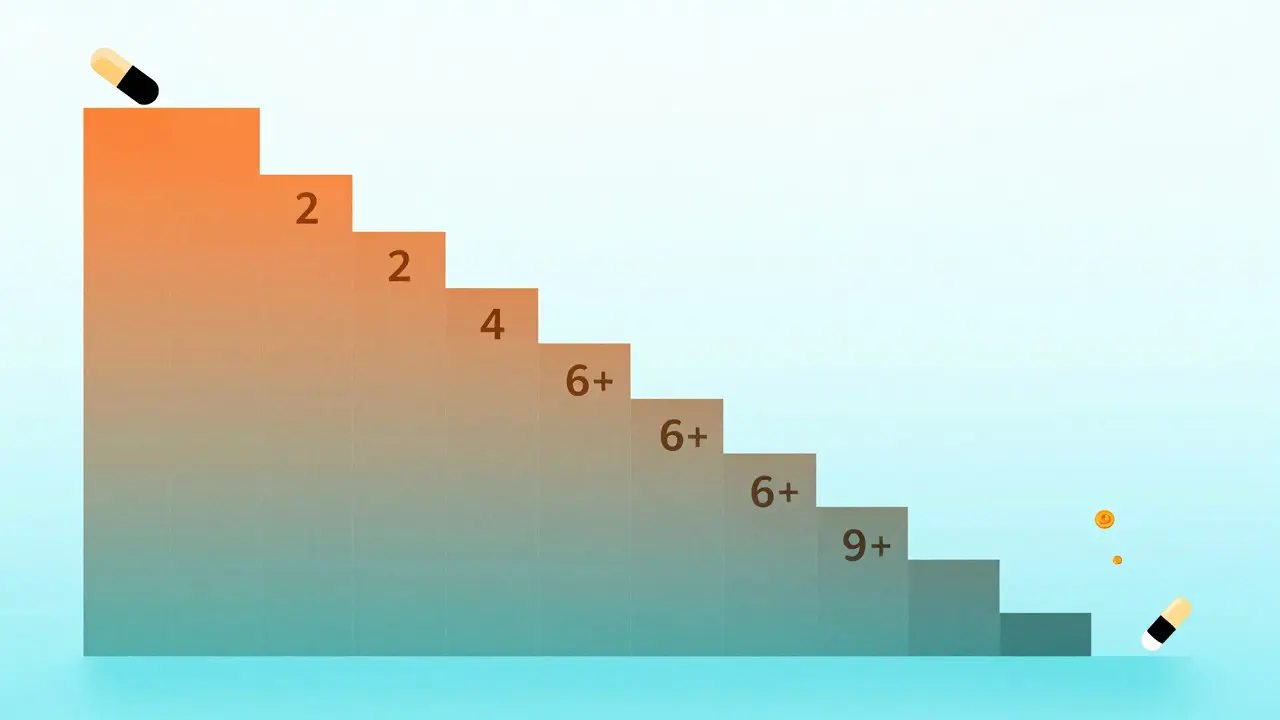
The 180-day window is just the beginning. As more competitors enter the market, prices continue to fall. The FDA’s 2019 analysis provides a clear trajectory of how prices erode as competition intensifies.
- Single Generic (First-to-File): Average Manufacturer Price (AMP) is 39% lower than the brand AMP.
- Two Competitors (First-to-File + AG): AMP drops to 54% lower than the brand.
- Four Competitors: AMP falls to 79% lower than the brand.
- Six or More Competitors: Price reductions exceed 95% compared to brand prices.
This progression highlights that while authorized generics provide an early boost to competition, the real price collapse happens when multiple traditional generics enter the fray. Health Affairs research published in 2023 noted that generic drugs average about 70% less than pre-generic brand-name prices within five years of the first entry. By then, the specific dynamics of authorized vs. first-to-file matter less; the market is simply flooded with low-cost options.
However, not all authorized generics stick around. Research published in Health Affairs in July 2023 showed that approximately 20% of authorized generics launched between 2010 and 2014 had no sales in Medicare data after five years. This suggests that for some brands, launching an authorized generic is a tactical move to disrupt the first-to-file’s momentum rather than a long-term sales strategy.
Regulatory Scrutiny and Future Outlook
The landscape is shifting. The FTC remains vigilant. Commissioner Alvaro Bedoya emphasized in 2022 that the agency is watching for anti-competitive practices. The Supreme Court’s 2013 decision in FTC v. Actavis made it harder for brand and generic companies to settle patent disputes in ways that delay generic entry. This legal pressure might influence how often brands choose to launch authorized generics as part of settlement deals.
Additionally, regulatory efficiency is changing the calculus. The FDA’s Generic Drug User Fee Amendments (GDUFA), reauthorized in 2022, have sped up approval timelines. First-cycle approval rates jumped from around 20% to 66%, cutting time to market by about 13 months and reducing costs for applicants by $3.5 million. Faster approvals mean more generics enter sooner, potentially diluting the unique advantage of both first-to-file and authorized generics even faster.
For patients and providers, the takeaway is clear. The presence of an authorized generic is a sign of active competition that drives down prices immediately. While it hurts the profits of the first-to-file generic manufacturer, it does not appear to slow down the overall pipeline of new generic entries. The system, despite its complexities, continues to deliver lower costs as competition increases.
Are authorized generics cheaper than first-to-file generics?
Yes, typically. The introduction of an authorized generic forces the first-to-file generic to lower its prices to remain competitive. Studies show that in markets with authorized generics, retail prices are 4-8% lower and wholesale prices are 7-14% lower compared to markets with only a first-to-file generic.
What is the difference between an authorized generic and a first-to-file generic?
An authorized generic is produced by the original brand-name manufacturer (or their licensee) and sold without the brand name. A first-to-file generic is produced by a different company that was the first to file an Abbreviated New Drug Application (ANDA) and receives 180 days of exclusive marketing rights.
Do authorized generics reduce the incentive for companies to challenge patents?
According to the Federal Trade Commission (FTC), no. While authorized generics significantly reduce the revenues of first-to-file manufacturers during the 180-day exclusivity period, empirical analysis has found no measurable reduction in the number of patent challenges filed by generic firms.
How much do prices drop when multiple generics enter the market?
Prices drop dramatically as competition increases. With a single generic, prices are about 39% lower than brand. With two competitors, they drop 54%. With four competitors, they are 79% lower. With six or more competitors, prices can fall by more than 95% compared to the brand name.
What is the Hatch-Waxman Act's role in generic pricing?
The Hatch-Waxman Act of 1984 established the framework for generic drug approval via ANDAs and granted 180 days of market exclusivity to the first company to file an ANDA for a given drug. This exclusivity is designed to incentivize generic manufacturers to challenge brand-name patents, ultimately lowering drug costs.