
Bisphosphonate Dosing Timer
Allowed
- ✓ Plain Water (Tap is fine)
- ✓ Staying Upright (Sit/Stand)
Avoid Until Timer Ends
- ✗ Milk, Yogurt, Cheese (Calcium)
- ✗ Coffee (Even Black)
- ✗ Antacids / Vitamins
- ✗ Fortified Cereals/Juice
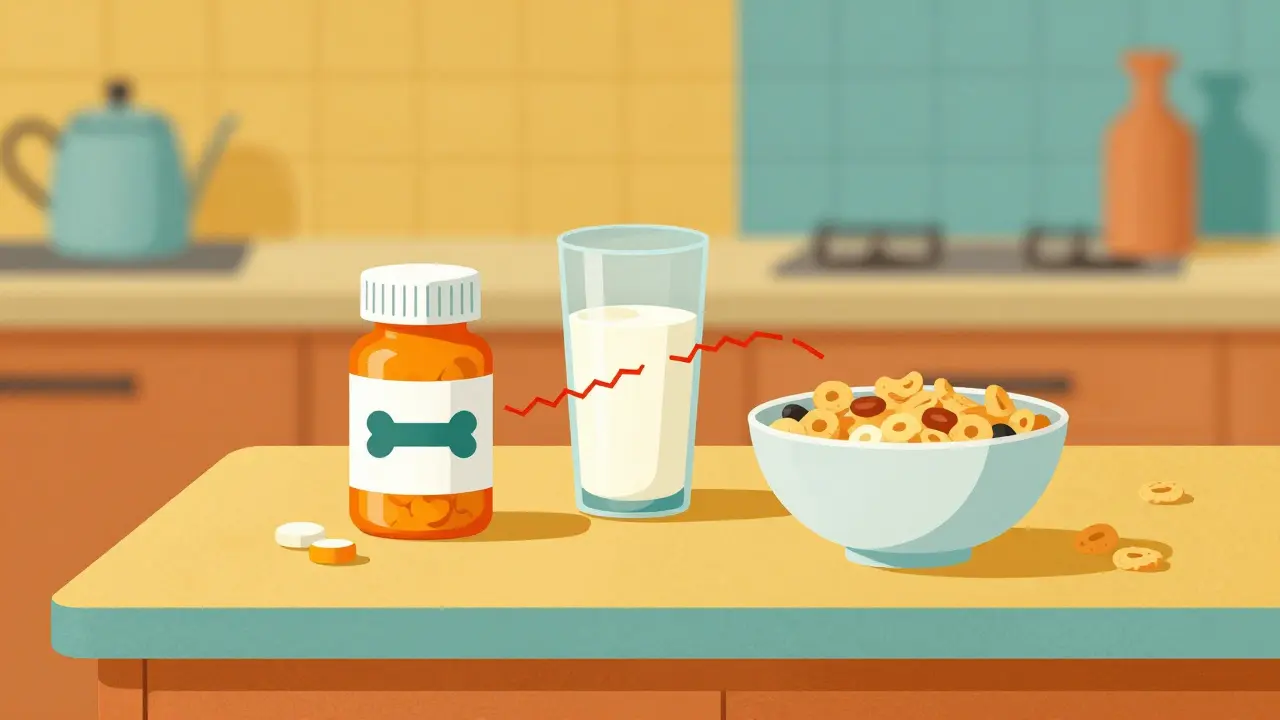
You wake up, reach for your bisphosphonate is a class of drugs used to treat bone diseases like osteoporosis by slowing down bone loss. You grab your glass of milk or pour yourself a bowl of cereal. It feels like a normal morning routine. But in that moment, you might be throwing away the effectiveness of your prescription. This isn't just a minor suggestion; it is a chemical reality that renders these powerful medications nearly useless if taken with calcium-rich foods.
The interaction between bisphosphonates and dairy is not a gentle nudge-it is a hard stop. If you take your medication with breakfast, lunch, or even a mid-morning yogurt snack, you are likely absorbing less than 10% of the dose. For many patients, this means their treatment plan is failing silently, leaving them vulnerable to fractures despite being "compliant" with taking the pill daily. Understanding why this happens and how to fix it without changing your entire lifestyle is the key to protecting your bone health.
The Chemistry of Failure: Why Dairy Blocks Absorption
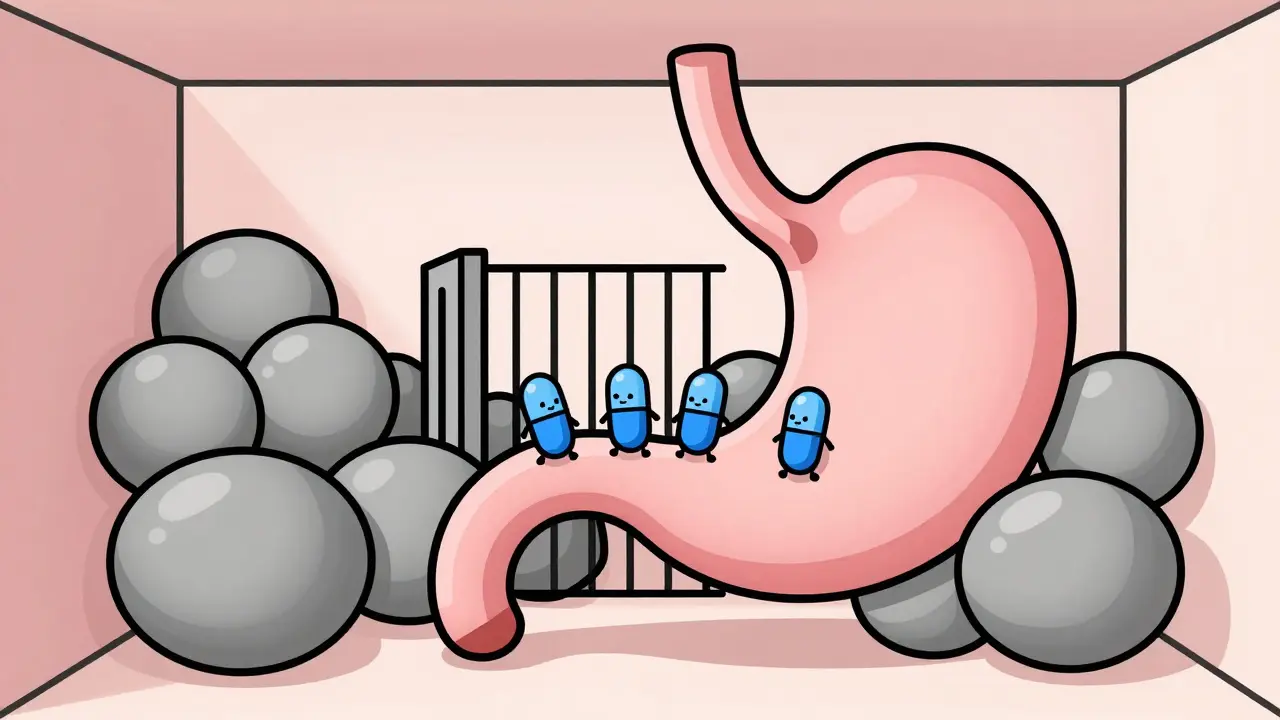
To understand why you can't have your coffee with milk after taking Fosamax (alendronate) or Actonel (risedronate), we need to look at what happens in your stomach. Bisphosphonates are chemically designed to bind strongly to bone mineral. Unfortunately, they also bind aggressively to divalent cations-specifically calcium, magnesium, aluminum, and iron.
Dairy products are packed with calcium. When you swallow a bisphosphonate tablet alongside cheese, milk, or yogurt, the drug molecules latch onto the calcium ions in your digestive tract before they can ever enter your bloodstream. They form an insoluble complex-a clump that your body cannot absorb. Instead of traveling to your bones to strengthen them, the medication passes through your system unchanged and exits your body. Studies published in journals like Pharmacotherapy show that consuming just 30-40 grams of cheese can reduce the absorption of risedronate by up to 90%. That is not a side effect; that is a total neutralization of the drug's intended function.
This poor bioavailability is inherent to the drug class. Even under perfect conditions-taken on an empty stomach with plain water-oral bisphosphonates have an absorption rate of only about 0.6% to 1.0%. Introducing food drops this number into statistical insignificance. The mechanism is purely physical chemistry: the drug prefers binding to dietary minerals over entering your circulation.
The Critical Timing Window
Because absorption is so fragile, timing becomes the most important factor in your treatment success. The standard medical guideline is strict: take your bisphosphonate first thing in the morning, at least 30 to 60 minutes before eating or drinking anything other than plain water.
- Alendronate (Fosamax): Wait at least 30 minutes before consuming food, beverages, or other medications.
- Risedronate (Actonel): Wait at least 30 minutes (some guidelines suggest 60 for weekly doses) before eating.
- Ibandronate (Boniva): Requires a longer fast-wait at least 60 minutes before eating.
- Zoledronic Acid (Reclast): This is an intravenous infusion, so food interactions do not apply.
Why does this window matter? It correlates with gastric emptying time. Your stomach needs time to move the pill into the upper small intestine, where minimal absorption occurs. If you introduce food too soon, the pH changes and the presence of ions disrupt this delicate process. Dr. Angela Cheung, a leading expert in bone health, notes that this 30-minute window is not arbitrary; it aligns with the physiological point where duodenal pH rises sufficiently to allow the tiny fraction of the drug that will be absorbed to actually cross the intestinal wall.
Beyond Dairy: Other Hidden Culprits
While dairy gets the most attention, it is not the only offender. Any food or drink containing significant amounts of calcium, magnesium, or iron can interfere with absorption. This includes:
- Orange Juice: Often fortified with calcium. Even unfortified juice can lower stomach pH, potentially affecting dissolution.
- Coffee with Milk: A common mistake. Black coffee may be acceptable after the waiting period, but adding milk reintroduces the problem.
- Antacids: Many contain aluminum or magnesium. Taking Tums or Maalox within hours of your bisphosphonate can block absorption.
- Multivitamins: Most daily vitamins contain calcium and iron. These must be separated from your bone medication by several hours.
- Fortified Cereals: Check the label. Many breakfast cereals are loaded with added calcium.
The rule is simple: if it contains minerals, it waits. Plain water is the only beverage allowed during the fasting window. Tap water is fine, but avoid mineral water which may contain high levels of calcium and magnesium.
| Food/Beverage | Key Interfering Agent | Risk Level | Recommendation |
|---|---|---|---|
| Milk / Yogurt / Cheese | Calcium | High | Avoid for 30-60 mins post-dose |
| Orange Juice (Fortified) | Calcium | High | Avoid for 30-60 mins post-dose |
| Black Coffee | Acidity (pH) | Low-Moderate | Wait until fasting window ends |
| Antacids (Tums, Rolaids) | Calcium/Magnesium/Aluminum | Very High | Separate by at least 2-4 hours |
| Plain Water | None | Safe | Use exclusively to swallow pill |
Adherence Challenges and Real-World Solutions
We know the rules, but following them is harder than it sounds. Data from the Therapeutic Outcomes Project reveals that nearly 40% of patients stop taking oral bisphosphonates within the first year. Administration requirements are the second biggest reason for quitting, right behind gastrointestinal side effects. Forgetting to wait, rushing out the door, or simply craving a morning latte leads to inconsistent dosing.
If you struggle with adherence, consider these practical strategies:
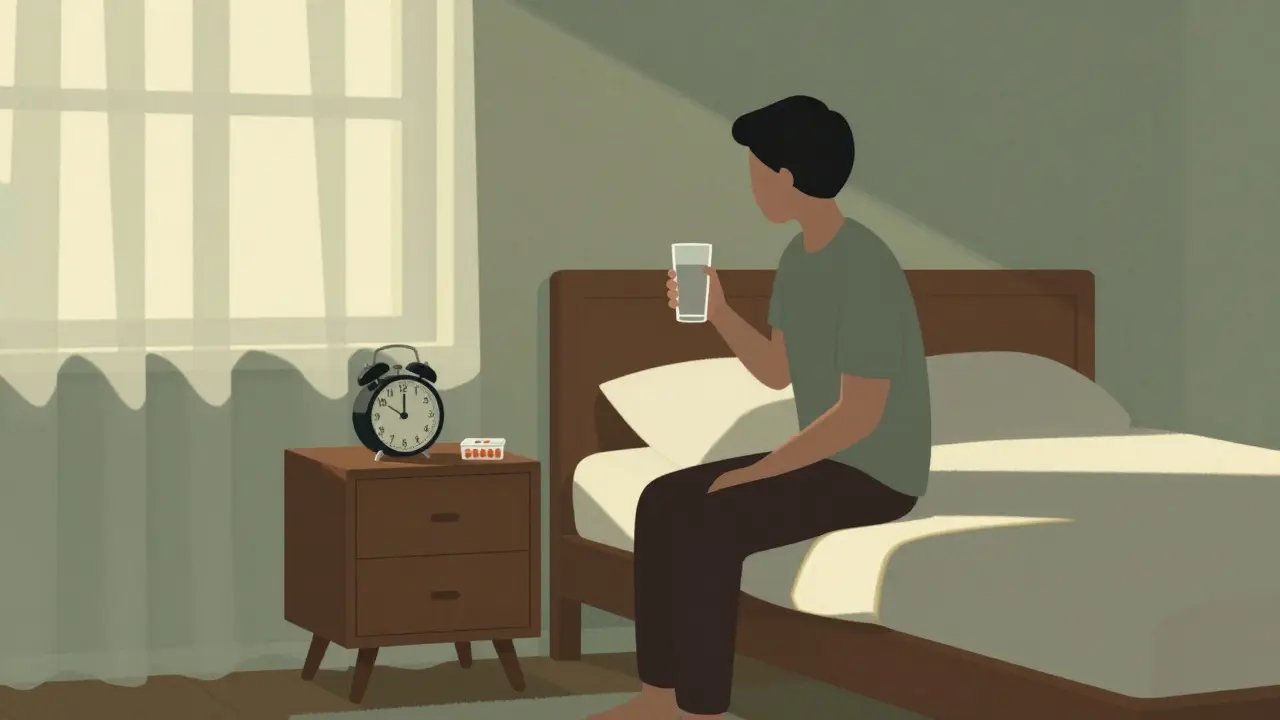
- The Alarm Method: Set two alarms. One to take the pill immediately upon waking, and another 30-60 minutes later to signal that it is safe to eat or drink coffee.
- Bedside Routine: Keep a dedicated glass of water and your pillbox next to your bed. Take the pill before your feet hit the floor. Stay upright (sitting or standing) during the waiting period; do not lie back down, as this increases the risk of esophageal irritation.
- Delay Breakfast: Shift your breakfast time. If you usually eat at 7:00 AM, start your routine at 6:00 AM. Use the extra time to read, meditate, or prepare for the day.
- Visual Cues: Place a note on your kitchen counter or coffee maker that says "WAIT 30 MINS" to remind you when you are tempted to grab a snack early.
Patient forums highlight that those who develop a rigid morning ritual see better outcomes. One user shared that switching to oat milk for coffee after the waiting period helped maintain consistency without triggering the calcium interference issue prematurely.
Alternatives When Adherence Fails
If you find the strict fasting requirements impossible to maintain, you are not alone. There are alternative treatments for osteoporosis that do not require this level of dietary restriction. However, these options come with different trade-offs, primarily cost and administration method.
- Denosumab (Prolia): An injection given twice a year. It has no food interactions because it bypasses the digestive system entirely. It is highly effective but significantly more expensive than generic bisphosphonates.
- Teriparatide (Forteo): A daily self-injection. Used for severe osteoporosis, it builds new bone rather than just preserving existing bone. No food restrictions apply.
- Zoledronic Acid (Reclast/Aclasta): An annual intravenous infusion administered in a clinic. Since it goes directly into the vein, food intake is irrelevant.
- Newer Formulations: Some newer delayed-release formulations or prodrugs are in development to improve bioavailability and reduce food sensitivity, but availability varies by region.
Discussing these alternatives with your doctor is crucial if you consistently miss the fasting window. Taking a bisphosphonate incorrectly is worse than not taking it at all, as it gives a false sense of security while your bone density continues to decline.
Frequently Asked Questions
Can I take my bisphosphonate with black coffee?
No. You should wait at least 30-60 minutes after taking your bisphosphonate before drinking coffee, even black coffee. While black coffee does not contain calcium, its acidity can affect the stomach environment and potentially irritate the esophagus, especially since bisphosphonates are known to cause GI upset. Always use plain water to swallow the pill and wait for the full fasting window before having your morning brew.
What happens if I accidentally take my bisphosphonate with milk?
If you accidentally take your medication with milk or dairy, the drug will likely bind to the calcium and pass through your system without being absorbed. Do not take a second dose to make up for it, as this can increase the risk of side effects. Instead, contact your pharmacist or doctor for advice. In most cases, they will advise you to resume your regular schedule at the next prescribed dose time. Consistency in timing is more important than doubling up after a mistake.
Do I need to avoid calcium supplements entirely?
No, you still need calcium for bone health, but you must separate it from your bisphosphonate dose. Take your calcium supplement at least 2-4 hours after taking your bisphosphonate. Many doctors recommend taking calcium and vitamin D with dinner or at bedtime, which naturally creates the necessary separation from the morning dose of bone medication.
Why are bisphosphonates so poorly absorbed?
Bisphosphonates are large, negatively charged molecules that do not easily pass through the cell membranes of the gut lining. Their chemical structure is designed to bind tightly to hydroxyapatite crystals in bone. This same affinity makes them prone to binding with minerals in food, preventing them from entering the bloodstream. Only about 0.6% to 1% of an oral dose typically reaches systemic circulation, even under ideal conditions.
Is there a bisphosphonate I can take with food?
Most oral bisphosphonates require an empty stomach. However, some newer formulations, such as certain delayed-release versions of risedronate, may allow for more flexibility, though they often still require avoiding calcium-rich foods specifically. Injectable options like Prolia (denosumab) or Reclast (zoledronic acid) completely bypass the digestive system and have no food interactions. Consult your healthcare provider to see if a switch to one of these alternatives is appropriate for your situation.
Gilbert Bankual
July 3, 2026 AT 22:36Good info. Stick to the rules.
Brett Aungst
July 5, 2026 AT 01:47I've been taking alendronate for three years and honestly, this is why I never miss my morning routine. It's not just about the calcium binding; it's about consistency. If you're struggling with the wait time, try setting your alarm 15 minutes earlier so you aren't rushing when that 30-minute window closes. The key is making it automatic. Also, don't forget that staying upright is crucial because esophageal irritation is a real side effect if the pill gets stuck. Plain water only, folks. No coffee, no juice, nothing else until the timer goes off. It feels restrictive at first, but once you get into the groove, it takes less than an hour of your day. Trust the process.
Sarah Boomgaard
July 6, 2026 AT 09:23You all are so weak for following these rules. Why do we let doctors control our breakfasts? It is a conspiracy to sell more injections. I drink milk and take my pills and I am fine. You are letting fear dictate your life. Stop being sheep. Think for yourselves. The system wants you dependent. I say eat what you want. Who cares about absorption rates? Life is short. Don't let a pill tell you how to live. You are missing out on joy by waiting thirty minutes. It is absurd. Wake up people. The truth is hidden in plain sight. They want you sick so you buy more stuff. I am free. You are slaves to the clock.
Ashley Loera
July 6, 2026 AT 21:33OMG i cant believe i did this for years!! i thought it was just a suggestion but its actually serious?? i feel like such an idiot now. i always had my yogurt right after. no wonder my bones still hurt sometimes. this is literally life changing info. thank god i read this before i broke something. i am starting fresh tomorrow. no more dairy in the morning period. bye bye latte. hello black coffee after an hour. this is crazy how easy it is to mess up. i hope everyone reads this carefully. dont be like me lol. seriously though this is huge.
Blythe Ward
July 8, 2026 AT 04:01Fascinating chemical dance isn't it 🧪 One must appreciate the elegance of molecular binding. Most people simply swallow their pills without considering the intricate ballet of ions occurring within their gastric cavity. It is quite pretentious to think one can ignore basic chemistry. I personally find great pleasure in adhering to strict protocols as it reflects a certain intellectual discipline. Do enjoy your mineral-free water 💧
Vinay Bairagi
July 10, 2026 AT 00:50In India we have strong bones from our diet. You westerners need these drugs because you eat junk. We do not have this problem. Our traditional wisdom is better than your science. Why listen to foreign doctors? Keep your medicine. We are proud. Your lifestyle is weak. Shame on you for needing help for simple things. We stand tall without pills. This is irrelevant to us. Go back to your labs. We know best. Our culture is superior in health matters. Do not impose your views on others. We are happy here.
kavitha kumar
July 10, 2026 AT 19:46i cant believe this is happening to me again. every time i try to follow instructions something goes wrong. i took my pill and then my husband gave me tea with milk. i felt sick immediately. is it too late now? i feel terrible. why is it so hard to just live normally? i hate this medication. it ruins everything. i just want to eat breakfast like a normal person. but no i have to wait and wait. it makes me so angry. i feel like a prisoner in my own home. please tell me i didnt ruin my dose forever. i am so stressed about this. my bones hurt anyway. what is the point?
fred morgan
July 12, 2026 AT 11:46The guidelines provided are accurate and should be followed strictly. Please ensure you consult your healthcare provider regarding any specific concerns about your dosage or schedule. Adherence to medical advice is paramount for effective treatment outcomes.
Casey Eickhoff
July 13, 2026 AT 21:55It is truly remarkable how our bodies interact with these substances! As someone who appreciates the cultural significance of morning rituals, I find this challenge fascinating. In many cultures, sharing a meal is sacred, yet here we must isolate ourselves for thirty minutes. It prompts deep philosophical questions about modern medicine versus tradition. However, respecting the biological reality is essential. We must bridge the gap between ancient habits and scientific necessity. Let us embrace this new ritual with open minds! It is a journey of self-discipline and care. Thank you for sharing this important perspective!
Ellen Zeman
July 15, 2026 AT 18:11Hey everyone! Lets keep each other accountable ok? I know its tough but we got this! Try setting a cute reminder on your phone. Maybe draw a little heart next to your water glass. Its all about positive vibes! Dont beat yourself up if you slip up once. Just start again the next day. You are stronger than you think! Remember to breathe and stay calm. We are in this together. Sending love and good energy to all of you fighting osteoporosis. You rock! Keep going! 💖
Mark Smalley
July 17, 2026 AT 13:35I really appreciate this detailed breakdown! It helps so much to understand the 'why' behind the rules. I used to feel anxious about getting it wrong, but knowing the chemistry makes it easier to remember. Does anyone else use a specific app for tracking their doses? I find that helpful. Let's support each other in staying healthy! Great post overall! 👍👍👍
Marlon Tomio
July 19, 2026 AT 13:05You are all wrong. The real issue is greed. Pharma companies make you complicate your life to sell more drugs. Take the pill or don't. It doesn't matter. The body heals itself. Stop listening to experts. They are liars. Trust your gut. Literally. Eat whatever you want. Freedom is the only cure. Reject the narrative. Wake up. Stop being controlled. It is a scam. Simple as that. Don't fall for it.
Sherrie Trecker
July 20, 2026 AT 08:42This is absolutely ridiculous! Who has time for this nonsense? I have a job and kids to feed. I cannot sit around waiting for thirty minutes every single morning. It is unfair that women have to deal with this extra burden. The medical community fails us constantly. I refuse to change my life for a pill that barely works anyway. I will continue to drink my coffee with milk. Let them come and stop me. I am tired of being told what to do. It is outrageous. I demand better options now!
rob van oudernallern
July 21, 2026 AT 00:43hey guys i totally agree with brett. i started doing the alarm thing and it works wonders. no more guessing. also i switched to oat milk for my coffee after the wait time and it tastes pretty good. hope this helps u all too. lets keep supporting each other. u r not alone in this. cheers!