

Waking up to a high blood sugar reading can feel like a personal failure. You ate well yesterday. You took your medication. You didn't binge on sweets. So why is your meter showing 180 mg/dL or higher? If this sounds familiar, you are likely dealing with the dawn phenomenon, which is a natural early-morning surge in blood glucose caused by hormonal changes that prepare the body for wakefulness. It is not your fault, and it is incredibly common. In fact, about half of all people with Type 1 and Type 2 diabetes experience this regularly.
Understanding what happens inside your body between 3:00 a.m. and 8:00 a.m. is the first step to taking back control. This isn't just about random numbers; it's about how your hormones interact with insulin-or lack thereof-to affect your health. Let’s break down exactly why this happens, how to tell it apart from other issues, and practical steps you can take to flatten those morning spikes.
What Is the Dawn Phenomenon?
The dawn phenomenon is a physiological event, not a disease. Every human body goes through a cycle of hormone release in the early morning hours to help you wake up. Around 3:00 a.m., your brain signals the release of counter-regulatory hormones like cortisol, growth hormone, glucagon, and epinephrine. These hormones tell your liver to dump stored glucose into your bloodstream so you have energy to start the day.
In someone without diabetes, the pancreas responds by releasing extra insulin to handle this glucose load, keeping blood sugar stable. But if you have diabetes, your body either doesn’t produce enough insulin (Type 1) or can’t use it effectively (Type 2). The result? That natural glucose surge stays in your blood, leading to hyperglycemia when you check your levels in the morning. Research shows cortisol levels can jump by 50-100% during this window, and growth hormone secretion can rise by up to 500%. Without sufficient insulin to counteract this, your blood sugar climbs steadily until you get out of bed.
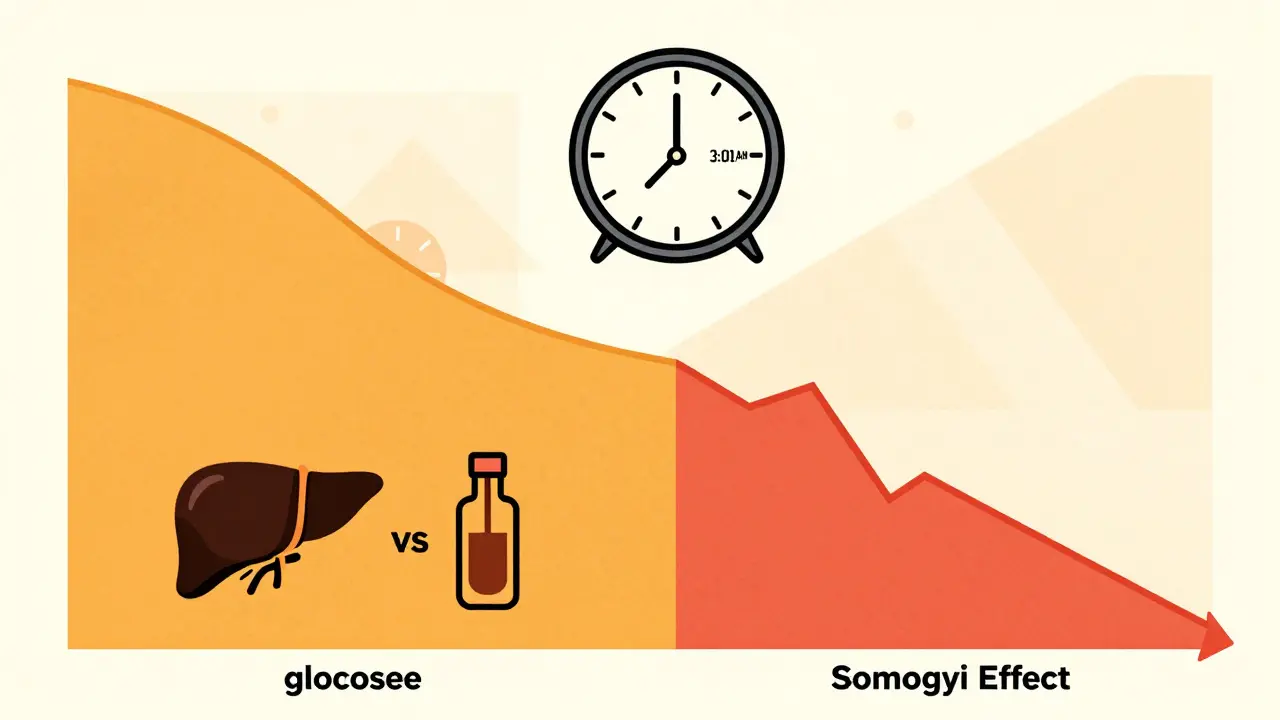
Dawn Phenomenon vs. Somogyi Effect: Know the Difference
Many people confuse the dawn phenomenon with the Somogyi effect, also known as rebound hyperglycemia following nocturnal hypoglycemia. While both result in high morning blood sugar, their causes-and treatments-are completely opposite. Getting this wrong can be dangerous.
| Feature | Dawn Phenomenon | Somogyi Effect |
|---|---|---|
| Cause | Hormonal surge (cortisol, growth hormone) | Rebound from low blood sugar at night |
| 3:00 a.m. Reading | Normal or High (>100 mg/dL) | Low (<70 mg/dL) |
| Trend | Steady rise from 3 a.m. onwards | Dip followed by sharp spike |
| Primary Treatment | Adjust basal insulin or meds timing | Reduce evening insulin or add snack |
To distinguish between them, you need data from the middle of the night. Checking your blood sugar at 3:00 a.m. for three consecutive nights is the gold standard diagnostic method. If your level is below 70 mg/dL, you are likely experiencing the Somogyi effect, meaning your insulin dose might be too high. If your level is above 100 mg/dL and rising, it is the dawn phenomenon. Modern continuous glucose monitoring (CGM) systems like Dexcom G7 or Abbott FreeStyle Libre 3 make this much easier by showing you the trend arrows throughout the night without needing to prick your finger.
Why Managing Morning Spikes Matters
You might think, "It’s only high for an hour before I eat breakfast." But persistent morning hyperglycemia has real consequences. Data from the University of Michigan Health System indicates that uncontrolled dawn phenomenon can increase your HbA1c by 0.5 to 1.2 percentage points. Since every 1% increase in HbA1c correlates with a 21% higher risk of diabetes-related complications, ignoring these morning highs adds up over time.
Beyond long-term risks, waking up with high blood sugar affects your daily quality of life. Symptoms like extreme thirst, fatigue, and blurred vision can set a negative tone for the entire day. For people with Type 1 diabetes, severe cases where blood sugar exceeds 250 mg/dL repeatedly can increase the risk of diabetic ketoacidosis (DKA). Addressing the dawn phenomenon isn't just about better numbers; it's about feeling better and reducing stress.

Actionable Management Strategies
Fixing the dawn phenomenon requires a personalized approach. There is no one-size-fits-all solution, but several evidence-based strategies work well for most people. Start with lifestyle changes before adjusting medications, and always consult your healthcare provider before making significant changes to your insulin regimen.
1. Adjust Your Evening Diet
What you eat for dinner impacts your morning numbers more than you might think. Heavy carbohydrate meals can keep your blood sugar elevated longer into the night. Studies from the Joslin Diabetes Center suggest that reducing evening carbohydrate intake to less than 45 grams can reduce morning glucose spikes by 27%. Try swapping refined carbs for lean proteins and healthy fats. A small bedtime snack containing protein and fat-like a handful of almonds or Greek yogurt-can help stabilize glucose levels without causing a spike.
2. Optimize Sleep Quality
Sleep deprivation increases insulin resistance. Research published in *Sleep Medicine Reviews* shows that poor sleep can raise morning glucose by 15-20 mg/dL. Aim for 7-8 hours of quality sleep. Keep your bedroom cool, dark, and quiet. If you struggle with sleep apnea, getting treated can significantly improve your morning readings, as interrupted breathing stresses the body and triggers more cortisol release.
3. Medication Timing and Dosage
For many, shifting the timing of medications helps. If you take GLP-1 receptor agonists or certain oral medications, taking them in the evening rather than the morning may provide better coverage during the dawn hours. For those on insulin, especially using pumps, increasing the basal rate by 20-30% between 3:00 a.m. and 7:00 a.m. is a common strategy. Automated insulin delivery systems, such as Tandem Control-IQ, have been shown to reduce dawn phenomenon hyperglycemia by nearly 60% by automatically adjusting insulin delivery based on predicted trends.
4. Move Before Bed
Gentle exercise after dinner can help lower blood sugar overnight. A 15-20 minute walk after eating improves insulin sensitivity and helps your muscles use the glucose from your meal. However, avoid intense workouts right before bed, as vigorous exercise can sometimes trigger a stress response that raises blood sugar.
When to See Your Doctor
If you’ve tried dietary and lifestyle changes for 4-6 weeks and still see consistent morning highs, it’s time to talk to your endocrinologist or diabetes educator. They can help you interpret your CGM data and adjust your medication safely. Never increase your insulin dosage on your own to combat morning highs without confirming it’s the dawn phenomenon, as this can lead to dangerous nighttime lows if you’re actually dealing with the Somogyi effect.
Remember, the dawn phenomenon is a normal biological process that becomes problematic only in the context of diabetes. With the right tools and information, you can manage it effectively. You don’t have to accept high morning numbers as inevitable. By tracking your patterns and working with your care team, you can wake up feeling refreshed and in control.
How do I know if I have the dawn phenomenon or the Somogyi effect?
The key difference lies in your blood sugar levels around 3:00 a.m. Check your glucose at this time for three nights. If your reading is below 70 mg/dL, you likely have the Somogyi effect (rebound high from a low). If your reading is above 100 mg/dL and trending upward, you have the dawn phenomenon. Continuous glucose monitors (CGMs) are the best tool for seeing this pattern clearly.
Can diet alone fix the dawn phenomenon?
Diet changes can significantly reduce morning spikes, particularly by lowering evening carbohydrates and adding protein/fat snacks. However, for many people, especially those with Type 1 diabetes or advanced Type 2, medication adjustments are also necessary because the hormonal surge is strong. A combination of diet, sleep hygiene, and medical treatment is usually most effective.
Does exercise help with morning blood sugar spikes?
Yes, gentle exercise like a post-dinner walk can improve insulin sensitivity and help lower blood sugar overnight. Avoid intense workouts right before bed, as they may cause a stress response that raises glucose. Consistency is key; regular physical activity helps manage overall insulin resistance.
Should I increase my bedtime insulin if I have the dawn phenomenon?
Not necessarily. Increasing bedtime insulin blindly can cause dangerous nighttime lows if you misdiagnose the issue. Instead, consider adjusting your basal insulin rates during the early morning hours (3:00 a.m. to 7:00 a.m.) if you use a pump, or discuss timing changes with your doctor. Always confirm the diagnosis with overnight monitoring first.
How does sleep quality affect the dawn phenomenon?
Poor sleep increases cortisol production and insulin resistance, which can worsen the dawn phenomenon. Getting 7-8 hours of quality sleep helps regulate these hormones. Treating underlying sleep issues like sleep apnea can also lead to better morning blood sugar control.