

You might assume that if a medicine is dangerous, the government can just snap its fingers and pull it off every shelf in the country. But the reality is much more complicated. In the United States, the drug recall authority is surprisingly limited. While we often hear that the government "pulled" a drug, the legal truth is that for most pharmaceuticals, the government can't actually force a company to do it. They can only ask nicely-or make the alternative so miserable that the company has no choice but to comply.
This creates a strange gap in public safety. If you're using a medication that's suddenly flagged for contamination, you're relying on a system where the agency in charge of your safety doesn't have the direct statutory power to order a withdrawal. Understanding how this process actually works reveals the tension between corporate autonomy and public health.
The Legal Gap: Request vs. Mandate
To understand why the process is so clunky, we have to look at the Federal Food, Drug, and Cosmetic Act (FD&C Act). This is the primary law governing drug safety. Surprisingly, the Food and Drug Administration (FDA) generally lacks the authority to mandate a pharmaceutical recall. According to data from the NCBI StatPearls, the agency can request that a manufacturer remove a drug, but they cannot legally force them to do so in most cases.
This is a huge point of confusion. Many people believe the FDA has total control, but as Dr. Caleb Alexander from Johns Hopkins University explains, when we say the FDA "pulled" a drug, it's usually a colloquialism. In reality, the manufacturer pulls the drug because the FDA has made it untenable for them to keep it on the market. If a company refuses to budge, the FDA has to go to court. They use Section 304 of the FD&C Act to seek injunctions to stop the manufacturing or distribution of the medicine. It's a legal battle, not a simple administrative order.
Interestingly, this isn't true for everything. If we're talking about medical devices, the rules are different. Under 21 CFR 810, the FDA actually does have the power to order mandatory recalls if a device is likely to cause serious health consequences or death. This creates a weird regulatory asymmetry where a faulty pacemaker can be legally mandated off the market, but a contaminated pill might require a court case.
How Recalls are Classified
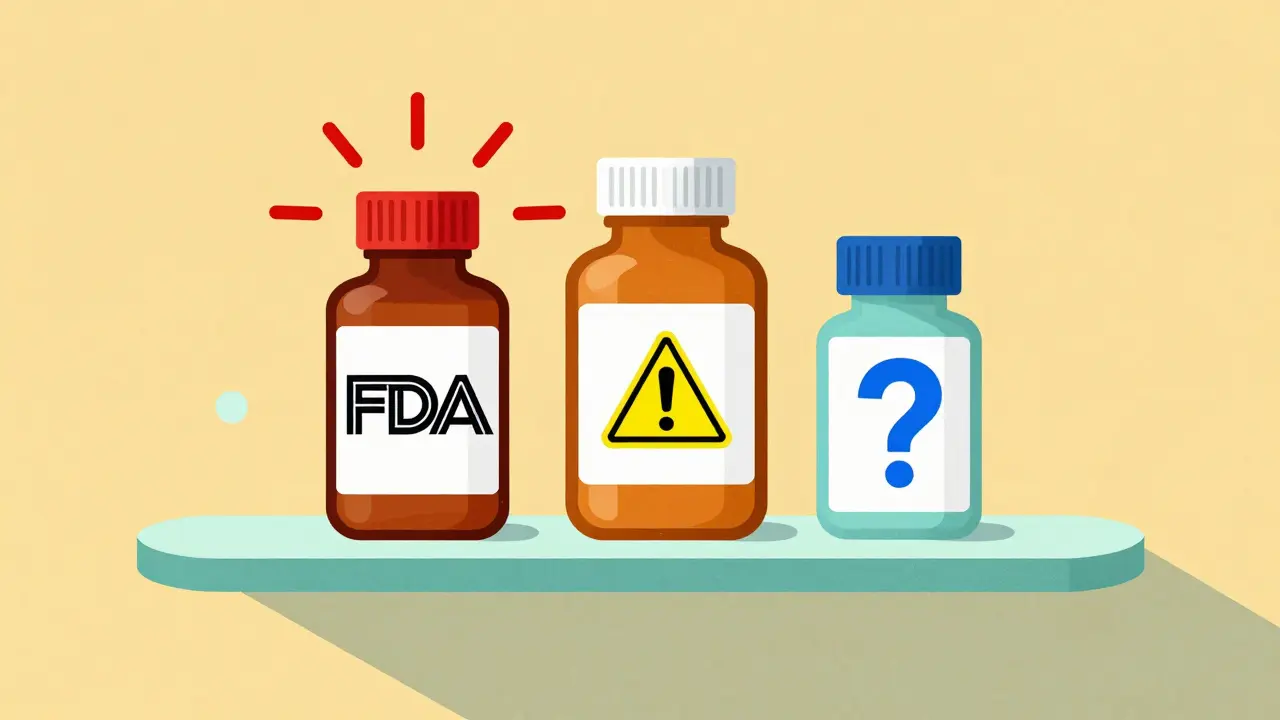
When a recall does happen, it isn't one-size-fits-all. The FDA uses a tier system defined in 21 CFR Part 7 to tell the public and pharmacists how worried they should be. These classifications determine how deep the recall goes-whether they just notify wholesalers or if they need to contact every single patient.
| Classification | Risk Level | Example Scenario | Typical Action |
|---|---|---|---|
| Class I | Critical | Contamination leading to death or permanent injury | Patient-level notification; urgent removal |
| Class II | Moderate | Temporary or reversible health issues | Wholesale/Pharmacy level removal |
| Class III | Low | Labeling errors or packaging defects | Distributor-level correction |
Most recalls-roughly 70%-fall into Class II. These are the "moderate" risks where the problem is reversible. Class I is the nightmare scenario. These require the fastest action, and recent 2023 guidance now requires manufacturers to act within 24 hours of notification, a significant speed-up from the old 72-hour window.
The Trigger: How a Recall Starts
A recall doesn't just happen by accident; it's triggered by specific data. There are two main paths: the company finds the mistake, or the government finds it for them.
- Manufacturer Stability Testing: Companies are required to test their drugs at least once a year. If they find the drug is breaking down or contains impurities, they should start a voluntary recall.
- Post-Marketing Surveillance: This is where the MedWatch program comes in. It's essentially a massive reporting system for adverse events. In 2022 alone, it processed 1.2 million reports. When a spike in side effects appears, the FDA steps in.
Once the decision is made, the company develops a "Recall Strategy." This includes how they'll notify people and how they'll handle returns. The "depth" of the recall depends on the hazard. For a Class I recall, the company can't just tell the pharmacy to stop selling it; they often have to try to reach the patients directly.
Real-World Failure: The Valsartan Case
To see why the lack of mandatory authority is a problem, look at the 2018 valsartan recall. Valsartan is a common blood pressure medication. It was discovered that some batches were contaminated with NDMA, a probable carcinogen. Because the supply chain is global, the process was a mess. The FDA issued alerts in early June, but it took several weeks for all manufacturers to voluntarily comply.
The real bottleneck was in China, where the active pharmaceutical ingredient (API) manufacturers delayed cooperation for 17 days. This gap is exactly what critics like Dr. Sidney Wolfe from Public Citizen argue against. When you're dealing with a carcinogen in a heart medication, 17 days is a lifetime. This case highlighted that while 99% of recalls are voluntary, the 1% that aren't can be catastrophic.
The Struggle for New Powers
There has been a long-running fight in Washington over whether to give the FDA more teeth. The FD&C Modernization Act of 2022 had a section that would have granted mandatory recall authority. It was stripped out during the committee process. Industry groups, like PhRMA, argue that the voluntary system is nearly perfect, citing that only a handful of recalls in a decade actually required enforcement action.
On the other side, public health advocates argue that the risk of "biologics"-complex drugs made from living organisms-is increasing. These are much harder to stabilize and easier to contaminate, making a mandatory recall power more necessary than it was in 1938 when the original Act was written.
What This Means for Patients and Hospitals
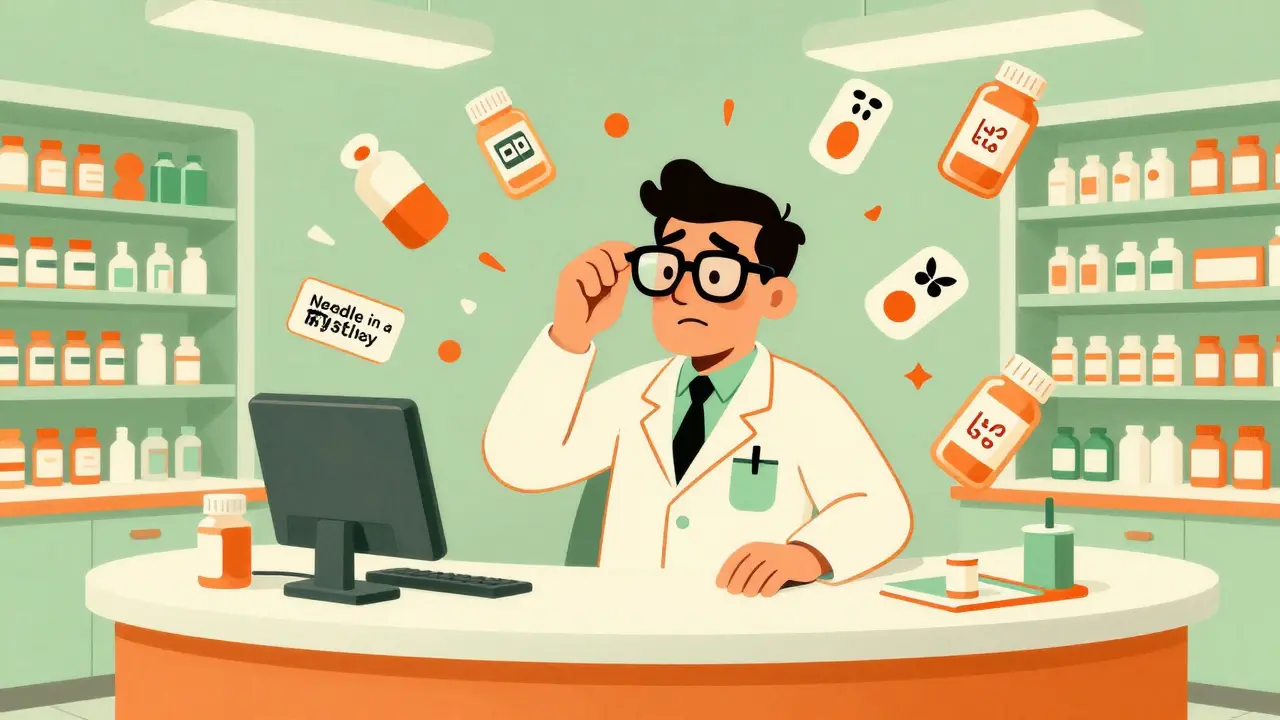
Because the legal process is so fragmented, the burden often falls on the healthcare providers. Hospital pharmacy directors face a logistical nightmare during recalls. According to an ASHP survey, about 68% of these directors struggle to identify affected products because different manufacturers use inconsistent lot numbering systems. Imagine trying to find a needle in a haystack when the needles are all labeled differently.
For a patient, the most important thing is to know that the "voluntary" nature of the recall doesn't necessarily mean it's optional. Most companies comply because the brand damage of refusing an FDA request is far worse than the cost of a recall. However, the delay between a safety signal and a pharmacy alert is where the real risk lies.
Can the FDA legally force a drug company to recall a medication?
Generally, no. Under the Federal Food, Drug, and Cosmetic Act, the FDA does not have the statutory authority to mandate a drug recall. They can request that a company do so voluntarily. If a company refuses, the FDA must seek a court injunction to stop the sale and distribution of the drug. This is different from medical devices, which the FDA can mandate for recall under 21 CFR 810.
What is the difference between a Class I and Class III recall?
A Class I recall is the most serious; it means the product is likely to cause serious adverse health consequences or death. A Class III recall is the least serious, typically involving a defect (like a labeling error) that is unlikely to cause any adverse health effects. Class II falls in the middle, where effects are temporary or remote.
How does the MedWatch program help with drug recalls?
MedWatch is the FDA's post-marketing surveillance system. It allows healthcare professionals and consumers to report adverse events. When the FDA sees a pattern of dangerous side effects through these reports, they can initiate an investigation that leads to a recall request.
Why do some recalls take so long to complete?
Delays often happen because of global supply chains. If the contamination occurs at an international API (Active Pharmaceutical Ingredient) site, coordinating with foreign regulators and manufacturers can take weeks. Additionally, inconsistent lot numbering makes it hard for hospitals to find every affected bottle.
What should I do if my medication is recalled?
First, check the recall class. For Class I recalls, contact your doctor immediately. Do not stop taking a critical medication without medical supervision, as the risk of stopping the drug could be higher than the risk of the recall. Your pharmacist can help you determine if your specific lot number is affected.
Dale Kensok
April 26, 2026 AT 10:09The systemic inertia inherent in the FD&C Act is a textbook example of regulatory capture. We're essentially operating under a paradigm of corporate hegemony where the state's nominal oversight is merely a performative gesture. This asymmetry between medical devices and pharmacopeia is an ontological absurdity that prioritizes profit margins over biological viability. It's practically comical how the legal infrastructure is designed to maintain this status quo while the plebeians just hope their blood pressure meds aren't carcinogenic. Truly a masterpiece of bureaucratic incompetence.
prince king
April 27, 2026 AT 10:49Wow, it's wild to think about how much trust we put in these systems! 😱 It really makes you ponder the balance between corporate freedom and our collective well-being. Thanks for shedding light on this! ✨
Timothy Brown
April 27, 2026 AT 16:32Basically, we're just paying these companies to gamble with our lives. Absolute joke.
Sharon Mathew
April 29, 2026 AT 06:40Oh please! As if the voluntary system isn't already a complete disaster! The drama of calling it a "request" is just a fancy way of saying the government is terrified of Big Pharma! It's absolutely scandalous that we even pretend this is a functioning safety net!
Kevin Taggart
April 29, 2026 AT 07:43so the fda can't actually stop them? thats crazy... lol
Amber McCallum
May 1, 2026 AT 00:49This is just how the world works. Money always wins and people are too blind to see it. Simple as that.
Justin Crice
May 2, 2026 AT 00:29The discrepancy regarding 21 CFR 810 is particularly concerning given the high risk of implantable electronics. One must consider the pharmacovigilance implications when the API is sourced globally, creating an opaque supply chain that complicates the attribution of contamination.
Jonathan Hall
May 3, 2026 AT 12:11I honestly believe that if we just sat down and looked at this from a global perspective, we'd realize that the American system is just one of many flawed attempts to regulate an industry that is fundamentally designed to make a profit even if it means some people get hurt in the process, and while I hate to be the one to say it, the aggressive lobbying from groups like PhRMA is exactly why our laws are stuck in 1938 while our medicine is in 2024, which is just a tragedy for everyone involved.
Peter Minto
May 5, 2026 AT 11:45Who cares if the fda is weak? The companys do the work anyway! Stop whining about laws and just trust the American industry to fix its own mess!
Kat G
May 6, 2026 AT 02:28The information about the class system is helpful. It is good to know that Class I is the most urgent.
Darrin Oneto
May 7, 2026 AT 03:18That valsartan mess was a real clusterfu.. if you know what I mean. Just total chaos.
Jean Robert
May 7, 2026 AT 11:32It's definitely a lot to take in, but I think it's wonderful that we're starting to have these conversations about transparency and safety, and even though the system seems broken, there are so many hardworking people in pharmacy and medicine trying their best to protect us every single day, so we should try to keep a bit of hope that the legislation will eventually catch up to the needs of the patients.
Thomas Jorquez
May 9, 2026 AT 07:26The lott numbering issue is a real mess for hospitls. Its just not efficent.
Michael Yoste
May 10, 2026 AT 23:43It's honestly so sad that you're all just now realizing the government doesn't actually protect you. I've been saying this for years and it's just heartbreaking to see people still so shocked by the reality of the system!