
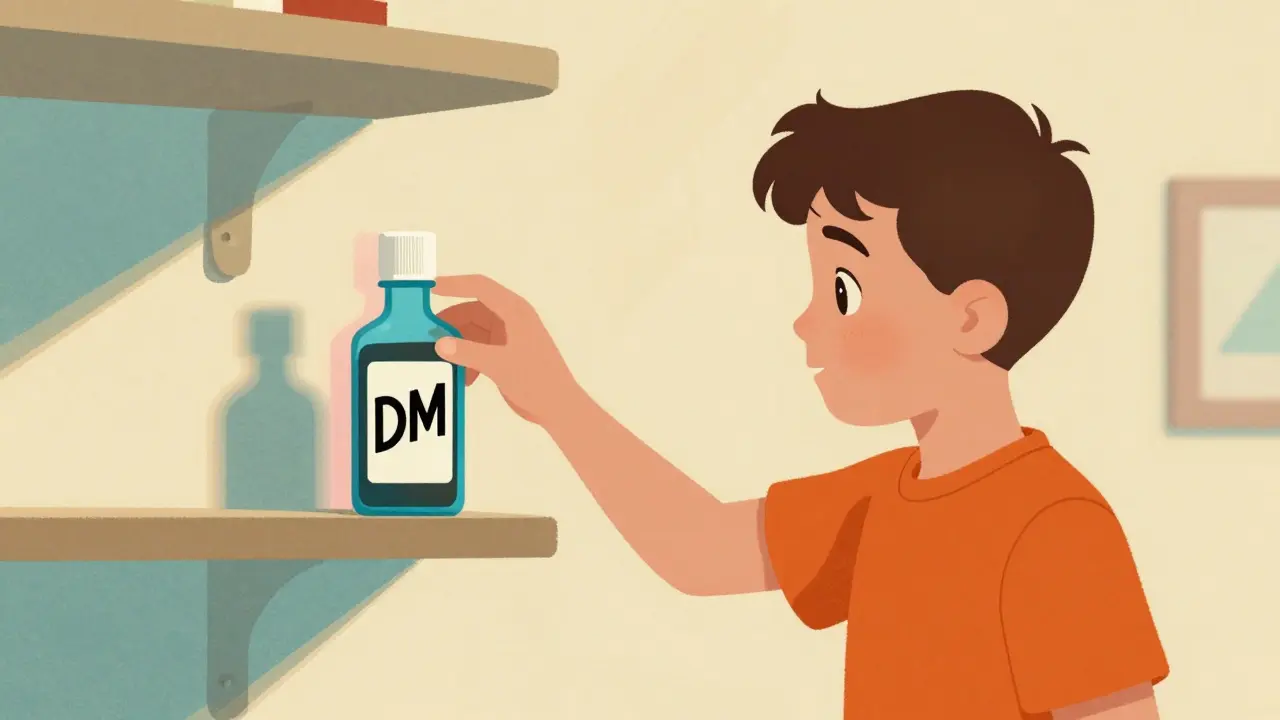
Every day, teens grab a bottle of cough syrup thinking it's harmless. But what if that little blue liquid could change their brain chemistry forever? DXM abuse is a growing concern. Dextromethorphan, or DXM, is a common ingredient in over-the-counter cough medicines. When used correctly, it's safe. But when abused, it can cause serious harm.
Key Takeaways
- DXM is in over 70 OTC products, often labeled 'DM' or 'cough suppressant'.
- Abusers take 240mg-1500mg at once (vs. 15-30mg recommended), leading to dissociation and hallucinations.
- 'Robo tripping' involves drinking multiple bottles or extracting pure DXM.
- Combining DXM with alcohol or drugs like MDMA can cause seizures or death.
- Early signs of abuse include confusion, blurred vision, and slurred speech.
What is Dextromethorphan (DXM)?
Dextromethorphan (DXM) is a synthetic cough suppressant first approved by the FDA in 1958. It works by calming the brain's cough reflex without pain relief or addiction potential when used as directed. Today, DXM appears in more than 70 over-the-counter cough and cold products, including well-known brands like Robitussin DM and NyQuil. The typical dose for cough relief is just 15-30mg every 4-8 hours. But when people take much higher doses, DXM starts acting differently-becoming a dissociative drug that alters perception and sensation.
How DXM Abuse Happens
Abusers don't just take a little extra. They consume massive amounts of cough syrup all at once. Some drink several bottles in a single sitting. Others use a method called 'robo shake'-drinking a huge amount and then vomiting to absorb more DXM while getting rid of other ingredients that cause nausea. More experienced abusers extract pure DXM from the syrup using chemical processes. This creates dangerous powder or pill forms that can be snorted or swallowed. Slang terms like 'dexing' or 'robo tripping' describe this abuse. According to the National Institute on Drug Abuse (NIDA), about 3% of teens admit to abusing OTC cough medicines for the high. That's roughly 1 in 30 teenagers.
Abusers often use slang terms like 'candy' or 'C-C-C' to refer to DXM abuse. Some call it 'robo tripping' because of the dissociative effects. A common method is 'robo shake'-drinking a large amount of cough syrup and then vomiting to absorb more DXM while getting rid of other ingredients that cause nausea. More experienced abusers use chemical extraction techniques to isolate pure DXM from syrups. This creates powder or pills that are easier to take in large doses. According to the Department of Justice's 2004 report, some websites even provide instructions on how to extract DXM and how much to take for a high.
Robitussin DM is one common product abusers target. It contains 10mg of DXM per 5mL. A single bottle holds 200mg total. To get high, abusers might drink 4-5 bottles at once-over 1000mg of DXM. That's 30 times the recommended dose.
Another product, NyQuil, has 15mg per 30mL. A typical bottle contains 450mg. Abusers often mix NyQuil with other substances like alcohol or antidepressants to intensify effects. This combination dramatically increases risks.
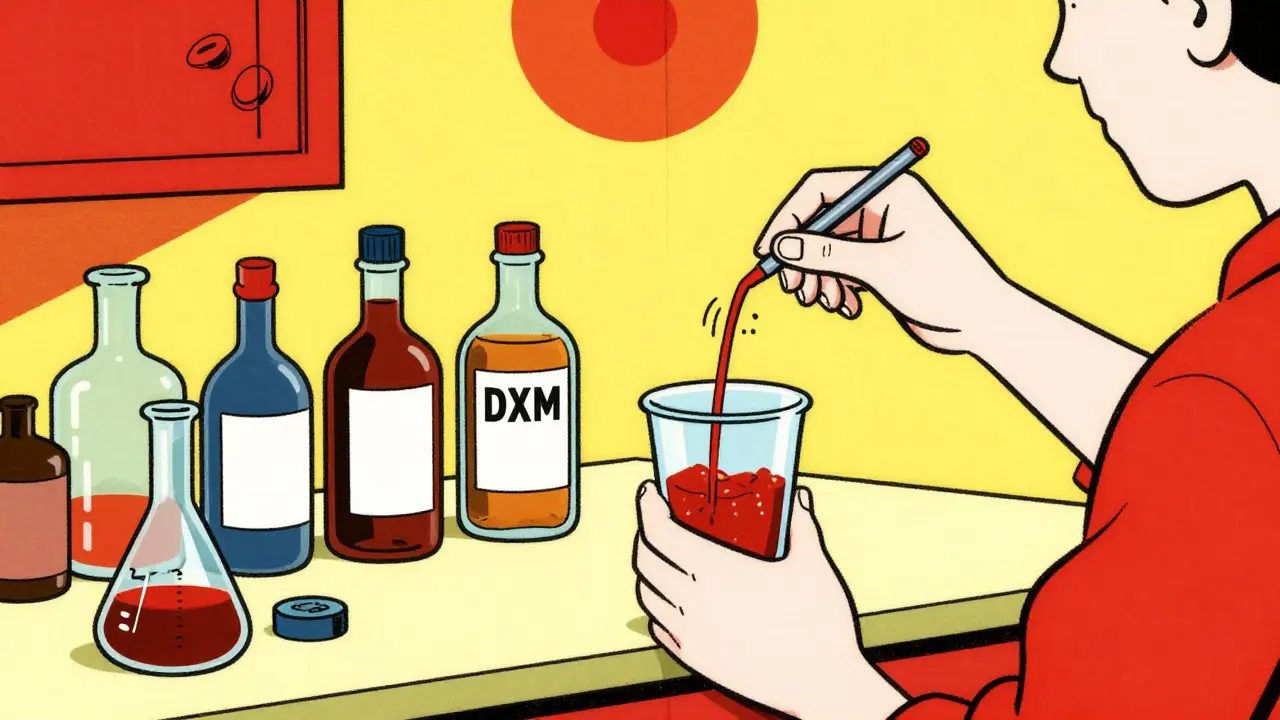
Common OTC Products Containing DXM
| Product Name | Typical DXM Content | Common Use |
|---|---|---|
| Robitussin DM | 10mg per 5mL | Cough suppressant |
| NyQuil | 15mg per 30mL | Cold and flu relief |
| Benylin DM | 10mg per 5mL | Cough suppressant |
| Coricidin HBP | 30mg per tablet | Cold medicine for high blood pressure |
| Delsym | 30mg per 10mL | Long-acting cough suppressant |
| DayQuil | 15mg per 30mL | Daytime cold relief |
| TheraFlu | 15mg per packet | Cold and flu relief |
| Dimetapp DM | 10mg per 5mL | Cough suppressant |
The Dangerous Effects of High Doses
DXM abuse follows distinct 'plateaus' where effects get progressively worse. At lower doses (100-200mg), users might feel euphoria and mild dizziness. But as doses climb to 200-400mg, they experience confusion, blurred vision, and slurred speech. Higher doses (400-1500mg) can cause hallucinations, 'out-of-body' sensations, and loss of motor control. At these levels, the brain's normal function is severely disrupted. The National Institute on Drug Abuse (NIDA) warns that high-dose DXM can lead to dangerous side effects like irregular heartbeat, high blood pressure, and severe abdominal pain.
One scary aspect is how DXM interacts with other substances. Combining it with alcohol is extremely risky-it can cause coma or death. Mixing DXM with drugs like MDMA (ecstasy) increases the chance of hyperthermia, seizures, or brain damage. The Mount Sinai Health Library confirms these combinations can be fatal. Even without other drugs, taking too much DXM alone can overdose. Symptoms include extreme drowsiness, vomiting, and seizures. Immediate medical attention is critical. The NIH article 'Dextromethorphan in Cough Syrup: The Poor Man's Psychosis' (PMC5601090, 2017) describes DXM as 'the poor man's PCP' because its effects mimic those of the illegal drug PCP.
Health Risks and Deadly Combinations
While DXM is safe when used correctly, abuse has serious consequences. Short-term effects include paranoia, excessive sweating, dry itchy skin, and facial redness. But long-term abuse can lead to dependence. The Greenhouse Treatment Center reports increasing cases of DXM addiction requiring professional help. Some experts debate whether DXM is truly addictive, but the evidence shows repeated high-dose use changes brain chemistry. This makes stopping difficult without support.
Another major risk is accidental overdose. Pure DXM powder is especially dangerous because it's easy to take too much. A teaspoon of powder could contain 500mg or more-enough to cause severe harm. The Drug Enforcement Administration (DEA) has monitored DXM abuse closely. They warn that if misuse continues, DXM could be added to the Controlled Substances Act. Right now, it's still legal in OTC products, but regulations are tightening in some states.
Prevention and What to Do
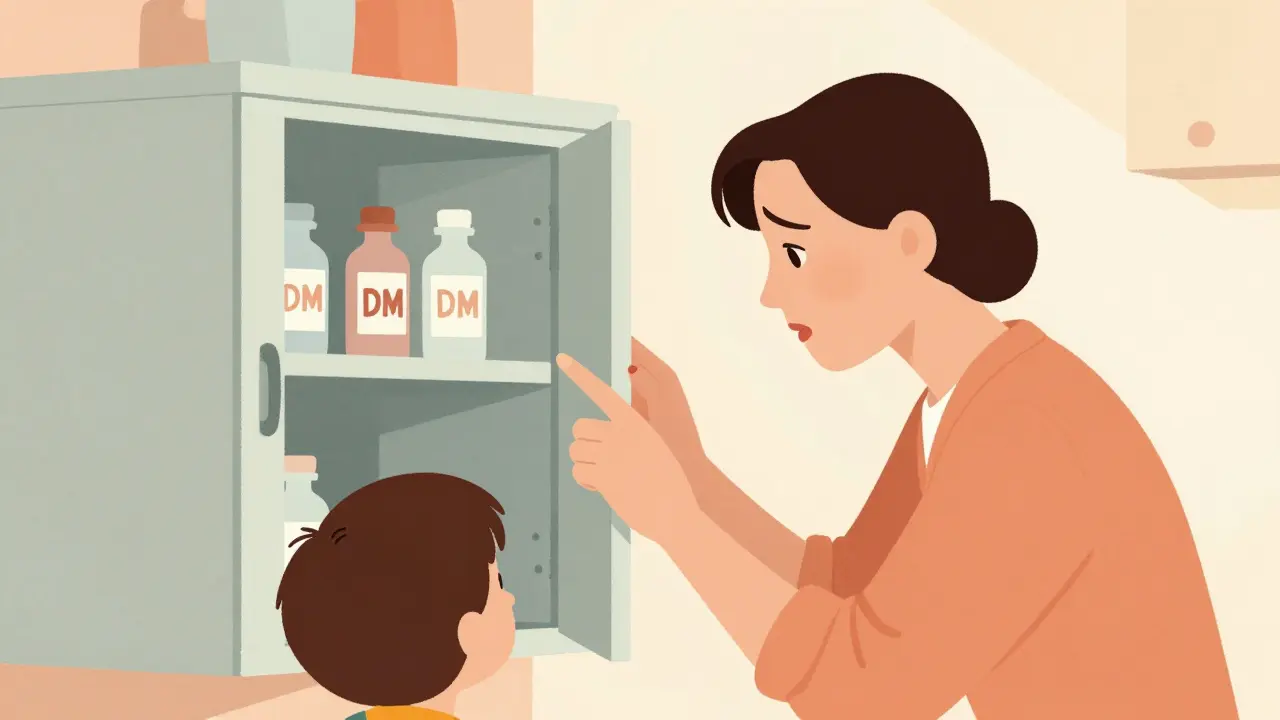
Parents and caregivers should watch for signs of abuse. Look for empty cough syrup bottles, unusual drowsiness, or confusion. Check medicine cabinets for missing products. Many products list 'DM' or 'cough suppressant' on the label. If you suspect abuse, talk to the person calmly. Don't panic, but act quickly. Contact a healthcare provider or poison control center immediately. For emergencies, call 911.
Education is key. Teach teens that OTC drugs aren't always safe. Many think cough syrup is harmless because it's sold in stores. But high doses can be deadly. Organizations like the Westchester County Public Safety offer guides for parents to recognize and prevent abuse. These resources include tips for secure medicine storage and open conversations about drug risks.
Frequently Asked Questions
Is DXM addictive?
Yes, DXM can be addictive with repeated high-dose use. While it's not as addictive as opioids, studies show some users develop dependence. The Greenhouse Treatment Center reports cases where individuals needed professional help to stop using DXM. Withdrawal symptoms include anxiety, insomnia, and cravings. However, not everyone who abuses DXM becomes addicted-this depends on usage patterns and individual factors.
Can you overdose on cough syrup?
Absolutely. Overdosing on DXM-containing cough syrup is possible and dangerous. Symptoms include severe dizziness, vomiting, irregular heartbeat, seizures, and unconsciousness. The Mount Sinai Health Library states that survival depends on how quickly medical help is received. A single bottle of Robitussin DM (200mg DXM) is safe, but consuming 4-5 bottles at once can lead to life-threatening overdose.
What are the signs of DXM abuse?
Common signs include confusion, slurred speech, blurred vision, lack of coordination, and excessive sweating. You might also find empty cough syrup bottles or notice someone acting unusually drowsy. Some users develop 'robo shakes'-involuntary muscle movements. Behavioral changes like secrecy about medicine use or sudden interest in 'candy' or 'robo' slang are red flags.
Are there legal restrictions on buying DXM products?
Most DXM products are still available over-the-counter without age restrictions. However, some states have implemented limits. For example, New Mexico requires pharmacy staff to monitor DXM sales and restrict purchases to adults. The Department of Justice monitors abuse trends closely. If misuse continues, DXM could be classified as a controlled substance, making it harder to buy legally.
What should you do if someone overdoses on DXM?
Call emergency services immediately. Do not try to make them vomit unless instructed by a professional. Keep the person awake and monitor their breathing. If they're unconscious, place them in the recovery position to prevent choking. Bring the cough syrup bottle to the hospital-it helps doctors know exactly what was taken. Quick medical attention can save lives, as survival rates depend on prompt treatment.
Laissa Peixoto
February 6, 2026 AT 14:06DXM abuse is a silent crisis hiding in plain sight. It's alarming how accessible it is-people grab cough syrup thinking it's harmless, not realizing it's a potent dissociative when misused. The brain chemistry changes are profound, especially for teens. I've seen studies showing long-term cognitive effects from chronic abuse. Education is key here; we need to inform parents and teens that OTC doesn't equal safe. The data is clear: 3% of teens abuse it, which is 1 in 30. That's a huge number. Why aren't more pharmacies putting age restrictions on DXM products? It's not just about the physical symptoms-it's the psychological toll. Dissociation isn't a game; it can leave lasting scars. We need better labeling, stricter sales policies, and open conversations. Ignoring this issue won't make it go away. It's time to take action before more lives are ruined. The FDA should reevaluate these products given the current abuse rates. Parents must be proactive in monitoring their kids' medicine cabinets.
Samantha Beye
February 7, 2026 AT 08:02Great points. As a parent, I always double-check medicine labels. It's scary how easily accessible this is. I've started talking to my teens about it openly. They didn't realize the risks either. Education is indeed the first step. Schools should include this in health classes. Awareness can prevent so many tragedies. Let's keep pushing for better information.
Andre Shaw
February 8, 2026 AT 22:51DXM abuse is overhyped. It's just cough syrup. People take it responsibly all the time. The real problem is parents who don't monitor their kids. If you're using it as directed, it's safe. The FDA approved it for a reason. Stop the panic. It's not like heroin or cocaine. Most teens know what they're doing. This is just fearmongering by the media. The data is cherry-picked. I've seen way worse drugs abused without this much fuss. Chill out.
Tehya Wilson
February 9, 2026 AT 04:21DXM abuse data is outdated. Studies show higher rates now. Table lacks dosage per serving. Poor research. Need better sources. No international comparison. Shallow analysis.
Dina Santorelli
February 11, 2026 AT 02:31That's a fair critique. But the FDA has updated guidelines recently. The table might not be current. Also, the real issue is the lack of awareness among parents. They need to know the signs. It's not just about the numbers-it's about real people. Let's focus on education instead of nitpicking data.
Arjun Paul
February 12, 2026 AT 23:44DXM abuse is dangerous.
Danielle Vila
February 14, 2026 AT 06:33Of course it's dangerous. But why is it still sold without restrictions? Big Pharma and the government are in cahoots. They want to keep people dependent on these drugs. The real agenda is to control the population. Look at the history of similar substances. They're all part of a larger scheme. They know about the risks but ignore them. It's all about profit. They don't care about kids. This is a calculated move to weaken society. Wake up people!
Thorben Westerhuys
February 15, 2026 AT 08:24DXM abuse is such a serious issue! It's terrifying how many people don't realize the dangers! I've read so many stories about teens who overdosed! It's not just about the physical effects-it's the psychological damage! The brain chemistry changes are permanent in some cases! Why isn't more being done?! This needs to be addressed immediately! People need to be educated! It's not just a 'cough medicine'-it's a potent drug when misused! I can't believe it's still so accessible!
Gregory Rodriguez
February 15, 2026 AT 23:25Wow, that's a lot of emphasis! But hey, let's not lose hope! Education and awareness can make a difference! We've tackled worse problems before! The key is to stay positive and proactive! Maybe we can push for better labeling? Or stricter sales policies? It's not all doom and gloom! We can do this! Let's channel that energy into action!
Jenna Elliott
February 17, 2026 AT 09:48DXM abuse is a problem, but it's not unique to the US. Other countries have similar issues. We need to focus on American solutions. The government should ban these products. They're a threat to national security. Our kids are at risk. This isn't just a health issue-it's a patriotic duty to act. Stop the imports. Enforce strict laws. Protect our nation's youth!
Pamela Power
February 18, 2026 AT 06:47DXM abuse is merely a symptom of deeper societal decay. The real issue is the lack of critical thinking among the masses. People consume OTC drugs without understanding their pharmacology. This is a direct result of poor education. The FDA's lax regulations reflect a broader trend of intellectual complacency. It's not the medicine that's dangerous-it's the ignorance of the users. We need to elevate discourse. Only the educated can truly grasp the gravity of this situation. The rest are just noise.
anjar maike
February 19, 2026 AT 23:26That's a bit harsh 😔. Education is important, but not everyone has access to good schooling. We need to help everyone, not just the 'educated'. DXM is dangerous for all. Let's focus on solutions, not blaming people. 💡
Bella Cullen
February 21, 2026 AT 20:20DXM abuse is a problem. But the article doesn't say much new. It's just repeating the same facts. Maybe more data would help. Or some solutions. Not sure what to do with this. Just seems like a rehash.
Sam Salameh
February 22, 2026 AT 00:36I get what you're saying! But the article does have important info. We need to spread this knowledge. It's crucial for parents and teens to know the risks. Let's work together to educate people. Safety first! 😊