
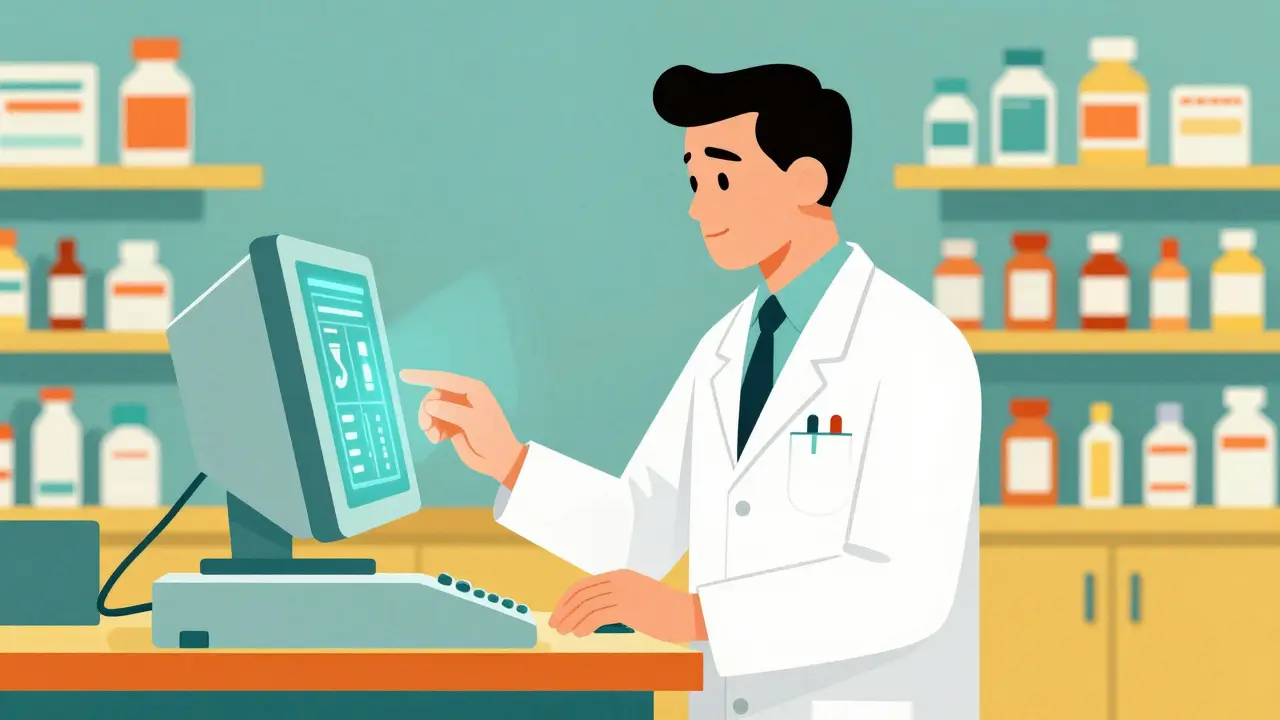
Imagine a pharmacist spotting a dangerous drug interaction because they can see a patient's latest lab results in real-time, rather than waiting for a phone call that might never come. That's the promise of EHR integration is the bidirectional exchange of patient health information between medical providers' electronic health record systems and pharmacy management software. For too long, pharmacies have been the "last mile" of healthcare-isolated from the clinical data that doctors use to make decisions. But as we move toward 2026, the gap is finally closing, turning the local pharmacy from a simple pickup spot into a therapeutic hub.
The Real Impact of Connected Prescriptions
When a pharmacy and a doctor's office speak the same digital language, the results aren't just convenient; they're life-saving. According to a 2022 study published in PMC, integration leads to a 23% improvement in medication adherence rates. Why? Because when the provider and pharmacist are synced, there are fewer contradictions and errors in how a patient takes their meds.
Beyond adherence, the numbers on hospitalizations are striking. A proof-of-concept study by EnlivenHealth® and the University of Tennessee found a 31% reduction in medication-related hospital readmissions. Pharmacists with direct EHR access can identify and resolve about 4.2 medication-related problems per patient encounter-compared to just 1.7 when they're flying blind without that data. This isn't just about efficiency; it's about catching a mistake before it becomes an emergency room visit.
The Tech Stack: How it Actually Works
You won't see the plumbing, but there are a few key standards making this possible. The most common is the NCPDP SCRIPT standard, specifically version 2017071. This is the "language" used primarily for transmitting prescriptions. However, for deeper clinical data-like a patient's full history or care plan-the industry relies on HL7 FHIR (Fast Healthcare Interoperability Resources). FHIR is a next-generation standard that allows different health systems to exchange data using modern API technology.
Another critical piece of the puzzle is the Pharmacist eCare Plan (or PeCP). Think of this as a structured way for pharmacists to document the clinical care they provide so that the doctor can actually see it in their own system. To keep this data safe, these systems use AES-256 encryption and OAuth 2.0 for authentication, ensuring that only authorized personnel can see sensitive patient files, as required by HIPAA and the 21st Century Cures Act.
| Standard/Tool | Primary Purpose | Key Value/Version | Impact |
|---|---|---|---|
| NCPDP SCRIPT | Prescription Transmission | Version 2017071 | Standardizes e-prescribing across networks |
| HL7 FHIR | Clinical Data Exchange | Release 4 (R4) | Enables real-time access to lab values and history |
| PeCP | Pharmacist Care Documentation | Workgroup 11 Standards | Allows pharmacist interventions to be seen by MDs |
| Surescripts | Interoperability Network | 22 Billion Annual Transactions | Connects 97% of U.S. pharmacies to providers |
The High Cost of Staying Disconnected
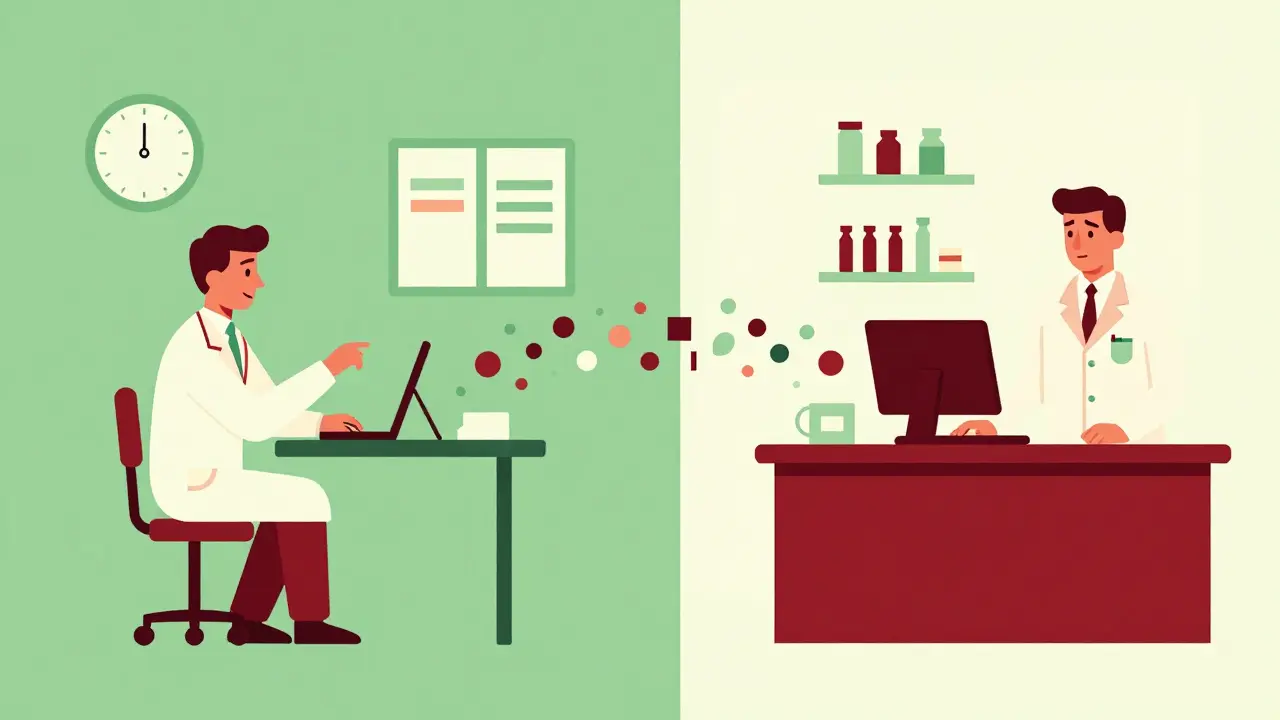
If the benefits are so clear, why isn't every pharmacy connected? The biggest hurdle is simple: money. For an independent pharmacy, the initial setup cost can range from $15,000 to $50,000, with annual maintenance fees adding another $5,000 to $15,000. For a small business, that's a massive hit to the bottom line.
Then there's the "time tax." Community pharmacists are often stretched thin. A survey from Ohio State University found that pharmacists spend an average of only 2.1 minutes per patient interaction. When you're that rushed, digging through a complex EHR interface can feel like a burden rather than a benefit. This leads to "alert fatigue," where clinicians start ignoring important warnings because the system pings them too often.
Finally, there's the reimbursement gap. While 48 states allow pharmacists to prescribe, only 19 states have actual payment mechanisms for the time pharmacists spend coordinating care via EHRs. Without a way to get paid for this expertise, many pharmacies view integration as a luxury they can't afford.
Commercial Solutions and Integration Paths
Depending on the size of the practice, different tools are used to bridge the gap. Surescripts is the giant in the room, handling the vast majority of electronic prescriptions and providing a pathway for medication history and eligibility verification. They make it possible for a pharmacist to see what a patient bought at a different chain across town.
For those looking for a more dedicated platform, options like SmartClinix or DocStation offer pharmacy-specific EMRs. These tools are designed to handle the unique workflows of a pharmacy while still plugging into larger systems like Epic or Cerner. For clinicians who need immediate, evidence-based drug data, UpToDate integrates directly into the provider's workflow, reducing the need to jump between different tabs or apps during a patient visit.
Step-by-Step: Moving Toward Integration
Implementing a bidirectional system isn't an overnight process. It usually takes 3 to 6 months for a pharmacy to get fully up and running. Here is the typical roadmap:
- Readiness Assessment: Evaluating current software and hardware. This phase usually costs between $2,500 and $5,000.
- Technical Configuration: Spending 8-12 weeks mapping data. This is where the hard work happens-ensuring that a "drug allergy" in the pharmacy system means the same thing in the doctor's system.
- Credentialing: Getting the legal and professional permissions to access health system data, which can take about 28 days.
- Staff Training: A 4-8 week period where the team learns how to use the new data without slowing down the pharmacy workflow.
Looking Ahead: AI and the Future of Care
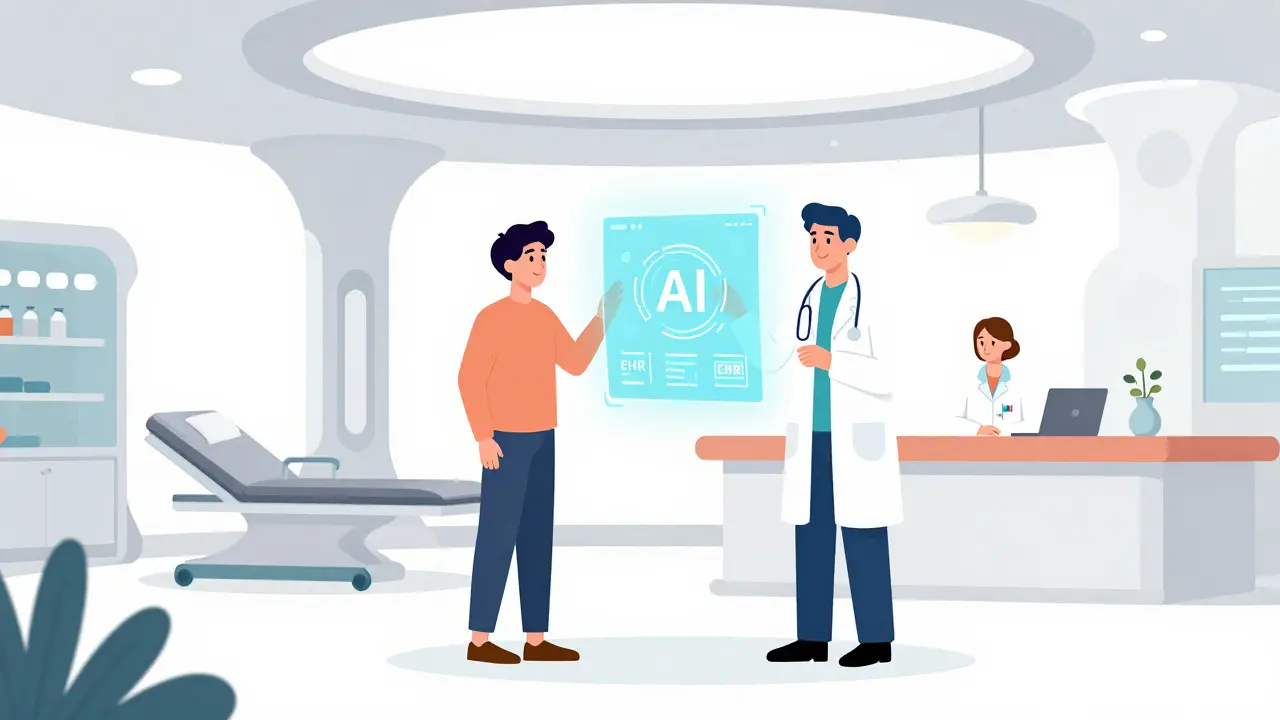
The next wave of integration is already here: Artificial Intelligence. Pilot programs at major chains like CVS Health and Walgreens are using machine learning to analyze integrated EHR data. These AI tools can flag potential interventions with 37% more accuracy than a human skimming a chart.
We're also seeing a shift toward patient-mediated data. The CARIN Blue Button 2.0 project allows patients to control how their data moves between their insurance payer, their doctor, and their pharmacist. This puts the patient in the driver's seat, ensuring that everyone in their care circle is looking at the same updated list of medications.
What is the difference between e-prescribing and bidirectional EHR integration?
E-prescribing is a one-way street where a doctor sends a prescription to a pharmacy. Bidirectional EHR integration is a two-way street; it allows the pharmacist to see the patient's full medical record (like lab results and diagnoses) and allows the doctor to see the pharmacist's clinical notes and medication therapy management (MTM) updates in real-time.
How does EHR integration reduce medication errors?
It reduces errors by providing automated clinical decision support. Instead of relying on a patient's memory or a handwritten note, the system automatically flags interactions between a new prescription and the patient's existing health data, which has been shown to decrease medication errors by up to 48%.
Why is it so expensive for independent pharmacies to integrate?
The costs stem from the need for custom data mapping between different software vendors and the requirement for secure, HIPAA-compliant API connections. Initial setup can cost up to $50,000 because independent pharmacies lack the economies of scale that large health systems enjoy.
What is the PeCP and why does it matter?
The Pharmacist eCare Plan (PeCP) is a standardized digital format for recording pharmacist-led care. It matters because it transforms the pharmacist's role from a "dispenser" to a "consultant," making their interventions a permanent part of the patient's medical history that other doctors can act upon.
Which standards are used for the technical connection?
The two primary standards are NCPDP SCRIPT (used for the actual prescription transmission) and HL7 FHIR (used for broader health data exchange like lab values and patient histories). These are typically implemented via secure APIs using OAuth 2.0 for authentication.
Sam Hayes
April 4, 2026 AT 20:32Most independent shops just can't swing that initial cost because the margins on generics are basically zero these days. It's a great idea on paper but the financial barrier is real for the small guys
Lawrence Rimmer
April 5, 2026 AT 05:41The obsession with "integration" is just a mask for the slow death of the human element in medicine. We're just turning pharmacists into data entry clerks for a machine that thinks it knows the patient better than the person standing right in front of them. It's an existential failure of the profession.
Will Baker
April 5, 2026 AT 10:33Oh sure, because giving every single corporate entity a bidirectional pipe into my medical history is exactly what the world needs right now. I'm sure the "security" is just top-notch and not at all a sieve for data brokers.
simran kaur
April 6, 2026 AT 20:46It's actually laughable that anyone believes this is about "patient safety."
It's obviously about creating a centralized digital panopticon where every single medication you take is tracked, logged, and cross-referenced by an algorithm that decides if you're a "compliant" citizen. The 21st Century Cures Act is a joke, a thin veil for total surveillance under the guise of healthcare efficiency. Only the most naive would think a $50,000 setup fee for a small pharmacy is about health and not about forced adoption of a state-monitored infrastructure. I've seen the patterns and this is just the beginning of the social credit system arriving in the pharmacy aisle.
Joseph Rutakangwa
April 7, 2026 AT 11:20good progress for safety
Mark Zhang
April 8, 2026 AT 12:17I really appreciate how this highlights the struggle of the independent pharmacist. It's so hard to provide that personal touch when you're fighting against outdated software and tight budgets. Hopefully, the reimbursement gap closes soon so these experts can actually be paid for the clinical work they do.
Rob Newton
April 10, 2026 AT 00:39Wrong approach. The issue isn't money, it's the bloated bureaucracy of the EHRs themselves.
The Charlotte Moms Blog
April 11, 2026 AT 05:54Absolutely typical!!! The industry expects us to just "trust" these systems while they ignore the actual human cost of alert fatigue!!! It's a disaster waiting to happen!!!
Dee McDonald
April 12, 2026 AT 02:19This is the kind of innovation we need to be pushing for! Imagine the possibilities if we can actually get the data moving. We need to demand that the states fix the reimbursement laws right now! Why are we letting a few outdated laws stop us from saving lives? Let's get the independent pharmacies the grants they need to upgrade!
Vicki Marinker
April 12, 2026 AT 19:51The sheer optimism here is exhausting. It is simply a more expensive way to make the same mistakes, only now they are digitally archived.
Aysha Hind
April 13, 2026 AT 05:27a total circus. these "standards" are just a fancy way of saying the big tech companies are carving up the pie while we get the crumbs of "interoperability." it's a total racket, honestly.
HARSH GUSANI
April 14, 2026 AT 08:53Why we always talk about US standards? India is doing amazing things with digital health too 🇮🇳. We don't need to follow the West blindly 🚩. Our systems can be better and cheaper! 🚀
Sakshi Mahant
April 14, 2026 AT 15:30It is heartening to see the potential for better patient outcomes regardless of where the pharmacy is located. Collaboration between doctors and pharmacists is a universal need that transcends borders.
Hope Azzaratta-Rubyhawk
April 15, 2026 AT 05:43It is imperative that we hold these software vendors accountable for the exorbitant costs they charge small businesses. We must insist upon a more equitable distribution of these technologies to ensure that no patient is left behind due to the size of their local pharmacy!
Jenna Carpenter
April 15, 2026 AT 15:26honestly just sounds like more ways for them to track us lol. plus the typos in these manuals are laughable usualy