
MAOI Wait Time Calculator
This calculator helps determine when it's safe to take decongestants after stopping MAOIs. Remember: NEVER take ephedrine, pseudoephedrine, or phenylephrine while on an MAOI.
Enter your information to see safe timeframe for decongestant use.
One oral dose of ephedrine can kill you-if you’re taking an MAO inhibitor. This isn’t a hypothetical risk. It’s a documented, deadly interaction that has caused strokes, brain hemorrhages, and sudden death. And it’s still happening today, even though MAOIs are rarely prescribed.
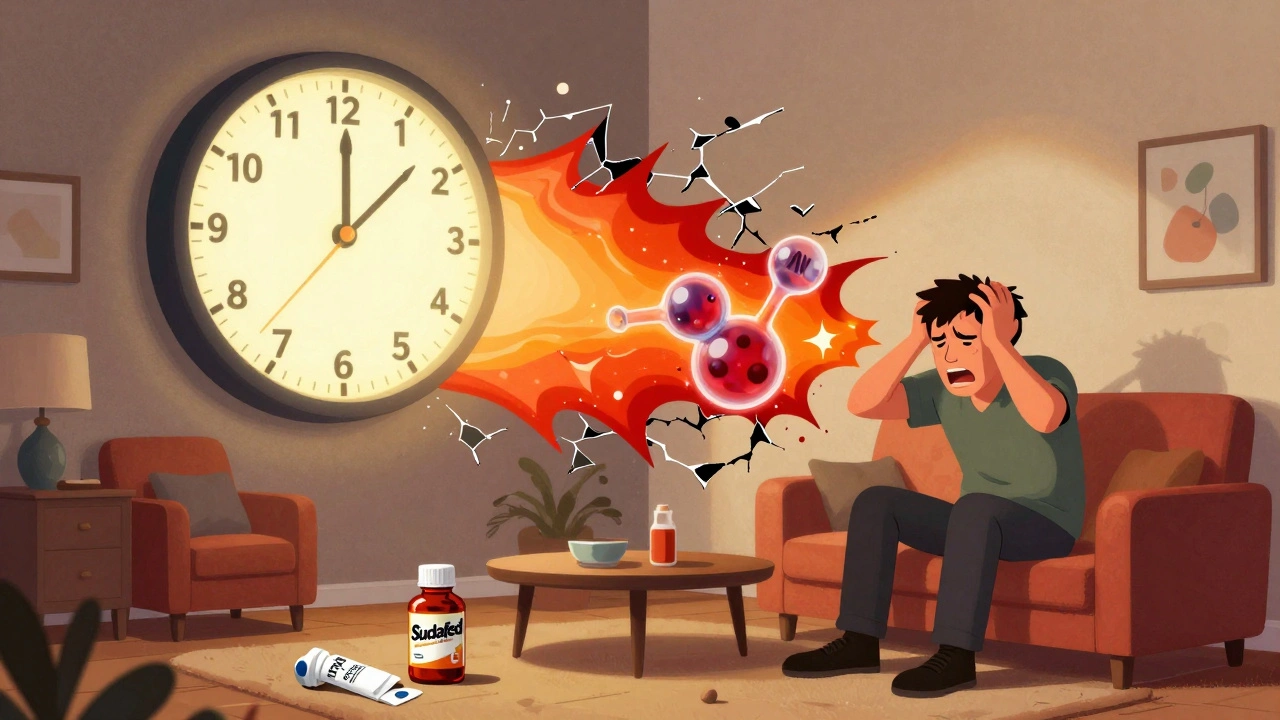
Most people know that mixing alcohol with certain medications is dangerous. But few realize that a common cold medicine-something you can buy off the shelf-can trigger a medical emergency if you’re on an antidepressant. That’s the reality of combining ephedrine with monoamine oxidase inhibitors (MAOIs). The result? A hypertensive crisis: blood pressure shooting past 200 mmHg in under an hour, with no warning.
What Happens When Ephedrine Meets an MAOI?
Ephedrine is a stimulant. It’s found in some cold and allergy meds, weight loss supplements, and even energy drinks. It works by forcing your body to release norepinephrine-the same chemical your brain uses to trigger the "fight or flight" response. Your heart races. Your blood vessels tighten. Blood pressure spikes.
MAOIs, like phenelzine (Nardil), tranylcypromine (Parnate), or isocarboxazid (Marplan), are antidepressants. They work by blocking an enzyme called monoamine oxidase. This enzyme normally breaks down excess norepinephrine, serotonin, and dopamine. When it’s turned off, those chemicals build up.
Now imagine this: you take an MAOI, and your body can’t clear norepinephrine. Then you take ephedrine, which floods your system with even more. The result? A runaway surge. Your blood pressure doesn’t just rise-it explodes. Studies show systolic pressure can hit 240 mmHg within 30 to 120 minutes. That’s higher than the pressure in a car tire.
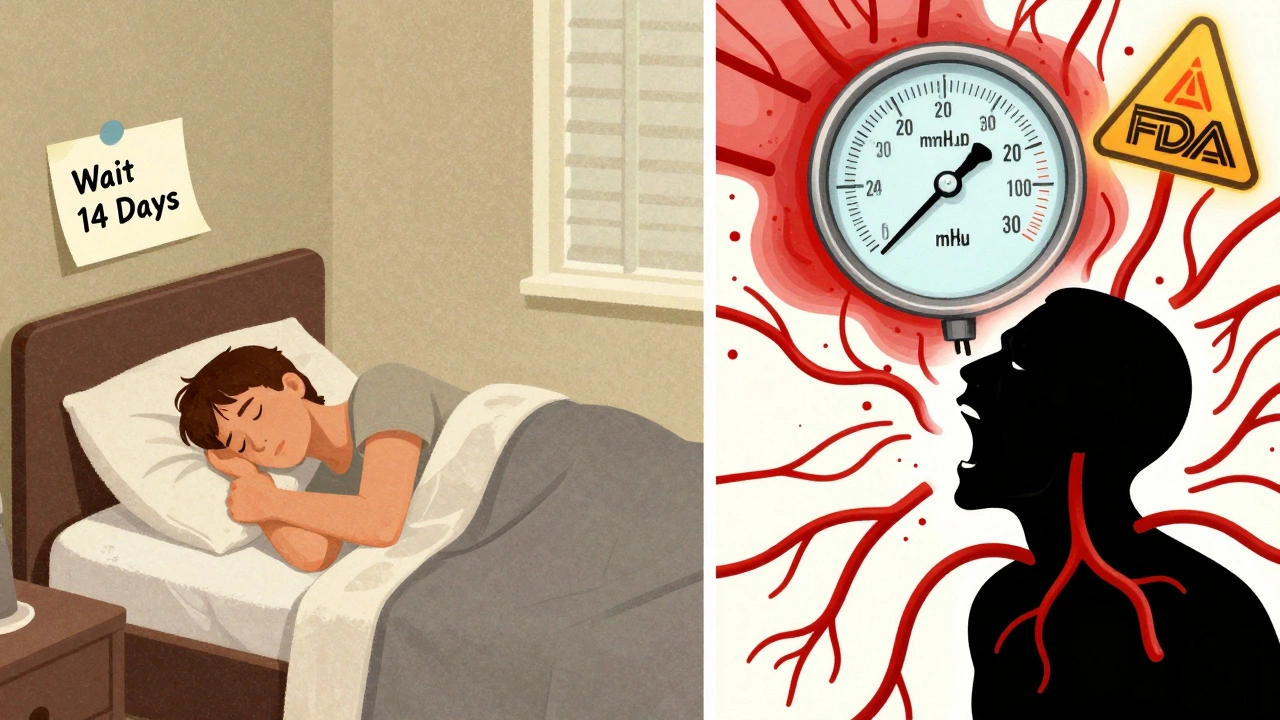
This isn’t just high blood pressure. It’s a crisis. The force can rupture blood vessels in the brain, causing a subarachnoid hemorrhage. It can tear the aorta. It can trigger a heart attack. In the 1965 case reported in JAMA, a woman died within hours after taking just one 25 mg pill of ephedrine while on an MAOI. Her brain bled out.
How Common Is This Interaction?
MAOIs are rare now. Less than 1% of antidepressant prescriptions in the U.S. are for MAOIs. But they’re not gone. About 500,000 Americans still take them-usually because other antidepressants failed. They’re often the last option for treatment-resistant depression, especially when someone has atypical symptoms like oversleeping, overeating, or extreme sensitivity to rejection.
Here’s the problem: many doctors who prescribe MAOIs are psychiatrists. But the people who give patients cold medicine? That’s often a primary care doctor, an ER physician, or even a pharmacist. A 2021 study in JAMA Internal Medicine found that 22% of patients on MAOIs were still prescribed at least one contraindicated drug within 30 days of starting treatment. Most of those were OTC decongestants.
The FDA has documented 37 cases of hypertensive crisis linked to ephedrine and MAOIs between 2015 and 2020. Nine of them ended in death. Reddit forums like r/antidepressants are filled with personal stories: "I took Sudafed for a cold. My head felt like it was going to burst. I thought I was dying." One user wrote, "My vision went white. I couldn’t breathe. I called 911. They said I was lucky to be alive."
What Medications Are Dangerous?
It’s not just ephedrine. Any drug that releases or mimics norepinephrine is risky. That includes:
- Pseudoephedrine-the active ingredient in Sudafed
- Phenylephrine-found in many "new and improved" cold meds
- Phenylpropanolamine-banned in the U.S. but still available in some countries
- Amphetamines-including Adderall and illicit methamphetamine
- Some weight loss pills-especially those labeled "natural stimulants"
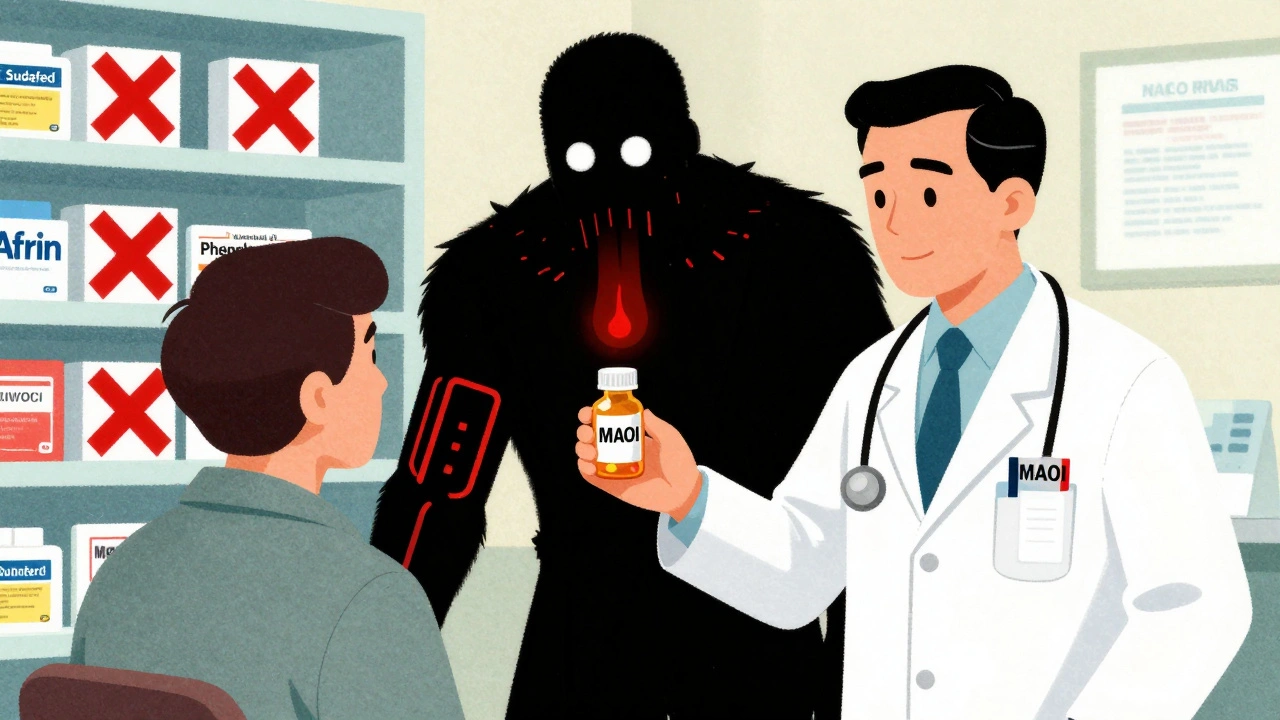
Even topical nasal sprays like oxymetazoline (Afrin) can be dangerous if used heavily. The risk isn’t just from pills. It’s from anything that gets into your bloodstream and triggers norepinephrine release.
And here’s the trap: many people don’t realize they’re on an MAOI. Some take them for anxiety, chronic pain, or PTSD-not just depression. Others take them in combination with other meds and don’t know the name of the drug they’re using. A 2023 review in StatPearls found that nearly half of patients who experienced a hypertensive crisis didn’t know they were on an MAOI.
How Long Does the Risk Last?
Most people think: "I stopped my MAOI last week. I’m safe now." That’s wrong.
Irreversible MAOIs like Nardil and Parnate permanently disable the monoamine oxidase enzyme. Your body has to grow new enzymes to replace them. That takes two to three weeks. Even after you stop the drug, you’re still at risk.
Reversible MAOIs like moclobemide are different. They bind temporarily. The risk drops after 24 to 48 hours. But they’re rarely used in the U.S. The only newer MAOI approved in the last 20 years is selegiline (Emsam), a skin patch. Even then, the FDA warns it still carries risk-especially at higher doses.
There’s no safe waiting period unless you’re certain your MAOI is fully cleared. And even then, doctors recommend waiting at least 14 days before using any sympathomimetic.
What If You Accidentally Mix Them?
If you take ephedrine while on an MAOI, symptoms can come on fast:
- Severe headache, often starting at the back of the head and spreading forward
- Blurred vision or seeing spots
- Palpitations, chest tightness, or crushing pain
- Profuse sweating, nausea, vomiting
- Neck stiffness, confusion, or loss of consciousness
This is not something to wait out. Call 911 immediately. Do not take anything by mouth. Do not try to lower your blood pressure with over-the-counter meds.
Emergency treatment requires intravenous phentolamine, a drug that blocks norepinephrine receptors. It’s the only approved treatment. Sublingual nifedipine (a common blood pressure pill) is dangerous here-it can cause a sudden, dangerous drop in pressure that leads to stroke.
There’s no home remedy. No herbal tea. No ice pack. Only immediate medical care can save you.
How to Stay Safe
If you’re on an MAOI, here’s what you must do:
- Get a list-Ask your doctor for a printed list of all drugs to avoid. Include brand names and generic names.
- Carry an alert card-The Mayo Clinic found that 87% of patients who carried a wallet-sized "MAOI Alert Card" avoided dangerous interactions. Write your name, your drug, and the emergency number for your prescriber.
- Check every OTC label-Look for: ephedrine, pseudoephedrine, phenylephrine, phenylpropanolamine. If you see any of these, don’t take it.
- Tell every provider-Every time you see a doctor, dentist, or pharmacist, say: "I’m on an MAOI. I cannot take any stimulants or decongestants."
- Wait 14 days-After stopping an MAOI, wait two weeks before using any cold, flu, or weight loss medication.
Even if you feel fine, even if you’ve taken cold meds before, this interaction doesn’t care about your history. It only cares about the chemistry in your body.
Is There Any Hope for Safer Options?
Yes-but slowly. In March 2023, the FDA approved a new reversible MAOI called befloxatone. Early studies suggest it has a 90% lower risk of hypertensive crisis because it breaks down in just six hours. It’s not yet widely available, but it’s a sign that researchers are working on safer alternatives.
NIH is also testing wearable patches that monitor blood pressure continuously. If pressure spikes, the device alerts the patient and their doctor before a crisis hits. This could be a game-changer for people who need MAOIs but can’t avoid all stimulants.
Still, the bottom line hasn’t changed: never combine ephedrine or any decongestant with an MAOI. The risk isn’t rare. It’s deadly. And it’s entirely preventable.
Can I take Sudafed if I’m on an MAOI?
No. Sudafed contains pseudoephedrine, which acts just like ephedrine in the body. Combining it with an MAOI can cause a life-threatening spike in blood pressure. Even one pill can trigger a hypertensive crisis. Avoid all decongestants while on an MAOI, and wait at least 14 days after stopping the MAOI before using them.
What if I accidentally took ephedrine while on an MAOI?
Call 911 immediately. Do not wait for symptoms to appear. A hypertensive crisis can develop within 30 minutes. Do not try to treat it yourself. Do not take aspirin, ibuprofen, or any blood pressure pill. Emergency responders will need to give you IV phentolamine. Delaying care increases the risk of stroke, heart attack, or death.
How long after stopping an MAOI is it safe to take ephedrine?
For irreversible MAOIs like Nardil or Parnate, wait at least 14 days. For some doctors, 21 days is recommended to be extra safe. The enzyme takes that long to regenerate. For reversible MAOIs like moclobemide, 24 to 48 hours is usually enough. But if you’re unsure which type you’re on, always wait 14 days. Never guess.
Are all MAOIs equally dangerous with ephedrine?
All irreversible MAOIs carry the same high risk. This includes phenelzine, tranylcypromine, isocarboxazid, and nialamide. Selegiline (Emsam) patch at higher doses (9 mg/24hr or more) still carries risk. Lower doses (6 mg/24hr) reduce the risk but don’t eliminate it. Reversible MAOIs like moclobemide are safer, but they’re not approved in the U.S. The bottom line: if it’s an MAOI, assume it’s dangerous with ephedrine.
Why aren’t MAOIs banned if they’re so dangerous?
Because they work when nothing else does. For people with treatment-resistant depression-especially those with atypical symptoms like excessive sleep, overeating, or mood reactivity-MAOIs are often the only effective treatment. The risk is real, but so is the benefit. That’s why they’re still used, but only under strict supervision, with full patient education, and with mandatory warning labels. The goal isn’t to ban them-it’s to make sure no one takes them accidentally.
John Webber
December 3, 2025 AT 03:00people still take ephedrine like its candy bro its 2025 not 1998. one pill and your brain turns into a pressure cooker. i knew a guy who did this with sudafed and ended up in the icu for a week. no joke.
Genesis Rubi
December 3, 2025 AT 14:41of course this happens. americans think OTC means ‘safe to mix with anything’. we’re a nation of self-diagnosing idiots who read drug labels like they’re horoscopes. if you’re on an MAOI and still buying cold meds off the shelf, you deserve what you get.
Doug Hawk
December 5, 2025 AT 12:25the pharmacokinetics here are terrifying. irreversible MAOIs cause permanent enzyme inhibition, so even after discontinuation, the body needs de novo synthesis of monoamine oxidase. that’s a 14-21 day window where sympathetic overdrive from exogenous catecholamines like pseudoephedrine becomes a perfect storm. the real issue is lack of cross-specialty communication - psych docs know, but PCPs and pharmacists don’t always get the memo. we need better EHR alerts and mandatory patient handouts.
John Morrow
December 7, 2025 AT 03:17the fact that this interaction is still causing deaths in 2025 speaks to a systemic failure in medical education and pharmaceutical labeling. the FDA’s 37 documented cases are just the tip of the iceberg - most go unreported because patients don’t connect the dots. and let’s not pretend that ‘natural stimulants’ on supplement labels are any safer. they’re just unregulated poison with a yoga aesthetic. the real tragedy is that this isn’t a mystery - it’s been known since the 60s. we’re not dealing with ignorance. we’re dealing with institutional negligence.
Kristen Yates
December 7, 2025 AT 15:54i’m on an MAOI. i carry my alert card in my wallet. i check every label. i tell every doctor, even the dentist. i don’t take risks. this isn’t drama. this is survival. if you’re reading this and you’re not sure - don’t take it. wait. ask. live.
Saurabh Tiwari
December 9, 2025 AT 03:55so scary 😰 i live in india and people here use cold meds like candy. no one knows about MAOIs. i hope this post reaches them. maybe someone will read this and not die. 🙏
Michael Campbell
December 9, 2025 AT 08:09they’re letting pharma companies sell this stuff on purpose. it’s a kill switch for the mentally ill. watch how fast they ban it when rich people start dying.
Victoria Graci
December 9, 2025 AT 16:21there’s something deeply human about how we treat our own bodies like machines we can hack - throw in a stimulant here, a pill there, and expect harmony. but biology doesn’t negotiate. it doesn’t care if you’re ‘just trying to get over a cold’. it just reacts. and when you mess with the neurotransmitter symphony, the music turns to static - and then, silence. this isn’t just a drug interaction. it’s a warning about how little we truly understand the invisible systems inside us. we think we’re in control. we’re not. we’re just guests in our own bodies.