
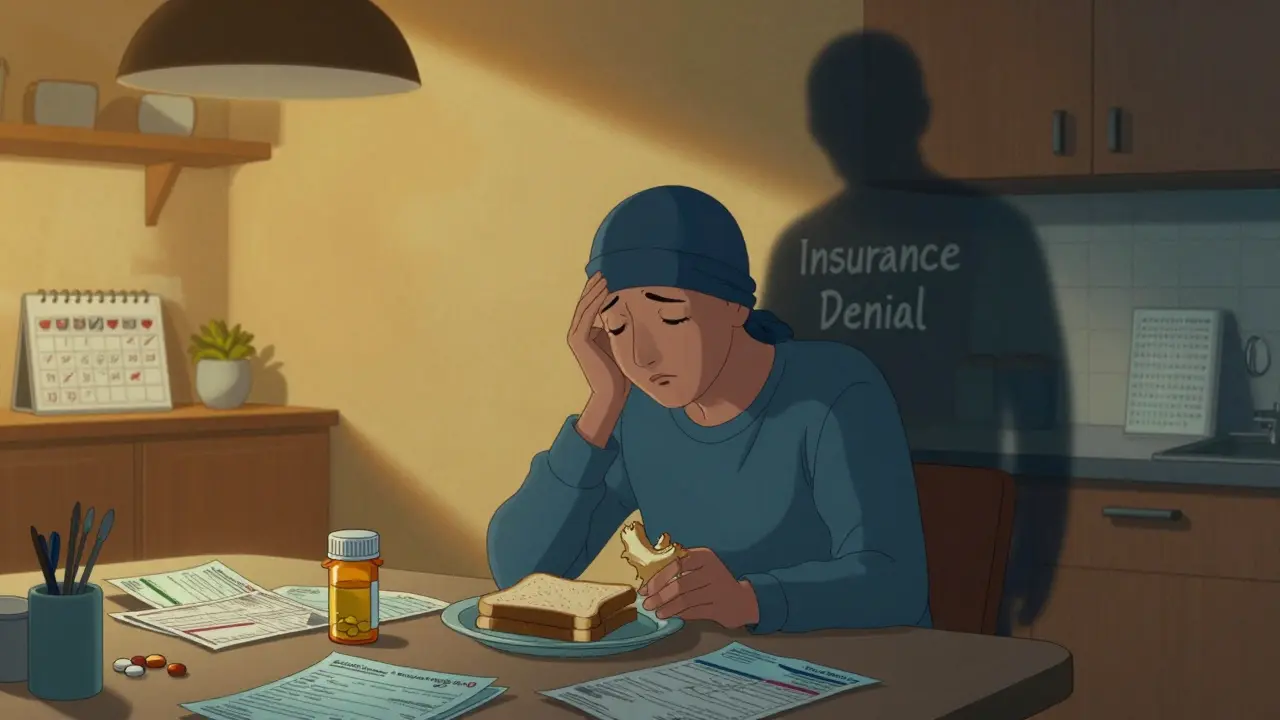
When you’re fighting cancer, the last thing you should be worrying about is how to pay for treatment. But for too many people, the cost of surviving cancer is eating away at their savings, their homes, and even their mental health. This isn’t just a side effect-it’s a direct consequence of how cancer care is priced in the U.S. today. The term financial toxicity was coined in 2013 to describe the crushing financial stress that comes with cancer treatment, and since then, it’s become clear that this burden is just as dangerous as the disease itself.
What Financial Toxicity Really Means
Financial toxicity isn’t just about having a high medical bill. It’s the daily fear of choosing between buying your next round of chemo and paying rent. It’s skipping doses because your copay went up. It’s watching your retirement savings vanish while your insurance company denies coverage for a drug your doctor prescribed. The National Cancer Institute defines it simply: problems a patient has related to the cost of medical care. But the reality is messier. It includes:- Out-of-pocket costs like copays, deductibles, and coinsurance
- Travel to treatment centers, especially if you live far from a cancer hospital
- Losing income because you can’t work during or after treatment
- Buying groceries instead of filling a prescription
- Going into debt just to stay alive
Who Gets Hit the Hardest?
Not everyone feels the same level of financial pressure. Some groups are far more vulnerable.- Low-income patients: For some women with breast cancer, treatment costs can eat up 98% of their entire annual income. That’s not a typo.
- Younger patients (under 65): They’re more likely to be working, have less savings, and be underinsured. Medicare doesn’t cover them, and private insurance often has high deductibles.
- Patients with metastatic cancer: Their treatment doesn’t end after six months-it goes on for years, sometimes indefinitely. Immunotherapy and targeted drugs can cost $10,000 to $15,000 a month. Even with insurance, you’re still on the hook for thousands.
- Underinsured patients: High-deductible plans sound good on paper, but when your deductible is $8,000 and your treatment costs $120,000 a year, you’re not saving money-you’re drowning.
How Financial Toxicity Hurts Your Health
You might think, “I’ll just pay it off later.” But financial stress doesn’t wait. It changes how you fight cancer. Patients who are financially overwhelmed are:- More likely to skip or delay treatments
- More likely to cut pills in half or stop taking them altogether
- More likely to report depression, anxiety, and poor quality of life
- More likely to say their financial stress is worse than their physical symptoms
Why Are Cancer Drugs So Expensive?
Cancer treatment has become one of the most expensive areas in medicine. A decade ago, a round of chemo might have cost $5,000. Today, a single immunotherapy drug can cost $150,000 a year. Why? New drugs-like checkpoint inhibitors and CAR-T cell therapies-are incredibly effective, but they’re also incredibly costly to develop. Pharmaceutical companies charge what the market will bear. Insurance companies push back, but often only after patients have already started treatment. There’s also a hidden cost: oral cancer drugs. These pills are often taken at home instead of in a clinic. But here’s the catch-many insurance plans treat them as “specialty drugs,” meaning you pay 30% to 50% of the cost upfront. Meanwhile, the same drug given through an IV in a hospital might be covered at 80%. That’s called copay discrimination, and it’s a major driver of financial toxicity.What Can You Do? Practical Steps to Protect Yourself
You can’t control drug prices, but you can control how you respond. Here’s what works:1. Ask for a Financial Navigator
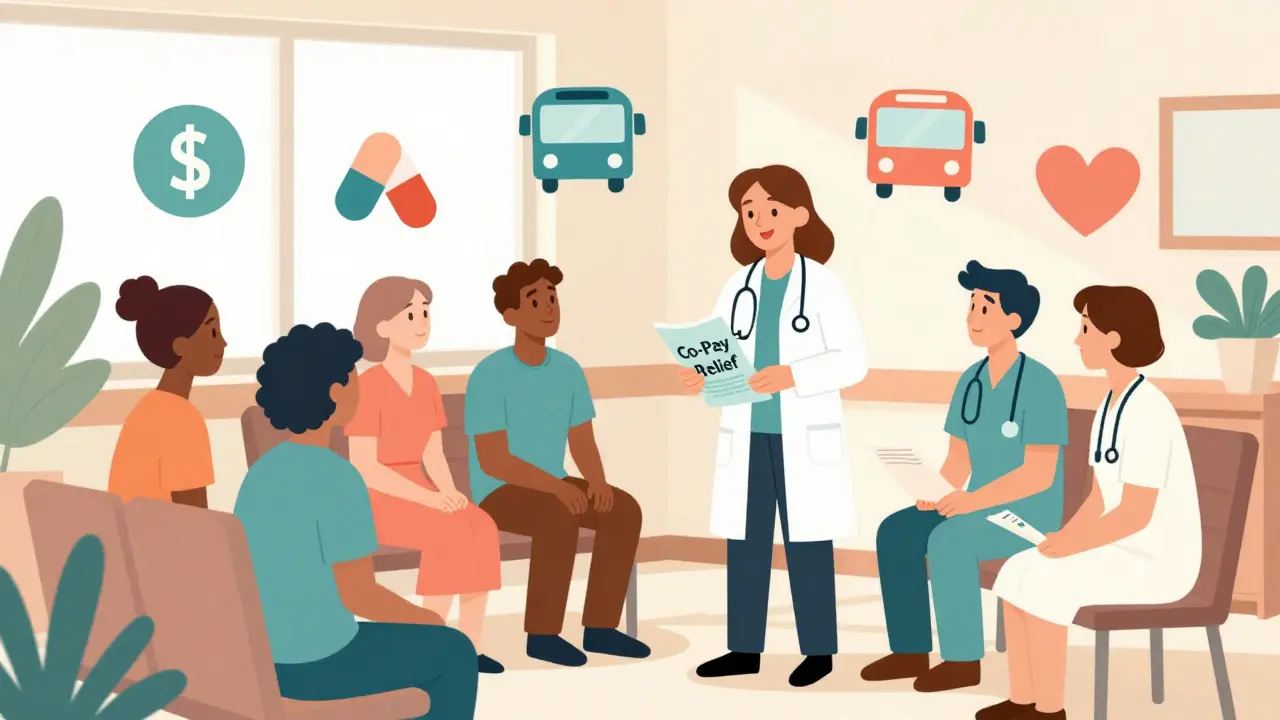
Most major cancer centers now have financial navigators-trained professionals who help patients find help. They know about:- Co-pay assistance programs from drug manufacturers
- Nonprofit grants (like the Patient Advocate Foundation)
- Medicaid expansion options
- Local charities that help with rent, utilities, or transportation
2. Know Your Insurance
Call your insurer and ask:- What’s my out-of-pocket maximum for this year?
- Is this drug on my formulary? If not, can you approve an exception?
- Are there generic or biosimilar alternatives?
- Do you cover transportation to treatment?
3. Apply for Patient Assistance Programs
Every major drugmaker has a program to help low-income patients. In 2021, pharmaceutical companies provided $12.8 billion in free drugs and financial aid to 1.8 million people. But only 1 in 3 eligible patients apply. Start here:- RxAssist (free database of programs)
- American Cancer Society’s Financial Assistance Guide
- Patient Advocate Foundation’s Co-Pay Relief Program
4. Talk to Your Doctor About Cost
Doctors are not mind readers. If you’re scared about cost, say so. Say: “I can’t afford this. Is there another option?” A 2017 survey found that 78% of oncologists say patients skip doses or stop treatment because of cost. But only 15% of patients bring it up first. Your doctor can often switch you to a cheaper drug, delay a test, or connect you with a clinical trial that covers costs.5. Look Into State Laws
Some states are stepping in. California’s 2022 Cancer Drug Affordability Act requires drugmakers to justify price hikes and report costs to the state. Other states are banning copay discrimination for oral drugs. Check your state’s health department website. You might be eligible for help you didn’t know existed.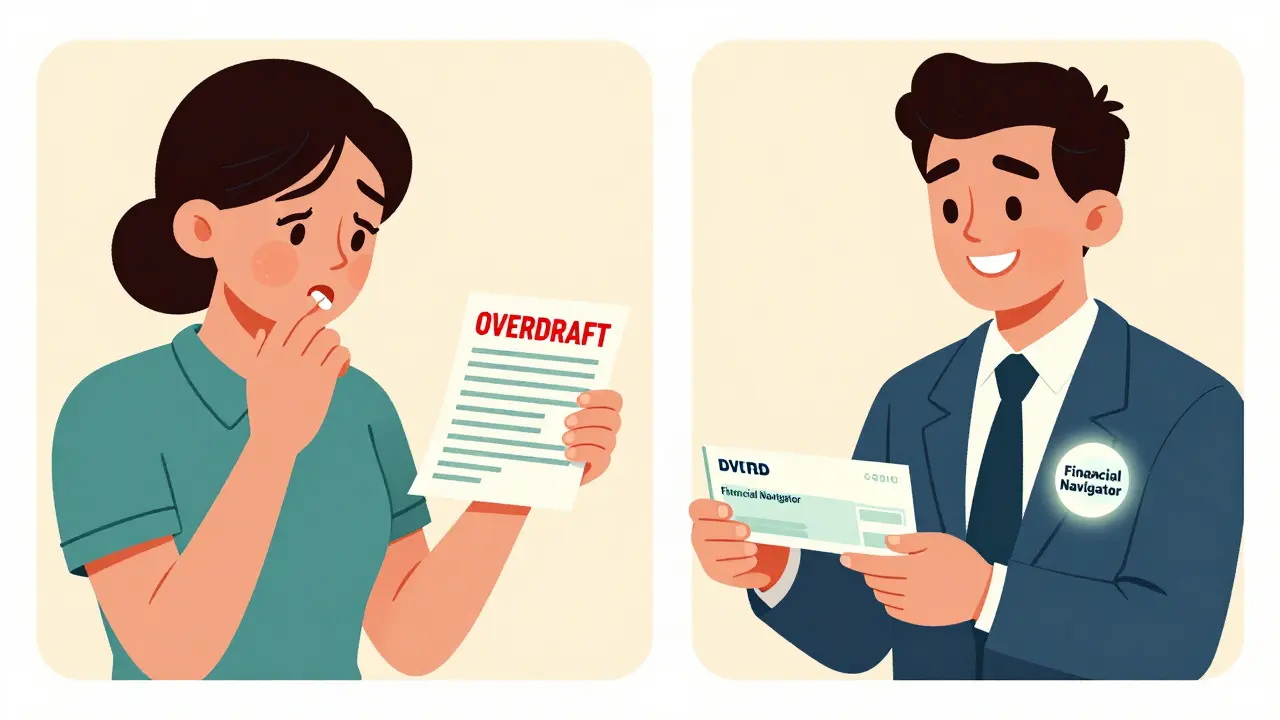
What’s Changing? The Future of Cancer Care Costs
Change is coming-but slowly.- Screening is becoming standard: The National Comprehensive Cancer Network now says all cancer centers should screen patients for financial toxicity. By 2025, 75% of NCI-designated centers plan to have formal programs in place.
- AI is helping predict risk: A 2023 study showed AI models can predict who will face financial toxicity with 82% accuracy by looking at income, insurance, treatment type, and location.
- Legislation is moving: The Cancer Drug Parity Act (H.R. 4553), reintroduced in 2023, would force insurers to charge the same copay for oral and IV cancer drugs. That could save thousands for patients.
- Nonprofits are investing: The American Cancer Society is spending $15 million between 2023 and 2025 on financial toxicity research and programs.
Final Thought: You’re Not Alone
Cancer is hard enough. You shouldn’t have to choose between your health and your home. Financial toxicity is not your fault. It’s a broken system. But you have power. Ask questions. Ask for help. Use the resources that exist. Talk to your care team. Fill out the forms. Call the nonprofits. You’re not asking for charity-you’re asking for what you’re entitled to. The system isn’t perfect. But people are fighting to fix it. And you don’t have to fight alone.What is financial toxicity in cancer care?
Financial toxicity is the severe financial stress and hardship that cancer patients experience due to the cost of treatment. It includes out-of-pocket expenses like copays, deductibles, and medication costs, as well as indirect costs like lost wages, travel, and housing instability. It’s not just about debt-it’s about daily choices between medicine and groceries, rent and treatment.
How common is financial toxicity among cancer patients?
About 28% to 48% of cancer survivors face measurable financial hardship, according to objective data. When asked how they feel, up to 73% report financial distress. One in four non-elderly patients spends at least 20% of their income on cancer care. For low-income women with breast cancer, treatment can consume up to 98% of their annual income.
Can financial toxicity affect my cancer outcomes?
Yes. Patients who can’t afford their treatment are more likely to skip doses, delay care, or stop treatment entirely. Studies show this leads to worse survival rates-up to 30% higher risk of death. Financial stress also worsens depression, anxiety, and overall quality of life, making it harder to recover.
What help is available for cancer patients struggling with costs?
Many options exist: patient assistance programs from drug manufacturers, nonprofit co-pay relief (like the Patient Advocate Foundation), financial navigators at cancer centers, Medicaid expansion, and state-level programs like California’s Cancer Drug Affordability Act. In 2022, one program alone gave $327 million in aid to 67,000 patients. You don’t need to be poor to qualify-many programs help people earning up to 500% of the federal poverty level.
Should I talk to my oncologist about my finances?
Absolutely. Oncologists are not mind readers. If you’re worried about cost, say so. Many doctors can switch you to a less expensive drug, connect you with a clinical trial that covers costs, or help you apply for aid. A 2017 survey found that 78% of oncologists say patients skip doses due to cost-but only 15% of patients bring it up. Your doctor wants you to get better. They can’t help if they don’t know you’re struggling.
Is there help for transportation or housing during treatment?
Yes. Many local nonprofits, churches, and cancer organizations offer free or low-cost rides to treatment, temporary housing near hospitals, and help with utility bills. The American Cancer Society’s Road to Recovery program provides free transportation in many areas. Local United Way offices and 211 hotlines can connect you to these services.
Are oral cancer drugs more expensive than IV treatments?
Often, yes. Many insurance plans classify oral cancer drugs as “specialty medications,” requiring patients to pay 30%-50% of the cost upfront. The same drug given intravenously in a clinic might be covered at 80%. This is called copay discrimination. Legislation like the Cancer Drug Parity Act (H.R. 4553) aims to fix this by requiring equal copays for oral and IV treatments.
How do I find a financial navigator at my cancer center?
Ask your oncology nurse, social worker, or front desk staff. Most major cancer centers now have dedicated financial navigators. If yours doesn’t, ask if they can refer you to a nonprofit or hospital-based program. You can also call the Patient Advocate Foundation or the American Cancer Society for local referrals.
Can I get help if I have Medicare?
Yes. Medicare doesn’t cover everything, but you can get help through Medicare Savings Programs (if your income is low), Extra Help for Part D drug costs, and nonprofit co-pay programs. About half of Medicare beneficiaries with cancer spend more than 10% of their income on out-of-pocket costs. You’re not alone-and help exists.
What should I do if I’m already in debt from cancer treatment?
Don’t ignore it. Contact your medical provider’s billing department-they often have payment plans or charity care programs. Reach out to nonprofit credit counselors (like those at the National Foundation for Credit Counseling) who specialize in medical debt. Avoid payday loans or high-interest credit cards. Many hospitals will forgive debt if you prove financial hardship. Your health shouldn’t cost you your future.
Shelby Marcel
January 24, 2026 AT 02:36so i just found out my mom’s chemo copay went up 300% this year and she’s on medicaid… like how is that even legal? i thought medicaid was supposed to protect people from this crap. she’s skipping doses to make rent. i’m crying typing this.
Phil Maxwell
January 25, 2026 AT 02:16my aunt went through this last year. she didn’t tell anyone until she had to sell her car. just… talk to someone. even if it’s a stranger on the internet. you’re not broken for needing help.
Sharon Biggins
January 25, 2026 AT 03:22you’re not alone. i used to think asking for help was weak. then i got diagnosed. turned out the financial navagator at my clinic saved my life. they hooked me up with free rides, a grant for meds, and even helped me negotiate my electric bill. i didn’t know any of this existed. don’t suffer in silence. reach out. someone’s waiting to help.
Patrick Gornik
January 26, 2026 AT 20:07ah yes, the classic neoliberal tragedy narrative. let’s not forget that the real villain here is the pharmaceutical-industrial complex’s monopolistic rent-seeking behavior, enabled by patent thickets and FDA regulatory capture. these drugs aren’t expensive because they’re ‘innovative’-they’re expensive because the system is designed to extract surplus value from human suffering. the so-called ‘patient assistance programs’? corporate PR theater. the same companies that give $12.8 billion in aid also rake in $200 billion in annual revenue. this isn’t charity-it’s calculated damage control. and don’t get me started on ‘financial navigators’-they’re glorified triage clerks in a system that was never meant to care for the sick, only to profit from their desperation.
the real solution? single-payer. universal coverage. no more ‘out-of-pocket.’ no more ‘specialty drug’ discrimination. no more ‘copay assistance’-because you shouldn’t need assistance to survive. but no, we’d rather have a thousand nonprofit grants than fix the root cause. capitalism doesn’t care if you die. it just wants your data, your insurance premiums, and your grief as a market segment.
Vatsal Patel
January 28, 2026 AT 05:30lol at the ‘financial navigator’ advice. like, sure, let’s have a nice lady with a clipboard hand you a pamphlet while your kidney fails from skipping chemo. the real problem? no one in this country gives a damn until it’s their turn. you think your ‘helpful expert’ is gonna fix this? nah. they’re just the janitor cleaning up after the massacre.
blackbelt security
January 29, 2026 AT 06:59you’re not weak for needing help. you’re brave for asking. i’ve been there. i took the patient assistance forms to my job during lunch breaks. filled them out with shaking hands. got approved. it didn’t fix everything-but it kept me alive. keep going. one form at a time. you got this.
Karen Conlin
January 30, 2026 AT 05:28to everyone who’s scared right now: i see you. i’ve been in the chair where you are. the fear that you’re a burden? it’s not true. the system is broken, not you. i started a local support group for cancer patients struggling with bills-we meet every other week at the library. we share apps, contacts, success stories. one woman got her insulin covered through a church program. another got her rent paid for three months. you don’t need to do this alone. find your people. call 211. email the ACS. text a friend. you’re not a statistic. you’re a human being who deserves to live without choosing between medicine and milk. i’m rooting for you. always.
Kevin Waters
January 31, 2026 AT 08:40just a quick heads-up: if you’re on Medicare Part D and your drug isn’t covered, ask for a ‘formulary exception.’ it’s not as hard as it sounds. i helped my neighbor do it last month-got her $14k/month drug covered with a $20 copay. all you need is your doctor to write a note saying it’s medically necessary. they’re required to respond in 72 hours. don’t take ‘no’ for an answer. and yes, even if you’re not ‘poor,’ you can still qualify for help. many programs go up to 500% FPL. you’d be surprised how many people don’t even know that.
John McGuirk
February 1, 2026 AT 15:51they don’t want you to know this but the real reason drugs cost so much is because the government secretly owns the patents and sells them to pharma for 10x markup. it’s all a scam. the ‘financial navigators’? they’re just CIA operatives trained to make you feel better while they track your data. don’t fill out any forms. don’t trust anyone. burn the pamphlets. the system is rigged. you’re being watched. and they’re coming for your meds next.