
Fulminant Hepatic Failure Symptom Checker
Symptom Assessment Tool
This tool helps identify potential fulminant hepatic failure based on symptoms and medication history. It is not a diagnostic tool and should not replace professional medical advice.
If you're experiencing these symptoms, seek medical attention immediately. Time is critical in fulminant hepatic failure.
This is a medical emergency. Please call emergency services or go to the nearest emergency room immediately.
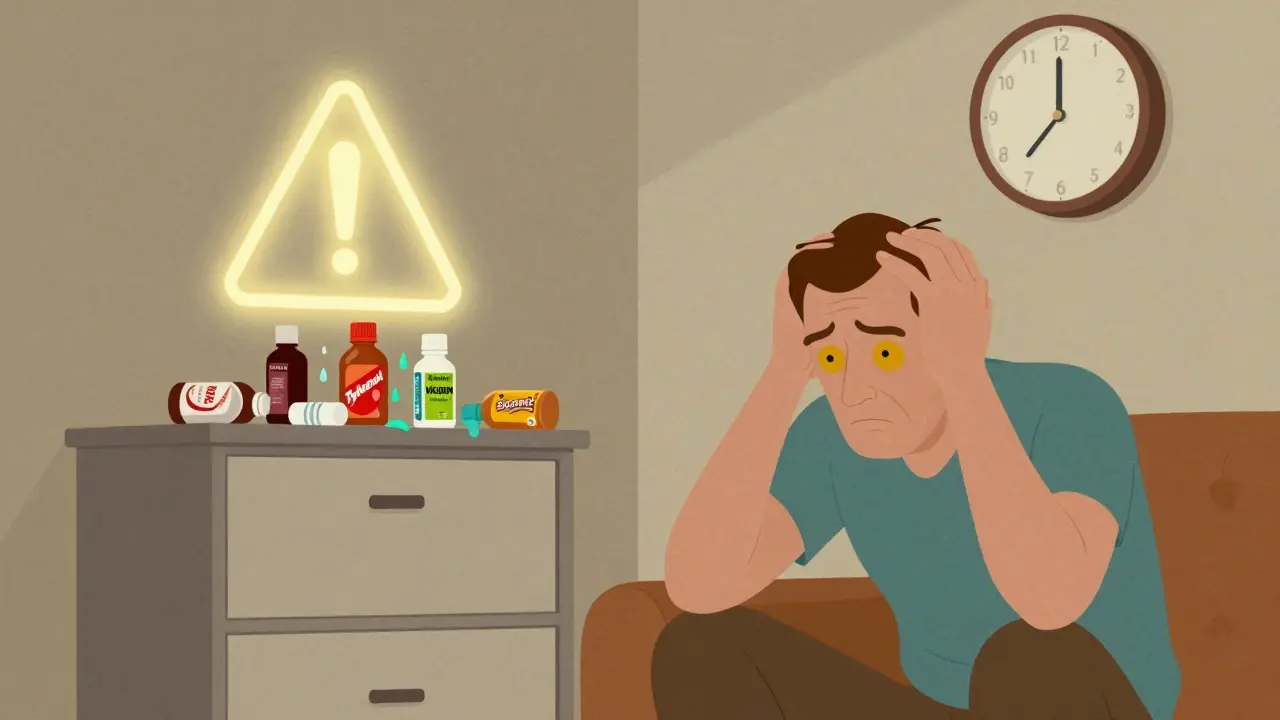
When someone suddenly becomes confused, yellow-eyed, and vomiting - but has no history of liver disease - it’s not just a bad flu. It could be fulminant hepatic failure, a life-or-death collapse of the liver that can happen in days, sometimes hours. And in nearly half of all cases, it’s caused by something most people think is safe: medications.
Every year in the U.S., about 2,000 people develop this condition. The worst part? Many of them walked into the ER thinking they were fine. They took their daily painkiller. They added a new supplement. They didn’t realize they’d crossed a line - until their body started shutting down.
What Exactly Is Fulminant Hepatic Failure?
Fulminant hepatic failure (FHF), also called acute liver failure, isn’t just a slow decline. It’s a rapid, catastrophic shutdown. The liver stops doing its job - detoxifying blood, making clotting factors, processing nutrients - and the whole body starts to crumble.
The signs are unmistakable once you know them: yellow skin or eyes (jaundice), confusion or drowsiness (hepatic encephalopathy), and abnormal blood clotting (INR ≥1.5). These three things together mean the liver is failing fast. And if you don’t catch it early, survival drops from 63% to just 28%.
What makes this different from chronic liver disease? Timing. FHF happens in people with no prior liver damage. It strikes within weeks - sometimes within days - after exposure to a trigger. The word “fulminant” comes from Latin for “striking like lightning,” and that’s exactly how it feels.
Acetaminophen: The Silent Killer in Your Medicine Cabinet
More than 45% of all medication-induced liver failures in the U.S. are caused by acetaminophen. That’s Tylenol. That’s Vicodin. That’s Excedrin. That’s the pill you grab without a second thought when your head hurts.
Here’s the scary part: you don’t need to overdose on purpose. Taking four 500mg pills a day - the maximum recommended dose - for a week or two can be enough. Especially if you’re also drinking alcohol, or taking other meds that contain acetaminophen. Many people don’t realize that hydrocodone, oxycodone, and even cold medicines often include it.
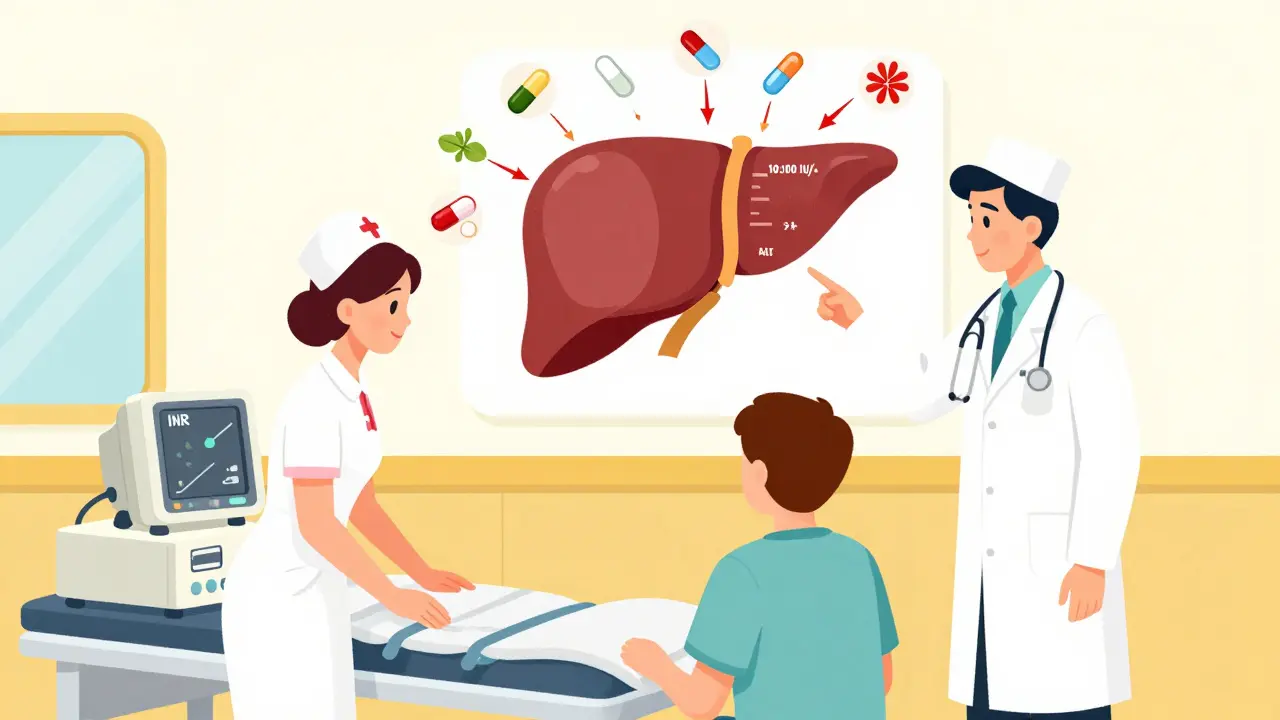
When too much acetaminophen hits the liver, it produces a toxic byproduct that destroys liver cells. The result? ALT levels spike above 1,000 IU/L - sometimes over 10,000. The ALT-to-AST ratio is usually greater than 2:1. That’s a red flag doctors look for.
But here’s what makes it even more dangerous: 23% of people who end up in the ER with acetaminophen-induced liver failure say they didn’t take any. They don’t remember. Or they think “just a few extra pills” won’t hurt. The truth? It’s the most preventable cause of liver failure - and we’re still missing it.
Other Medications That Can Trigger a Liver Crisis
Acetaminophen gets the most attention, but it’s not alone. Many other drugs can cause this same deadly reaction - often without warning.
- Antibiotics like amoxicillin-clavulanate (Augmentin) often cause liver damage after 10-14 days of use. Instead of sudden confusion, you might get prolonged jaundice, itching, or dark urine. The alkaline phosphatase level rises, not ALT.
- Antiseizure drugs like valproic acid can cause microvesicular steatosis - fat building up inside liver cells. Ammonia levels climb before encephalopathy hits. This one is especially common in kids and teens.
- Herbal supplements are a growing problem. Green tea extract, kava, and certain weight-loss pills have caused dozens of liver failure cases. One study found 42% of supplement-related liver failures involved green tea extract at doses over 800 mg/day. And the delay? Often 90 days. People think “natural” means safe. It doesn’t.
- NSAIDs like ibuprofen or naproxen can cause acute hepatitis that looks like gastroenteritis. Nausea, vomiting, abdominal pain - but no fever. No diarrhea. Just liver damage hiding in plain sight.
There’s no easy test to catch these. No single number that says “this drug did it.” That’s why doctors have to rule everything else out - viruses, autoimmune disease, alcohol - before they can say it’s drug-induced.
How Emergency Teams Spot It - Before It’s Too Late
Time is everything. The window for saving someone with acetaminophen overdose is about 8 hours. After that, the antidote - N-acetylcysteine - becomes less effective. By 24 hours, the damage may be irreversible.
That’s why emergency departments now follow a strict 30-minute triage protocol:
- If a patient has nausea or vomiting and jaundice - get an ALT, INR, and acetaminophen level right now.
- Check mental status every hour using the West Haven Criteria. Is the person confused? Slurring words? Falling asleep? That’s grade III or IV encephalopathy - a transplant emergency.
- If INR is above 1.5, repeat it every 6 hours. If it climbs past 6.5 in 48-96 hours, survival without a transplant is less than 10%.
And here’s the rule no one should ignore: Test for acetaminophen in every patient with ALT over 500 IU/L - even if they say they didn’t take it. That’s the American Association for the Study of Liver Diseases’ official guideline. And it’s backed by data: nearly a quarter of these cases are hidden.
The King’s College Criteria: When to Call for a Transplant
Not every case of liver failure needs a transplant. But some do - and waiting too long kills.
The King’s College Criteria are the gold standard for deciding who needs a liver transplant right away:
- INR >6.5 with grade III or IV encephalopathy
- Acetaminophen overdose with pH <7.3 or INR >3.5 and creatinine >3.4 mg/dL at 96 hours
If either of these is true, the patient is in the highest-risk group. Without a transplant, 90% die. With one, survival jumps to 70% or higher.
And here’s the kicker: many patients are turned away from transplant centers because they’re not recognized early enough. A nurse in 2022 saw a 45-year-old woman with INR 8.2 - but the ER team didn’t test for liver failure until it was too late. That’s the kind of mistake that still happens.
What Patients and Families Should Watch For
You don’t need to be a doctor to spot the warning signs. Here’s what to look for:
- Persistent nausea - not from food poisoning, not from stress. Just doesn’t go away.
- Yellowing of the eyes or skin - even slight.
- Subtle personality changes - forgetfulness, irritability, sleeping all day. Family members notice this first.
- Dark urine, pale stools - signs the liver isn’t processing bile.
- Unexplained fatigue - worse than normal, doesn’t improve with rest.
And if you’re taking any new medication, supplement, or herbal product - even if it’s “natural” - pay attention. If you start feeling off after 2-3 weeks, stop it and get checked. Don’t wait for jaundice. Don’t wait for confusion.
Why This Is Getting Worse - And What’s Being Done
Medication-induced liver failure is rising. The FDA recorded a 17% increase in cases from 2021 to 2022. Herbal supplements are the fastest-growing cause - up 42% in just one year. More adults are using them for sleep, anxiety, weight loss - without knowing the risks.
There’s progress, though. In 2023, the FDA cleared a new AI tool called HepaPredict that analyzes 17 clinical factors to predict liver failure with 89% accuracy within 24 hours. Emergency rooms in California are now required to report suspected cases within an hour - cutting transplant wait times by nearly 40 hours.
Researchers are also testing a new blood marker - microRNA-122 - that can detect acetaminophen damage as early as 6 hours after ingestion. That’s a game-changer.
But the biggest hurdle isn’t technology. It’s awareness. Doctors still miss it. Patients still ignore it. And too many people think, “It can’t happen to me.”
It can. And it does - every day.
Can you survive fulminant hepatic failure without a liver transplant?
Yes - but only if it’s caught early and treated quickly. For acetaminophen-induced cases, about 67% of patients recover with N-acetylcysteine and intensive care alone. For other drug-induced cases, survival without transplant drops to 29%. The key is timing: if you get treatment within 8 hours of overdose, your chances improve dramatically.
Is it safe to take acetaminophen every day for chronic pain?
The maximum daily dose is 4,000 mg - but that’s the absolute limit. Many people exceed it without realizing it, especially when taking combination painkillers like hydrocodone/acetaminophen. Taking 4,000 mg daily for more than a few days increases risk. Talk to your doctor about alternatives. Never combine multiple acetaminophen-containing products.
Can herbal supplements really cause liver failure?
Absolutely. Green tea extract, kava, comfrey, and certain weight-loss supplements have caused hundreds of cases of acute liver failure. Unlike prescription drugs, supplements aren’t tested for liver safety before sale. Many people take them for months before symptoms appear. The median time to failure is 90 days - long enough to think it’s harmless.
What should I do if I suspect someone has drug-induced liver failure?
Go to the ER immediately. Don’t wait. Bring a list of all medications, supplements, and dosages. If acetaminophen is involved, tell them how much and when it was taken. Ask for an acetaminophen level, INR, and liver enzymes. Time is the most critical factor - every hour matters.
Why do some people get liver failure from a drug while others don’t?
It’s unpredictable. Some people have genetic differences that make their liver more sensitive to certain drugs. Others may have underlying liver stress - from alcohol, obesity, or another condition - that makes them vulnerable. That’s why idiosyncratic reactions (unpredictable, rare) are so dangerous. There’s no way to screen for them before they happen.
Is there a hotline or resource for emergency help with suspected liver failure?
Yes. The National Acute Liver Failure Foundation runs a 24/7 hotline: 1-888-567-6253. They connect patients and ERs to transplant centers within minutes. The average response time is 18 minutes. If you’re in doubt, call them. They’ve helped save hundreds of lives.
Every year, people die from liver failure because no one recognized the signs in time. It’s not rare. It’s not mysterious. It’s preventable - if you know what to look for.
Ashley Karanja
January 26, 2026 AT 07:52Just read this and my heart sank. I’ve seen this happen to a friend who was on kombucha and green tea extract for "detox"-no alcohol, no smoking, just "natural wellness." Then one morning she couldn’t stand up. The ALT was over 12,000. They didn’t even suspect supplements. It took three days to connect the dots. Natural doesn’t mean safe. It means unregulated. And that’s terrifying.
Karen Droege
January 26, 2026 AT 15:37As a nurse who’s seen 17 cases of acetaminophen-induced FHF in 5 years, I can tell you: the worst part isn’t the liver-it’s the guilt. Families blame themselves. Patients say, "I only took two extra pills." Two extra pills. Two extra pills killed a 22-year-old college student last month. We need warning labels that scream, not whisper. And we need to stop treating supplements like yoga mats.
John Wippler
January 26, 2026 AT 20:09There’s a philosophical irony here: we trust pills because they’re regulated, but we distrust pharmaceuticals and embrace "natural" remedies that have zero oversight. We want control over our bodies, yet we outsource safety to corporations selling tea bags as medicine. The liver doesn’t care if it’s Tylenol or turmeric extract-it just metabolizes. And when it fails, it doesn’t ask for permission.
George Rahn
January 28, 2026 AT 08:34Let us be blunt: this is not medicine. This is cultural negligence dressed in organic cotton. We’ve turned healthcare into a marketplace of self-deception-where a $30 bottle of "liver cleanse" from Amazon is trusted more than a $5 generic drug approved by the FDA. And then we wonder why our hospitals are overflowing. It’s not a medical crisis. It’s a moral one. We’ve surrendered reason to marketing. And now people are dying because they believed a hashtag.
Shweta Deshpande
January 28, 2026 AT 09:38This is so important. I used to take ashwagandha for stress-never thought twice. But after reading this, I checked my bottle and realized I’d been taking 1,200 mg/day for 6 months. I stopped immediately and got my liver checked. Everything was fine… but what if I’d been one of the 42%? I’m telling everyone I know. If you’re taking something labeled "herbal," "natural," or "ancient remedy," ask: who tested it? For how long? And why isn’t it on a prescription pad?
Angie Thompson
January 28, 2026 AT 13:28OMG I just realized I’ve been taking Advil PM every night for months-it has acetaminophen 😱 I thought it was just the diphenhydramine. I’m gonna go check my meds right now. Thanks for this. I almost didn’t read it but I’m so glad I did 💪❤️
Kipper Pickens
January 29, 2026 AT 10:17The King’s College Criteria are underutilized in community hospitals. We have the data. We have the tools. But we lack the institutional urgency. The 30-minute triage protocol is gold standard-yet in 60% of rural ERs, it’s not even posted on the wall. This isn’t about knowledge. It’s about systems. And systems are slow. Too slow.
Faisal Mohamed
January 30, 2026 AT 12:52It’s not just the drugs-it’s the epistemology. We live in a post-truth pharmacopeia. If it’s not FDA-approved, it’s "natural." If it’s FDA-approved, it’s "Big Pharma lying." The liver doesn’t care about your ideology. It only cares about glutathione depletion. And when that runs out? Poof. No philosophy. No activism. Just necrosis.
Josh josh
February 1, 2026 AT 02:28bella nash
February 2, 2026 AT 13:13One must consider the ontological implications of pharmacological agency: when the body becomes the site of unintended consequence, and the self is rendered passive before the chemical sublime. The liver, as an organ of detoxification, is not merely a biological structure-it is the silent witness to our collective epistemic hubris. We ingest without inquiry. We trust without verification. And thus, we fall.
SWAPNIL SIDAM
February 4, 2026 AT 10:06My uncle died from this. He took a "natural energy booster" from a yoga studio. He was 54. Healthy. No alcohol. No smoking. Just one bottle. Three weeks later-he was gone. We never knew it was the supplement. The hospital didn’t test for it. I’m sharing this everywhere. Please. Stop assuming "natural" means safe.
Betty Bomber
February 5, 2026 AT 10:20Wow. I’m just sitting here with my mug of green tea wondering if I’m slowly killing myself. I guess I’ll switch to coffee. Or maybe just… stop taking everything.
Napoleon Huere
February 5, 2026 AT 14:23There’s a quiet revolution happening in emergency medicine-not in tech, not in drugs, but in awareness. Nurses are now asking: "What are you taking? Even the stuff you think doesn’t count?" And patients are starting to answer. It’s slow. But it’s real. This post? It’s part of that wave. Keep talking. Keep sharing. Someone’s life depends on it.