
Gastroparesis is not just a slow stomach-it’s a broken communication line between your brain and your digestive system. When your stomach can’t empty food properly, even simple meals become a battle. Nausea, bloating, and feeling full after just a few bites aren’t just annoying-they’re signs your body is struggling to do something basic: move food along. And if left unmanaged, this condition can lead to malnutrition, dangerous food masses called bezoars, and wild blood sugar swings, especially if you have diabetes.
What Gastroparesis Really Feels Like
Most people think stomach problems mean heartburn or cramps. But gastroparesis is different. It’s not about acid-it’s about motion. Your stomach muscles don’t contract the way they should. Food sits there, unmoved. The result? A long list of symptoms that hit hard and stay long. Nine out of ten people with gastroparesis feel nauseous after eating. Three-quarters vomit regularly. Eighty-five percent feel full after eating just a small amount. And 70% are stuck with that heavy, swollen feeling long after the meal is over. It’s not just the stomach. Many also deal with abdominal pain, constant bloating, and belching. Some even get heartburn. These symptoms don’t come and go-they stick around for months, sometimes years. And they’re worse after eating. That’s why so many people with gastroparesis start avoiding meals, losing weight, and pulling back from social events. One in two says they feel anxious about eating. One in three has developed a fear of food altogether.Who Gets Gastroparesis-and Why
This isn’t random. Women are four times more likely to get it than men. And if you have diabetes, your risk shoots up. Up to half of people with type 1 diabetes and 30% of those with long-term type 2 diabetes develop gastroparesis. That’s because high blood sugar damages the vagus nerve-the main nerve that tells your stomach when and how to move food. But diabetes isn’t the only cause. About one-third of cases have no clear cause at all-these are called idiopathic. Another 13% happen after stomach surgery, where nerves or muscles get accidentally cut or scarred. Some cases are tied to autoimmune diseases like scleroderma. And in 70% of cases, the root problem is nerve damage. In 15%, it’s the stomach muscles themselves that are weakened.How Doctors Diagnose It
You can’t diagnose gastroparesis with a blood test. The gold standard is a gastric emptying scan. You eat a meal with a tiny bit of radioactive material, then lie under a camera that tracks how fast it leaves your stomach. If less than 40% is gone after two hours, you have gastroparesis. Some clinics use stricter cutoffs, especially for adults. But symptoms matter just as much. If you’ve had nausea, vomiting, and early fullness for at least three months-and doctors ruled out a physical blockage like a tumor or scar tissue-you’re likely dealing with gastroparesis. The tricky part? It looks a lot like functional dyspepsia. The difference? Gastroparesis brings more vomiting and less pain. Dyspepsia is mostly pain and bloating without the delayed emptying.Diet Is the First-and Most Powerful-Tool
Here’s the good news: you can take control. Diet changes alone help 65% of people feel significantly better. You don’t need surgery or pills right away. Start here:- Small meals, often. Eat 5 to 6 tiny meals a day instead of 3 big ones. Keep each meal under 1.5 cups. Large portions overwhelm your stomach.
- Go low-fat. Fat slows digestion by 30-50%. Avoid fried foods, butter, cream, fatty meats, and full-fat dairy. Aim for under 3 grams of fat per meal.
- Cut fiber. Fiber is hard to break down. Skip raw veggies, whole grains, nuts, seeds, and skins on fruits. Cooked carrots, applesauce, and peeled potatoes are safer choices.
- Blend it. If chewing isn’t enough, blend your food. A smooth texture means your stomach doesn’t have to work as hard. A 2022 study found 70% of patients improved when meals were blended to a particle size under 2mm.
- Avoid carbonation. Soda and sparkling water puff up your stomach, adding 25% more pressure. Stick to still water, broth, or herbal tea.
- Separate solids and liquids. Drink fluids 30 minutes before or after meals. Mixing them increases stomach volume by 40%, making bloating worse.
- Chew, chew, chew. Don’t rush. Chew each bite until it’s almost liquid. This reduces the work your stomach has to do.
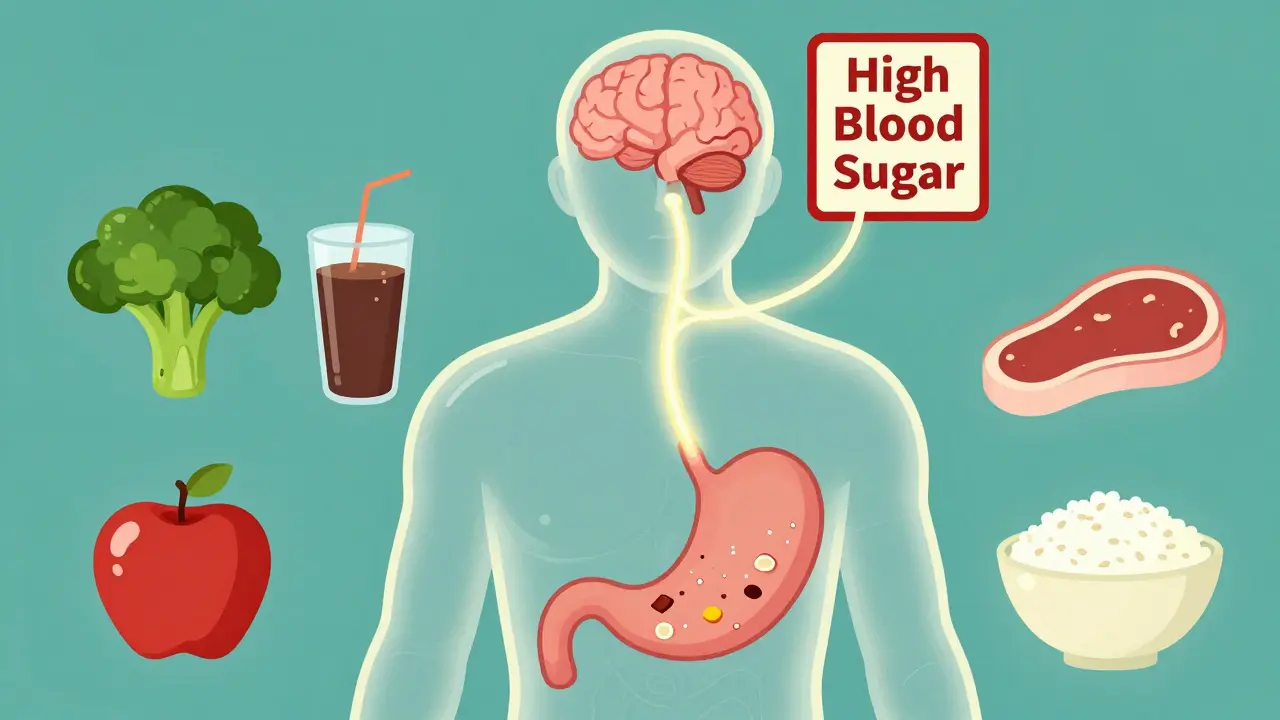
What to Eat (and What to Skip)
Here’s a quick guide to food choices:| Good Choices | Avoid |
|---|---|
| Blended soups, smoothies | Fried chicken, pizza, burgers |
| Applesauce, ripe bananas | Raw apples, broccoli, corn |
| White rice, pasta, mashed potatoes | Brown rice, whole wheat bread, beans |
| Lean ground turkey, tofu | Steak, sausage, pork chops |
| Clear broth, herbal tea | Soda, sparkling water, milkshakes |
| Low-fat yogurt, cottage cheese | Whipped cream, cheese slices, butter |
When Diet Isn’t Enough
If you’ve stuck to the diet for 8-12 weeks and still feel awful, it’s time to talk to your doctor about other options. Medications like metoclopramide can help your stomach contract better-but they come with risks. Long-term use can cause a serious movement disorder called tardive dyskinesia. That’s why doctors usually limit it to short-term use. For people who don’t respond to pills, gastric electrical stimulation (GES) is an option. It’s a small device implanted under the skin that sends mild pulses to the stomach muscles. In 70% of cases, it cuts vomiting by more than half. It’s not a cure, but it gives people their lives back. A newer procedure called per-oral pyloromyotomy (POP) is gaining traction. Doctors use an endoscope to cut the muscle at the bottom of the stomach, making it easier for food to pass. Studies show 60-70% of patients see big improvements.Complications You Can’t Ignore
Gastroparesis doesn’t just make you feel bad-it can make you sick in dangerous ways. About 6% of people develop bezoars: hard lumps of undigested food that get stuck in the stomach. These can block the outlet and need to be removed with a scope or surgery. Dehydration is common. If you’re vomiting daily, you’re losing fluids and electrolytes. One in four people with moderate to severe gastroparesis ends up hospitalized for dehydration or low potassium. Malnutrition hits 30-40% of long-term patients. Some lose over 10% of their body weight. And if you have diabetes, gastroparesis makes blood sugar control nearly impossible. Food sits in the stomach, then suddenly dumps into the intestine. Blood sugar spikes unpredictably. Many patients end up with more insulin shots, more lows, and more stress.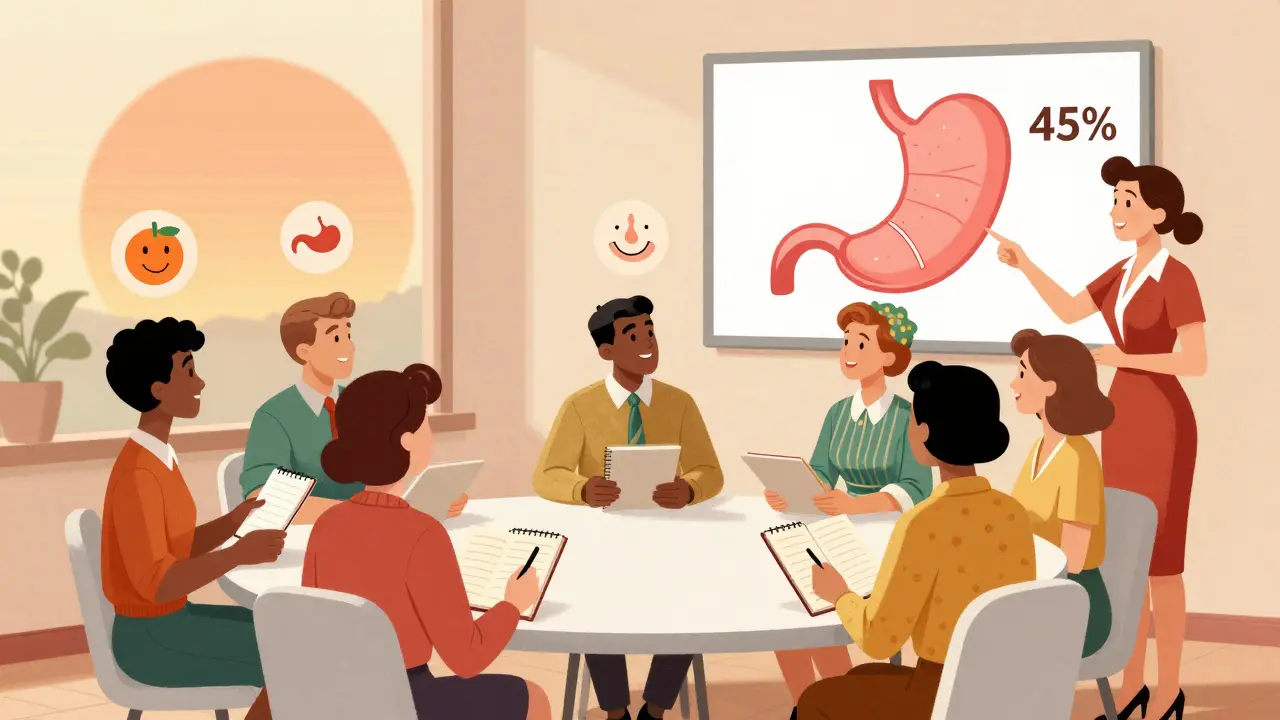
What Works Best in the Long Run
The most successful patients don’t just follow a diet-they track it. Keeping a food and symptom diary helps you spot your personal triggers. Eighty percent of people find their worst foods this way. Maybe it’s spinach. Maybe it’s oatmeal. Maybe it’s even a smoothie with too much almond butter. Working with a registered dietitian who knows gastroparesis improves outcomes by 40%. They’ll help you get enough calories, protein, and nutrients without triggering symptoms. They’ll also teach you how to use supplements if needed-like liquid meal replacements or vitamins that are easy to absorb.The Future Is Personalized
Research is moving fast. Scientists have identified three different symptom patterns in gastroparesis-some people have mostly nausea, others have severe bloating, and some have pain with little vomiting. That means treatment can be tailored. New drugs like relamorelin, a ghrelin agonist, are showing promise in trials, improving gastric emptying by 35%. AI tools are being tested to read gastric scans more accurately than humans. And early studies on probiotics suggest certain strains can reduce bloating and nausea by 30%. One day, we might even repair damaged nerves with stem cells. Early trials show a 20% improvement in stomach movement after a year. It’s not ready yet-but it’s coming.What to Do Today
If you’re struggling with delayed gastric emptying, start simple. Cut out soda and fatty foods. Eat six small meals. Blend your food if chewing feels like a chore. Track what you eat and how you feel after. Talk to your doctor about a gastric emptying test. And don’t wait to see a dietitian. The sooner you start managing this, the less it will control your life. You don’t need to give up food. You just need to change how you eat it.Can gastroparesis be cured?
No, there is no cure for gastroparesis. But symptoms can be managed effectively in most cases through diet changes, medications, and advanced procedures. Many people live full, active lives with proper management.
Is gastroparesis linked to diabetes?
Yes. Up to 50% of people with long-term type 1 diabetes and about 30% of those with type 2 diabetes develop gastroparesis. High blood sugar damages the vagus nerve, which controls stomach emptying. Managing blood sugar closely can slow or prevent its progression.
What foods should I avoid with gastroparesis?
Avoid high-fat foods like fried items, cheese, and cream; high-fiber foods like raw vegetables, whole grains, nuts, and seeds; carbonated drinks; and tough meats like steak or pork chops. These slow digestion or are hard to break down.
Can I still eat fruits and vegetables?
Yes-but cooked and blended. Avoid raw produce. Try applesauce, peeled and cooked carrots, squash, and blended green smoothies without pulp. Remove skins and seeds. These are much easier for your stomach to process.
How long does it take to see improvement with diet changes?
Most people notice better symptoms within 8 to 12 weeks of sticking to a gastroparesis-friendly diet. Some feel relief sooner, especially if they eliminate carbonation and fat. Consistency is key-skip meals or slip back into old habits, and symptoms return.
Should I see a dietitian for gastroparesis?
Yes. Working with a registered dietitian who specializes in gastroparesis improves outcomes by 40% compared to self-management. They help you get enough calories and nutrients without triggering symptoms, and they tailor your plan to your personal triggers.
Can gastroparesis lead to weight loss?
Yes. Up to 40% of people with chronic gastroparesis experience malnutrition, and 20% lose more than 10% of their body weight. This happens because food doesn’t move well, so you eat less, absorb fewer nutrients, and burn calories just trying to manage symptoms.
Are there any new treatments on the horizon?
Yes. New drugs like relamorelin are showing promise in trials, improving gastric emptying by 35%. Procedures like per-oral pyloromyotomy (POP) are already helping patients. Researchers are also testing AI to read gastric scans more accurately and probiotics to reduce bloating. Stem cell therapy for nerve repair is in early stages but shows potential.
Jan Hess
January 17, 2026 AT 02:01Just started the low-fat, small-meal thing last week and already feel like a new person. No more bloating after lunch and I can actually sit through a movie without needing to nap. Seriously, blend your food if you have to. I blend my chicken and rice now and it’s a game changer.
Stop thinking it’s ‘dieting’-it’s just eating smart.
Iona Jane
January 17, 2026 AT 14:05They’re hiding the real cause. It’s not nerves or diabetes-it’s glyphosate in your food. Big Pharma doesn’t want you to know that stopping Roundup fixes gastroparesis. I’ve seen it. My cousin went from vomiting daily to eating steak in 3 weeks after switching to organic. The FDA won’t tell you this. They profit off your suffering.
Ask yourself: who benefits?
Jaspreet Kaur Chana
January 18, 2026 AT 19:24In India we have a traditional remedy-jeera water with a pinch of black salt, drunk warm before meals. My aunt had this for 15 years after her diabetes diagnosis and never needed surgery. We don’t need fancy machines or pills. Sometimes the oldest wisdom works best.
Also, ginger tea after eating? Magic. I know it sounds silly but try it for 10 days. Your stomach will thank you.
And yes, we eat with our hands here-makes you chew slower, which helps too. No fork needed.
Don’t ignore Ayurveda. It’s not alternative-it’s ancestral science.
ellen adamina
January 19, 2026 AT 07:29I’ve been dealing with this for 4 years. The diet advice here is spot on. I didn’t realize how much carbonation was wrecking me until I cut soda. I used to think it was ‘just gas’-turns out it was doubling my bloating.
Also, chewing each bite 30 times? Brutal at first. Now I don’t even think about it. It’s automatic.
Thank you for the food list. Saved me so much trial and error.
Gloria Montero Puertas
January 20, 2026 AT 12:23Ugh. This is such a basic, amateurish guide. You mention ‘blend your food’ like it’s some revolutionary tip? Have you even read the 2023 ESPEN guidelines? They recommend particle size under 1.5mm, not 2mm. And you call applesauce ‘safe’? Pectin content can still delay gastric emptying in Type 2 patients.
And where’s the discussion on prokinetic alternatives to metoclopramide? Domperidone, for instance, is available outside the U.S. and has a far better safety profile.
Also-why no mention of the role of gut microbiota? This is 2025. You’re still treating symptoms like it’s 2005.
Tom Doan
January 20, 2026 AT 22:39So let me get this straight. You’re telling me the solution to a neurological disorder is… chewing more? And blending? That’s it?
Because if I just chew my steak for 90 seconds, the vagus nerve will magically reboot?
Meanwhile, the people who actually need GES or POP are being told to ‘try applesauce’ like it’s a yoga pose.
What a tragic oversimplification. The real issue? The medical system ignores this until patients are hospitalized. Then they throw drugs at it.
And you call this ‘management’? It’s triage with a side of kale.
Arjun Seth
January 21, 2026 AT 18:25People need to stop blaming food. This is a spiritual problem. Your stomach is full of resentment. You hold onto anger, you hold onto food. That’s why it doesn’t move. I’ve seen this in my yoga retreats. One woman stopped vomiting after she wrote a letter to her father and burned it.
Also, avoid sugar. Sugar is the devil’s tool. And don’t eat after 7pm. Your stomach needs peace. It’s not a machine. It’s a soul.
Try chanting Om before meals. It vibrates the vagus nerve. Science says so. I read it on a blog.
Ayush Pareek
January 22, 2026 AT 04:06Hey, just wanted to say this post saved me. I was ready to give up. I thought I was just lazy or weak. Turns out my body was fighting me.
Started with the blended soups and water before meals. No soda. No butter. And guess what? I ate dinner with my family last night for the first time in 8 months.
You’re not alone. This isn’t your fault. Small steps matter. Keep going. I’m rooting for you.
Jami Reynolds
January 23, 2026 AT 12:23Interesting. But did you consider the possibility that this entire condition is a construct of the pharmaceutical-industrial complex? The ‘gastric emptying scan’ uses radioactive isotopes that are patented by GE Healthcare. The ‘diet guidelines’ are funded by Abbott Nutrition. The ‘new drugs’ like relamorelin? Developed by a company owned by the same investors who profit from insulin.
Why is no one asking: what if the cure is not in the stomach-but in the system?
What if we’re being manipulated into believing we need a protocol instead of freedom?
Just a thought.