
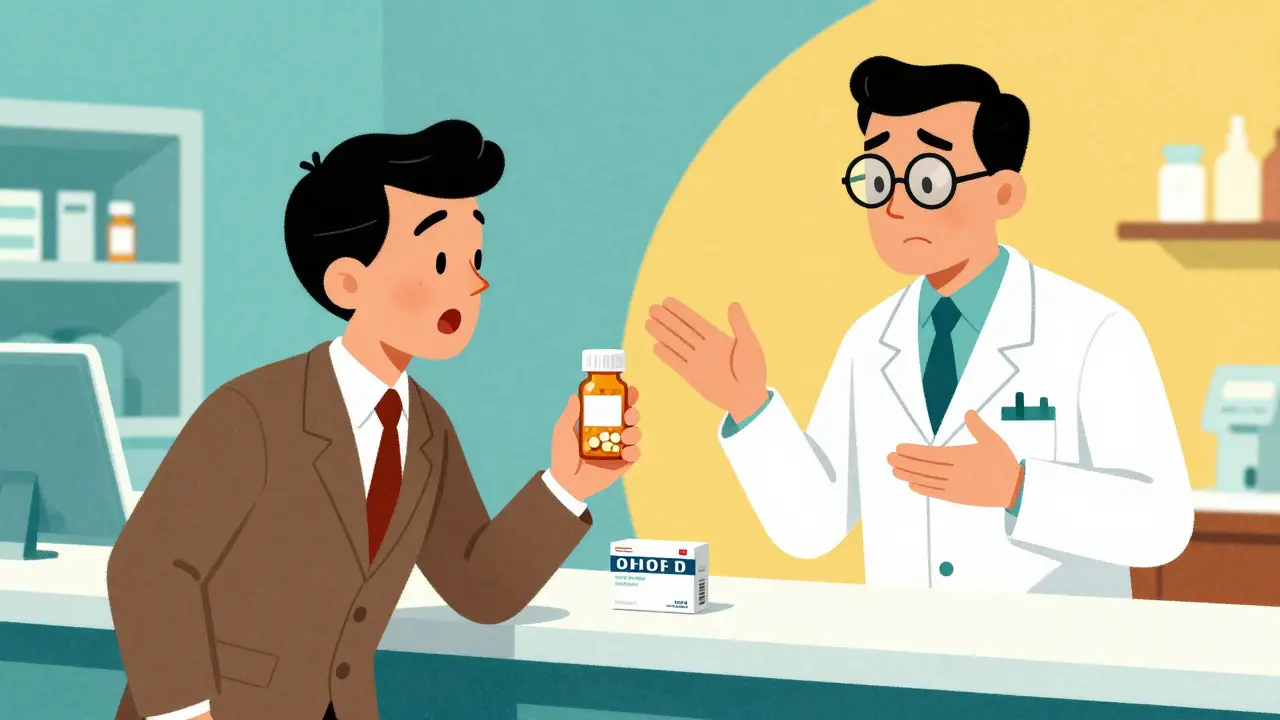
Walk into any pharmacy in the United States today, and you are likely picking up a pill that costs a fraction of its original brand-name price. This is the promise of generic drug competition, defined as the economic dynamic where multiple manufacturers produce bioequivalent versions of off-patent medications, driving down costs through market rivalry. For decades, the prevailing wisdom has been simple: more competitors equal lower prices. But if you look closer at the data from 2023 to 2026, that equation starts to break down. The reality is messier. Sometimes, having five or six generic makers doesn't slash prices as much as you'd expect. Other times, the original brand raises its price when generics arrive. Why does this happen? Understanding these effects requires looking past the basic supply-and-demand charts and diving into the strategic behaviors of pharmaceutical companies, the role of regulators, and the hidden structures of the healthcare purchasing system.
The Non-Linear Drop: How Many Generics Do You Need?
It helps to start with the baseline expectations set by regulatory bodies. The Food and Drug Administration (FDA) provides clear benchmarks for how prices should behave as new entrants join the market. According to FDA analysis using Average Manufacturer Price (AMP) data, the first generic competitor typically reduces the price by 30% to 39% compared to the brand name. Add a second competitor, and prices drop by about 54%. The real cliff happens later: when you reach six or more competitors, the average manufacturer price can fall by 95%. This is the "robust generic market" model that policymakers love to cite.
However, these numbers tell only part of the story. They represent averages across thousands of drugs, masking significant variations. In many specific markets, especially those with complex formulations or limited manufacturing capacity, the price decline is far less steep. The relationship between competitor count and price reduction is not linear; it is logarithmic. The biggest savings come from the first few entrants. After that, each additional competitor yields diminishing returns on price reduction. This means that while adding a seventh generic maker might technically increase competition, the financial benefit to the patient or insurer may be negligible compared to the jump from one to two competitors.
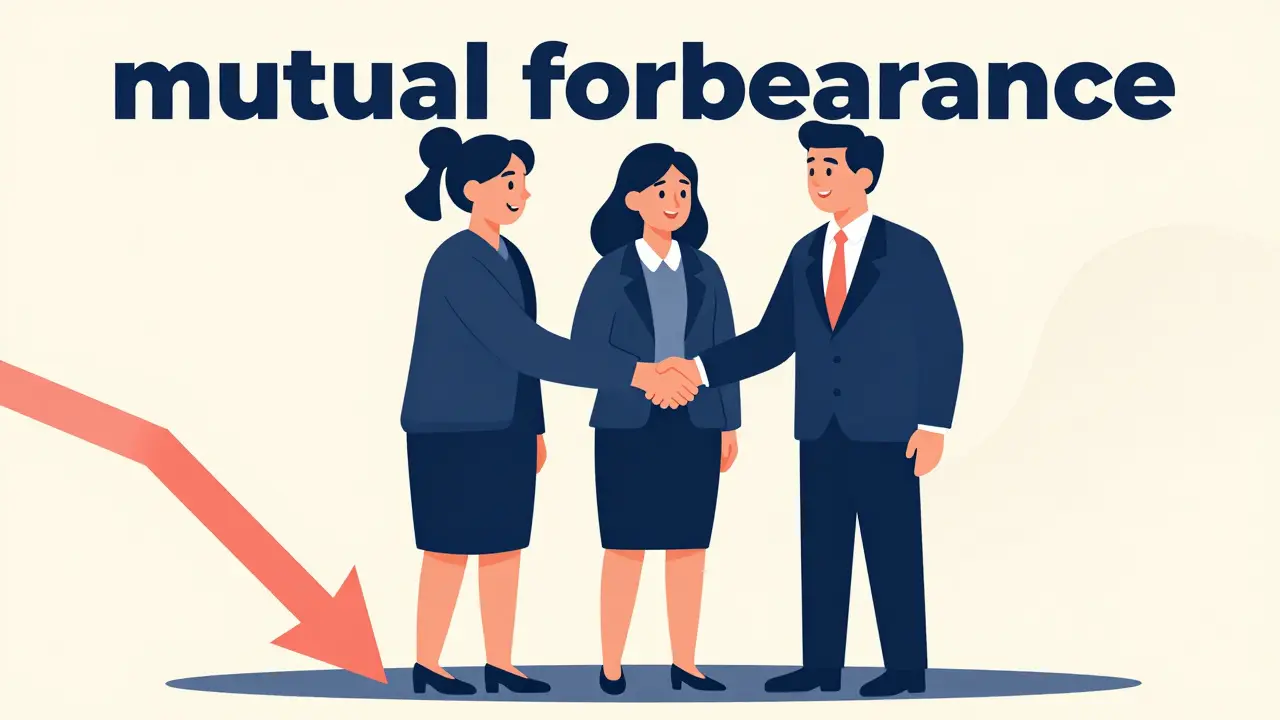
The Paradox of Mutual Forbearance
One of the most counterintuitive findings in recent health economics research comes from studies published in journals like *Health Economics*. Researchers Carolina Santos, Eduardo Costa, and Sara Machado documented a phenomenon known as "mutual forbearance." This occurs when pharmaceutical companies repeatedly face the same rivals across different drug markets. Instead of engaging in aggressive price wars, they develop an unspoken understanding to keep prices stable. This was clearly observed in Portugal's statin market. Despite having multiple generic competitors and strict regulatory price caps, drugs often remained priced at or near those ceilings. The companies essentially coordinated their behavior without explicit communication, anchored by the regulatory limits. This suggests that simply approving more generics does not guarantee competition if the players in the market have incentives to avoid fighting over margins.
Brand Name Strategies: The Price Hike Puzzle
If generics are supposed to drive prices down, why do some brand-name drugs actually become more expensive after generic entry? A 2023 study of 27 originator drugs in China revealed a striking paradox. Eight quarters after the first generic entered the market, 15 of the 27 originator drugs still held over 70% of the market share. More surprisingly, while most brand companies lowered prices slightly (by an average of 3%), three drugs actually saw their prices increase by 0.62% on average. This happens because brand manufacturers sometimes raise prices to compensate for lost volume, particularly for drugs where patients perceive a quality advantage or where insurance plans heavily favor the brand. This strategy shifts the cost burden onto those who remain loyal to the brand, effectively subsidizing the loss of market share rather than competing directly on price.
| Market Scenario | Price Impact | Key Driver |
|---|---|---|
| First Generic Entry | -30% to -39% | Loss of monopoly power |
| Two Competitors | -54% | Direct head-to-head rivalry |
| Six+ Competitors | -95% | Commoditization of product |
| Mutual Forbearance | Minimal Reduction | Strategic coordination among rivals |
| Brand Response | +0.62% (in some cases) | Compensation for volume loss |
The Complexity Barrier: Why Some Markets Stay Expensive
Not all generic drugs are created equal. Simple pills, like aspirin or metformin, are easy to manufacture. But advanced delivery systems-such as extended-release capsules, transdermal patches, or injectable biologics-create substantial barriers to entry. Regulatory agencies require generic manufacturers to prove "sameness" across all critical quality attributes. This necessitates costly bridging studies that smaller manufacturers cannot afford. As a result, only the largest, most technically capable generic companies enter these markets. This "complexity advantage" maintains higher prices even when multiple competitors exist, because the high fixed costs of development limit the number of viable players. The European Medicines Agency and the FDA have attempted to harmonize requirements through programs like the Parallel Scientific Advice Pilot Program, but the regulatory burden remains high enough to deter many potential entrants.
The Role of Pharmacy Benefit Managers and Authorized Generics
The structure of the U.S. healthcare purchasing system also distorts competitive outcomes. Pharmacy Benefit Managers (PBMs) account for approximately 90% of all pharmaceutical purchasing. Their negotiating power fundamentally alters how brands respond to generic competition. When PBMs rebate heavily on brand names, the incentive for patients to switch to generics diminishes. Additionally, the introduction of authorized generics (AGs)-brand-name drugs sold under a generic label by the innovator company-adds another layer of complexity. Federal Trade Commission studies show that AG competition can reduce generic prices and lower brand wholesale prices by 8-12%. However, this effect rarely translates to lower retail prices for consumers. Interestingly, when the authorized generic is not owned by the brand company, brand prices tend to be 22% higher, suggesting that ownership structures significantly influence competitive intensity.
Regulatory Shifts: The Inflation Reduction Act Impact
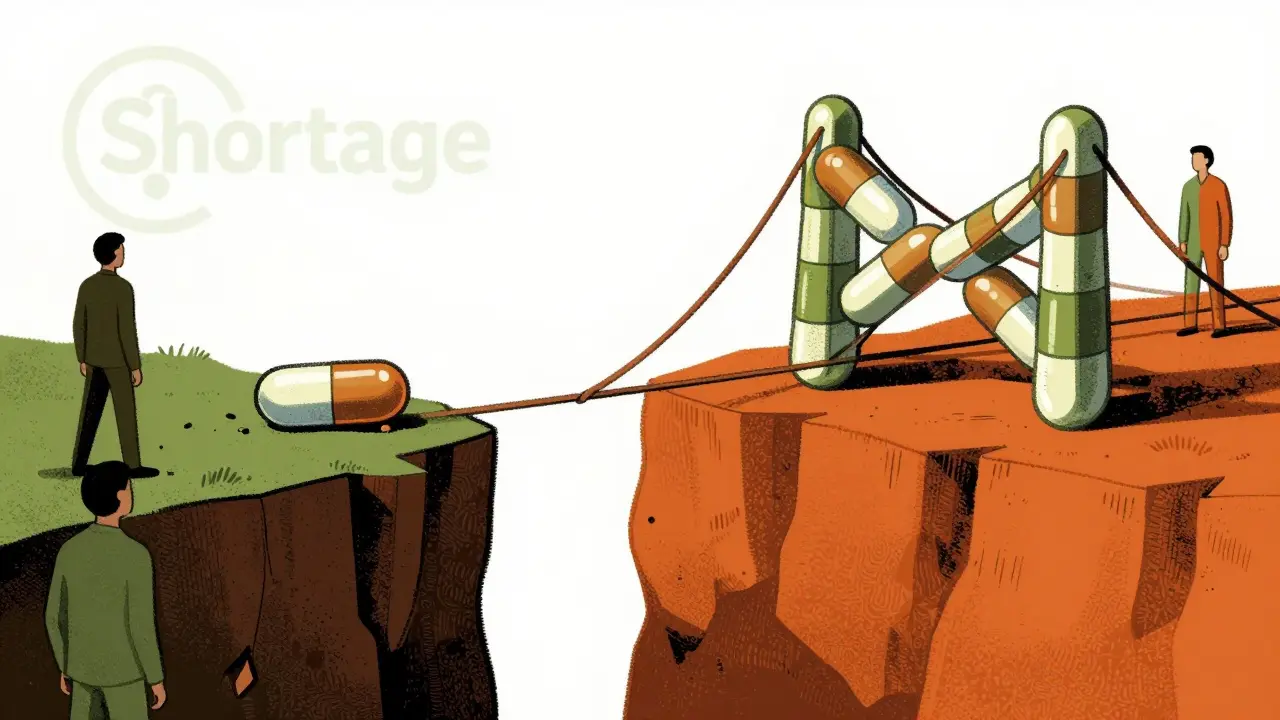
Looking ahead, the Inflation Reduction Act (IRA) of 2022 introduces new variables into the generic competition equation. The Medicare Drug Price Negotiation Program sets Maximum Fair Prices (MFPs) for certain brand medications. Analysis by Lumanity projects that these MFPs may reduce the financial incentives for generic manufacturers to enter markets. If the brand price is already suppressed by government negotiation, the profit margin for generics shrinks. This threatens the robust generic market model, potentially leading to fewer manufacturers per drug and reduced supply chain resilience. Data from the FDA shows that drugs with three or more manufacturers experienced 67% fewer shortages than single-source generics between 2018 and 2022. If the IRA discourages entry, we could see a trade-off between lower initial prices and increased risk of future shortages.
Supply Chain Resilience vs. Price Competition
While price is the most visible metric of competition, supply stability is equally important. A market with multiple generic competitors is inherently more resilient. If one manufacturer faces production issues, others can step in. This redundancy is crucial for essential medications. However, the drive for maximum price reduction can sometimes undermine this resilience. When prices drop too low, manufacturers may exit the market entirely, leaving only one or two suppliers. This creates a fragile ecosystem where a single disruption can cause widespread shortages. Policymakers must balance the desire for low prices with the need for a diverse manufacturing base. The goal should not just be the cheapest pill, but a reliable supply of affordable medication.
Why don't generic prices always drop when more competitors enter?
Prices may not drop due to "mutual forbearance," where companies avoid price wars, or because of high regulatory costs for complex drugs that limit the number of viable manufacturers. Additionally, PBM rebates can obscure true price reductions for consumers.
What is the impact of the Inflation Reduction Act on generic competition?
The IRA's price negotiations may reduce profit margins for generic manufacturers, potentially discouraging market entry. This could lead to fewer competitors per drug, increasing the risk of supply shortages despite lower initial brand prices.
How do authorized generics affect market prices?
Authorized generics can lower wholesale prices by 8-12%, but this rarely results in lower retail prices for patients. Ownership structure matters: brand prices are often higher when the authorized generic is not owned by the brand company.
Why do some brand-name drugs raise prices after generic entry?
Brands may raise prices to compensate for lost market share, particularly if patients perceive a quality difference or if insurance plans favor the brand. This strategy shifts costs to loyal customers rather than competing on price.
Does more generic competition improve drug supply reliability?
Yes. Drugs with three or more manufacturers experience significantly fewer shortages than single-source generics. Multiple competitors create a redundant supply chain that can withstand individual production failures.