
Grapefruit Medication Interaction Checker
Click on the fruit you plan to consume:
Interaction Result
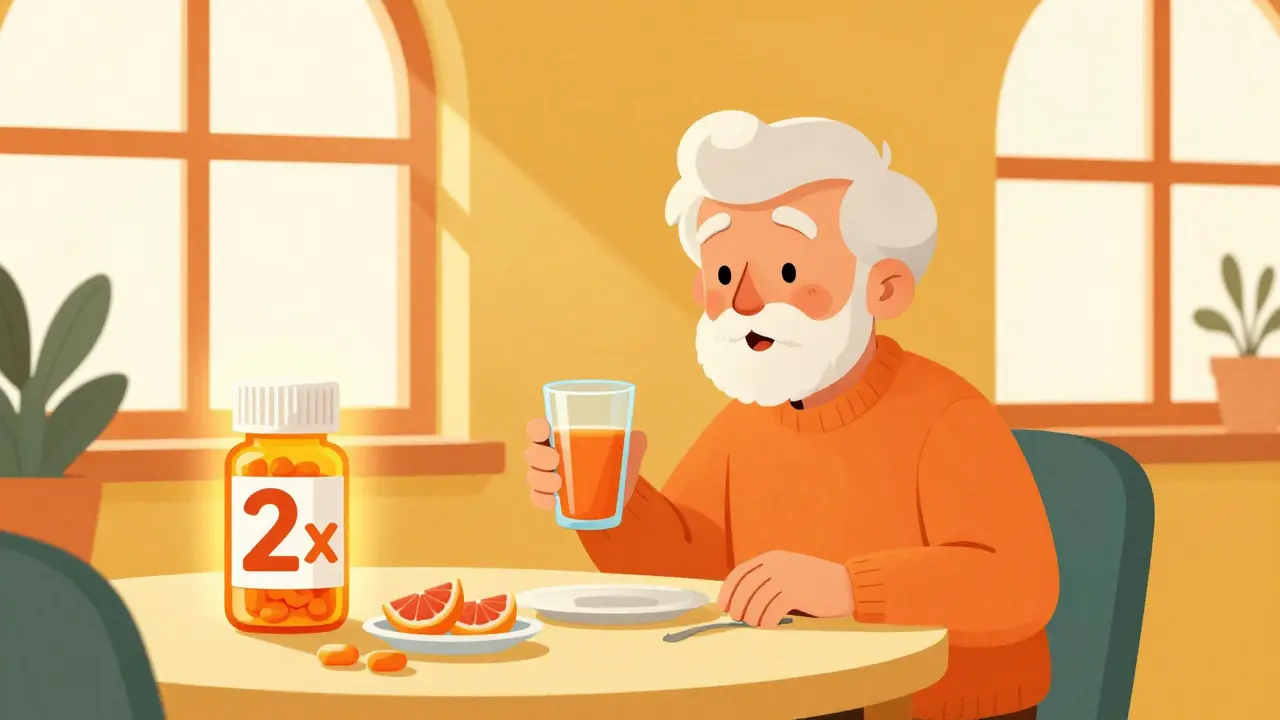
Imagine enjoying a fresh glass of orange-colored juice or slicing into a tart fruit for breakfast, completely unaware that you are inadvertently doubling the dose of your heart medication in your bloodstream. This isn’t science fiction; it is a documented pharmacological reality known as grapefruit-drug interaction, which occurs when compounds in the citrus fruit interfere with how your body processes certain medications. For millions of people, particularly older adults managing chronic conditions, this common dietary habit can turn a standard prescription into a potential health hazard.
The phenomenon was first identified in 1989 by researchers at the University of Western Ontario, who discovered that grapefruit juice increased blood levels of the blood pressure drug felodipine by 355%. Since then, the list of affected drugs has grown significantly. The Canadian Medical Association Journal (CMAJ) published an expanded list of 85 interacting medications in 2012, noting that 43 of these interactions could be life-threatening. Today, the U.S. Food and Drug Administration (FDA) mandates warnings on prescription labels for numerous high-risk drugs. Understanding why this happens and which medications are involved is not just academic-it is essential for patient safety.
Why Grapefruit Disrupts Your Medication
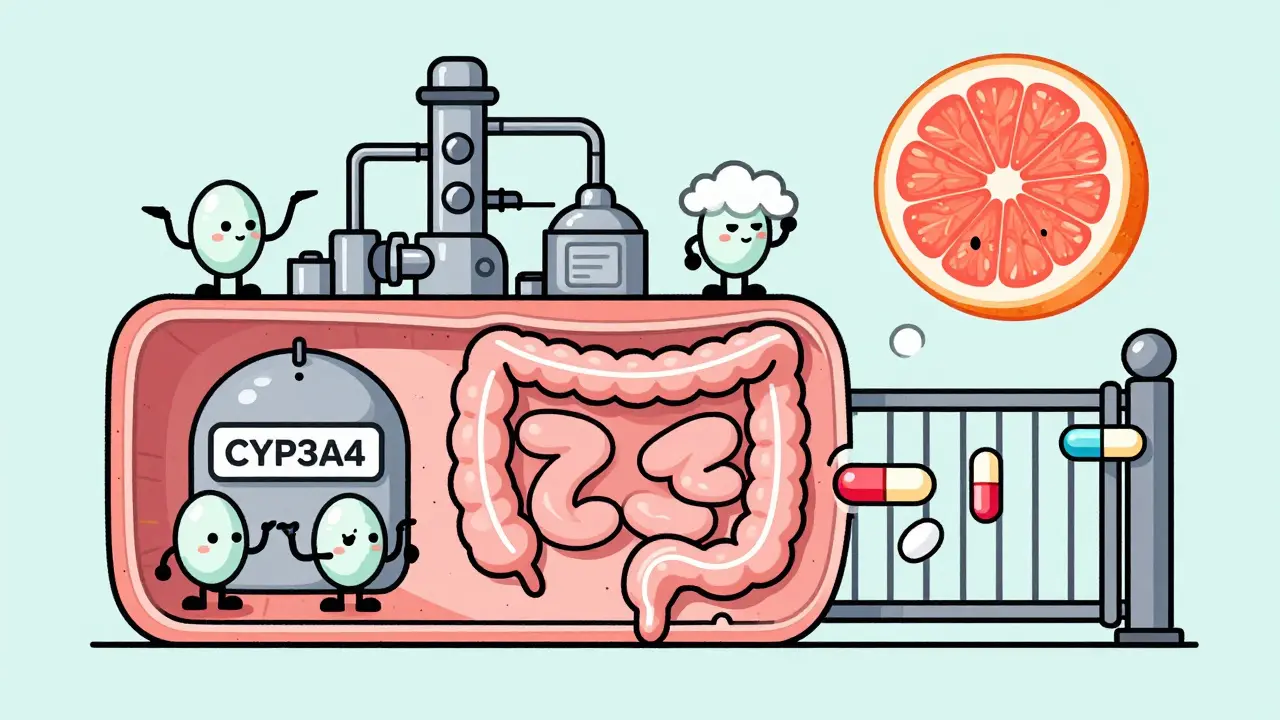
To understand the risk, you need to look at what happens inside your intestines. Most medications are processed by enzymes before they enter your bloodstream. The primary enzyme responsible for breaking down many drugs is called CYP3A4, a cytochrome P450 enzyme found in the intestinal wall and liver that metabolizes approximately 50% of all prescribed medications. Normally, this enzyme acts as a gatekeeper, breaking down a portion of the drug so that only a safe amount reaches your circulation.
Grapefruit contains specific chemical compounds known as furanocoumarins, bioactive compounds including bergamottin and 6',7'-dihydroxybergamottin that irreversibly inhibit intestinal CYP3A4 enzymes. When you consume grapefruit, these furanocoumarins bind to the CYP3A4 enzymes and shut them down. Unlike other inhibitors that wear off quickly, this binding is irreversible. Your body must produce new enzymes to replace the disabled ones, a process that takes 24 to 72 hours.
This creates a dangerous window of vulnerability. Because the enzymes are offline, the "first-pass metabolism" of the drug is reduced. Consequently, a much larger percentage of the medication enters your bloodstream unchanged. For some drugs, this can increase systemic exposure by 30% to 300%. Crucially, simply waiting two hours after taking your pill before eating grapefruit does not help. The enzyme inhibition persists long after the fruit is digested, meaning the interaction can occur even if the medication and the fruit are consumed at different times of the day.
High-Risk Medications: Statins and Heart Health
Statins, the most commonly prescribed cholesterol-lowering drugs, are among the most sensitive to grapefruit interference. However, not all statins are created equal. The risk depends entirely on which metabolic pathway the specific drug uses.
| Medication Name | Brand Name | Risk Level | Effect of Grapefruit Juice (200mL) |
|---|---|---|---|
| Simvastatin | Zocor | Very High | Blood levels triple (330% increase in AUC) |
| Atorvastatin | Lipitor | Moderate | 80% increase in blood concentration |
| Lovastatin | Mevacor | High | Up to 1500% increased bioavailability |
| Pravastatin | Pravachol | Low / None | No significant interaction (different metabolic pathway) |
| Rosuvastatin | Crestor | Low / None | No significant interaction (different metabolic pathway) |
For patients taking simvastatin or lovastatin, consuming just one glass of grapefruit juice daily can dramatically raise the risk of rhabdomyolysis-a severe condition where muscle tissue breaks down and releases damaging proteins into the blood, potentially leading to kidney failure. If you are on a statin, ask your doctor if switching to pravastatin or rosuvastatin is an option. These alternatives do not rely heavily on the CYP3A4 enzyme and are generally safe to consume with grapefruit.
Blood Pressure and Immunosuppressants
Beyond cholesterol management, calcium channel blockers used for hypertension and heart rhythm disorders are highly susceptible. Drugs like amlodipine (Norvasc), nifedipine (Procardia), and felodipine (Plendil) can see plasma concentrations rise by 150% to 274%. This can cause dangerously low blood pressure, dizziness, fainting, and swelling in the legs.
Immunosuppressants pose perhaps the greatest danger because they have a narrow therapeutic index-meaning the difference between a helpful dose and a toxic dose is very small. Medications such as cyclosporine (Sandimmune), tacrolimus (Prograf), and sirolimus (Rapamune) are critical for organ transplant recipients. Grapefruit can increase tacrolimus exposure by 300-500% and sirolimus by 1100%. Such spikes significantly raise the risk of nephrotoxicity (kidney damage), severe hypertension, and life-threatening infections due to over-suppression of the immune system.
Not All Citrus Is Created Equal
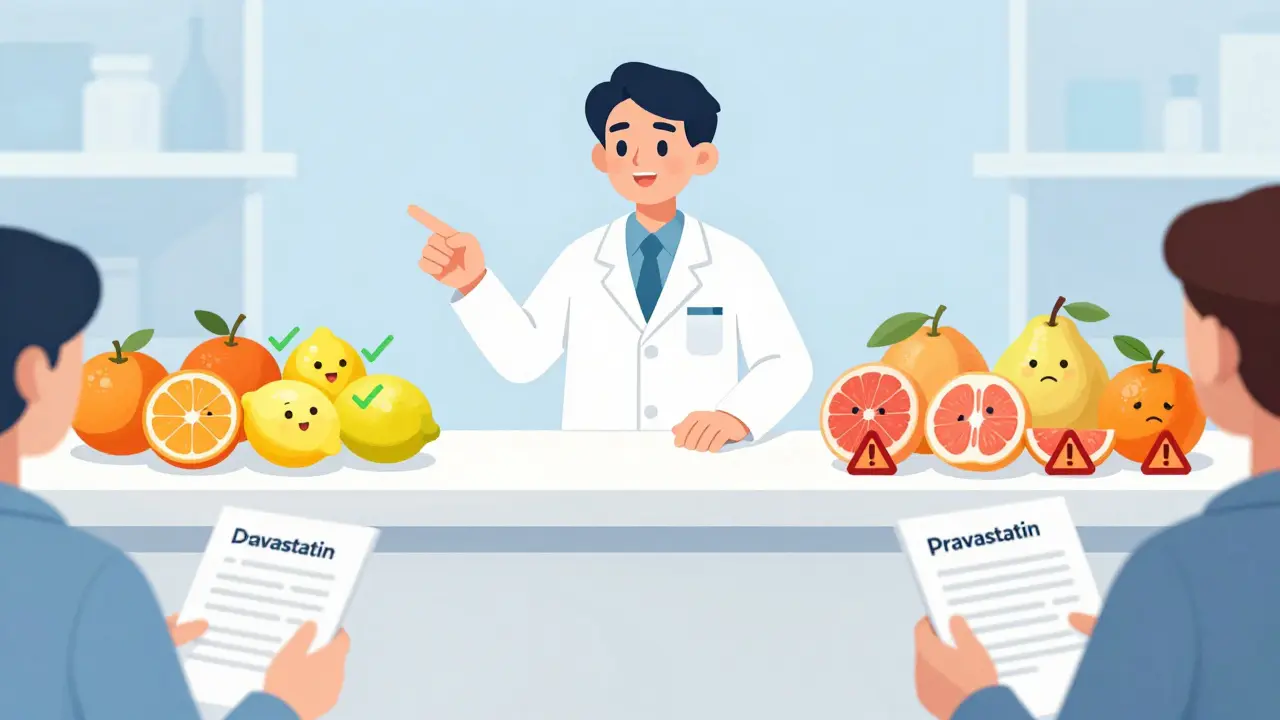
A common misconception is that only grapefruit poses a risk. While grapefruit is the most potent source of furanocoumarins, other citrus fruits contain similar compounds. You should treat the following fruits with the same caution:
- Pomelos: Often milder in taste but chemically similar to grapefruit, pomelos can inhibit CYP3A4 enzymes just as effectively.
- Seville Oranges: These bitter oranges are commonly used in traditional marmalades. They contain high levels of furanocoumarins and should be avoided if you are on interacting medications. Sweet navel oranges, however, are generally safe.
- Limes: Some varieties may contain trace amounts, though the risk is lower than with grapefruit. It is best to consult your pharmacist regarding specific lime products.
- Pomegranates: Emerging research suggests pomegranate may also enhance certain drug effects through similar mechanisms, though the evidence is less robust than for grapefruit.
Conversely, regular sweet oranges, tangerines, and lemons do not contain significant levels of furanocoumarins and are considered safe alternatives for vitamin C intake.
Who Is Most at Risk?
The risk of adverse events is not distributed equally across the population. Older adults are disproportionately affected. According to the CDC’s 2021 National Health Interview Survey, 52.3% of Americans aged 65 and older take five or more prescription drugs daily. This polypharmacy increases the likelihood of encountering a drug that interacts with CYP3A4.
Furthermore, genetic factors play a role. A 2021 study published in *Clinical Pharmacology & Therapeutics* found that individuals with the CYP3A4*22 allele experienced 40% more pronounced interactions with grapefruit compared to non-carriers. This means that two people taking the same dose of medication and drinking the same amount of juice could have vastly different physiological responses based on their genetics.
The FDA estimates that grapefruit-drug interactions contribute to approximately 10,000 adverse drug events annually in the United States. As the elderly population grows-projected to reach 80.8 million by 2040-the public health significance of this interaction will only increase.
Managing the Interaction: Practical Steps
If you are currently taking a medication that interacts with grapefruit, timing separation is not a viable strategy. Because the enzyme inhibition lasts up to 72 hours, you cannot simply "wait it out." The only recommended strategy by the American Heart Association and the FDA is complete avoidance of grapefruit products while taking the medication.
However, you do not necessarily have to stop your medication. In most cases, there are alternative drugs that do not interact with grapefruit. For example:
- Instead of simvastatin, consider pravastatin or rosuvastatin.
- Instead of amlodipine, consider diltiazem or verapamil (though these also require monitoring).
- Instead of warfarin, consider apixaban (Eliquis), which does not interact with grapefruit.
When visiting your healthcare provider, ask these three specific questions recommended by the FDA:
- Does my specific drug interact with grapefruit?
- How much grapefruit, if any, can I safely consume?
- Are there alternative medications that do not have this interaction?
Pharmacists are increasingly equipped to help with this. As of 2022, 78.4% of community pharmacists routinely screen for grapefruit-drug interactions during medication therapy management. Do not hesitate to bring your grocery list or supplement regimen to your pharmacy counter for a quick check.
Can I eat grapefruit if I take it at a different time than my medication?
No, separating the timing does not work. The furanocoumarins in grapefruit irreversibly inhibit the CYP3A4 enzymes in your intestine. It takes 24 to 72 hours for your body to regenerate these enzymes. Therefore, the inhibitory effect persists long after you have consumed the fruit, meaning the interaction can occur regardless of when you take your pill relative to when you eat the grapefruit.
Is grapefruit seed extract safe to use with medications?
It is generally advised to avoid grapefruit seed extract as well. While the concentration of furanocoumarins may vary, the extract still contains compounds from the grapefruit plant that can potentially inhibit CYP3A4 enzymes. Given the severity of potential interactions, it is safer to avoid all grapefruit-derived supplements unless explicitly approved by your doctor.
Do all statins interact with grapefruit?
No. Only statins that are metabolized by the CYP3A4 enzyme are affected. Simvastatin, atorvastatin, and lovastatin have significant interactions. Pravastatin and rosuvastatin are metabolized differently and do not have clinically significant interactions with grapefruit, making them safer alternatives for patients who wish to consume grapefruit.
What happens if I accidentally eat grapefruit while on interacting medication?
If you consume a small amount, monitor yourself for side effects such as extreme dizziness, muscle pain, weakness, or unusual fatigue. For high-risk drugs like immunosuppressants or certain antiarrhythmics, contact your healthcare provider immediately. They may recommend blood tests to check drug levels. Do not skip your next dose without medical advice, as this could lead to under-medication.
Are there any benefits to grapefruit that outweigh the risks?
Grapefruit is rich in vitamin C, fiber, and antioxidants, which are beneficial for general health. However, if you are taking high-risk medications, the potential for serious adverse events outweighs these nutritional benefits. You can obtain similar nutrients from safe alternatives like sweet oranges, kiwis, strawberries, and bell peppers without risking your medication efficacy.
Joel Bonstell
May 2, 2026 AT 22:37Hey folks, just wanted to drop a quick note since I work in pharmacy. This stuff is super important and honestly kinda scary if you don't know about it. I see patients all the time who think they can just eat a grapefruit an hour after their pill and be fine. It doesnt work that way at all. The enzymes stay shut down for days basically. So yeah, if you are on simvastatin or those blood pressure meds, seriously avoid the fruit. Switching to pravastatin is usually an easy fix with your doc. Just talk to us before you chug that juice lol.
Jimmy Crocker
May 4, 2026 AT 07:25I must say, this article is rather pedestrian in its approach to such a complex pharmacological phenomenon. One would assume that the general populace has been adequately educated on basic metabolic pathways by now, yet here we are, explaining CYP3A4 inhibition as though it were a novel discovery from the last century. It is truly disheartening to observe the collective ignorance regarding even the most rudimentary biochemical interactions. Perhaps if people actually read the literature instead of relying on internet summaries, we would not need these overly simplified guides. The notion that timing separation could ever be viable is laughable to anyone with a background in biochemistry, yet the persistence of this myth suggests a fundamental failure in our educational systems.
Allison Maier
May 5, 2026 AT 11:17this is so annoying :/ why cant i just eat what i want? my mom eats grapefruit every day and she is fine. probably fake news anyway. whatever.
Andrew Hanssen
May 6, 2026 AT 04:05You are all missing the point entirely. The real issue here is not the grapefruit, but the pharmaceutical industry's reliance on drugs with narrow therapeutic indices that require such stringent dietary restrictions. Why should patients have to alter their natural diets to accommodate poorly designed medications? The solution is not to ban grapefruit; the solution is to demand better drug design from Big Pharma. Until then, we are merely treating symptoms while ignoring the root cause of medical dependency.
Alexa Mack
May 7, 2026 AT 09:59I found this really interesting! I never knew pomelos were also risky. My aunt makes her own marmalade using Seville oranges because she loves the taste, and I always thought it was just regular orange marmalade. Now I am worried she might be taking some of her heart meds with it. I will definitely have to ask her doctor about switching her medication or maybe just telling her to skip the marmalade during treatment weeks. It is crazy how something so common can be so dangerous. Thanks for sharing this info!
Prudence Wesson
May 8, 2026 AT 08:51Oh, please. Do you really think you need a blog post to tell you this? If you cannot manage your own health without being told not to eat a specific fruit, perhaps you should reconsider your lifestyle choices. It is elementary common sense that food affects digestion. The fact that you need this explained to you in such detail is quite embarrassing for modern society. Stop expecting everyone to hold your hand through basic biological processes. Read the label. Consult your physician. Do not come here whining about restrictions.
Divya Patel
May 9, 2026 AT 17:50This brings to mind the ancient wisdom of Ayurveda, where food and medicine are often seen as intertwined forces. In many traditional systems, certain foods are considered 'heating' or 'cooling' and can alter the efficacy of herbs and remedies. While the mechanism here is enzymatic inhibition via furanocoumarins, the principle remains similar: context matters. We must view our bodies not as isolated machines, but as dynamic ecosystems where every input has a ripple effect. It is fascinating how science is catching up to what holistic practitioners have known for centuries about the interconnectedness of diet and healing.
SWATI NAWANGE
May 10, 2026 AT 03:37I simply cannot believe people still fall for these scare tactics. Grapefruit is a superfood! It is packed with antioxidants and vitamin C. To suggest that one must abandon such a nutritious fruit due to a minor interaction with prescription drugs is absurd. I have taken my statins for years with a glass of grapefruit juice every morning, and I feel fantastic. Your cholesterol is down, your energy is up, and you are living life to the fullest. Don't let fear-mongering articles ruin your breakfast routine. Life is too short to worry about every little enzyme.
nikki paurillo
May 10, 2026 AT 05:26It is like walking through a minefield in your own kitchen, isn't it? One moment you are savoring the tart burst of citrus, and the next you are wondering if you just accidentally doubled your dose of warfarin. I love how colorful and vibrant our diets can be, but sometimes nature throws us a curveball that feels more like a full-on fastball to the gut. It makes me appreciate the quiet safety of sweet oranges and lemons even more-they are like the gentle friends who never cause drama. Maybe we should embrace the boring fruits for a while and let our livers rest easy.