
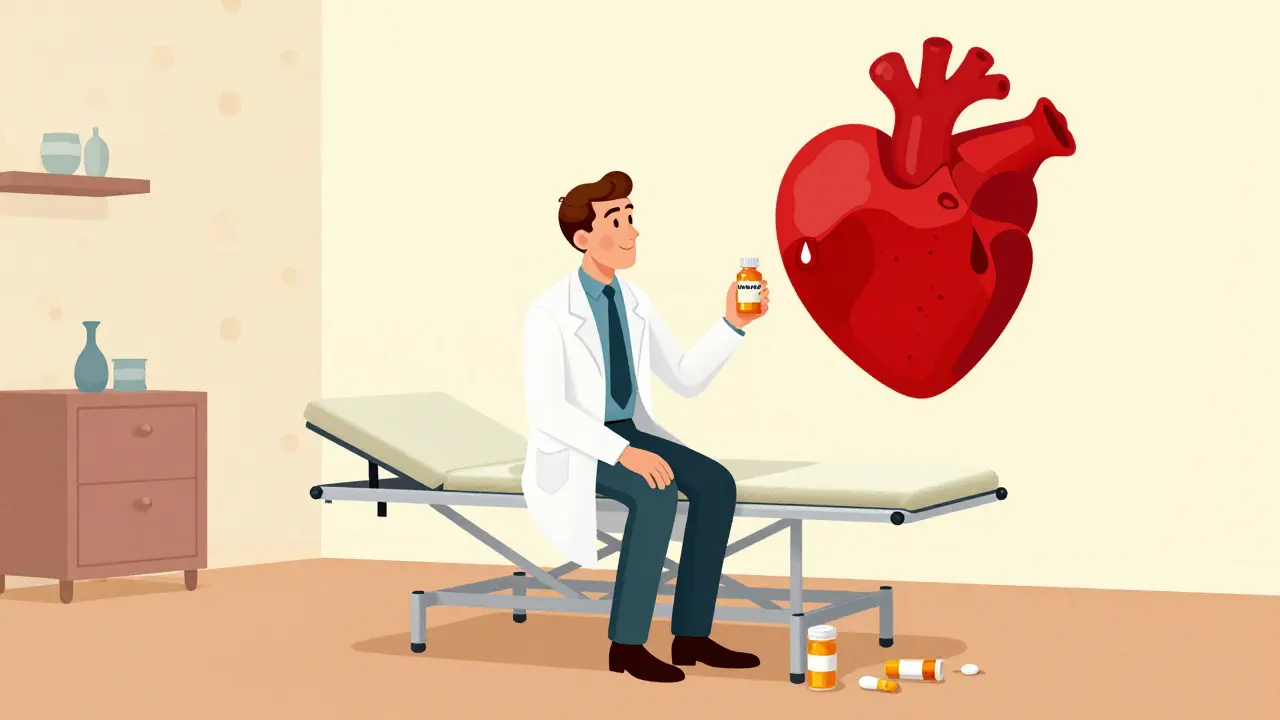
More than 1 in 4 adults in the U.S. take herbal supplements. Many believe these products are harmless because they’re "natural." But what most people don’t realize is that herbal supplements can be just as powerful-and just as dangerous-as prescription drugs when mixed with medications. A man on blood thinners starts taking ginkgo for memory, then ends up in the ER with internal bleeding. A woman on birth control takes St. John’s wort for depression and gets pregnant. These aren’t rare accidents. They’re predictable, preventable, and happening every day.
Why Herbal Supplements Aren’t Safe Just Because They’re Natural
The idea that "natural" equals "safe" is one of the biggest myths in health. Herbs contain active chemicals. Some of them are so potent they’re used in pharmaceuticals. For example, the painkiller morphine comes from the opium poppy. The cancer drug paclitaxel comes from the Pacific yew tree. If a plant can produce life-saving drugs, it can also produce dangerous side effects-especially when mixed with other medicines.
Unlike prescription drugs, herbal supplements aren’t tested for safety before they hit store shelves. The 1994 Dietary Supplement Health and Education Act (DSHEA) lets companies sell herbal products without proving they’re safe or that they don’t interact with medications. The FDA only steps in after someone gets hurt. In 2022, the agency issued just 12 warning letters about interaction risks, even though over 23,000 herbal supplement products were on the market. That’s like letting someone drive a car without brakes and only stepping in after a crash.
How Herbal Supplements Interfere With Your Medications
Your body uses enzymes to break down drugs so they can be cleared from your system. The most important of these are the CYP450 enzymes-especially CYP3A4, which handles about half of all prescription drugs. Herbal supplements can either block these enzymes (making drugs build up to toxic levels) or speed them up (making drugs work poorly or not at all).
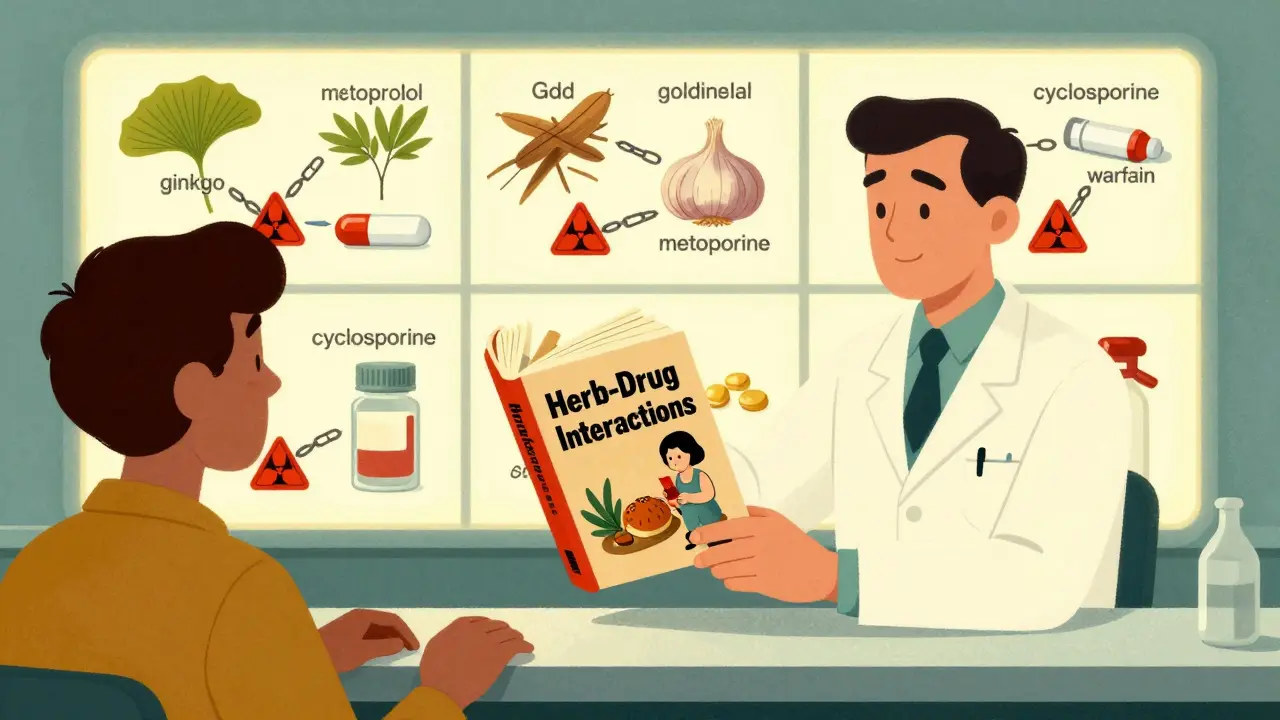
Take St. John’s wort. It’s one of the most popular herbal antidepressants. But it’s also the most dangerous when mixed with other meds. It turns on CYP3A4 and P-glycoprotein-two systems that flush drugs out of your body. Studies show it can cut the levels of cyclosporine (used after organ transplants) by 57%, putting transplant patients at risk of rejection. It drops the concentration of HIV drugs like indinavir by up to 80%, making treatment useless. And it reduces birth control effectiveness so much that at least 10 documented pregnancies have occurred in women using it.
Then there’s garlic. People take it to lower cholesterol or fight colds. But garlic also activates CYP3A4. In one study, it cut the blood levels of the HIV drug saquinavir by 51%. That’s not just ineffective-it’s dangerous. When antivirals don’t work, the virus can mutate and become resistant.
On the flip side, goldenseal blocks CYP3A4 and CYP2D6. This causes drugs like metoprolol (for high blood pressure) and dextromethorphan (a cough suppressant) to stay in your system too long. That can lead to dangerously low heart rates or even serotonin syndrome-a life-threatening condition.
High-Risk Herbal Supplements and Their Dangerous Partners
Some herbal supplements have well-documented, dangerous interactions. Here are the ones you need to watch out for:
- St. John’s wort: Interacts with at least 15 drug classes. Avoid with antidepressants, birth control, blood thinners, heart meds, and HIV drugs.
- Ginkgo biloba: Increases bleeding risk when taken with warfarin, aspirin, or NSAIDs. One study showed a 30% higher chance of bleeding in people using both.
- Danshen (Salvia miltiorrhiza): Used for heart health, but it can cause irregular heartbeat when combined with digoxin. One study found a 35% increase in digoxin toxicity risk.
- Garlic: Lowers blood pressure and thins blood. Can cause dangerous drops in pressure when mixed with antihypertensives or increase bleeding risk with anticoagulants.
- Goldenseal: Raises levels of drugs like metoprolol, dextromethorphan, and some antidepressants. Can lead to overdose symptoms even at normal doses.
- Hawthorn: Used for heart failure and high blood pressure. When combined with beta-blockers or digoxin, it can cause blood pressure to drop too low or trigger heart rhythm problems.
- American ginseng: May reduce the effectiveness of warfarin by acting like vitamin K. One patient’s INR dropped from 4.9 to 1.9 after taking 1,000 mg daily-putting them at risk of stroke.
Even supplements that seem harmless-like valerian for sleep-can be risky. It can make sedatives like benzodiazepines work too well, leading to excessive drowsiness or trouble breathing.

What Patients Don’t Tell Their Doctors
Most people don’t mention herbal supplements when they talk to their doctor. In one study of 299 hospitalized patients, 25% were taking herbs-but doctors didn’t know about it in 72% of cases. Why? Patients assume supplements are too small to matter. Or they think their doctor won’t care. Or they’re embarrassed.
But here’s the truth: doctors need to know. A hematologist in a Reddit thread said they’d seen at least three bleeding incidents in the past year caused by patients taking ginkgo with warfarin-and none of them had told their doctor. On patient forums, people report fainting, dizziness, and hospital visits after combining hawthorn with blood pressure pills. One person’s systolic pressure dropped to 85 mmHg. That’s dangerously low.
A Consumer Reports survey found 68% of supplement users never discussed their use with a healthcare provider. And 22% had side effects they later linked to interactions. That’s not just ignorance-it’s a public health blind spot.
What You Should Do
If you take any prescription medication, here’s what you need to do right now:
- Make a list of every herbal supplement, tea, or botanical product you take-even if you think it’s harmless. Include doses and how often you take them.
- Bring it to your next appointment and say: "I take these herbs. Can they interact with my meds?" Don’t wait for them to ask. Most providers still don’t screen for this routinely.
- Check your meds. If you’re on blood thinners, heart meds, antidepressants, HIV drugs, or transplant medications, assume any herbal supplement could be risky until proven otherwise.
- Don’t trust labels. Only 15% of herbal products in the U.S. include interaction warnings. Just because it says "natural" or "safe" doesn’t mean it is.
- Use reliable sources. The National Center for Complementary and Integrative Health (NCCIH) and the Mayo Clinic have updated guides on herb-drug interactions. Avoid blogs and social media advice.
Pharmacists are your best ally here. At the Mayo Clinic, pharmacists spend an average of 12 minutes per patient counseling on high-risk combinations. For St. John’s wort, it’s 18 minutes. That’s how serious this is.
What’s Being Done-and What’s Still Missing
There’s progress. The NIH spent $12.7 million in 2023 on herb-drug interaction research. The FDA released draft guidance in 2023 pushing for mandatory interaction testing for new botanical drugs. Europe now requires full interaction studies for herbal medicines. AI tools like the University of California’s Herb-Drug Interaction Prediction Engine can now predict new risks with 87% accuracy.
But here’s the problem: only 3% of primary care providers routinely screen for herbal supplement use. Most still think it’s not worth asking. And without that first step-asking-the rest doesn’t matter.
The bottom line: herbal supplements aren’t harmless snacks. They’re active drugs with real risks. And if you’re taking prescription medication, you’re playing Russian roulette unless you know what’s in your body and how it’s interacting.
When to Stop and Call Your Doctor
Stop taking any herbal supplement and call your doctor immediately if you experience:
- Unexplained bruising or bleeding
- Dizziness, fainting, or unusually low blood pressure
- Heart palpitations or irregular heartbeat
- Sudden change in mood or energy levels while on antidepressants
- Breakthrough symptoms-like a blood clot, seizure, or transplant rejection-despite taking your meds as prescribed
These aren’t side effects. They’re red flags. And they’re preventable-if you speak up.
Can I take St. John’s wort if I’m on birth control?
No. St. John’s wort reduces the effectiveness of birth control pills, patches, and rings by speeding up how fast your body breaks down the hormones. At least 10 documented cases of pregnancy have occurred in women using both. Even if you’ve taken it before without issue, the risk is real and unpredictable. Use an alternative form of contraception or avoid St. John’s wort entirely.
Is ginkgo biloba safe with aspirin?
It’s not recommended. Ginkgo inhibits platelet function and can increase bleeding risk, especially when combined with aspirin, ibuprofen, or warfarin. A 2009 meta-analysis of five studies involving 1,200 patients showed a 30% higher risk of bleeding events. If you’re taking ginkgo for memory or circulation and also take daily aspirin for heart health, talk to your doctor before continuing both.
Do all herbal supplements interact with drugs?
No, but many do. Some, like milk thistle and saw palmetto, have very low interaction potential. Others, like St. John’s wort, ginkgo, and goldenseal, are known for dangerous interactions. The problem is that you can’t assume safety. Even supplements labeled "safe" or "mild" can interfere with medications. Always check with your doctor or pharmacist before starting any new herb, especially if you’re on prescription drugs.
Can I just stop my herbal supplement before surgery?
It’s not enough to just stop. Some herbs, like ginkgo and garlic, can affect bleeding for days or even weeks after you stop taking them. Most surgeons recommend stopping all herbal supplements at least 7-14 days before surgery. Tell your surgeon exactly what you take-even if you think it’s harmless. A simple tea like chamomile can increase bleeding risk during procedures.
Why don’t supplement labels warn about drug interactions?
Because they’re not required to. Under U.S. law (DSHEA), supplement makers don’t need FDA approval before selling their products. They also don’t need to prove their products are safe or test them for interactions with medications. Only 15% of herbal products include interaction warnings. The burden is on you to research and ask your doctor-not on the company to warn you.
Are there any herbs that are generally safe with most medications?
Some have low interaction risk, including milk thistle, saw palmetto, and cranberry (in normal amounts). But "low risk" doesn’t mean "no risk." Even these can interfere with certain drugs under specific conditions. For example, milk thistle may affect how the liver processes statins. Always disclose everything you take-don’t assume safety based on general claims.
Herbal supplements can help-but they can also hurt. The difference isn’t in the herb. It’s in whether you know how it works with your body and your meds. Don’t guess. Don’t assume. Ask your doctor. Your life could depend on it.
Usha Sundar
December 22, 2025 AT 17:30I took ginkgo for a month thinking it’d help my focus. Ended up bruising like a toddler on a trampoline. Never again.
My doctor didn’t even ask about supplements. Just nodded and wrote me a new script.
Christine Détraz
December 23, 2025 AT 00:11This post hit me hard. I’ve been taking St. John’s wort for years because my cousin swore by it. I didn’t realize it could mess with my birth control until now.
Just called my pharmacist. We’re switching to something safer. Thanks for the wake-up call.
John Pearce CP
December 23, 2025 AT 01:42The fact that the FDA only issued 12 warning letters in 2022 while over 23,000 herbal products flood the market is an absolute national disgrace.
Our regulatory framework is broken. This isn’t just negligence-it’s corporate capture disguised as freedom. The 1994 DSHEA law was a gift to snake oil merchants. We need mandatory pre-market testing, not post-injury damage control.
Until then, Americans are being used as unwitting test subjects in a deregulated pharmaceutical Wild West.
CHETAN MANDLECHA
December 23, 2025 AT 22:44Back home in India, we’ve been using turmeric and ashwagandha for centuries. Nobody dies from it.
But I get it-Western meds are different. Maybe we need a hybrid system. Test the herbs with the drugs. Not just ban everything because some people are careless.
Ajay Sangani
December 25, 2025 AT 22:10is it really about the herbs… or is it about how we’ve outsourced our health to systems that profit from our ignorance?
we’re taught to trust labels, to believe in quick fixes, to fear doctors asking questions…
and then we blame the plant when the system fails us.
maybe the real interaction is between capitalism and human vulnerability.
just a thought.
Gray Dedoiko
December 27, 2025 AT 00:01I’ve been on blood pressure meds for 8 years. Took garlic pills for colds last winter. Felt fine.
Then my doctor checked my INR and said, ‘You’re lucky you didn’t bleed out.’
Now I tell every new patient I meet: if you’re on meds, don’t assume it’s safe. Always ask.
Simple. But nobody does it.
Aurora Daisy
December 27, 2025 AT 09:48Of course the FDA doesn’t regulate this. They’d rather let people die than inconvenience a $50 billion industry.
Meanwhile, my 72-year-old neighbor takes ‘natural’ heart pills with her statins and wonders why she’s dizzy all day.
It’s not natural. It’s just unregulated. And deadly.
Paula Villete
December 28, 2025 AT 06:54I once took valerian with my Xanax because I ‘wanted to sleep better.’ Ended up in the ER with a heart rate of 42.
My doctor said, ‘You didn’t tell me you were taking herbal tea.’
It’s not tea. It’s a sedative. And I didn’t know.
So now I screenshot every interaction warning I find. And I send it to my mom. She’s 68 and takes 12 pills a day. She still thinks ‘natural’ means ‘safe.’
She doesn’t know about goldenseal. I do now.
Georgia Brach
December 29, 2025 AT 01:51Let’s be honest-this isn’t about safety. It’s about liability.
Doctors don’t ask because they don’t want to be blamed if you get hurt.
Companies don’t warn because they don’t want to scare customers away.
Patients don’t speak up because they think their ‘little supplement’ won’t matter.
It’s a perfect storm of collective denial.
And we’re all paying for it-with our blood, our kidneys, our lives.
Steven Mayer
December 31, 2025 AT 01:44Pharmacokinetic modulation via CYP450 isoform interference represents a clinically significant pharmacodynamic variable in polypharmacy regimens.
St. John’s wort induction of CYP3A4 and P-gp efflux transporters demonstrably reduces serum concentrations of substrate medications below therapeutic thresholds.
Garlic’s activation of the same pathways compromises antiretroviral efficacy, increasing viral load and resistance potential.
These are not anecdotal phenomena-they are reproducible, quantifiable, and documented in peer-reviewed literature.
Yet, clinical protocols remain inert.
Systemic failure.
Sidra Khan
December 31, 2025 AT 19:27So… I guess I’m just supposed to stop taking my ‘natural’ energy boosters because some guy on the internet said so?
Meanwhile, Big Pharma’s pills come with a 12-page insert and a 10-minute warning video.
But my turmeric capsule? ‘Natural.’ Safe. No worries.
Yeah, right.
Lu Jelonek
January 2, 2026 AT 13:46As a nurse in a rural clinic, I see this every week.
People come in with low INR, low potassium, or sudden arrhythmias-and they say, ‘I just started drinking hawthorn tea.’
They’re not lying. They’re not careless. They just never thought it mattered.
I keep a printed cheat sheet of high-risk herb-drug combos on my desk.
And I ask. Every. Single. Time.
Even if they roll their eyes.
Because someone’s life is worth the awkward question.
Ademola Madehin
January 3, 2026 AT 19:35Bro, I took ginkgo with warfarin and almost died. My cousin said it’s fine. He’s dead now. 😔
Don’t be him.
Just stop. Talk to your doctor.
Or don’t. But don’t blame the herb.