
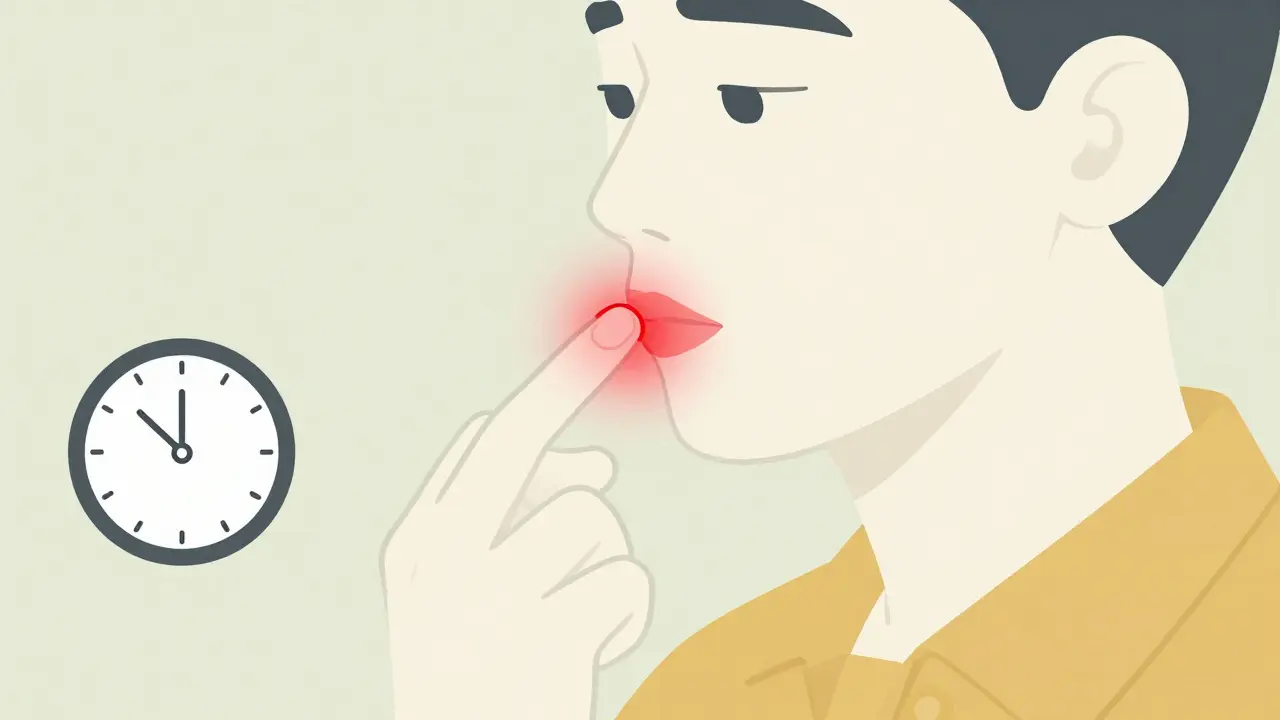
Herpes simplex on the skin isn’t just a rash. For millions, it’s a recurring cycle of tingling, blisters, and pain that can show up after stress, sun exposure, or even a dental visit. The virus behind it-HSV-1 or HSV-2-stays in your nerves for life. But that doesn’t mean you have to live with frequent outbreaks. The good news? You can significantly cut down how often they happen and make them much milder when they do. Herpes simplex most commonly shows up as cold sores on the lips or face (HSV-1) or as genital sores (HSV-2). About 67% of people under 50 have HSV-1, according to the World Health Organization. Most don’t even know they carry it until an outbreak happens. Once the first sore clears, the virus hides in nerve clusters near your spine or skull. It wakes up when something triggers it: sunlight, illness, stress, or even hormonal shifts. When it reactivates, you get warning signs-tingling, itching, or burning-before the blister forms. That’s your window to act.
Stop Outbreaks Before They Start
The most effective way to prevent recurrences is to catch the virus early. If you’ve had herpes before, you likely know your body’s early signals. That tingling on your lip? That’s not just imagination. It’s the virus moving to the surface. The CDC recommends starting antiviral medication within one hour of noticing these symptoms. Waiting until the blister appears cuts the benefit in half. For episodic treatment, valacyclovir (Valtrex) at 2 grams taken twice in one day is the gold standard. Studies show it shortens healing time from 5.2 days to 4.3 days on average. Acyclovir (Zovirax) works too, but you’d need to take it five times a day. Famciclovir (Famvir) is another option, but valacyclovir’s convenience and absorption make it the top choice for most people. If you’re getting outbreaks more than six times a year, daily suppressive therapy is the next step. Taking valacyclovir 500mg once a day, or acyclovir 400mg twice daily, reduces recurrences by 70-80%. That’s not a guess-it’s backed by a Cochrane review of 289 studies. One patient in Seattle, who had 8 outbreaks a year, dropped to 1 after six months of daily therapy. She says her relationships improved because she stopped dreading intimate moments.Know Your Triggers
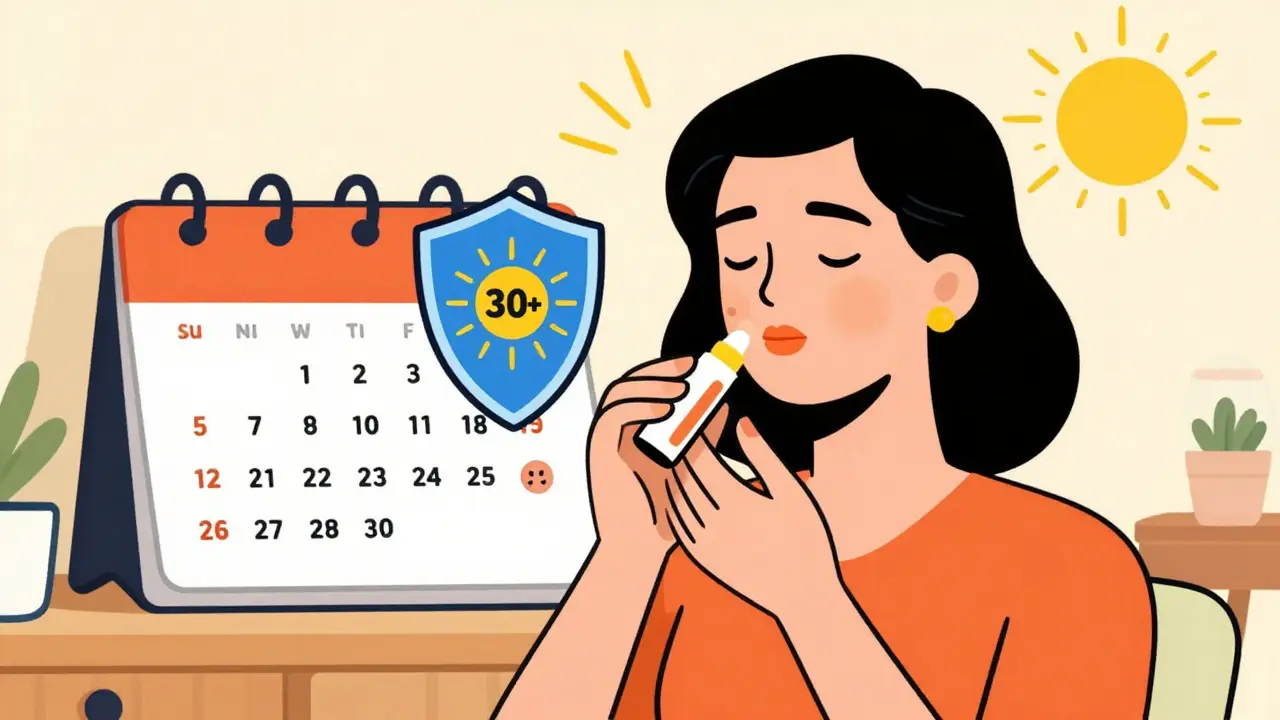
You can’t control the virus, but you can control what wakes it up. The biggest triggers are well-documented:- UV exposure: Sunlight is the #1 trigger for facial herpes. A 2022 Healthline survey found 76% of users reduced outbreaks by using SPF 30+ lip balm every day-even in winter.
- Stress: A Reddit community of 127,000 people showed 68% linked outbreaks to emotional strain. One user described her worst outbreak after her dog passed away. Managing stress with sleep, exercise, or therapy isn’t just good mental health-it’s herpes prevention.
- Immune dips: A cold, flu, or even lack of sleep can trigger a flare. Your body’s defenses are already taxed. That’s when the virus sneaks out.
- Cosmetic procedures: Laser treatments, chemical peels, or dermal fillers can reactivate herpes. Dermatology clinics now routinely ask about past outbreaks before any skin procedure. If you’ve had herpes before, ask for valacyclovir prophylaxis: 500mg twice daily for 10-14 days starting the day before treatment. Studies show this cuts recurrence risk from 20% to nearly 0%.
Medication: What Works and What Doesn’t
Not all herpes treatments are created equal. Topical creams like acyclovir ointment? They don’t help prevent outbreaks. A 2000 study in the American Academy of Family Physicians journal found no significant benefit. The virus lives deep in nerves-cream can’t reach it. Oral antivirals are the only proven method. Here’s how they compare:| Medication | Dosage (Episodic) | Dosage (Suppressive) | Bioavailability | Cost (Monthly, US, no insurance) |
|---|---|---|---|---|
| Valacyclovir (Valtrex) | 2g twice daily, one day | 500mg once daily | 55% | $370 |
| Acyclovir (Zovirax) | 800mg five times daily, 5 days | 400mg twice daily | 10-20% | $180 |
| Famciclovir (Famvir) | 1,000mg twice daily, one day | 250mg twice daily | 77% | $320 |
What About Supplements and Natural Remedies?
There’s no magic pill, but some evidence supports certain supplements. Zinc-15 to 30mg daily-reduced outbreak severity in 63% of survey respondents. Lysine (1,000mg daily) is popular, but studies are mixed. The American Journal of Clinical Nutrition reviewed 13 trials and found no strong proof it prevents outbreaks. Sunscreen on your lips? Non-negotiable. Cold sores often appear after a day at the beach, skiing, or even just walking the dog. Use SPF 30+ lip balm every morning. It’s simple, cheap, and proven.Transmission Risk Is Real-But Manageable
You can still pass the virus to others, even without visible sores. The CDC says viral shedding happens about 20% of the time in people with frequent outbreaks. Daily suppressive therapy reduces transmission by 50%, but doesn’t eliminate it. If you have a partner without herpes, talk to your doctor. Using condoms and antivirals together cuts transmission risk the most. If you’re planning a dental visit, laser treatment, or even a tattoo, tell your provider you have herpes. Many clinics now require a signed consent form and offer pre-treatment antivirals. Skipping this step can lead to painful, widespread outbreaks.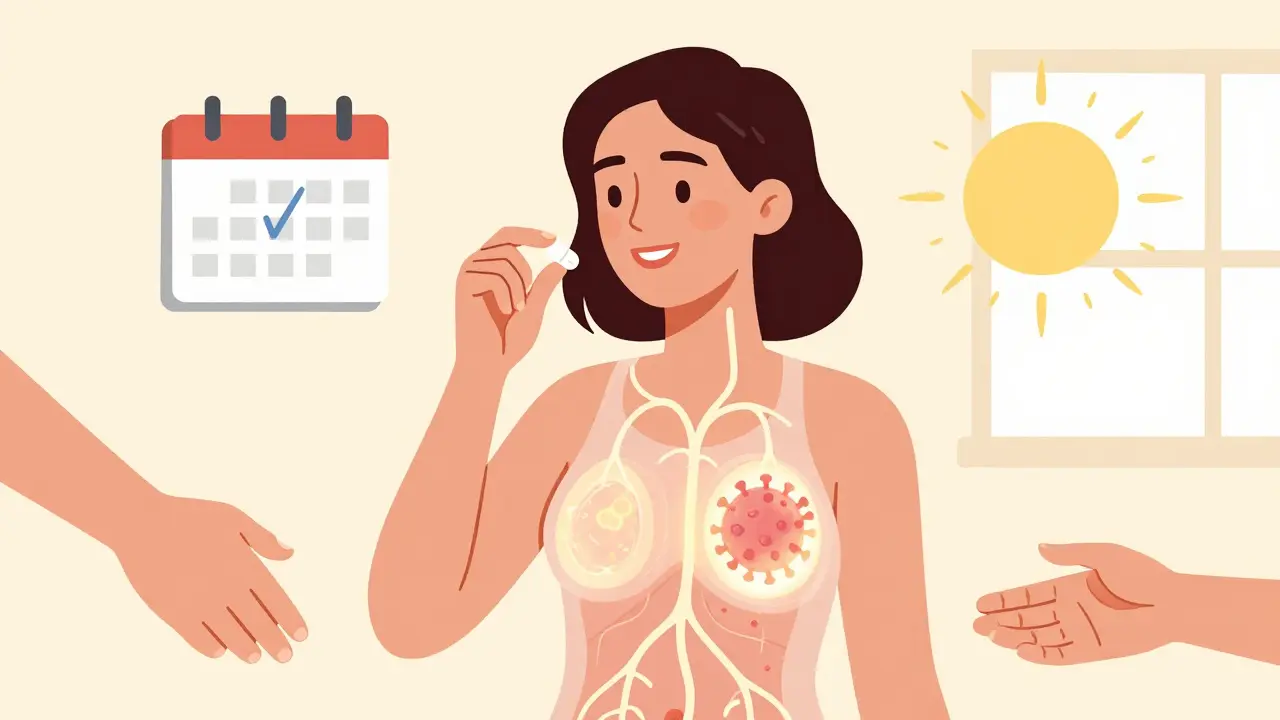
When to See a Doctor
You don’t need to see a doctor for every cold sore. But if:- You get outbreaks more than six times a year
- Your sores last longer than two weeks
- You have sores near your eyes
- You’re immunocompromised (HIV, chemo, transplant)
Living With It
Herpes isn’t a life sentence. It’s a condition you manage. The goal isn’t to be perfect-it’s to reduce how often it controls your life. People who use antivirals wisely, avoid triggers, and stay informed report better sleep, less anxiety, and stronger relationships. One woman in Seattle told her story: "I used to cancel plans when I felt a tingle. Now I take one pill and go on with my day. It’s not gone-but it’s not running my life anymore." It’s not about perfection. It’s about control.Can herpes simplex be cured?
No, there is no cure for herpes simplex virus. Once you’re infected, the virus stays in your nerves for life. But it doesn’t mean you’ll always have outbreaks. With proper care-antiviral medication, trigger avoidance, and early treatment-you can reduce outbreaks to once a year or less, and sometimes eliminate them entirely.
Is it safe to use topical creams like Zovirax on cold sores?
Topical acyclovir cream doesn’t prevent outbreaks or speed healing significantly. The virus lives in nerve tissue, and the cream can’t reach it. Oral antivirals like valacyclovir are far more effective because they circulate through your bloodstream. Save the cream for symptom relief if you don’t have access to pills-but don’t rely on it to stop recurrences.
Do I need to take antivirals forever if I start suppressive therapy?
No. Suppressive therapy isn’t permanent. Many people take it for 6-12 months, then stop to see if outbreaks return. If they do, they restart. Some people take it long-term if they have frequent outbreaks or high transmission risk. The decision should be made with your doctor based on your outbreak frequency, lifestyle, and goals.
Can I get herpes from sharing a drink or kissing someone without sores?
Yes. The virus can spread even when no sore is visible. This is called "asymptomatic shedding." Studies show people with HSV-1 shed the virus on about 1 in 5 days, even without symptoms. Kissing, sharing lip balm, or using the same utensil can transmit it. That’s why daily suppressive therapy and avoiding contact during outbreaks are key.
Are there new treatments or vaccines coming soon?
As of 2026, no vaccine is approved for herpes simplex. Two candidates (GEN-003 and HSV529) showed modest results in trials but didn’t meet the main goal of preventing outbreaks. A new antiviral called pritelivir was approved in 2023, but only for people with drug-resistant HSV, usually those with weakened immune systems. Researchers are testing long-acting injectables that could last 90 days, but those are still years away from public use.
Next Steps
If you have frequent outbreaks:- Track your triggers for one month-note stress, sun, illness, and timing.
- Ask your doctor about daily valacyclovir if you have six or more outbreaks a year.
- Start antivirals at the first tingle, not after the blister appears.
- Use SPF 30+ lip balm every day.
- Talk to your partner if you’re sexually active.
- Disclose your herpes history to your provider.
- Ask for valacyclovir 500mg twice daily for 10-14 days starting the day before.
- Don’t assume they’ll offer it-ask.
Sam Pearlman
February 17, 2026 AT 21:41Linda Franchock
February 19, 2026 AT 05:10Prateek Nalwaya
February 20, 2026 AT 13:58Dennis Santarinala
February 21, 2026 AT 07:22Adam Short
February 23, 2026 AT 04:11Steph Carr
February 24, 2026 AT 12:12Haley DeWitt
February 26, 2026 AT 06:09Brenda K. Wolfgram Moore
February 26, 2026 AT 20:39Agnes Miller
February 27, 2026 AT 04:32Geoff Forbes
February 28, 2026 AT 08:23