
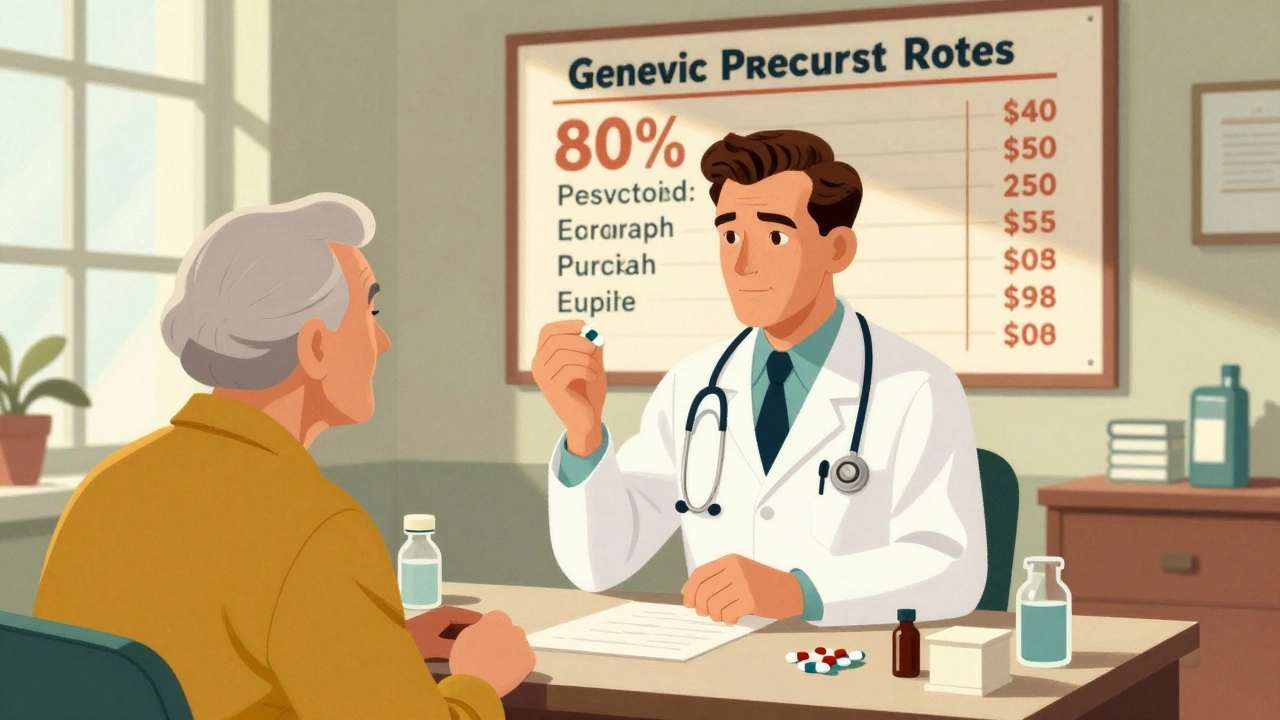
When you pick up a prescription at the pharmacy, you might not think twice about whether it’s a brand-name drug or a generic. But behind that little pill or capsule is a world of differences in how doctors, pharmacists, and health systems see generics - and those views change dramatically depending on where you live.
Europe: Generics as a Policy Tool
In Germany, France, and the UK, doctors don’t just accept generics - they’re encouraged to prescribe them. Government policies make it easy. Pharmacists can swap a brand-name drug for a generic without asking the doctor, as long as it’s allowed by law. This isn’t about cutting corners. It’s about keeping healthcare affordable for millions. European providers see generics as part of the system’s backbone. In 2025, generics made up nearly 80% of all prescriptions across the EU. That’s not because patients asked for them - it’s because the system pushes them. Germany alone accounts for over 15% of the global generic market. Doctors there know that a generic version of a blood pressure pill works just as well as the brand, and costs 80% less. They prescribe it without hesitation. But growth is slowing. In countries like the UK and France, most common drugs already have generic versions. So the focus is shifting to more complex generics - injectables, inhalers, and topical creams - where cost savings are still huge, but quality control is trickier.Asia-Pacific: Generics as Lifelines
In India and China, generics aren’t just affordable alternatives. They’re the only option for most people. A diabetic patient in rural India might not have access to insulin branded by a U.S. company. But they can get a generic version - made locally, priced at a fraction of the cost, and just as effective. Indian manufacturers supply nearly 40% of all generic drugs used in the United States. That’s not a coincidence. It’s a result of decades of investment in low-cost production, strict quality standards, and government support. Indian doctors don’t debate whether to use generics - they assume they’re the default. The same is true in China. With an aging population and rising rates of diabetes and heart disease, the government has made generics the cornerstone of its public health strategy. Prescribing a brand-name drug without a good reason can raise eyebrows. In these countries, generics aren’t a backup plan - they’re the plan. And the growth is fast. The Asia-Pacific region is expected to grow at over 6% annually through 2034. That’s not just because more people need medicine. It’s because providers trust generics to deliver results, even in complex cases like cancer treatment and chronic kidney disease.United States: Trust, But Verify
In the U.S., 90% of prescriptions are filled with generics. That sounds like total acceptance. But here’s the catch: doctors still have doubts. American providers know generics save money - and patients appreciate it. But they’ve also seen the fallout from shortages. In 2023, over 300 generic drugs were in short supply. Some were antibiotics. Others were heart medications. When a doctor prescribes a generic that’s not in stock, the patient waits. Or worse - they get a more expensive brand-name version. Quality concerns linger too. A few high-profile cases of contaminated generics from overseas factories have shaken confidence. Even though most generic drugs meet FDA standards, providers remember the bad headlines. That’s why many U.S. doctors still reach for the brand-name version when they’re treating critical conditions - like epilepsy or thyroid disease - where tiny differences in absorption can matter. Still, the trend is clear. With brand-name drugs costing up to 20 times more, and with over $200 billion in branded drugs losing patent protection by 2030, U.S. providers are being pushed toward generics. They’re not always enthusiastic, but they’re getting used to it.
Japan: Price Cuts, Not Choice
Japan’s approach is unique. The government doesn’t just encourage generics - it forces them. Every two years, drug prices are slashed across the board. Brand-name drugs lose value fast. Generics get a price boost. So doctors have little choice but to switch. Japanese providers don’t need convincing. They’ve watched the system work for decades. A 2025 study showed that over 80% of prescriptions in Japan were for generics - not because patients demanded them, but because the pricing system made alternatives financially unviable. The result? Japan’s overall pharmaceutical spending has barely grown in the last ten years - even as the population ages and chronic diseases climb. Generics kept the system from collapsing.Emerging Markets: Generics as the New Standard
In Brazil, Turkey, and parts of Africa, the story is similar to Asia. Generics aren’t a luxury - they’re the only way to treat millions. In these countries, public health systems don’t have the budget for expensive brand-name drugs. So they rely on low-cost imports - mostly from India and China. Providers in these regions don’t see generics as second-rate. They see them as necessary. A doctor in rural Turkey treating hypertension doesn’t have 10 options. They have one: a generic pill that costs $0.10 a day. If that pill works - and it usually does - they prescribe it. No debate. No hesitation. These markets are growing fast. IQVIA estimates that countries like India, Brazil, and Russia will add $140 billion in drug spending by 2025 - almost all of it on generics. Providers there aren’t waiting for the future. They’re living it.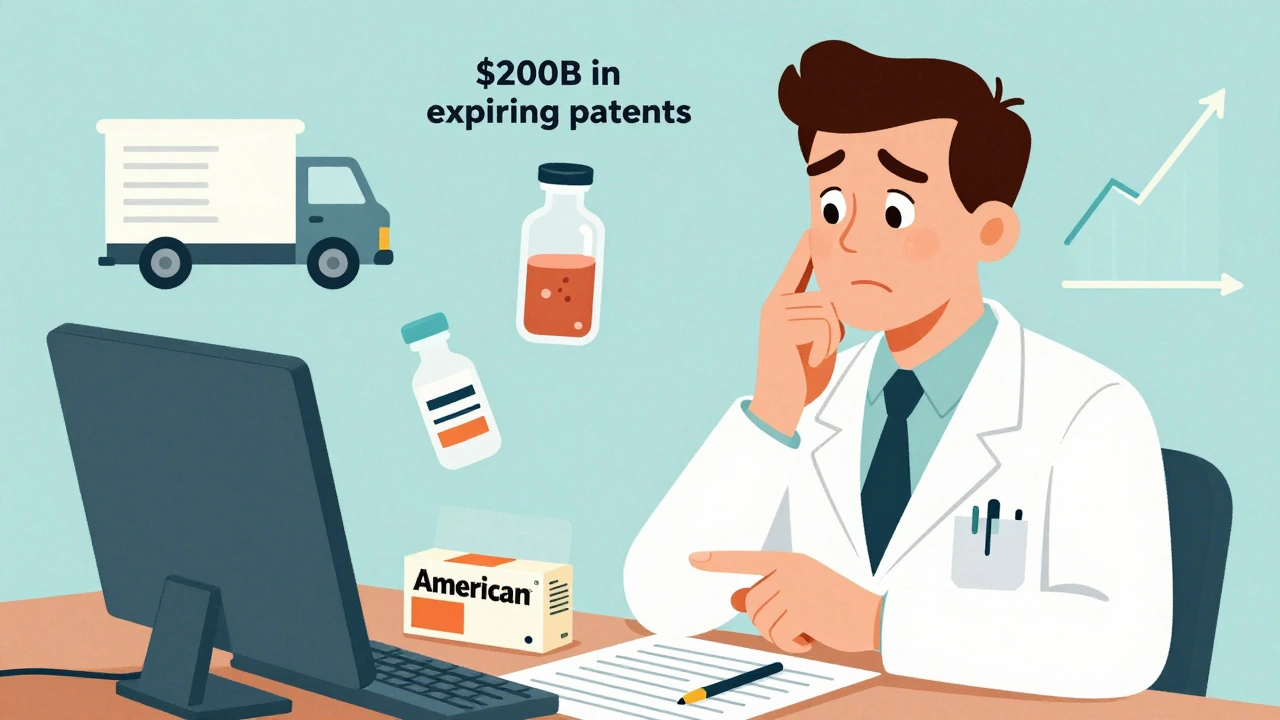
The Rise of Complex Generics
It’s not just pills anymore. Generics are moving into areas once thought too complex: injectables, inhalers, eye drops, and even biosimilars - generics of biologic drugs like those used for rheumatoid arthritis and cancer. In hospitals across the U.S. and Europe, doctors are now prescribing generic versions of expensive cancer drugs. A biosimilar to ustekinumab, for example, costs 30% less than the brand and works just as well. Providers who once avoided these drugs because of cost are now asking for them. The global specialty generics market is expected to grow from $76 billion in 2025 to nearly $186 billion by 2033. That’s a 11.7% annual increase. It’s not just about saving money anymore. It’s about making advanced treatments accessible.What This Means for Patients
If you’re in Europe or Asia, you’re likely already using generics without even knowing it. Your doctor chose them because they’re safe, effective, and affordable. If you’re in the U.S., you might still get a brand-name drug - not because it’s better, but because of supply issues or old habits. But that’s changing. More insurers are requiring generics. More doctors are learning that the generic version of your cholesterol pill works just as well. The real story isn’t about whether generics work. It’s about how different societies value health. In rich countries, generics are a tool to control costs. In poorer ones, they’re the only way to stay alive. And as patents expire on blockbuster drugs - like those for diabetes, heart disease, and autoimmune conditions - the world is moving toward a future where generics aren’t just common. They’re essential.Are generic medications as effective as brand-name drugs?
Yes. Generic medications must contain the same active ingredients, strength, dosage form, and route of administration as the brand-name version. Regulatory agencies like the FDA and EMA require generics to meet strict bioequivalence standards - meaning they work the same way in the body. Differences in inactive ingredients (like fillers or dyes) don’t affect how the drug works. Thousands of studies confirm that generics perform just as well as brands for conditions like high blood pressure, depression, and diabetes.
Why do some doctors still prescribe brand-name drugs?
Sometimes it’s habit. Other times, it’s because the patient had a bad experience with a generic in the past - maybe due to a shortage or a rare reaction to an inactive ingredient. In the U.S., some providers still believe brand-name drugs are more consistent, especially for conditions like epilepsy or thyroid disorders. But research shows these concerns are usually unfounded. When generics are available and in supply, most doctors switch without hesitation.
Why are generics so much cheaper?
Generics don’t have to pay for the original research, marketing, or advertising that brand-name companies do. Those costs can run into billions. Generic manufacturers only need to prove their version works the same way - not retest everything from scratch. Production is often done in countries with lower labor and manufacturing costs, like India and China. That’s why a 30-day supply of a generic statin might cost $4, while the brand costs $150.
Are there any risks with using generics from other countries?
In regulated markets like the U.S., EU, and Japan, all generics - even those made overseas - must meet the same safety and quality standards. The FDA inspects foreign factories just like domestic ones. The real risk comes from unregulated sources - like online pharmacies selling fake or substandard drugs. If you get your generics from a licensed pharmacy, the country where they’re made doesn’t matter. What matters is whether the manufacturer is approved by your country’s health authority.
Will generics replace all brand-name drugs in the future?
No - but they’ll cover most of them. Biologics and highly complex drugs (like gene therapies) are harder to copy and will remain expensive for years. But for the vast majority of common medications - antibiotics, blood pressure pills, antidepressants, insulin - generics will dominate. By 2030, over 95% of prescriptions for these drugs will likely be generics. The future of medicine isn’t about brand names. It’s about access.
Michael Feldstein
December 4, 2025 AT 17:24Man, I’ve had my fair share of generic meds - blood pressure, cholesterol, you name it. Never had an issue. My doc switched me years ago and I’ve saved a fortune. Honestly, if it works and costs 1/20th, why not? The system’s not broken, people just get scared of the word ‘generic’ like it’s some kind of knockoff sneaker.
jagdish kumar
December 6, 2025 AT 01:57India makes the pills that keep America alive. And still, we’re called ‘cheap’.
Gareth Storer
December 6, 2025 AT 19:06Oh wow, so now we’re supposed to believe that a $0.10 pill from a factory in Hyderabad is *exactly* the same as a $150 pill made in New Jersey? Please. I’ve seen the reports. The FDA catches more contamination in Indian plants than in all of Europe combined. This isn’t healthcare - it’s global roulette.
Jessica Baydowicz
December 8, 2025 AT 03:46Y’all are underestimating how wild this is. Imagine your entire life’s meds costing less than your weekly coffee habit. That’s not savings - that’s liberation. Generics are the quiet heroes of modern medicine. No capes, no fanfare, just pills that work. Let’s give them the standing ovation they deserve 💪💊
val kendra
December 8, 2025 AT 09:30My grandma’s on a generic for diabetes. Same active ingredient. Same results. She pays $3 a month. The brand would’ve cost her $120. She’s 82. She doesn’t care about the label. She cares about breathing. And so should we. The system’s rigged for profit, not patients. Time to flip the script.
Isabelle Bujold
December 8, 2025 AT 11:38It’s fascinating how cultural attitudes toward generics mirror broader societal values. In Europe, there’s a collective trust in public systems - so generics are normalized as a rational, efficient choice. In the U.S., individualism dominates - so even when data supports generics, people cling to brand names as symbols of personal control, quality, and status. It’s less about pharmacology and more about identity. The fact that we still debate this in 2025 says more about our psychology than our science. And then there’s Japan - where the government just resets prices every two years and suddenly everyone’s on generics. No debate. No marketing. Just math. That’s the real lesson here: if you want people to adopt generics, stop asking them to choose. Make the choice for them.
Joe Lam
December 8, 2025 AT 23:08Let’s be real - most people don’t know the difference between a generic and a placebo. They just trust the name on the bottle. That’s why Big Pharma spends billions on branding. Because if you tell someone ‘this is the one your doctor swears by,’ they’ll pay $200 for it. The science doesn’t matter. Perception does. And until Americans stop treating pills like luxury handbags, we’ll keep paying premiums for the same chemical.
Rachel Bonaparte
December 9, 2025 AT 23:02Have you ever looked at the FDA’s inspection reports for Indian generic factories? They’re not just cutting corners - they’re running underground labs with mold in the ventilation and workers mixing batches with bare hands. The ‘bioequivalence’ tests? Easily manipulated. And the real kicker? The same companies that make generics for the U.S. also sell them to Africa and Latin America - where regulation is nonexistent. So we’re importing drugs made in unsafe conditions, then pretending they’re safe because they ‘meet standards.’ That’s not healthcare. That’s colonialism with a pill bottle.
Scott van Haastrecht
December 11, 2025 AT 16:57300+ generic drug shortages in 2023? That’s not a coincidence. That’s a supply chain weaponized by corporate greed. The same companies that make the brand-name drugs also own the generic factories. They let the generics run out, drive up demand for the brand, then cash in. It’s not incompetence - it’s strategy. And we’re all just sitting here pretending we’re saving money while they’re laughing all the way to the bank.
Chase Brittingham
December 12, 2025 AT 12:03I get why people are nervous. I used to be too. But I worked in a rural clinic for three years - saw patients choose between food and meds. Then I watched a 70-year-old woman start her generic blood pressure med and go from barely walking to gardening again. No drama. No side effects. Just life. Maybe the real question isn’t whether generics work - it’s whether we’re willing to let people live.
Rebecca Braatz
December 12, 2025 AT 12:22Generics aren’t just cheaper - they’re democratizing medicine. Imagine a kid in rural Brazil getting insulin because it costs $0.50 instead of $50. That’s not a pill. That’s a future. Stop acting like this is about ‘quality.’ It’s about power. Who gets to decide what’s ‘good enough’ for someone else? If it works, let them have it. End of story.
Libby Rees
December 12, 2025 AT 12:56The data is clear. Generics are safe. Effective. Economical. The resistance is emotional, not scientific.
Dematteo Lasonya
December 13, 2025 AT 11:21My dad had a seizure last year because the generic he was on had a different filler. He didn’t know it until the hospital. It wasn’t the drug - it was the inactive ingredient. That’s real. And yeah, most generics are fine. But when it’s your life on the line, you don’t want to be the 1%.