
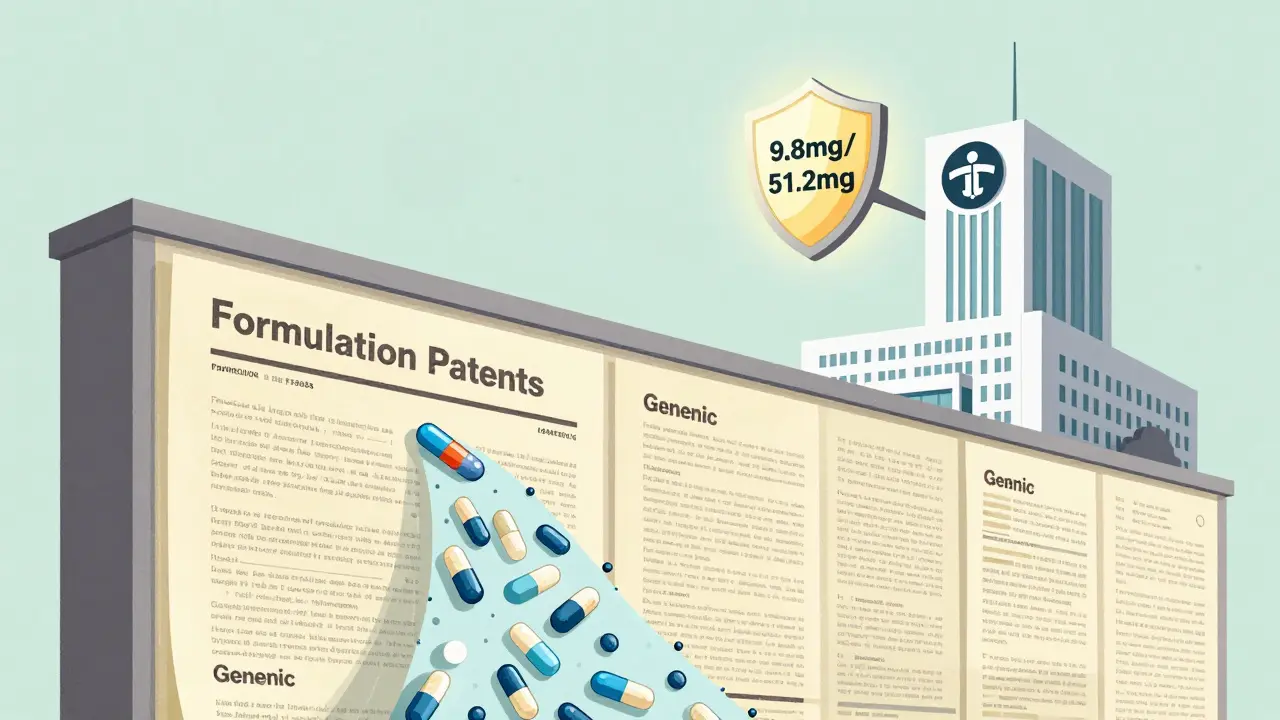
When a blockbuster drug’s core patent expires, you’d expect generics to flood the market. But in many cases, they don’t - not because the drug is too complex, but because the brand company already built a legal wall around it. That wall? Formulation patents on drug combinations.
These aren’t the big, groundbreaking patents that protect the original molecule. Those expire first. Instead, formulation patents cover the tiny details: the exact ratio of two drugs in one pill, the way they’re released over time, or even the needle used to inject them. On paper, they sound minor. In practice, they can delay generic competition for years - sometimes more than a decade.
What Exactly Is a Formulation Patent on a Drug Combination?
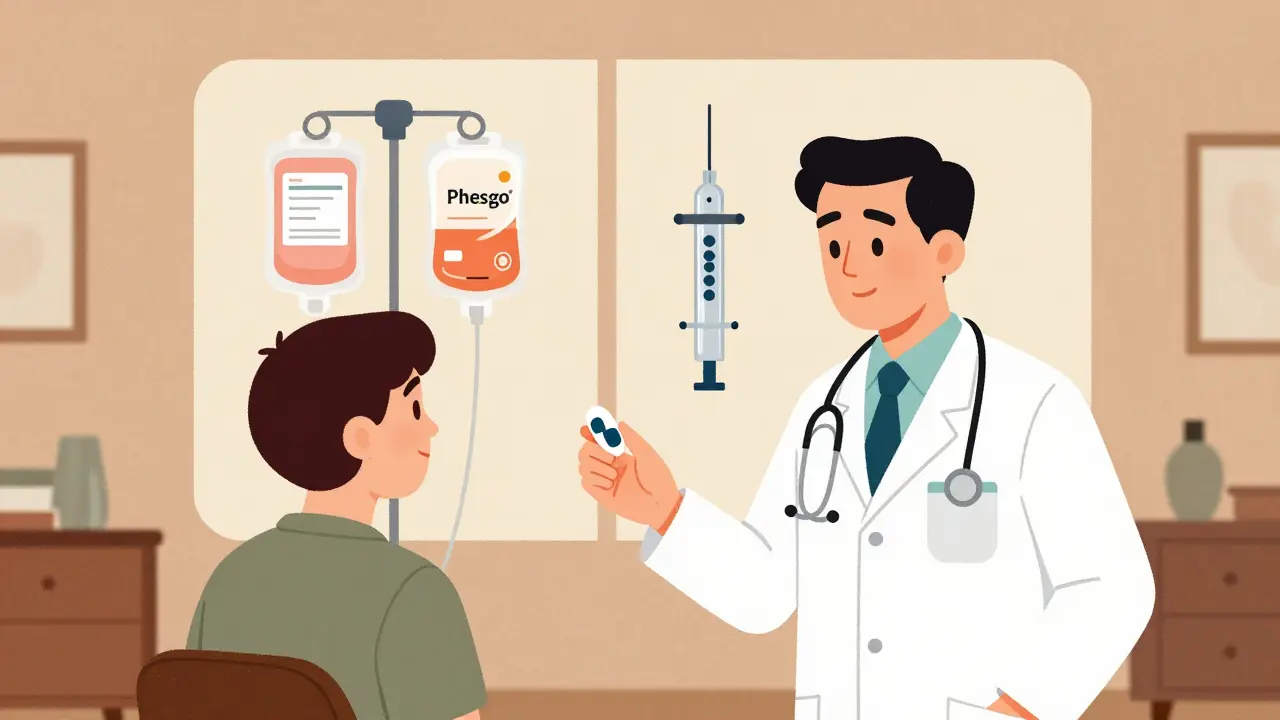
A formulation patent on a drug combination protects a specific way two or more active ingredients are put together. It’s not enough to say, “We combined Drug A and Drug B.” That’s too broad. The patent must lock in the details: 10mg of Drug A and 50mg of Drug B in a delayed-release tablet, taken once daily. Or a subcutaneous injection with a fixed ratio of trastuzumab and pertuzumab that replaces an IV infusion.
The U.S. Patent and Trademark Office (USPTO) requires proof that this combination isn’t obvious. You can’t just mix two known drugs and call it innovation. The company must show something unexpected - like a 40% drop in side effects, or a 3x increase in how long the drug stays active in the body. That’s why many patents include precise numbers: 9.8mg/51.2mg, not 10mg/50mg. The difference matters legally.
These patents are tracked in the FDA’s Orange Book, which lists all patents tied to approved drugs. Of the 1,842 formulation patents submitted in 2022, nearly 80% came from oncology and immunology drugs. Why? Because those treatments often need multiple drugs working together, and small changes in delivery can make a huge difference in patient outcomes - and patent strength.
Why Do Companies Use This Strategy?
Developing a new drug costs $2.6 billion on average and takes 10-15 years. Once the core patent expires, generic manufacturers can legally copy the drug. Revenue drops by 80-90% within months. That’s a massive financial cliff.
Formulation patents are a way to climb back up. By patenting a new delivery method, a new ratio, or a fixed-dose combo, companies can extend market control. For example, Roche’s Phesgo® - a subcutaneous combo of two cancer drugs - replaced the need for two separate IV infusions. Even though the original patents on trastuzumab and pertuzumab had expired, Phesgo’s unique delivery system gave them 8+ years of extra exclusivity.
The FDA confirmed that 78% of new drug approvals between 2015 and 2020 relied on at least one formulation or combination patent to extend exclusivity. That’s not an accident. It’s a planned part of the business model.
How Long Can These Patents Really Extend Exclusivity?
It varies. For drugs with weak patent portfolios, the extension might be just 3 years. For the best-protected ones, it’s 12-16 years beyond the original patent. Eli Lilly’s Humalog insulin formulations, for instance, have held off generics for over 16 years thanks to layered patents on delivery pens, concentrations, and combo formulations.
There’s also regulatory exclusivity on top of patents. The FDA grants:
- 5 years for a completely new chemical entity
- 3 years for a new formulation or new use with clinical data
- 7 years for orphan drugs
Many drugs get multiple layers. A drug might have a 5-year NCE exclusivity, then a 3-year exclusivity for a new combo formulation, then a 10-year patent on the delivery device. The result? A “patent thicket” that makes it nearly impossible for generics to enter without getting sued or redesigning the entire product.
According to the PMC’s 2023 review, these overlapping protections delay generic entry by an average of 4.7 years - and in some cases, over a decade.
How Do Generic Companies Fight Back?
Generics don’t sit still. They file Paragraph IV certifications under the Hatch-Waxman Act, challenging the validity of these formulation patents. In 2023, 842 such challenges were filed - up from 517 in 2020. And they’re winning more often.
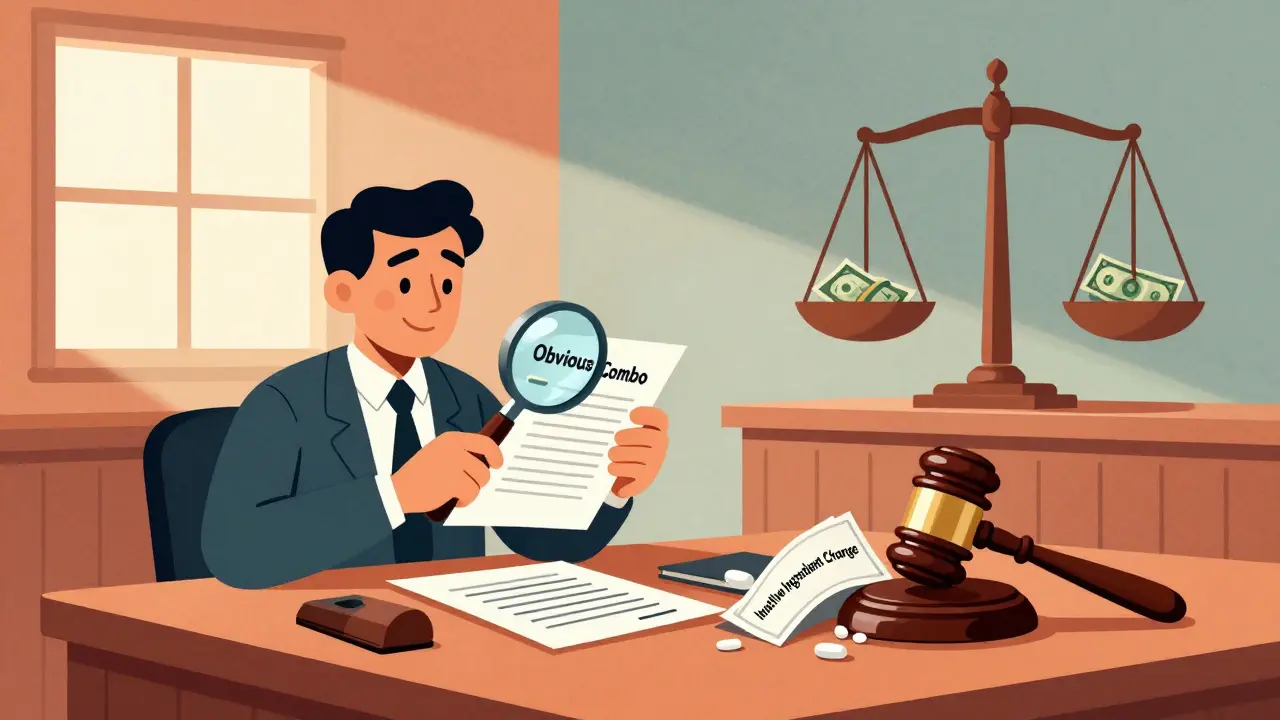
Since the 2007 KSR v. Teleflex Supreme Court ruling, courts have been tougher on obviousness. If a combo is just two known drugs in a known ratio, it’s likely invalid. Generic companies exploit this. In the Mylan v. Celgene case over Revlimid®, generics won approval for non-patented cancer indications - forcing Celgene to drop the original formulation.
And it’s expensive. Amgen spent $147 million trying to defend a subcutaneous injector patent for Enbrel® - and lost. The court called it “obvious automation.”
Today, 45% of formulation patents are invalidated in court. That’s higher than the 22% invalidation rate for core patents. Companies can’t just file any patent and expect to win.
What Makes a Formulation Patent Strong - and What Kills It?
Not all combo patents are created equal. The strongest ones have:
- Exact, non-rounded ratios (e.g., 9.8mg/51.2mg, not 10/50)
- Novel delivery systems (pH-sensitive coatings, wearable injectors, inhalers)
- Statistically significant clinical data showing improved safety or efficacy (p-value < 0.01)
- Clear evidence of unexpected results - like reduced nausea or longer half-life
The weakest ones? Those that change nothing meaningful. A 2022 IPWatchdog analysis found that 31% of formulation patents between 2015 and 2022 covered trivial changes - like swapping one inactive ingredient for another or switching from a tablet to a capsule with no clinical benefit.
Dr. Aaron Kesselheim from Harvard called these “patent privateering.” The FDA has started pushing back. In May 2024, it proposed requiring proof of “clinical superiority” to qualify for the 3-year exclusivity bonus. If that rule passes, many weak patents will be blocked before they’re even listed in the Orange Book.
Who Benefits - and Who Pays?
Pharma companies benefit. The top 10 drugmakers average 14.7 formulation patents per blockbuster drug. Mid-sized firms? Just 3.2. That’s why big players dominate the market.
But the cost is passed on to patients and insurers. The FTC estimates that evergreening through trivial formulation patents increases U.S. drug prices by 17-23% beyond what innovation justifies. In 2023, formulation and combination patents protected $312 billion in global drug sales - nearly a quarter of the entire pharmaceutical market.
Meanwhile, the Congressional Budget Office predicts that if patent reforms pass, U.S. healthcare could save $150 billion by 2028. The Preserve Access to Affordable Generics Act, currently under review, would require companies to prove “meaningful clinical benefit” to get a new patent - a standard that could wipe out 28% of current combo patents.
The Future: Tighter Rules, Smarter Patents
The game is changing. Companies can’t rely on tiny tweaks anymore. The new standard is innovation that matters.
Roche’s 2023 patent for a trastuzumab-deruxtecan combo with pH-sensitive release technology is the new model. It took 2.3 years of extra R&D, but it’s projected to extend exclusivity by 8.5 years. That’s the kind of patent that survives scrutiny.
Meanwhile, generic manufacturers are getting better at designing around patents. They’re filing more Paragraph IV challenges, and courts are siding with them more often. The average exclusivity extension is already falling - from 5.3 years (2020-2023) to an expected 3.8 years (2025-2030).
For now, formulation patents on drug combinations remain a powerful tool. But the days of gaming the system with minor changes are ending. The future belongs to companies that invest in real innovation - not legal loopholes.
Moses Odumbe
December 20, 2025 AT 08:02Dev Sawner
December 21, 2025 AT 23:45Alex Curran
December 23, 2025 AT 14:56Aadil Munshi
December 25, 2025 AT 09:42bhushan telavane
December 25, 2025 AT 17:06Jedidiah Massey
December 26, 2025 AT 06:55holly Sinclair
December 27, 2025 AT 17:52Emily P
December 28, 2025 AT 20:23Lynsey Tyson
December 29, 2025 AT 08:22Allison Pannabekcer
December 29, 2025 AT 23:52Janelle Moore
December 30, 2025 AT 00:01Chris porto
December 31, 2025 AT 21:49Mahammad Muradov
January 2, 2026 AT 06:57