
Why Your Medicine Might Go Bad Before the Date on the Bottle
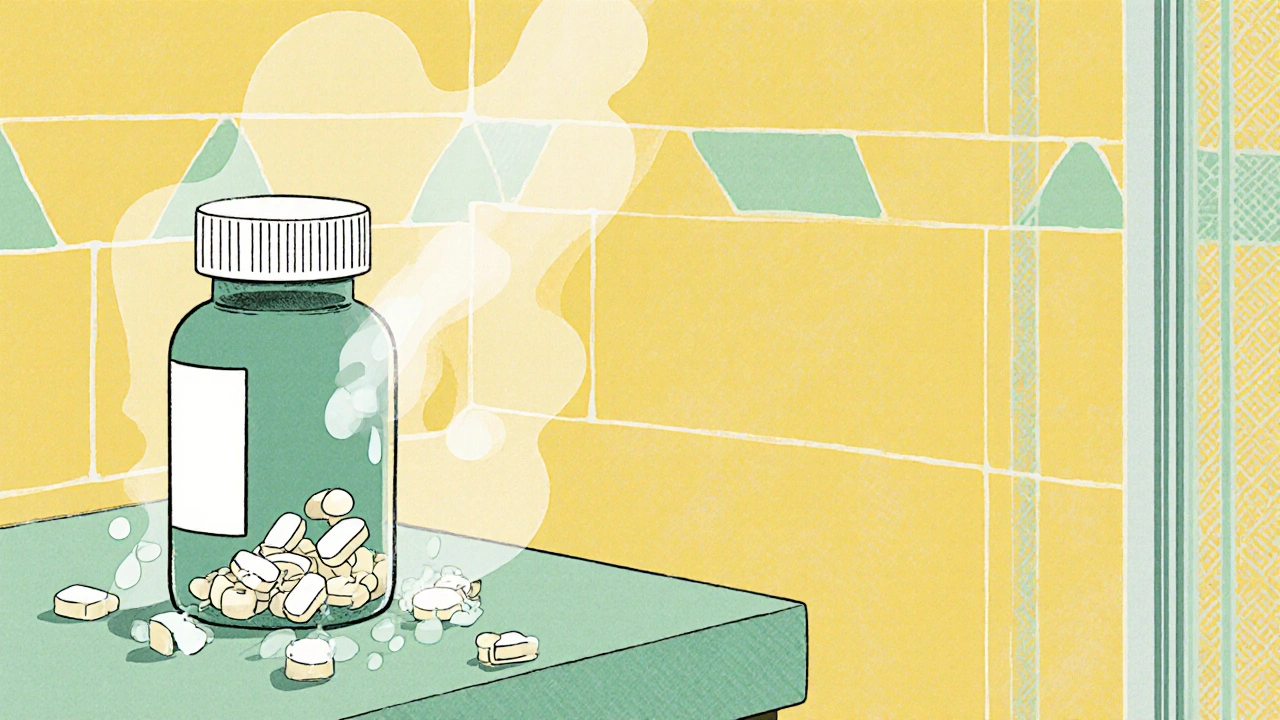
You check the expiration date on your pill bottle and think you’re safe-until you realize your meds have been sitting in a steamy bathroom or a hot car. The truth? Medication expiration isn’t just about time. Heat and humidity can wreck your pills, liquids, and inhalers long before the printed date, making them weaker, unsafe, or even dangerous.
The FDA says expiration dates are guarantees: if you store your medicine correctly, it should work as intended until that date. But if you leave it in a 90°F kitchen or a humid bathroom, that guarantee vanishes. You won’t see a warning label. The pill might look fine. But inside, the chemistry is breaking down.
What Happens Inside Your Pills When It Gets Hot and Damp
Medications are chemical formulas designed to stay stable under specific conditions: 68-77°F and 35-65% humidity. That’s not your bathroom. That’s a controlled lab. When you expose them to heat and moisture, three things happen:
- Active ingredients break apart
- Coatings dissolve or crack
- Excipients (fillers) absorb water and swell
Take aspirin. When it gets wet, it turns into acetic acid (vinegar) and salicylic acid. That’s why old aspirin sometimes smells sour. That change doesn’t just make it less effective-it can irritate your stomach more than the original pill.
Hard capsules? They can stick together or become brittle. Softgels? They might leak. Tablets might crumble or change color. These aren’t just cosmetic issues. They change how your body absorbs the drug. An extended-release pill that breaks open too fast can dump its whole dose at once. That’s not a time-release-it’s a risk.
Some Medicines Are Way More Sensitive Than Others
Not all meds are created equal. Some can handle a little heat. Others? One hot day can ruin them.
High-risk meds:
- Insulin: Loses up to 20% potency after just 24 hours at 98.6°F. For diabetics, that means higher blood sugar, more complications, and unpredictable dosing.
- Nitroglycerin: Used for heart attacks. Degrades fast above 77°F. A degraded pill might not stop chest pain when you need it most.
- Thyroid meds: Must stay below 80.6°F. Heat can reduce absorption, making your hormone levels swing wildly.
- Antibiotic suspensions (like amoxicillin): Lose 30-40% potency in 72 hours at room temperature. That’s not just ineffective-it can lead to antibiotic resistance.
- Biologics (monoclonal antibodies): These are proteins. Heat above 46.4°F causes them to unfold permanently. Once denatured, they’re useless.
- EpiPens: The spring mechanism can fail above 86°F. A 15-20% malfunction rate means your life-saving device might not fire when you need it.
- Inhalers: The propellant expands under heat. At 120°F, they can explode.
On the flip side, common pills like ibuprofen, acetaminophen, and statins hold up better. Even at 86°F, they often keep 90%+ potency for months. But that doesn’t mean you should store them in the sun.
Where You’re Probably Ruining Your Meds Right Now
Most people store meds in the worst possible places.
The bathroom cabinet: Humidity spikes to 70-90% during showers. That’s worse than a rainforest. Moisture gets into bottles, even if they’re sealed. Pills absorb it. Capsules swell. You think you’re being neat by keeping them in the medicine cabinet. You’re actually exposing them to daily steam baths.
The kitchen: Near the stove, sink, or dishwasher? Temperatures can hit 90°F or higher. Add cooking steam and you’ve got a perfect storm of heat and moisture.
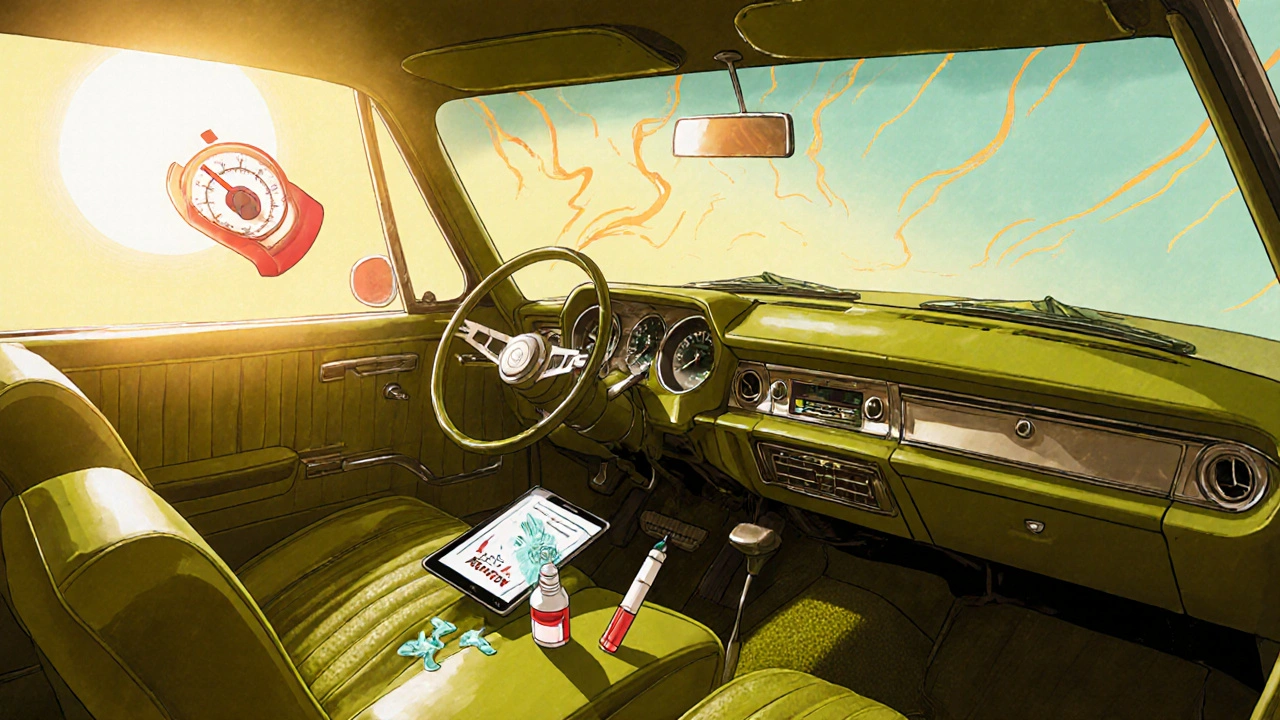
The car: On a sunny 80°F day, your car can hit 140°F inside. That’s not just hot-it’s destructive. Pills melt. Liquids separate. Inhalers can rupture. Leaving a bottle in the glovebox for an hour can be enough to damage insulin or EpiPens.
Even your nightstand, if it’s near a window, can get too warm. Sunlight through glass acts like a magnifying lens. UV rays break down chemicals too.
How to Tell If Your Medicine Has Been Damaged
You can’t always tell by looking. But here are red flags:
- Tablets that are discolored, cracked, or sticky
- Capsules that are leaking, swollen, or brittle
- Liquids that are cloudy, chunky, or smell odd
- Pills that smell like vinegar (aspirin) or chemicals
- Inhalers that feel lighter than usual or don’t spray properly
If you see any of these, don’t take it. Even if it’s before the expiration date. The manufacturer’s guarantee only applies if you stored it right. If you didn’t, the date means nothing.
How to Store Medicines Right (Simple Rules)
You don’t need a lab. Just follow these three rules:
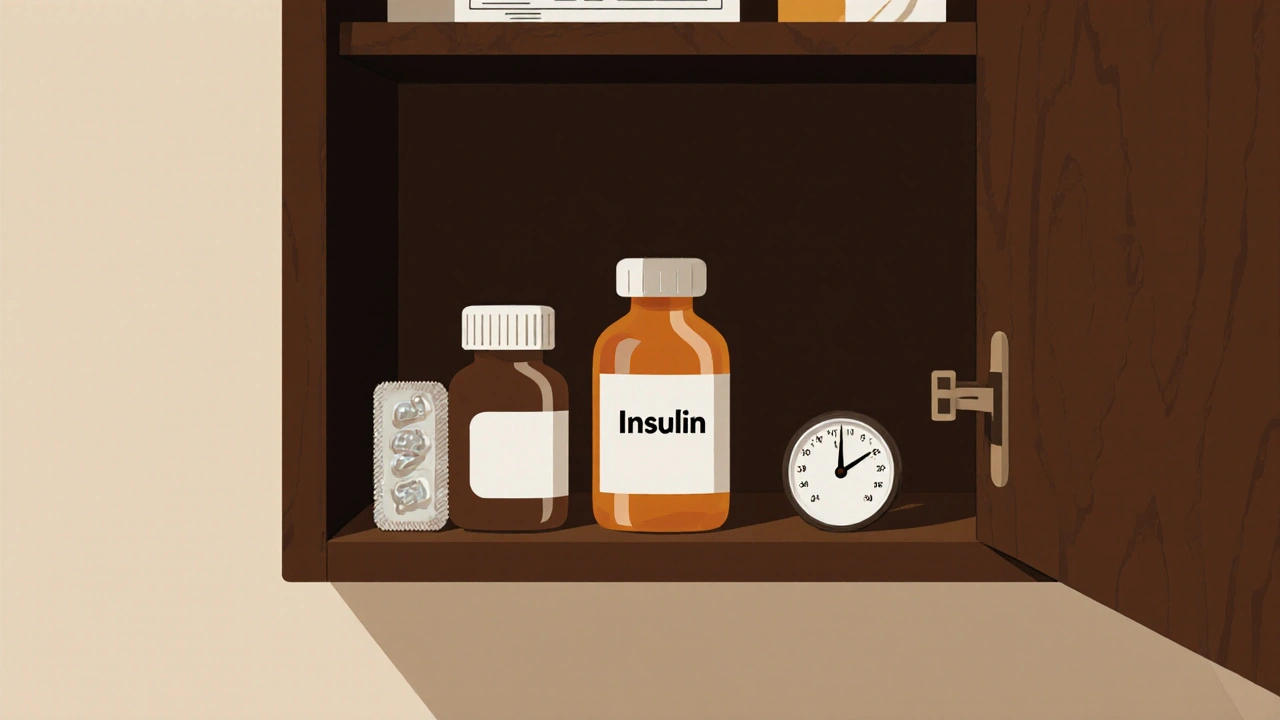
- Keep it cool: Store between 59-77°F. A bedroom drawer, a closet shelf, or a cabinet away from windows is fine.
- Keep it dry: Never store meds in the bathroom or kitchen. Use a sealed container with a silica gel packet if needed.
- Keep it dark: Light degrades many drugs. Use original bottles-they’re usually opaque.
For sensitive meds like insulin or biologics, use a small cooler with a cold pack when traveling. Pharmacies sell special travel packs for this. Don’t rely on your purse or backpack in summer.
Take only what you need for a trip. Leave the rest at home in a stable environment. If you’re going somewhere hot, ask your pharmacist for advice. They know what your meds can handle.
The Real Danger: Not Just Weakness-But Harm
Using degraded meds isn’t just ineffective. It’s risky.
Take antibiotics. If they’re not strong enough, they won’t kill all the bacteria. The survivors become resistant. That’s how superbugs grow. You’re not just failing to get better-you’re making the problem worse for everyone.
Insulin that’s lost potency? Blood sugar goes wild. That means ER visits, nerve damage, kidney stress. For someone with heart disease, a failed nitroglycerin tablet could mean a heart attack you didn’t survive.
EpiPens don’t work? That’s not a close call. That’s a death sentence during anaphylaxis.
The FDA is clear: “Using expired medicines is risky and possibly harmful to your health.” That rule applies even more if the medicine was stored wrong.
What’s Changing? Better Packaging, Better Warnings
Pharmacies are starting to fight back. Some now use:
- Desiccants inside pill bottles (those little packets that say “Do Not Eat”)
- Opaque, moisture-resistant containers
- Temperature-sensitive labels that change color if exposed to heat
Some smart packaging is in testing-bottles with built-in sensors that alert your phone if your meds got too hot. But until then, you’re the first line of defense.
And while 91% of healthcare workers know how to store meds properly, most patients don’t. That gap is dangerous. You need to know your meds’ limits. Ask your pharmacist. Write it down. Put a note on your fridge: “Insulin stays in the fridge until first use. Then keep it cool, not hot.”
Final Thought: Your Medicine Isn’t a Plant-It’s a Precision Tool
You wouldn’t leave your watch in the oven. You wouldn’t put your phone in the shower. Your medicine isn’t any different. It’s a finely tuned chemical instrument. Heat and moisture aren’t just inconvenient-they’re destructive.
Expiration dates aren’t magic. They’re conditional. If you store your meds right, they’ll last. If you don’t, they’ll fail-before the date, without warning, and with real consequences.
Check where your meds live. Move them. Protect them. Your health depends on it.
Can I still use my medicine after the expiration date if it was stored properly?
The expiration date is the last day the manufacturer guarantees full potency and safety under proper storage. Even if stored perfectly, potency slowly declines after that date. For non-critical meds like pain relievers, you might get some effect-but never risk it with life-saving drugs like insulin, EpiPens, or heart medications. When in doubt, throw it out.
Is it safe to store pills in a pill organizer for long periods?
Only for short-term use, like a week or two. Pill organizers expose meds to air and moisture, especially if left on a counter or in a bathroom. They also remove the original protective packaging. For long-term storage, keep pills in their original bottles with tight caps. Use organizers only as a daily convenience, not a storage solution.
What should I do if I think my medicine was exposed to heat or humidity?
Stop using it immediately. Look for signs of damage: discoloration, odd smell, changed texture. Call your pharmacist or doctor. Don’t guess. For critical meds like insulin or EpiPens, get a replacement right away. It’s not worth the risk.
Do refrigerated meds need to be kept cold all the time?
Some do, some don’t. Always check the label. Insulin, for example, can be kept at room temperature (below 77°F) for up to 28 days after first use. But before opening, it must stay refrigerated. Biologics and certain antibiotics must stay cold until used. If you’re unsure, ask your pharmacist. Never freeze meds unless the label says to.
Can I tell if a pill is still good just by looking at it?
Sometimes, but not always. Some meds degrade without visible changes. Color shifts, crumbling, stickiness, or odd smells are red flags-but the absence of these doesn’t mean the pill is safe. Heat and humidity can break down active ingredients without changing appearance. When in doubt, don’t take it.
Next steps: Check where your meds are stored right now. Move them to a cool, dry, dark spot. Ask your pharmacist about your specific prescriptions. Keep a list of which ones need extra care. Your health isn’t something you can afford to guess about.
Tiffany Fox
November 26, 2025 AT 21:20Natalie Sofer
November 27, 2025 AT 18:28Rohini Paul
November 29, 2025 AT 10:11Courtney Mintenko
December 1, 2025 AT 04:09Sean Goss
December 2, 2025 AT 08:56Khamaile Shakeer
December 3, 2025 AT 11:39Suryakant Godale
December 4, 2025 AT 14:56John Kang
December 4, 2025 AT 15:37Bob Stewart
December 5, 2025 AT 08:38Simran Mishra
December 5, 2025 AT 17:08ka modesto
December 7, 2025 AT 08:54Holly Lowe
December 8, 2025 AT 21:56Cindy Burgess
December 9, 2025 AT 03:22Keith Avery
December 9, 2025 AT 08:39Luke Webster
December 10, 2025 AT 05:50