
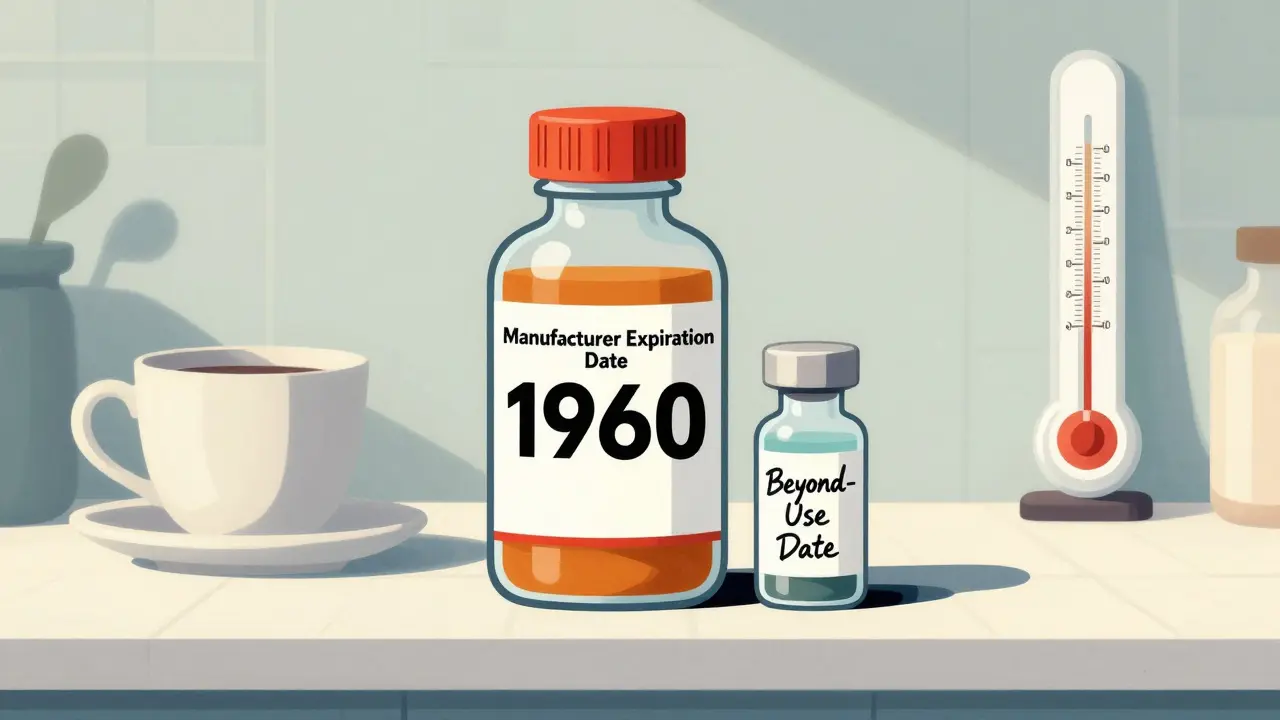
You pick up your prescription and see two dates on the bottle: one says expiration date, the other says beyond-use date. You might think they mean the same thing. They don’t. Mixing them up could mean taking a pill that doesn’t work-or worse, one that’s unsafe.
What’s the Difference Between Expiration and Beyond-Use Dates?
An expiration date comes from the drug manufacturer. It’s the last day they guarantee the medication is fully potent and safe, based on lab tests done under controlled conditions. These tests check how the drug holds up over time in heat, light, and humidity. The FDA requires this for every commercial drug sold in the U.S. since 1979. If the bottle says "March 31, 2025," that’s the date the manufacturer says: "Use it by then, or it might not work as intended."
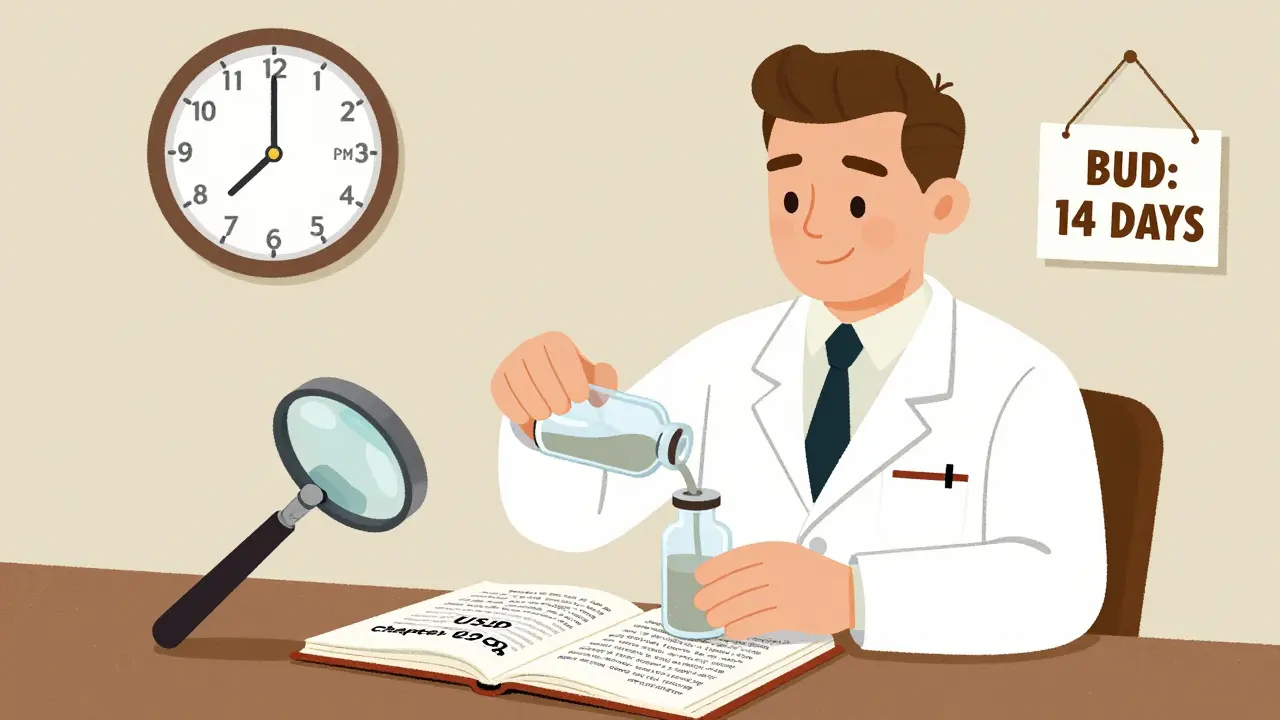
A beyond-use date (BUD) is set by the pharmacy-not the maker. It applies to medications that have been changed after leaving the factory. That includes things like liquid versions of pills made for kids, capsules mixed without dyes for allergic patients, or IV bags prepared in the hospital. Since these aren’t mass-produced, they haven’t been tested for long-term stability. So the pharmacist gives it a BUD based on USP guidelines-usually much shorter than a manufacturer’s expiration date.
Here’s the key: if a drug hasn’t been touched, it has an expiration date. If it’s been altered, it gets a BUD. That’s it.
How Long Do These Dates Last?
Expiration dates for commercial pills, capsules, or injectables usually last 1 to 5 years from when they were made. Some can go even longer if stored perfectly-but you shouldn’t rely on that. The manufacturer’s date is the only one you can trust.
Beyond-use dates are far more limited. For example:
- A liquid antibiotic made from powder? BUD is usually 14 days if refrigerated.
- A compounded cream? Might last 30 to 90 days at room temperature.
- A repackaged pill from a bulk bottle? BUD is the earlier of the original expiration date or 1 year after repackaging.
- A sterile IV bag? Could be good for up to 6 months if kept frozen, but only 24 hours if left out.
These aren’t guesses. They’re based on science. USP Chapter <795> says non-sterile compounded meds can’t go beyond 180 days at room temperature unless proven stable. Water-based formulas? They spoil fast. No preservatives mean bacteria can grow.
Why Can’t You Just Use the Manufacturer’s Date After Repackaging?
Think of it like this: a factory makes a bottle of ibuprofen. It’s sealed, tested, and stamped with an expiration date. Now, a pharmacy opens that bottle, pours 30 pills into a different container, and gives them to you. The original seal is broken. The pills are now exposed to air, moisture, and maybe even dust. The manufacturer never tested that scenario.
That’s why the pharmacy can’t use the original date. The drug’s stability changes when it’s moved, crushed, mixed, or diluted. Even something as simple as putting a tablet into a capsule with a different filler can affect how long it lasts. That’s why pharmacists must assign a new BUD-and why you need to pay attention to it.
Storage Matters More Than You Think
Expiration dates assume the drug was stored correctly-cool, dry, out of sunlight. But most people keep meds in the bathroom or on the kitchen counter. Heat and humidity kill potency faster.
With compounded meds, storage is even more critical. A pill that originally said "store at room temperature" might now need to be refrigerated after being turned into a liquid. Why? Because the pharmacy removed the preservatives to make it safer for your child or allergy. Without those chemicals, the formula degrades faster. If you leave it on the counter, it could become unsafe in days.
One patient in Manchester told me they kept their compounded thyroid medication at room temperature like the original bottle said. The pharmacist had written "refrigerate" on the label. They didn’t notice. Six weeks later, the med didn’t work. The BUD had passed-and they had no idea.
What Happens If You Use a Drug After Its Date?
Most expired meds don’t turn toxic. But they do lose strength. A 2020 FDA study found 90% of tested drugs still had at least 90% of their labeled potency 15 years past expiration-if stored perfectly. But that’s not real life.
Real-world storage? A pill in a hot car, a liquid left on a windowsill, a cream exposed to bathroom steam? Potency drops faster. And with compounded meds, the risk isn’t just weakness-it’s contamination. Mold. Bacteria. Yeast. That’s why BUDs are so short.
Using a BUD-overdue compounded medication can lead to treatment failure. For someone on a custom hormone therapy or a rare allergy treatment, that’s dangerous. A 2022 survey found 68% of patients threw away compounded meds because they expired before finishing the course. That’s not just waste-it’s health risk.
How to Know Which Date Applies to Your Medicine
Check the packaging:
- If it’s in the original bottle with the manufacturer’s label-use the expiration date.
- If it’s in a small white plastic bottle with a pharmacy label and no brand name-use the beyond-use date.
- If you got a liquid, cream, or injection made by the pharmacy-BUD is your only guide.
- If a pill was repackaged from a large bottle into a blister pack-BUD is the earlier of the original expiration or 1 year from repackaging.
Always ask your pharmacist: "Is this an expiration date or a beyond-use date?" They’re trained to explain it. Don’t assume.
What to Do When the Date Has Passed
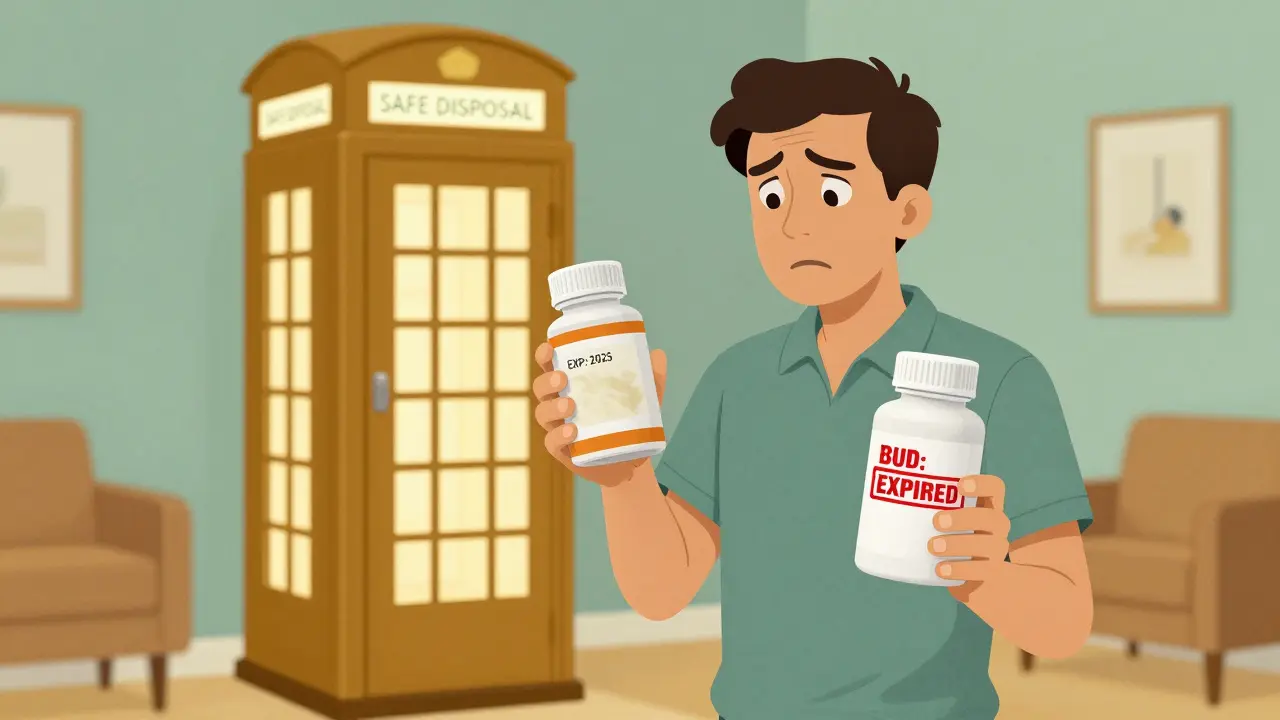
Don’t flush it. Don’t throw it in the trash. Don’t give it to someone else.
Take it back to the pharmacy. Over 90% of U.S. pharmacies offer free take-back programs. They dispose of it safely so it doesn’t pollute water or end up in the wrong hands.
If your pharmacy doesn’t have a drop-off, check with your local hospital, police station, or community health center. Many have secure disposal bins.
And if you’re unsure? When in doubt, toss it. The cost of a new prescription is far less than the cost of being sick because a pill didn’t work.
Why This Matters More Than Ever
The compounding pharmacy industry is growing fast-now worth over $11 billion in the U.S. More people need custom meds: kids who can’t swallow pills, patients allergic to fillers, people needing unusual doses. But with growth comes risk. In 2022, the FDA issued 27 warning letters to compounding pharmacies for incorrect BUDs. That’s up from 19 in 2021.
USP is updating its guidelines to make BUD rules stricter. Some high-risk formulas may soon have BUDs shortened by 30%. That means even more waste-but also more safety.
As personalized medicine grows, knowing the difference between these two dates isn’t just helpful. It’s essential.
Bottom Line
Expiration dates = manufacturer’s promise. Beyond-use dates = pharmacist’s safety limit.
Never assume they’re the same. Never ignore the BUD just because the original bottle had a longer date. Always check the label you walked out with. Store meds correctly. And when in doubt-take it back to the pharmacy.
Your health isn’t worth gambling on a date you don’t understand.
Kathy McDaniel
January 26, 2026 AT 17:17Conor Flannelly
January 28, 2026 AT 17:07Conor Murphy
January 30, 2026 AT 01:25Marian Gilan
January 30, 2026 AT 09:23Paul Taylor
January 31, 2026 AT 22:51Desaundrea Morton-Pusey
February 2, 2026 AT 19:29April Williams
February 3, 2026 AT 21:24Harry Henderson
February 4, 2026 AT 13:32suhail ahmed
February 4, 2026 AT 20:34Candice Hartley
February 5, 2026 AT 11:00astrid cook
February 6, 2026 AT 08:47Andrew Clausen
February 7, 2026 AT 06:38Anjula Jyala
February 7, 2026 AT 10:10Kirstin Santiago
February 8, 2026 AT 20:43Murphy Game
February 9, 2026 AT 09:00