

Imagine a second-grader with severe asthma walking into the classroom. She needs her inhaler before gym class, but the bell rings in five minutes. Who gives it to her? The teacher? The aide? Or the nurse? If you are a parent, an educator, or a healthcare provider, this scenario is more common than you think. With millions of U.S. children managing chronic conditions like diabetes, ADHD, and allergies, the question isn't just about giving pills-it's about who does it, how they do it, and how we keep everyone safe.
Coordinating School Nurse workflows for daily pediatric medications administration in educational settings is a systematic process that ensures safe, legal, and effective drug delivery. It involves strict protocols, proper delegation, and constant communication between families, doctors, and school staff. For decades, this area was messy, with every state doing its own thing. But recently, standards have tightened significantly. The National Association of School Nurses (NASN) published a major evidence-based guideline in 2022, and the American Academy of Pediatrics (AAP) followed up with a policy statement in June 2024. These documents don't just suggest best practices; they set the bar for what "safe" actually looks like in a K-12 setting.
The Core Framework: What "Coordination" Actually Means
At its heart, coordination is about risk management. When a child takes medication at school, the school district assumes liability. That means the process has to be bulletproof. The central entity here is the School Nurse, who acts as the linchpin of the entire operation. They aren't just handing out meds; they are assessing student needs, training other staff, reviewing documentation, and acting as the bridge between the family's doctor and the school environment.
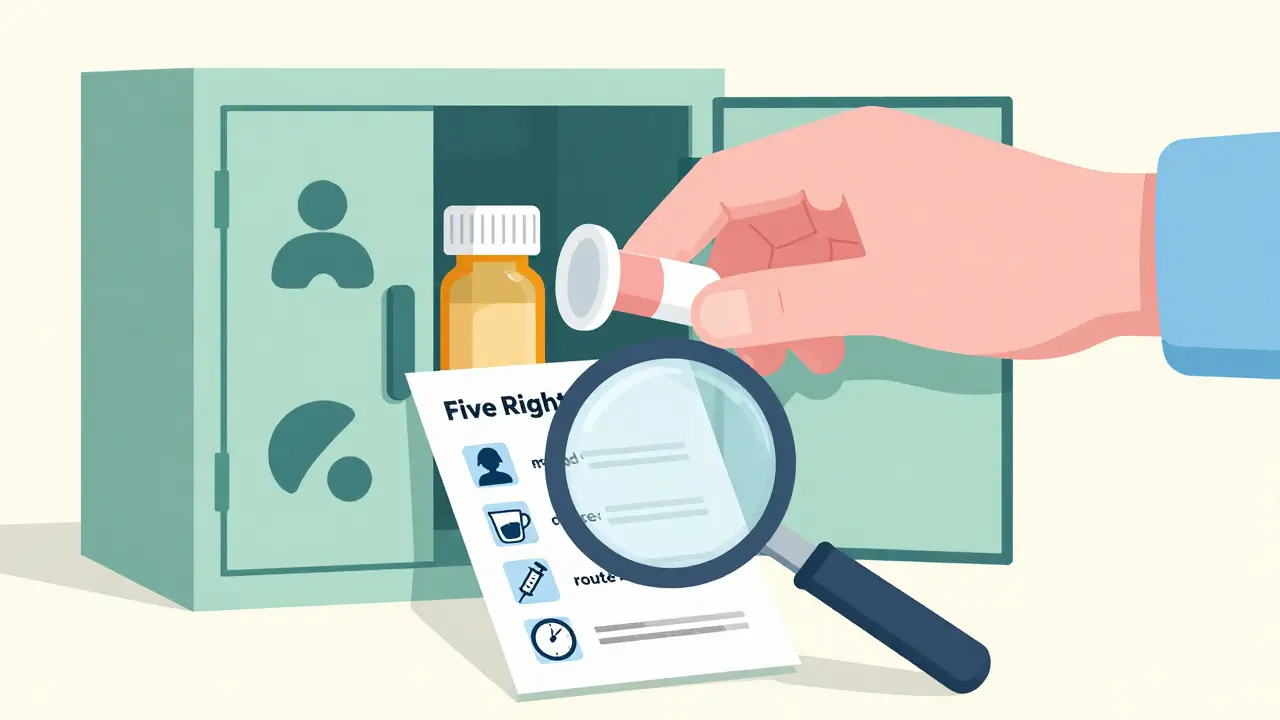
According to NASN data from 2023, medication errors occur in about 1.2% of all school-based administrations. It sounds low, but when you scale that to millions of doses given daily, it adds up fast. Most of these errors happen not because someone forgot a dose, but because of poor coordination-wrong time, wrong person, or lack of clear instructions. To fix this, schools rely on a framework called the Five Rights of Medication Administration. This isn't new to nursing, but applying it to schools requires specific adjustments:
- Right Student: Double-checking ID bands or photos, especially in large classes.
- Right Medication: Verifying the label against the medical order.
- Right Dose: Ensuring the amount matches the prescription exactly.
- Right Route: Oral, inhaled, injected, or topical.
- Right Time: Administering within a 30-minute window of the prescribed time, unless the doctor says otherwise.
This framework is non-negotiable. However, only 41% of school districts consistently apply these rights during high-stress periods like field trips or after-school activities. That gap is where coordination breaks down.
Legal Standards and State Variations
You can't coordinate school nurses without understanding the legal landscape. In the U.S., healthcare is regulated by states, which means the rules for giving medicine at school vary wildly from one border to the next. As of 2023, 92% of public school districts have formal policies, but implementation depends on local Nurse Practice Acts.
A critical distinction exists between states that view medication administration as a nursing function versus those that treat it as an administrative task. This difference matters because it changes who is allowed to give the meds.
| Model Type | Key Requirement | Risk Profile | Example States |
|---|---|---|---|
| Nursing Delegation Model | Must be delegated by an RN after assessment | Lower liability risk | Virginia, New York |
| Administrative Task Model | Treated as routine care, less RN oversight required | Higher liability risk (14% higher) | Texas |
| Hybrid Model | Mix of RN supervision and trained UAPs | Moderate risk, depends on training | Most other states |
The Virginia Model is often cited as a gold standard. It requires a Registered Nurse (RN) to review all first doses and assess each student's complexity before delegating tasks. Data shows this approach leads to 22% fewer adverse events compared to states without this requirement. On the other hand, the Texas Model allows more flexibility for unlicensed staff but creates confusion about scope of practice. A 2022 legal analysis found that districts following this model face a 14% higher liability risk, largely because principals sometimes override nursing decisions, leading to inconsistent care.
Federal law also plays a role. Section 504 of the Rehabilitation Act and the Individuals with Disabilities Education Act (IDEA) require schools to comply with Individualized Education Programs (IEPs) and 504 plans. If a student's medication is part of their plan, failing to administer it correctly can result in federal funding sanctions. In 2022, Houston ISD faced a $2.3 million sanction specifically for medication administration failures. That’s a stark reminder that compliance isn't just about safety; it's about financial stability for the district.
The Step-by-Step Coordination Process
So, how do you actually build this system? You don't just wing it. NASN’s Implementation Toolkit outlines a seven-step process that most successful districts follow. Here is how it works in practice:
- Develop District-Wide Policy: Start with sample templates from NASN. This takes 8-12 weeks for board approval. Don't skip this step; vague policies lead to inconsistent enforcement.
- Train School Nurses on Delegation: Nurses need a 16-hour certification course to learn how to properly assess staff competency and student complexity before assigning tasks.
- Screen Students: Use a three-category system: Nurse Dependent (requires RN), Supervised (trained UAP), or Self-Administered (student manages with check-ins). This triage saves valuable nursing time.
- Create Individualized Healthcare Plans (IHPs): For complex cases, spend 2-4 hours per student creating a detailed IHP. This document improves adherence by 28% compared to standalone logs.
- Train Unlicensed Personnel: Depending on the medication complexity, aides and teachers may need 4-16 hours of training. Simple oral meds take less time than insulin injections.
- Implement Documentation System: Choose between paper or electronic records. Electronic systems are faster and reduce errors, but not every district can afford them yet.
- Establish Quality Improvement: Review errors monthly. Use a "Just Culture" approach where staff report mistakes without fear of punishment. This reduces error rates by helping identify systemic issues rather than blaming individuals.
Step four is crucial. An IHP isn't just a form; it's a roadmap. It includes emergency procedures, specific timing windows, and contact info for the primary care provider. Without it, you're relying on memory, which is dangerous in a busy school hallway.
Delegation: The Make-or-Break Factor
Here’s the reality: there aren’t enough nurses. The national average ratio is 1 nurse to 1,102 students, far above the recommended 1:750 for schools with complex medical needs. Because of this shortage, 78% of districts rely on trained unlicensed assistive personnel (UAPs)-like teaching assistants or cafeteria staff-to give meds.
But delegation isn't just about finding someone to hold the pill bottle. The AAP mandates that nurses must assess both the student's unique needs and the staff member's suitability. If you skip this assessment, 63% of medication errors are likely to occur. Why? Because a simple allergy pill is different from administering epinephrine for anaphylaxis. One might be safe for a trained aide; the other might require an RN.
Training requirements vary. In Virginia, for example, the Department of Education specifies that training duration depends on complexity. A teacher might get four hours of training for giving a liquid antibiotic, while an aide handling insulin pumps might need sixteen hours. The key is matching the task to the skill level.
Documentation and Technology
If it isn't documented, it didn't happen. This is a legal maxim, but it’s also a practical one. Documentation proves that the right steps were taken. As of 2023, 98% of school districts use some form of electronic health record, though 42 states still permit paper logs.
Paper logs are slow. Nurses report spending over two hours daily just filling them out. Electronic systems change the game. Fairfax County Public Schools switched to an electronic system and saw documentation time drop by 45% while accuracy improved by 31%. That’s a massive efficiency gain.
Technology is moving even faster. By Q1 2024, 63% of districts were piloting smartphone-based verification systems. These apps allow staff to scan a barcode on the medication container and confirm the student’s identity digitally. It removes human guesswork from the equation. While not universal yet, this tech is becoming the standard for larger districts (10,000+ students), which are 3.2 times more likely to adopt it than small rural schools.
Common Pitfalls and How to Avoid Them
Even with good policies, things go wrong. Here are the most common coordination failures and how to fix them:
- Parent Non-Compliance with Containers: 38% of districts report parents bringing unlabeled bottles. The rule is strict: original pharmacy containers only. Unlabeled bottles violate federal drug laws. Fix: Hold mandatory parent education sessions. In Montgomery County, MD, this improved compliance by 52%.
- High-Stress Situations: Field trips and sports games disrupt routines. Only 41% of districts maintain the Five Rights during these events. Fix: Create portable medication kits with pre-verified orders for off-campus activities.
- Lack of Emergency Protocols: For anaphylaxis, epinephrine must be given within 5 minutes. Fix: Ensure 87% of schools have standing orders for stock epinephrine, allowing any trained staff member to act immediately without waiting for a nurse.
- Burnout and Shortages: Nurses are stretched thin. Fix: Use the triage system (Nurse Dependent vs. Supervised) to free up RN time for complex cases.
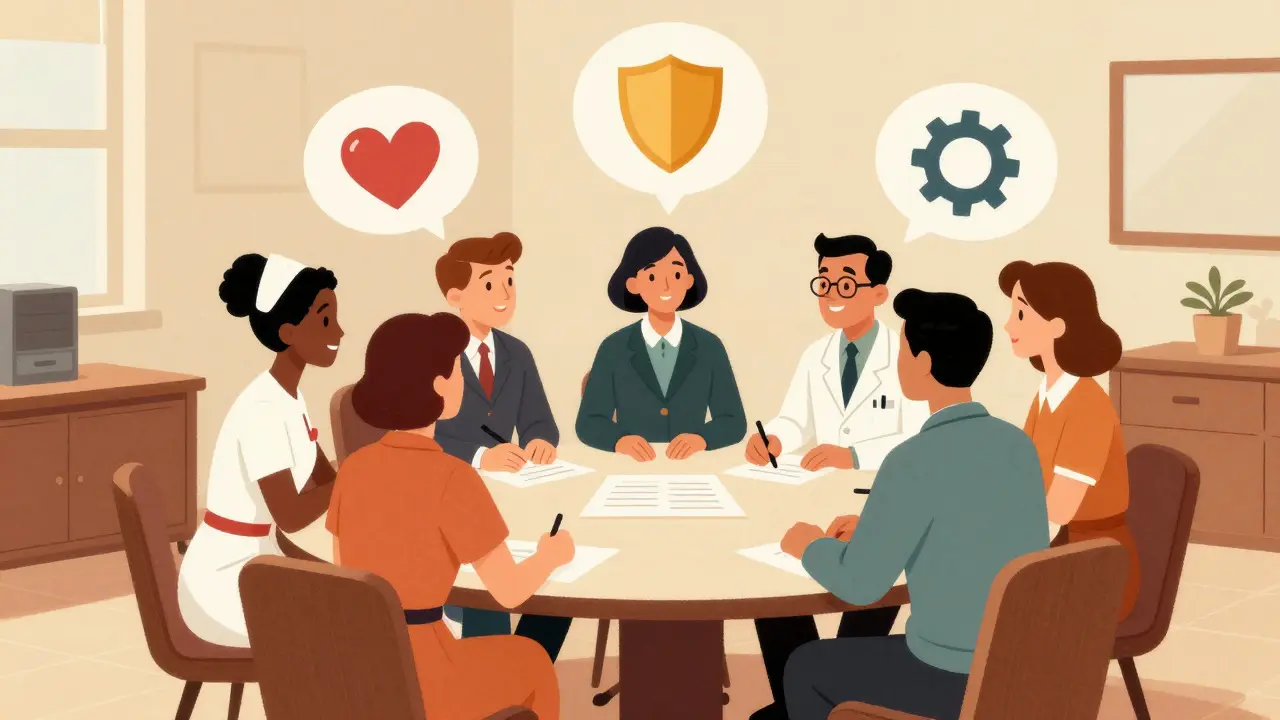
Another subtle issue is the "Just Culture." If staff are afraid to report a near-miss, you never learn from it. Implementing non-punitive reporting templates has reduced staff anxiety by 70% in some districts. When people feel safe reporting errors, the system gets smarter.
Future Trends and Long-Term Viability
Where is this going? The demand for school-based medication is rising. Childhood chronic conditions are increasing, and projections suggest a 22% growth in medication needs by 2030. Meanwhile, we face a projected 15% deficit in school nurses by 2027. This squeeze will force schools to lean harder on technology and delegation models.
The biggest development is the School Medication Administration Standardization Initiative, launched by NASN and AAP in January 2024. It aims to harmonize state protocols through model legislation. Twelve states have already adopted parts of it, with projections for 45-state adoption by 2026. If successful, this could end the patchwork of conflicting state rules and create a unified national standard for safety.
For now, the focus remains on execution. Whether you’re in a large urban district or a small rural school, the principles are the same: clear policies, trained staff, accurate documentation, and constant communication. It’s not just about getting the medicine into the child; it’s about building a system that protects them every single day.
Who is legally responsible if a medication error occurs at school?
The school district is generally liable, but individual negligence can shift responsibility. If a nurse fails to delegate properly or a trained aide deviates from protocol, both the district and the individual may face scrutiny. Following the NASN guidelines and documenting all steps is the best defense against liability claims.
Can teachers give medication to students?
Yes, but only if the state allows it and the teacher has completed required training. They must act under the delegation of a Registered Nurse. The nurse must assess the student's needs and the teacher's competency first. Teachers cannot independently decide to give meds; they follow a written order from the nurse or prescriber.
What is the difference between an IEP and an IHP regarding medication?
An IEP (Individualized Education Program) is for special education students and covers academic and behavioral goals. An IHP (Individualized Healthcare Plan) is specifically for medical needs, including medication schedules, emergency procedures, and storage requirements. A student can have both, but the IHP is the primary document for coordinating daily medication administration.
How long should medication orders last?
Orders typically last for one school year or until the prescriber updates them, whichever comes first. Some states require annual renewal, while others allow longer durations for stable chronic conditions. Always check your state's Nurse Practice Act for specific expiration rules.
What happens if a parent refuses to use original pharmacy containers?
The school can refuse to administer the medication until the correct container is provided. Using unlabeled bottles is a federal violation and increases the risk of dosing errors. Schools should educate parents on why this rule exists, emphasizing safety and legal compliance.