
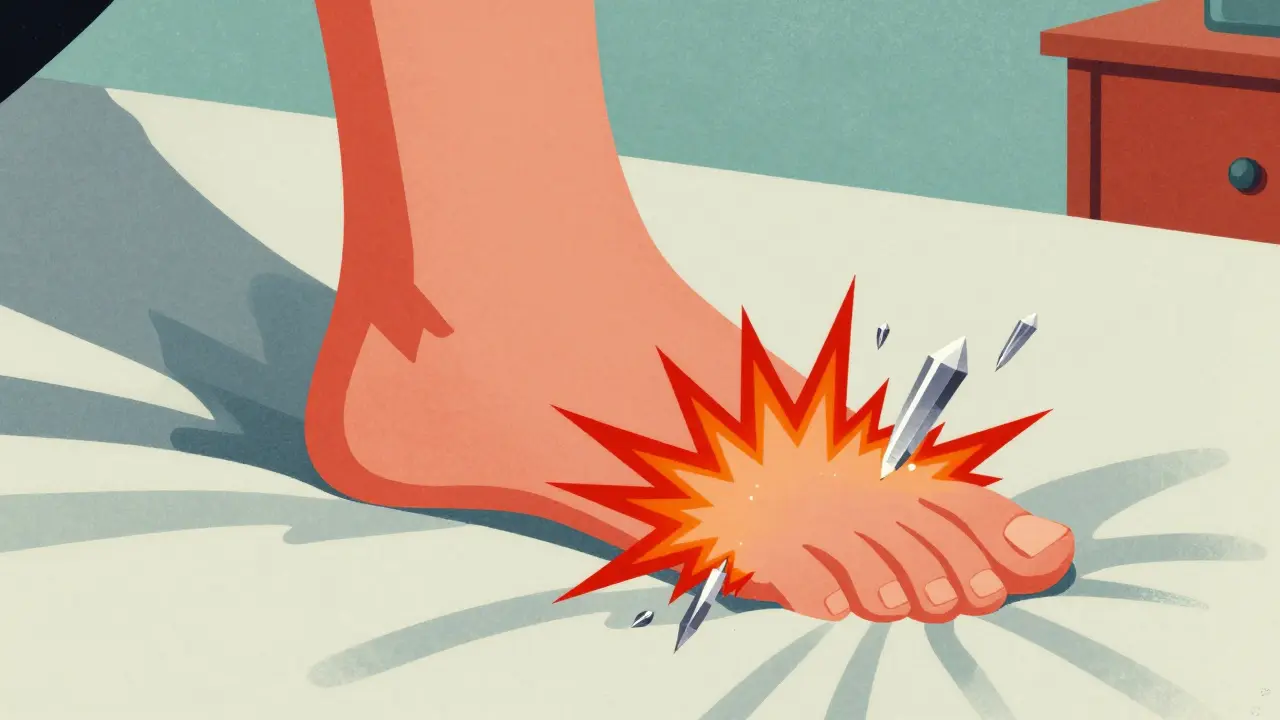
Imagine waking up in the middle of the night feeling like your big toe is on fire and being stepped on by an elephant. That's the reality of a gout attack. It isn't just a "rich man's disease" from eating too much steak; it's a complex inflammatory response where your own body turns chemical waste into tiny, jagged needles that lodge themselves in your joints. If you're dealing with this, you've probably realized that simply waiting for the pain to go away isn't a strategy-it's a gamble.
Quick Guide to Managing Gout
- The Goal: Keep serum uric acid levels below 6 mg/dL to stop crystals from forming.
- Acute Relief: Use NSAIDs, colchicine, or steroids to kill the inflammation quickly.
- Long-term Fix: Use urate-lowering therapies like allopurinol to prevent future flares.
- Key Triggers: Avoid high-purine foods (organ meats), beer, and fructose-heavy drinks.
- Pro Tip: Never stop your maintenance meds during a flare; it can actually make the attack worse.
What Actually Causes a Gout Attack?
At its core, gout is a problem of chemistry. Your body produces Uric Acid is a waste product formed when the body breaks down purines, which are found in certain foods and produced naturally by the body. Most animals have an enzyme called uricase to break this down, but humans don't. We're stuck with it. When the level of uric acid in your blood hits a saturation point-specifically 6.8 mg/dL-it stops staying dissolved and starts forming crystals.
These aren't smooth crystals; they are Monosodium Urate (MSU) sharp, needle-like crystals that deposit in joints and tissues when uric acid levels are persistently high. About 90% of people with gout have kidneys that simply don't flush out uric acid fast enough. This is often down to genetics-specifically genes like SLC2A9 and ABCG2-rather than just what you ate for dinner. When these crystals irritate the lining of your joint, your immune system panics. It activates the NLRP3 Inflammasome, a protein complex that triggers a massive release of inflammatory signals, leading to the redness, heat, and excruciating pain you feel during a flare.
Common Triggers That Spark a Flare
You might have your uric acid levels barely above the limit, but certain triggers can push you over the edge or physically shake those crystals loose. Think of it like a snowdrift; it's stable until someone throws a rock into it, causing a miniature avalanche in your joint.
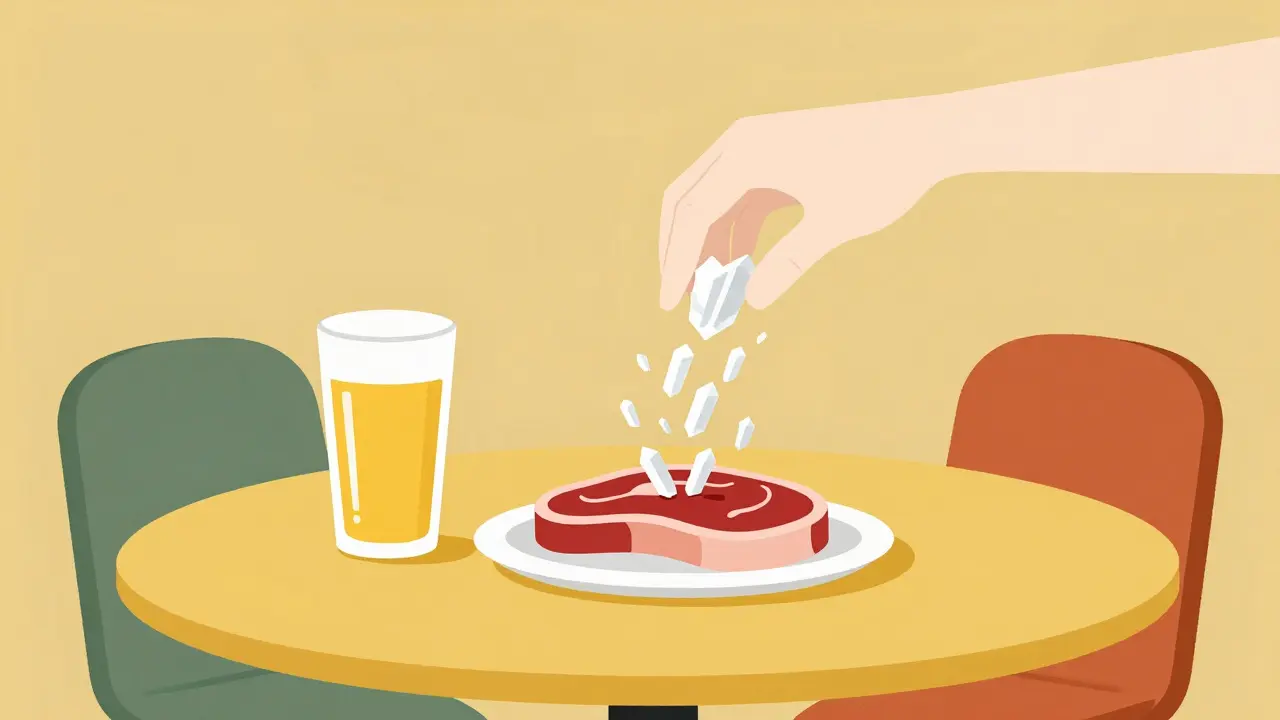
Diet plays a huge role, but not in the way most people think. While red meat and shellfish are known culprits, the real villains are often liquid. Beer is a double threat because it's high in purines and interferes with how your kidneys excrete uric acid. In fact, research shows that one daily 12-ounce beer increases your risk of a flare by 49%. Fructose-sweetened sodas are equally dangerous, as they deplete ATP in your cells, which spikes uric acid production by 20-30%.
Other common triggers include:
- Dehydration: When you don't drink enough water (less than 1.5 liters a day), your urine becomes more concentrated, making it harder to flush out urates.
- Physical Trauma: A bumped toe or a joint injury can disrupt a stable deposit of crystals, "nakedly" exposing them to your immune system.
- Medication Changes: Surprisingly, starting a new uric acid-lowering drug can actually trigger an attack. Rapidly shifting your blood levels can mobilize crystals, which is why doctors usually prescribe a "buffer" medication during the first six months of treatment.
Medication Strategies: Short-Term vs. Long-Term
The biggest mistake people make with gout attacks is treating them as one-off events. There are two entirely different goals in gout management: stopping the current fire (acute treatment) and preventing the next one (preventative treatment).
For acute attacks, you need anti-inflammatories. Colchicine is an alkaloid medication used to reduce the inflammatory response of the immune system during a gout flare. It works best if taken within the first 24 hours. Others use NSAIDs like indomethacin or corticosteroids like prednisone if they can't tolerate other options. These drugs make you feel better, but they do absolutely nothing to lower the actual amount of uric acid in your blood.
To actually stop the disease, you need Urate-Lowering Therapy (ULT) medications designed to lower serum uric acid levels to prevent crystal formation and dissolve existing deposits. The gold standard is Allopurinol, which blocks the enzyme that produces uric acid. The goal is to keep your levels below 6 mg/dL-or even 5 mg/dL if you have visible lumps called tophi. When you stay at these levels, the crystals in your joints actually start to dissolve back into the blood and get flushed away.
| Medication | Primary Goal | Typical Use Case | Key Attribute/Value |
|---|---|---|---|
| Colchicine | Stop Inflammation | Acute Flare | Best within 24 hours |
| Allopurinol | Lower Uric Acid | Prevention | Target level < 6 mg/dL |
| Febuxostat | Lower Uric Acid | Prevention (Allopurinol intolerant) | Alternative to Allopurinol |
| Prednisone | Stop Inflammation | Acute Flare (Kidney issues) | Steroidal anti-inflammatory |
Living With Gout: Practical Tips and Pitfalls
Managing gout is a marathon, not a sprint. One of the most dangerous habits is stopping your Allopurinol the moment a flare starts. You might think, "this drug is causing the attack," but stopping it causes your uric acid levels to bounce back up, which can prolong the flare and lead to more frequent attacks in the future.
Dietary changes can help, but they are rarely enough on their own. However, some shifts have a surprising impact. For example, drinking low-fat milk or eating low-fat dairy can reduce your risk of an attack by about 43%. This is because certain proteins in dairy help the body excrete uric acid more efficiently. On the flip side, you should be wary of organ meats (like liver or kidney), which can contain up to 500 mg of purines per serving.
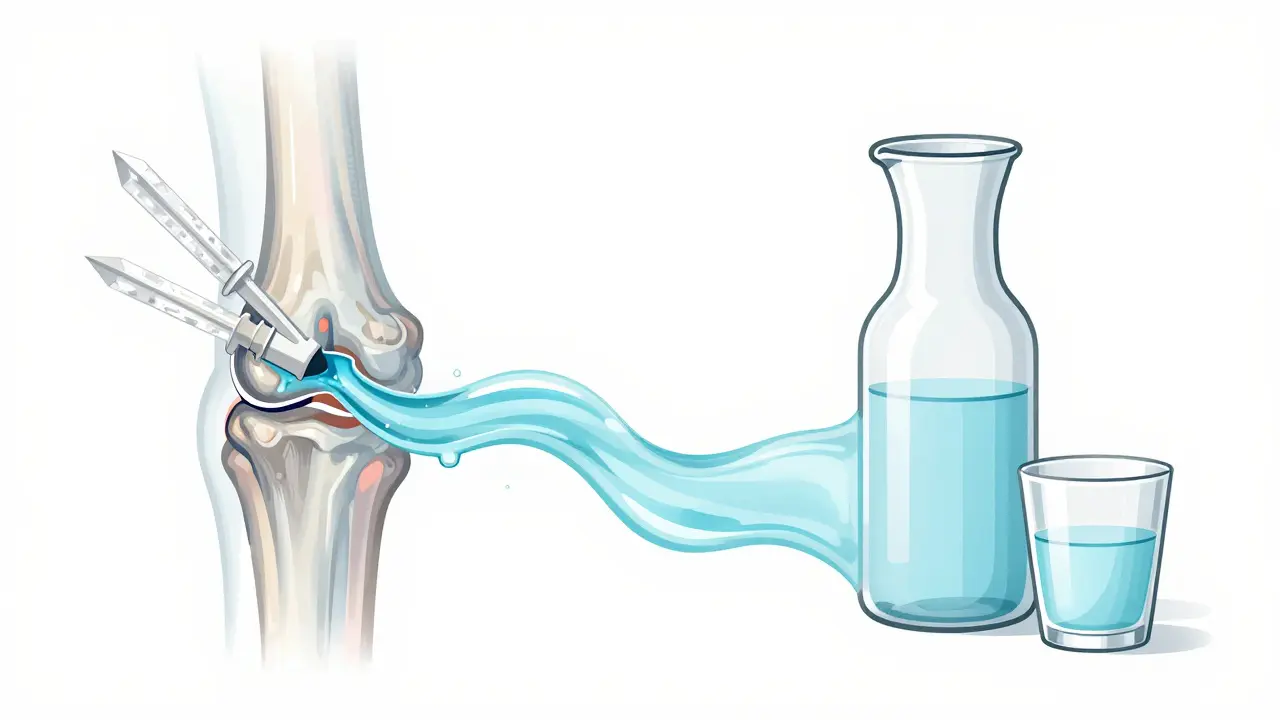
Keep an eye on your hydration. Aim for at least 2 liters of water daily. If you're on a low-dose aspirin regimen (75-325 mg/day) or taking thiazide diuretics for blood pressure, talk to your doctor, as these can actually hinder your kidney's ability to get rid of uric acid, increasing your risk by up to 50%.
The Future of Gout Treatment
We are moving toward a more precise way of treating this condition. Researchers are currently testing NLRP3 inhibitors, like dapansutrile, which target the exact inflammatory pathway that causes the pain, rather than just dampening the overall immune system. Early trials show these could reduce the duration of a flare by 40%.
There is also exciting data regarding "tophi resolution." Tophi are those hard, chalky deposits of crystals that can deform joints. Newer evidence suggests that if you can keep your uric acid levels below 5 mg/dL consistently for a year, up to 70% of those tophi can actually disappear completely. This proves that gout isn't just something you "live with"-it's something you can actually reverse with the right chemistry.
Can I stop taking allopurinol once the pain is gone?
No. Allopurinol is a preventative medication, not a painkiller. If you stop taking it, your uric acid levels will likely return to their previous high levels within 2 to 4 weeks, which almost guarantees another attack in the future. It is intended for lifelong management to keep crystals from forming.
Does drinking water really help prevent gout?
Yes. Proper hydration (at least 2 liters a day) ensures your kidneys can efficiently filter and excrete uric acid. Dehydration leads to a higher concentration of urate in the blood, which makes it much easier for crystals to precipitate and trigger an attack.
Why does my toe hurt more at night?
Joints tend to be cooler at night, and water is reabsorbed from the joint space during sleep. Since uric acid is less soluble at lower temperatures and higher concentrations, crystals are more likely to form or "precipitate" while you sleep, leading to those classic midnight wake-up calls.
Is beer worse than wine or spirits?
Generally, yes. Beer contains high levels of purines (the building blocks of uric acid) and interferes with the kidneys' ability to remove uric acid. Research indicates a much higher risk increase per serving of beer compared to spirits or wine.
What is the difference between a flare and chronic gout?
A flare is an acute attack of intense pain and inflammation. Chronic gout is the underlying state of hyperuricemia (high uric acid) and the gradual buildup of crystals (tophi) in the joints. You can have chronic gout without being in an active flare, but the crystals are still there damaging your joints.
Randy Ryder
April 15, 2026 AT 09:19The mention of the NLRP3 inflammasome is spot on. It's wild how a simple shift in serum urate concentration can trigger such a massive cytokine storm in the synovial fluid. Most people just see the redness, but the molecular cascade is where the real battle is happening.
Jasmin Stowers
April 17, 2026 AT 05:58drinking way more water now
Scott Lofquist
April 17, 2026 AT 14:13Actually, focusing only on the 6 mg/dL limit is such a basic approach 🙄. You're ignoring the systemic inflammation that often accompanies these metabolic failures! People need to stop blindly following these charts and look at their whole biological profile. Absolute madness! 🤦♂️
Anurag Moitra
April 19, 2026 AT 07:19The distinction between acute relief and long-term urate-lowering therapy is critical as many patients confuse the two and discontinue preventative medication prematurely
Ikram Khan
April 20, 2026 AT 11:32OMG the description of the elephant stepping on a toe is literally too real!! 😱 I've been there and it's a total nightmare! Keep pushing through everyone, you got this! 💪✨
Kenzie Evans
April 20, 2026 AT 19:38Please, this is just common knowledge for anyone who has spent five minutes on a health blog. The table is lazy and the tips are basic. Why are we acting like this is some ground-breaking medical discovery?
S.A. Reid
April 21, 2026 AT 06:34It is truly fascinating how we are encouraged to rely on Allopurinol for a lifetime. One must wonder which pharmaceutical giants benefit most from the narrative that our kidneys are suddenly incapable of performing a basic biological function. I find it quite quaint that the general public accepts these chemical interventions without questioning the underlying systemic control of our health data.
Princess Busaco
April 22, 2026 AT 17:49I honestly find it absolutely tragic that people still believe that a little bit of low-fat milk is going to save them from a lifetime of crystalline agony when they refuse to align their spiritual energy with their physical vessel. The sheer audacity of thinking a pill can replace a total lifestyle overhaul is just laughable, and frankly, I've seen people try every single one of these 'strategies' only to end up right back in a flare because they lack the discipline to actually purge their lives of toxins on a metaphysical level, not just a chemical one, and it's just so typical of modern medicine to offer a band-aid for a gaping wound in the soul.
David Snyder
April 23, 2026 AT 12:22It's really encouraging to know that tophi can actually be reversed. That gives a lot of hope to people who thought the damage was permanent.
rupa das
April 23, 2026 AT 18:14allopurinol is overrated
Mark Dueben
April 24, 2026 AT 07:36I appreciate the effort to simplify this for everyone. It's important that we all feel included in the conversation about chronic pain management.
Brooke Mowat
April 25, 2026 AT 17:46The way the body just decided we don't need uricase is just... wild lol. Such a glitch in the human design!! Just gotta keep vibing and staying hydrated i guess 🌊✨
Billy Wood
April 26, 2026 AT 12:07GET THAT WATER IN!! STAY HYDRATED!! NO MORE BEER!! LET'S GO!!
Olivia Lo
April 27, 2026 AT 22:49The systemic approach here is quite balanced. Integrating pharmaceutical intervention with dietary modulation is the only sustainable way to manage the hyperuricemic state without causing further renal stress.