
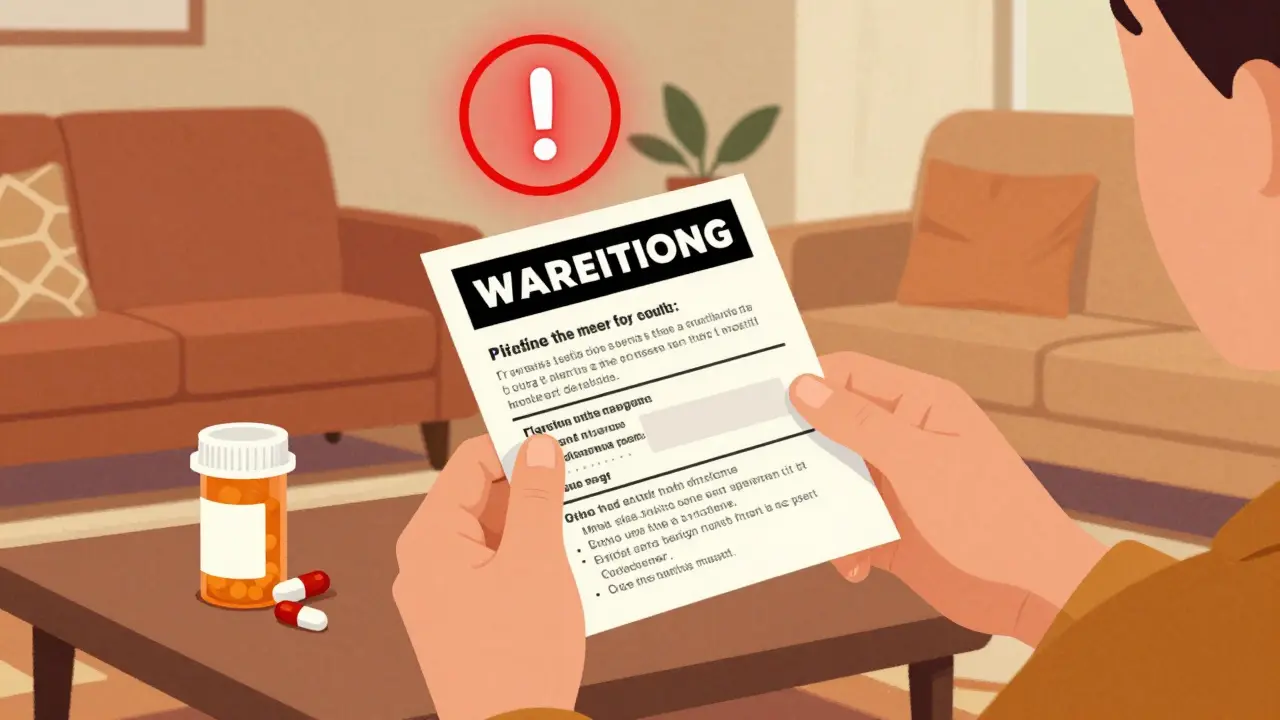
Most people never open the small booklet that comes with their prescription. They toss it in the drawer, forget about it, and hope for the best. But that booklet - the medication guide - holds life-saving details most people never learn to read. If you or someone you care about takes opioids, benzodiazepines, sleep meds, or even certain painkillers, knowing how to find overdose warnings and antidotes in that guide could make the difference between life and death.
What Is a Medication Guide?
A medication guide is a paper handout the FDA requires pharmacies to give you with certain prescriptions. It’s not the same as the tiny printed insert. These guides are written in plain language, meant for patients, not doctors. They’re required for drugs that have serious safety risks - including overdose. That means if your pill bottle came with a separate folded sheet, not just a slip of paper, you’re holding something critical.
These guides don’t just say “take as directed.” They spell out exactly what happens if you take too much, what symptoms to watch for, and - most importantly - what can reverse it. But if you don’t know where to look, you’ll miss it.
Where to Find Overdose Warnings
Look for these three sections first:
- Boxed Warning - This is the FDA’s strongest alert. It’s at the very top of the guide, in a thick black border. If your drug has a boxed warning for overdose, it means the risk is serious enough that the government demands it be front and center. Opioids like oxycodone, fentanyl patches, and methadone all have these.
- Warnings and Precautions - This section lists what can go wrong. Look for phrases like “risk of respiratory depression,” “fatal overdose with alcohol,” or “additive effects with benzodiazepines.” These aren’t just general warnings - they’re direct flags that combining this drug with other substances can kill you.
- Overdosage - This is the section you need most. It’s usually near the end. It doesn’t say “don’t take too much.” It says what happens when you do. For example: “Overdose of hydrocodone may cause extreme drowsiness, slowed breathing, unresponsiveness, and death.”
Don’t skip the Overdosage section because it sounds scary. That’s where you learn what to look for - and what to do next.
How to Spot Antidotes in the Guide
An antidote is a medicine that can reverse the effects of an overdose. For opioids, it’s almost always naloxone. But not every guide says it outright. Here’s how to find it:
- Search for the word “antidote” - it’s rare, but sometimes used.
- Look for “treatment of overdose” - this often lists naloxone by name.
- Check the “Drug Interactions” section - if it warns about mixing with other CNS depressants, naloxone is likely the antidote.
- Read the “Pharmacology” section - it may say “naloxone is a competitive opioid receptor antagonist,” which means it blocks the overdose.
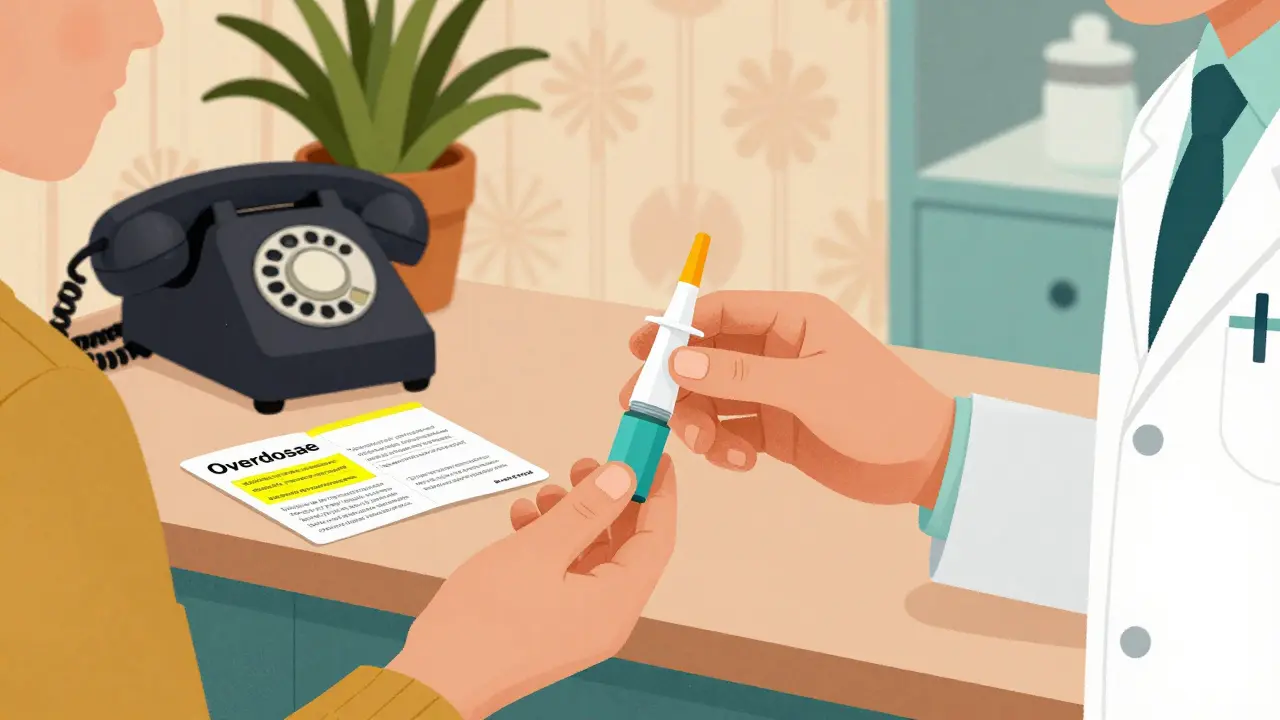
For example, the medication guide for oxycodone says: “In cases of overdose, naloxone may be administered as an antidote. Naloxone may reverse respiratory depression and sedation.” That’s your signal.
Some guides don’t name naloxone. They say “antagonists may be used.” That’s still a clue. Naloxone is the only FDA-approved antidote for opioid overdose in the U.S. If the guide mentions an antidote, it’s naloxone.
What Overdose Symptoms to Watch For
The guide will list symptoms, but they’re often buried. Here’s what to look for - and what they mean:
- Unresponsive or unable to wake up - This isn’t just being sleepy. It’s when shaking or shouting doesn’t bring them back.
- Slow, shallow, or stopped breathing - Count breaths for 15 seconds. If it’s fewer than 8, that’s dangerous.
- Blue or purple lips or fingernails - A sign your body isn’t getting oxygen.
- Pinpoint pupils - Tiny dots in the center of the eye, even in dim light.
- Extreme drowsiness or confusion - Not just tired. Disoriented, slurred speech, unable to answer simple questions.
These aren’t guesses. They’re the exact symptoms listed in FDA-approved medication guides for opioids and sedatives. If you see two or more of these, act immediately.
Why Naloxone Isn’t Always Mentioned by Name
You might wonder why some guides don’t say “use naloxone.” The reason is legal. The FDA requires the guide to state that naloxone is an antidote, but it doesn’t require pharmacies to hand out naloxone with every prescription - even though it’s now available over the counter in all 50 states.
That’s why you need to read the guide and then ask your pharmacist: “Does this medicine have an antidote? Can I get naloxone with this prescription?” Many pharmacists will give you a free dose if you ask.
Don’t wait for someone to die before you get it. If your medication has a boxed warning for overdose, get naloxone. Keep it in your car, your purse, your medicine cabinet. It doesn’t expire for 2-3 years. It’s not a magic cure - but it buys you time.
What to Do If You Suspect an Overdose
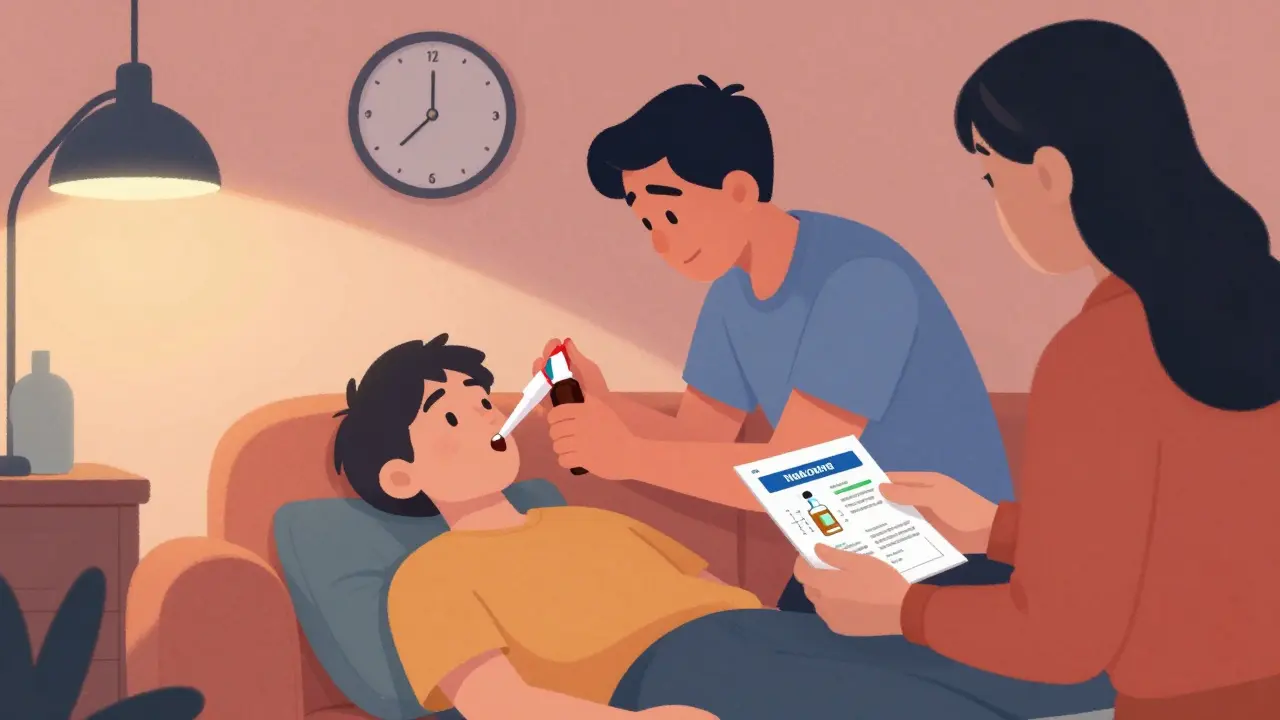
Reading the guide is step one. Acting is step two. Here’s what to do if someone shows signs of overdose:
- Call 911 - Even if you give naloxone, they still need medical help. Overdose can return after naloxone wears off.
- Give naloxone - Spray it in the nose or inject it in the thigh. One dose is enough to start. If there’s no response in 2-3 minutes, give a second dose.
- Start rescue breathing - Tilt the head back, pinch the nose, give one breath every 5 seconds. Don’t stop until help arrives.
- Stay with them - Don’t leave them alone. Monitor breathing. Keep them on their side if they’re unconscious.
This isn’t guesswork. It’s exactly what the CDC, SAMHSA, and FDA recommend - and it’s what the medication guide is trying to tell you.
Don’t Trust Memory - Always Check the Guide
People remember “don’t mix with alcohol” but forget the rest. They think “I’ve taken this for years, nothing happened.” But tolerance changes. Doses change. New meds get added. A guide from last year might not match your current prescription.
Every time you refill a high-risk medication, open the guide again. Compare it to the last one. Has the boxed warning changed? Is naloxone now listed as an antidote? Did they add a new warning about mixing with sleep aids?
Medication guides are updated when new risks are found. If you don’t check, you’re flying blind.
Keep It Accessible
Don’t store the guide in a drawer. Tape it to the inside of your medicine cabinet. Save a photo of the Overdosage and Antidote sections on your phone. Share it with family members who might need to act in an emergency.
Teach your kids: “If Mom or Dad passes out after taking pills, look for the blue booklet. Find the part that says ‘naloxone.’ Spray it in the nose. Call 911.”
Overdose doesn’t always look like a movie. It’s quiet. It’s slow. Someone just doesn’t wake up. But if you know where to look - and what to do - you can stop it before it’s too late.
Gregory Clayton
January 9, 2026 AT 01:22Meghan Hammack
January 9, 2026 AT 12:10RAJAT KD
January 10, 2026 AT 05:06Jerian Lewis
January 11, 2026 AT 04:21Jeffrey Hu
January 13, 2026 AT 03:00Matthew Maxwell
January 14, 2026 AT 12:43Lindsey Wellmann
January 16, 2026 AT 03:31Ian Long
January 16, 2026 AT 18:53Pooja Kumari
January 18, 2026 AT 12:35Jacob Paterson
January 19, 2026 AT 02:01tali murah
January 19, 2026 AT 17:48Jenci Spradlin
January 20, 2026 AT 20:01Maggie Noe
January 21, 2026 AT 20:31Catherine Scutt
January 23, 2026 AT 09:54