
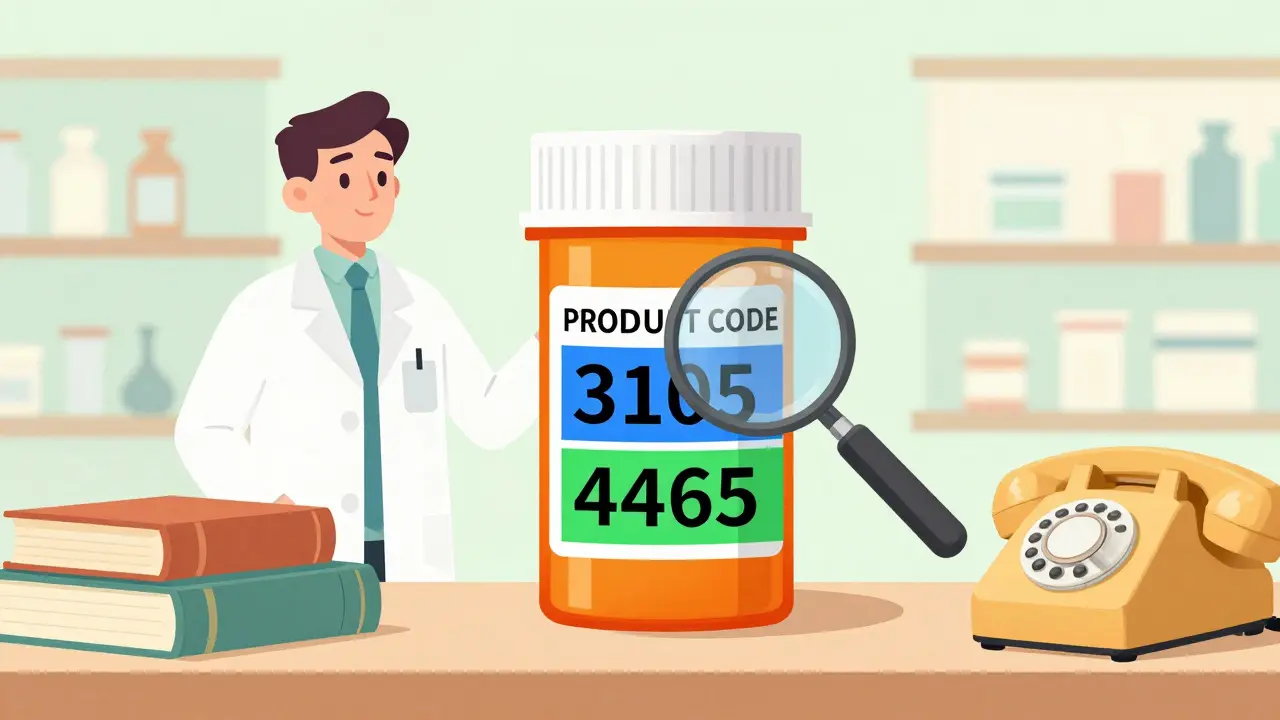
Getting the right medication isn’t just about the name on the bottle. One small mistake in reading the NDC number can lead to a deadly error-giving a patient 20mg of Prozac when they were supposed to get 10mg. That’s not hypothetical. It happens. And the NDC number is your best tool to stop it before it starts.
What Exactly Is an NDC Number?
The National Drug Code (NDC) is a unique 10-digit number printed on every prescription and over-the-counter medication sold in the U.S. It’s not just a barcode or a serial number. It’s a three-part code that tells you exactly what drug you’re holding, how strong it is, what form it’s in, and how many pills or milliliters are in the package. The FDA created the NDC system back in 1972 to make sure every drug product could be tracked from the factory to the pharmacy shelf. Today, over 150,000 active NDCs are listed in the FDA’s public directory. That means if you see a number that doesn’t match what’s in the system, something’s wrong.The Three Segments of the NDC Number
Every NDC has three parts, separated by hyphens. Think of them like a phone number with area code, exchange, and line number-but each part tells you something critical about the drug.- Labeler Code (first segment): 4 to 6 digits. This identifies the company that made or repackaged the drug. For example, 00002 is Eli Lilly. 00591 is Teva. If you’re expecting a brand-name drug but the labeler code matches a generic manufacturer, that’s a red flag.
- Product Code (second segment): 3 to 4 digits. This is the most important part. It tells you the active ingredient, strength, and dosage form. For instance, 3105 might mean 10mg capsules of fluoxetine. 4465 might mean 20mg capsules of the same drug. Mixing these up is how people get double the dose-or none at all.
- Package Code (third segment): 1 to 2 digits. This tells you the size of the package. 01 could mean a bottle of 30 tablets. 02 could mean 100 tablets. If your prescription says 30 pills but the NDC says 02, you’ve got a mismatch.
Three Common NDC Formats (And Why They Matter)
You’ll see NDCs printed in three different ways on packaging:- 4-4-2 (e.g., 1234-5678-90)
- 5-3-2 (e.g., 12345-678-90)
- 5-4-1 (e.g., 12345-6789-0)
How? Add a zero to the shortest segment to make it fit.
- If it’s 5-3-2 → add a zero after the product code: 12345-0678-90
- If it’s 4-4-2 → add a zero at the start of the labeler code: 01234-5678-90
- If it’s 5-4-1 → add a zero at the end of the package code: 12345-6789-00
This isn’t optional. Medicare, Medicaid, and most insurers will reject claims if the NDC isn’t in 5-4-2 format. But more importantly, if you’re reading the label and not converting it in your head, you’re missing half the picture.
How to Verify the NDC Against the Prescription
You don’t just read the number. You cross-check it. Here’s how:- Find the NDC on the package. It’s usually printed near the barcode, on the side of the bottle or box. Sometimes it’s in a red circle on the label-pharmacies use that to make it easy to spot.
- Break it into the three segments. Count the digits between hyphens. Don’t assume the format. Count it.
- Compare the labeler code. Is it the manufacturer you expect? If the prescription says “Lilly Prozac” but the NDC labeler code is for Teva, that’s a generic. Is that okay? Maybe. But you need to confirm with the prescriber or patient’s preference.
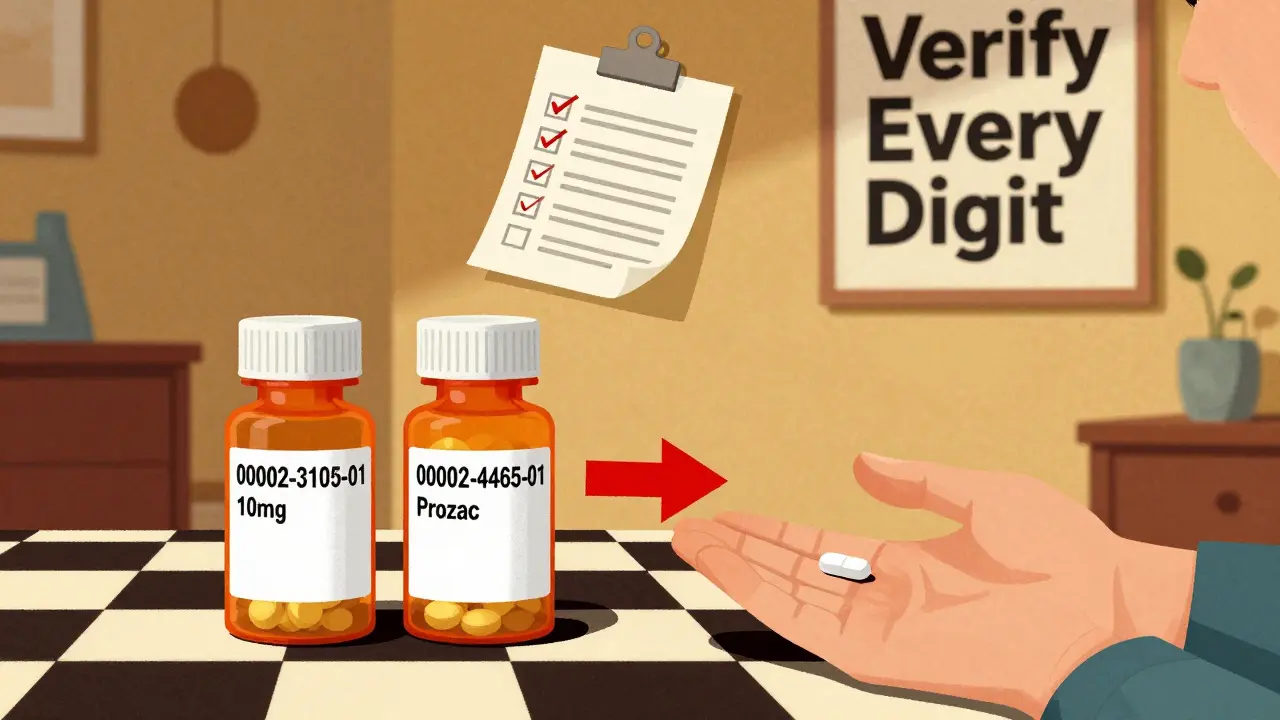
- Check the product code. This is where most errors happen. 3105 vs. 4465. 10mg vs. 20mg. Capsule vs. tablet. If the product code doesn’t match the strength or form on the prescription, stop. Don’t dispense.
- Verify the package code. Did the doctor order 30 tablets? Is the NDC showing 01 (30) or 02 (100)? If it’s 100 and you’re only supposed to give out 30, you might be giving the wrong package size-which can confuse the patient or lead to overuse.
- Convert to 11-digit format. Do the math. Add the zero where it belongs. Then enter it into the system. If the system rejects it, go back. Something’s off.
Real-World Mistakes and How to Avoid Them
A pharmacist in Arizona once almost gave a patient 20mg of fluoxetine instead of 10mg because she misread the product code. The NDC on the shelf said 00002-4465-01. The prescription said 00002-3105-01. Same drug. Same manufacturer. Same package. But different strength. The difference? One digit.That’s why you never just glance at the NDC. You say it out loud:
- “Labeler: zero-zero-zero-zero-two.”
- “Product: three-one-oh-five.”
- “Package: zero-one.”
Verbalizing forces your brain to process each part. It’s not just a habit. It’s a safety protocol. The American Society of Health-System Pharmacists says you must verify the NDC at three points: when you receive the stock, when you pull it for the patient, and right before you hand it over.
Another common error: confusing the package code with the product code. Someone sees “01” and thinks it’s the strength. It’s not. It’s the quantity. Mixing those up leads to under-dosing or over-dosing.
What to Do When the NDC Doesn’t Match
If the NDC on the bottle doesn’t match the prescription, don’t guess. Don’t assume it’s a typo. Don’t “just give it anyway.”- Check the FDA’s NDC Directory. Type the 10-digit code into their free search tool. It will tell you the exact drug name, strength, form, and manufacturer. If it doesn’t match what’s on the label, the label is wrong.
- Call the manufacturer. Sometimes, repackagers change the NDC. If a hospital repackages 100-count bottles into 30-count, they get a new NDC. The original bottle might be correct, but the repackaged one isn’t.
- Confirm with the prescriber. If the patient is on a new drug or a change was made, the NDC might have changed. Don’t assume the pharmacy’s system has the right info.
Why This Matters More Than Ever
The Drug Supply Chain Security Act (DSCSA), fully in effect since November 2023, requires every prescription drug package to have a unique NDC identifier for tracking. That means if a drug is recalled, they can pinpoint exactly which batches are affected. But if your NDC is wrong, you’re not just risking patient safety-you’re breaking federal law.And the stakes are rising. The FDA plans to move to a 12-digit NDC format by 2025. No more 4-4-2 or 5-3-2. Everything will be standardized. The goal? Cut down on the 8.7% of pharmacy claims that get rejected because of NDC format errors.
Right now, about 12% of all medication dispensing errors are tied to misreading the NDC. That’s 1.2 million preventable errors every year, according to the FDA. Most of them happen because someone rushed, assumed, or didn’t verify.
Tools That Help
You don’t have to memorize 150,000 codes. Use the tools:- Free FDA NDC Directory: Search by NDC, drug name, or manufacturer. Updated daily.
- Mobile apps: Several pharmacy apps let you scan the NDC barcode and pull up the full product details instantly.
- Electronic health record (EHR) integrations: Many systems auto-convert NDC formats and flag mismatches.
- Two-person verification: For high-risk drugs (like insulin, blood thinners, or chemo), have a second person read the NDC aloud and confirm it matches the prescription. Takes 37 seconds longer-but it saves lives.
Final Checklist Before You Dispense
Before you hand over any medication:- ✅ Did I find the NDC on the packaging?
- ✅ Did I count the digits in each segment?
- ✅ Did I match the labeler code to the expected manufacturer?
- ✅ Did I confirm the product code matches the drug, strength, and form?
- ✅ Did I verify the package code matches the quantity ordered?
- ✅ Did I convert it to 11-digit 5-4-2 format for billing?
- ✅ Did I cross-check with the FDA’s NDC Directory?
- ✅ Did I say it out loud to someone else?
If you answered yes to all eight, you’ve done your job. Not just your job. You’ve protected someone’s life.
What does the NDC number stand for?
NDC stands for National Drug Code. It’s a unique 10-digit identifier assigned by the FDA to every prescription and over-the-counter medication sold in the U.S. It breaks down into three segments: labeler code (who made it), product code (what it is and how strong), and package code (how much is in the container).
Why is the NDC number important for patient safety?
The NDC number is the only standardized way to confirm you’re giving the exact drug, strength, dosage form, and package size prescribed. A single digit difference in the product code can mean a patient gets double the dose-or none at all. NDC errors account for about 12% of all medication dispensing mistakes.
How do I convert a 10-digit NDC to the 11-digit format for billing?
Add a zero to the shortest segment to make it fit the 5-4-2 format. For example: 5-3-2 becomes 5-4-2 by adding a zero to the product code (e.g., 12345-678-90 → 12345-0678-90). 4-4-2 becomes 5-4-2 by adding a zero to the start of the labeler code (e.g., 1234-5678-90 → 01234-5678-90). 5-4-1 becomes 5-4-2 by adding a zero to the end of the package code (e.g., 12345-6789-0 → 12345-6789-00).
Can two different drugs have the same NDC number?
No. Each NDC is unique to one specific drug product-manufacturer, strength, dosage form, and package size. If two drugs have the same NDC, one of them is mislabeled. Always verify the NDC against the FDA’s official directory.
What if the NDC on the bottle doesn’t match the prescription?
Don’t dispense. Check the FDA’s NDC Directory using the 10-digit code. Call the manufacturer or pharmacy supplier to confirm. If the drug is repackaged, the NDC may have changed. Contact the prescriber if there’s any doubt. Never assume the label is correct.
Is the NDC number the same as the barcode?
The barcode usually contains the NDC number, but they’re not the same thing. The barcode is a machine-readable version of the NDC. You should always read the printed NDC number manually to verify it matches the barcode and the prescription. Scanners can misread, but your eyes and brain won’t.