
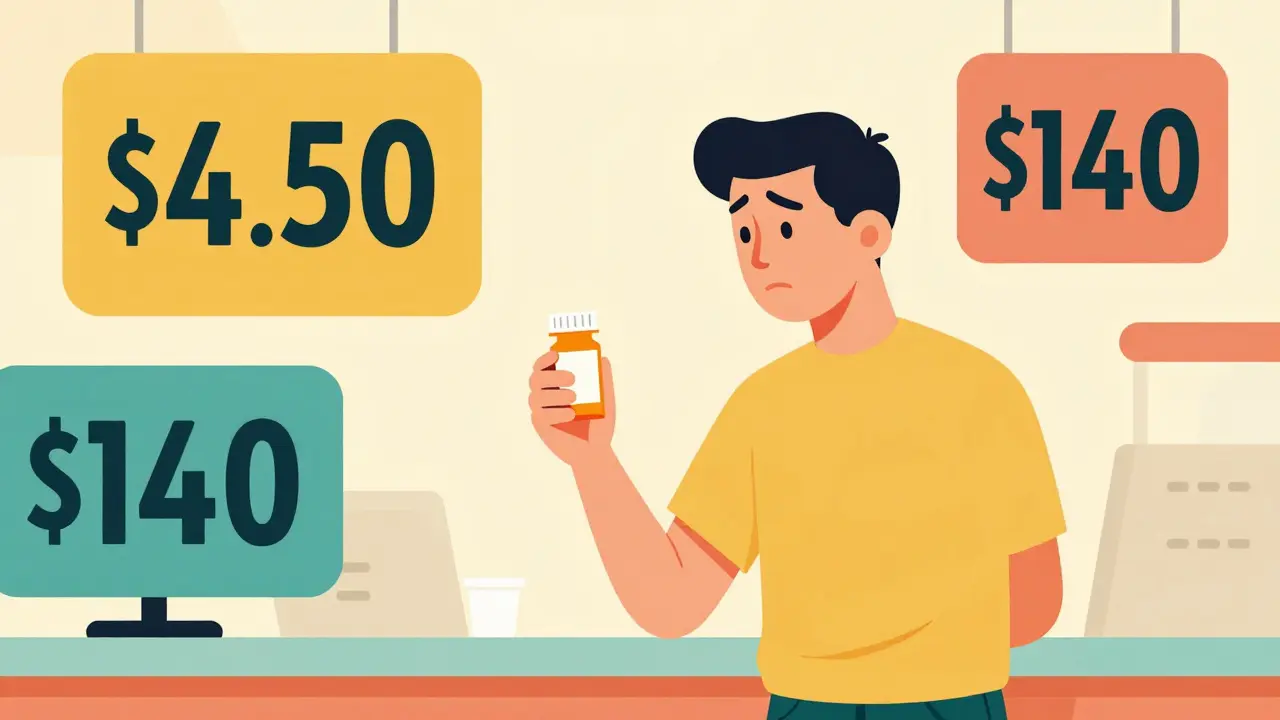
Did you know that the exact same bottle of medication can cost you anywhere from $4.50 to $140 depending on which pharmacy you walk into? It sounds like a scam, but it’s actually just how the pharmaceutical market works. If you are paying cash for your prescriptions-whether because you have a high-deductible health plan, no insurance at all, or simply want to avoid complex co-pays-you are sitting on a goldmine of potential savings if you know where to look.
Shopping for the best cash price on medications isn’t about guessing. It is a systematic process of comparing out-of-pocket costs across different pharmacy types and leveraging digital tools that negotiate discounts behind the scenes. In this guide, we will break down exactly how to find these hidden lower prices, understand why they exist, and save hundreds of dollars annually without sacrificing quality.
Why Do Pharmacy Prices Vary So Wildly?
To shop effectively, you first need to understand the playing field. The massive price differences you see aren't random errors; they are deliberate pricing strategies. Pharmaceutical manufacturers set prices based on who is buying and how sensitive that buyer is to cost. As noted by the U.S. Department of Health and Human Services in their 2022 analysis, no single purchaser pays a higher price to subsidize someone else's discount. Instead, every pharmacy sets its price based on its own bargaining power and business model.
Consider the case of Atorvastatin (the generic version of Lipitor). A study published in the National Institutes of Health (NIH) database showed that within the same zip code in Springfield, Massachusetts, prices ranged from $4.50 to $140. This disparity exists because different pharmacies operate with different margins. Mass merchandisers like Walmart often sell generics at razor-thin margins to drive foot traffic, while independent "analytical" pharmacies might charge more because they offer specialized compounding services or personalized care. Understanding this helps you realize that walking into the first pharmacy you see is almost always the most expensive option.
The Power of Discount Apps and Platforms
You don’t need to call ten pharmacies manually anymore. The rise of discount platforms has democratized access to lower prices. Apps like GoodRx, founded in 2011, is a digital platform that negotiates discounts directly with pharmacies in exchange for customer referrals. serve as aggregators, pulling real-time pricing data from over 70,000 U.S. pharmacies.
Here is how it works: These platforms don’t give you a coupon in the traditional sense. They provide a negotiated rate that the pharmacy agrees to honor. According to GoodRx’s 2023 corporate report, users save an average of 88% on generic medications and 42% on brand-name drugs compared to undiscounted cash prices. Other competitors like RxSaver, WellRX, and BuzzRx operate similarly. To get the absolute best deal, you should cross-reference at least three of these tools. A 2023 analysis by Art of Healthy Living found that using multiple apps increases accuracy because some pharmacies partner exclusively with one platform over another.
| Platform | Average Generic Savings | Key Feature | Best For |
|---|---|---|---|
| GoodRx | Up to 88% | Largest network of participating pharmacies | Most users seeking broad coverage |
| RxSaver | Competitive rates | No login required for basic use | Quick, one-time purchases |
| WellRX | Variable | Simple interface | Users preferring minimal data entry |
Which Pharmacy Type Offers the Best Cash Prices?
Not all pharmacies are created equal when it comes to cash pricing. Your choice of pharmacy type significantly impacts your bottom line. Here is what the data says about where to fill your prescriptions:
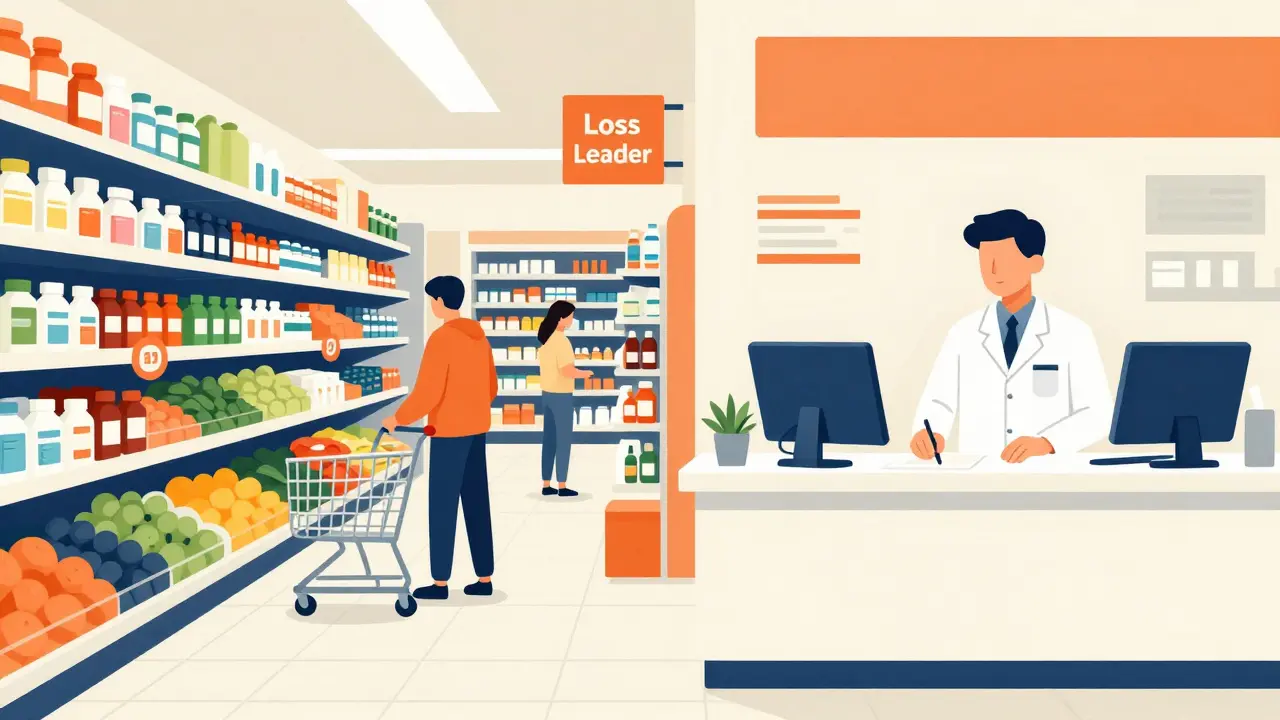
- Supermarket Pharmacies: Often the cheapest option for generics. An NIH study found that GoodRx-discounted prices for generic cardiovascular medications were 56.3% lower at supermarket pharmacies (average $28.17) compared to national chains (average $64.42). Supermarkets use cheap prescriptions as a loss leader to get you into their stores for groceries.
- Mass Merchandisers (e.g., Walmart, CVS): These giants maintain very low gross margins on generics-sometimes just $5.84 per prescription. They are reliable for standard, high-volume drugs but may not be the cheapest for niche medications.
- National Chains: While convenient, they often have higher overheads. Their gross margins on generics can reach $12.68, making them pricier than supermarkets unless you use a specific discount card.
- Independent Pharmacies: These are wild cards. Some offer unadvertised discounts to regular customers (38% according to UnityPoint Health), while others charge premium prices for personalized service. Always ask for the cash price before presenting insurance.
If you are looking for brand-name drugs, however, the landscape changes. Discounts for non-generic medications are much smaller. The NIH study noted that GoodRx-discounted prices for brand-name drugs did not differ significantly from undiscounted cash prices across most pharmacy types. In these cases, asking your doctor for a generic alternative is your biggest lever for savings.
Step-by-Step Guide to Finding the Lowest Price
Finding the best price doesn’t take hours. With a systematic approach, you can do it in 10-15 minutes per prescription. Follow these steps:
- Get the Undiscounted Cash Price First: Before you mention insurance or any app, ask the pharmacist for the raw cash price. Many people are surprised to learn that their insurance co-pay might actually be higher than the cash price, especially with high-deductible plans.
- Use Multiple Comparison Tools: Enter your medication name, dosage, and quantity into GoodRx, RxSaver, and WellRX. Note the top three cheapest locations near you.
- Check for Mail-Order Options: If you qualify, mail-order services can be cheaper. RXOutreach.com, a non-profit, serves patients with household incomes below 300% of the federal poverty level (approximately $45,000 for individuals in 2023). They offer substantial reductions even if you already have coverage.
- Ask About Local Programs: Some chains, like Kroger, have flat-rate programs (e.g., $4/$9 for generics) that might beat app discounts for certain drugs. Call ahead to confirm eligibility.
- Build a Relationship: If you stick with one independent pharmacy, ask if they offer loyalty discounts. Pharmacists appreciate repeat business and may manually adjust prices to keep you happy.
Special Considerations for Medicare Users
If you are on Medicare Part D, the rules are slightly different but the principle remains the same. The Inflation Reduction Act caps out-of-pocket costs at $2,000 annually starting in 2025, which is a huge relief. However, experts like Dr. Erin Trish from the University of Southern California warn that without price shopping, beneficiaries still overpay by hundreds of dollars annually for the same medications.
During Medicare Open Enrollment (October 15-December 7), review your plan options carefully. Utilize your plan’s preferred pharmacy network, which can reduce costs by 15-25%. Even with Medicare, checking GoodRx against your plan’s formulary can reveal scenarios where paying cash is cheaper than using your insurance benefit.
Real-World Examples of Savings
Does this actually work in practice? Yes. User experiences consistently validate these strategies. On Reddit’s r/personalfinance, user u/MedSaver2023 reported paying $1.89 for metformin at a local independent pharmacy using a GoodRx coupon, whereas the national chain charged $15.99 without insurance. Another user, u/BudgetPharma, found insulin prices ranging from $98 to $345 for the same vial within a two-mile radius in Chicago.
Even for common maintenance drugs, the savings add up. A verified Trustpilot review from October 2023 noted a user saving $112 on a Synthroid prescription at Walmart compared to their insurance co-pay. While there are occasional complaints about price mismatches (reported by 12.7% of users in a 2022 Consumer Reports study), the vast majority of users report significant net savings.
Common Pitfalls to Avoid
While shopping around is powerful, there are traps to avoid. First, never assume that the cheapest option today will be the cheapest tomorrow. Drug prices fluctuate, so re-check your prices every few months or when you refill. Second, be wary of "brand-only" requirements. If your doctor prescribes a brand-name drug without writing "Dispense as Written," ask for the generic. The Congressional Budget Office notes that therapeutic classes with multiple generic options show 12-17 percentage point greater discounts than those with single generics.
Finally, don’t ignore mail-order for long-term medications. If you take daily meds like blood pressure or cholesterol drugs, mail-order services often offer 90-day supplies at a lower per-unit cost due to reduced overhead. IQVIA data shows mail-order adoption grew from 28% to 35% of prescriptions between 2020 and 2023, driven largely by cost savings.
Is it legal to pay cash instead of using insurance?
Yes, it is completely legal and often encouraged. You have the right to choose how you pay for your medications. In many cases, the cash price (especially with a discount card) is lower than your insurance co-pay. Just ensure you inform your pharmacist if you are switching back and forth, as some insurance plans have "gap periods" that could be affected by paying cash.
Do discount apps like GoodRx count towards my insurance deductible?
No, payments made through discount apps or cash prices do not count towards your insurance deductible or out-of-pocket maximum. You are essentially bypassing the insurance system for that transaction. Use this strategy only when the cash price is significantly lower than your co-pay, or if you haven't met your deductible yet.
Can I use GoodRx with Medicare?
Generally, no. Federal law prohibits using third-party discount cards with Medicare Part D. However, you can compare the cash price via GoodRx to see if it's lower than your Medicare co-pay, and then pay cash directly to the pharmacy without using the GoodRx coupon code. Always check with your specific plan administrator first.
Why are brand-name drugs harder to discount?
Brand-name drugs have exclusive patents, meaning there is no competition. Manufacturers set high prices knowing that insurers often cover them. Discount apps have less negotiating power here because the manufacturer controls the wholesale price. Generics, however, have multiple manufacturers competing, leading to much lower prices and deeper discounts.
What if the pharmacy says the price online is wrong?
This happens occasionally due to inventory errors or system lag. If the pharmacy cannot honor the advertised discount price, try another location nearby. Most major chains will honor the price if you call ahead and confirm availability. If they refuse, you can report the discrepancy to the discount app provider for resolution.