
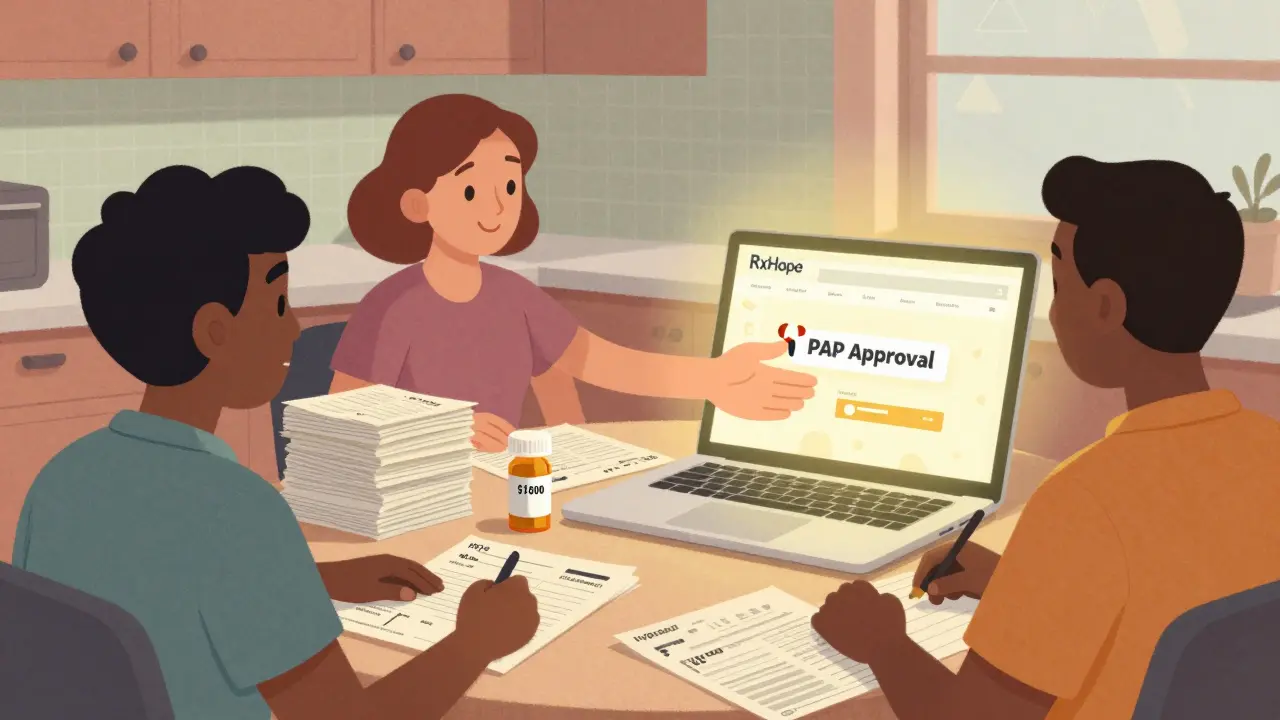
When a life-saving medication has no generic version, the cost can be overwhelming. Some drugs cost over $10,000 a month. For many people, that’s not just unaffordable-it’s impossible. But there’s a lifeline: Patient Assistance Programs (PAPs). These programs exist specifically to help people get brand-name drugs when there’s no cheaper alternative. They’re not a guarantee, and they’re not easy to navigate, but for those who qualify, they can turn a financial nightmare into manageable care.
Why PAPs Matter When No Generic Exists
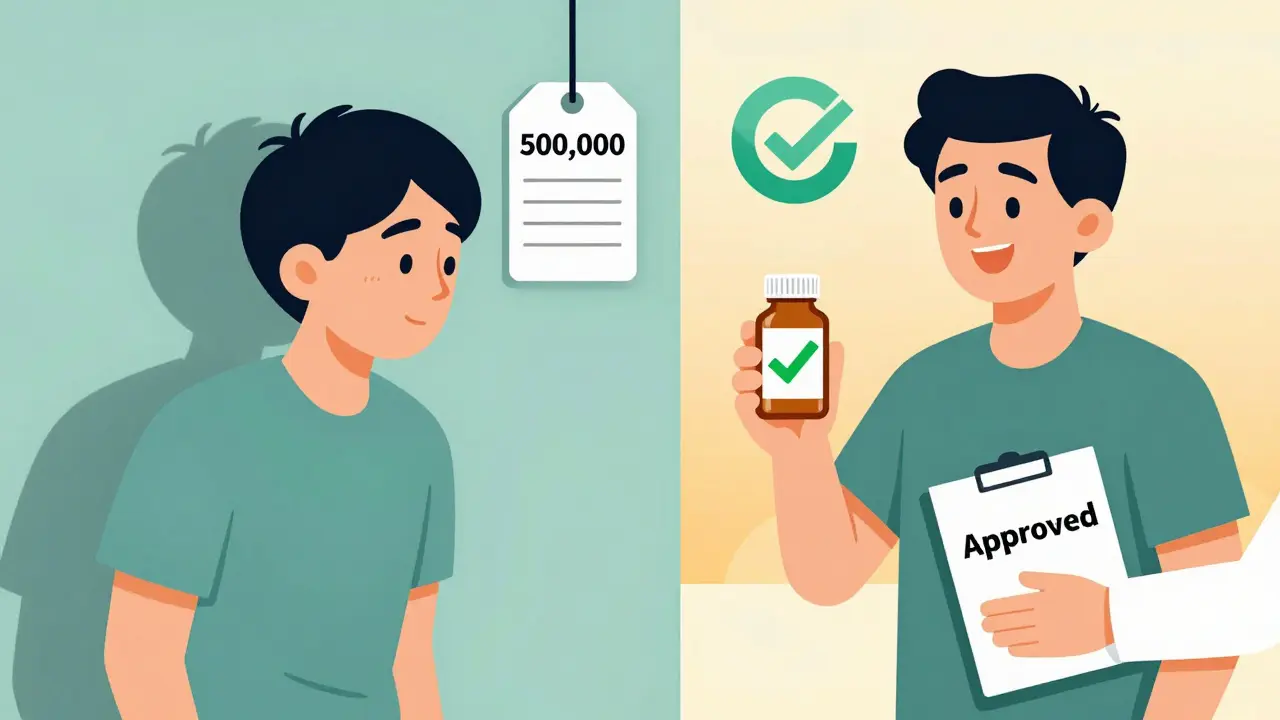
Generic drugs cut costs by up to 80% because they’re chemically identical to brand-name versions. But when a drug is new, complex, or used for rare conditions, generics don’t exist. Think of drugs like Soliris for paroxysmal nocturnal hemoglobinuria, or Tasigna for chronic myeloid leukemia. These drugs cost over $500,000 a year. Without PAPs, patients would have to choose between treatment and survival.
As of 2023, pharmaceutical companies sponsored 85% of the 1,500+ PAPs in the U.S. These programs gave out $4.7 billion in aid to over 1.2 million patients. Most of that aid went to people who needed brand-name drugs with no generic options. For uninsured patients, PAPs are often the only way to get their medication at all.
How PAPs Work: The Basic Structure
PAPs don’t work the same way for everyone. There are three main types:
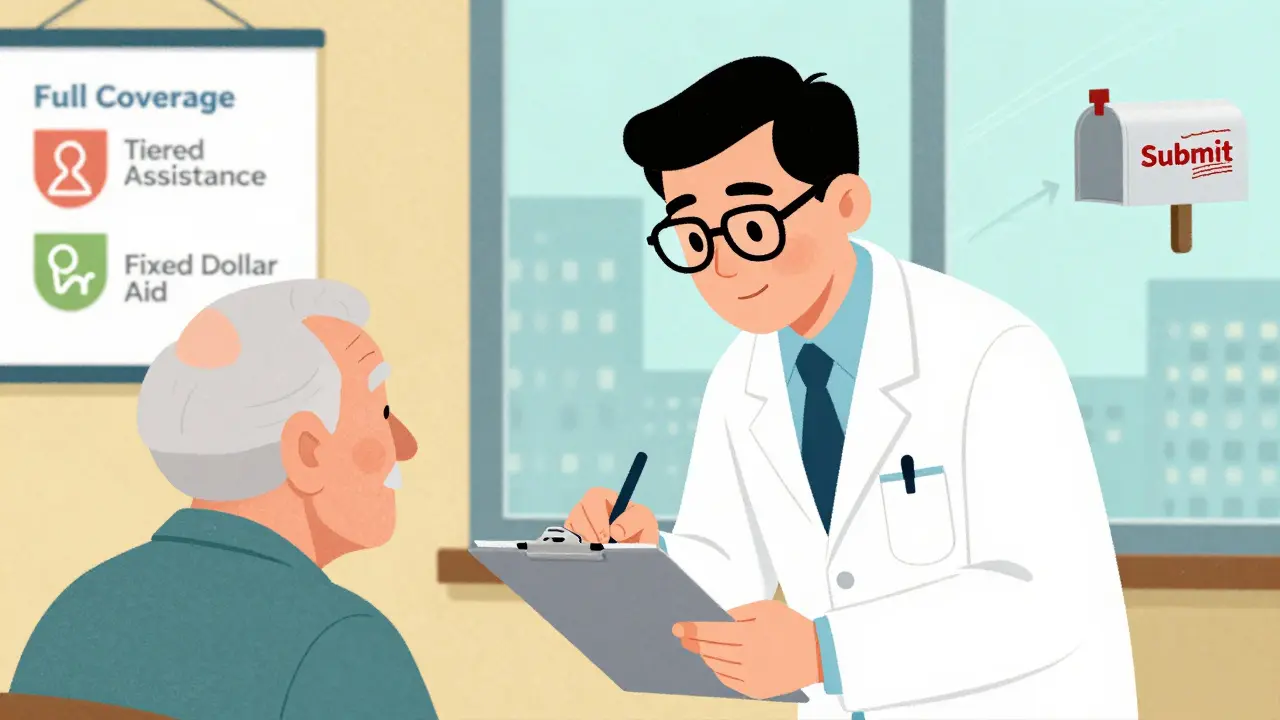
- Full coverage (55%) - The program pays 100% of the drug cost. You get the medication with $0 out-of-pocket.
- Tiered assistance (30%) - Your payment depends on income. Most programs use 400% of the Federal Poverty Level as the max cutoff. In 2023, that was $60,000 a year for one person.
- Fixed-dollar aid (15%) - You get a set amount, like $200 per month, toward your drug cost.
To qualify, you typically need:
- Proof of income (W-2s, tax returns, or pay stubs)
- A valid prescription from your doctor
- Proof you don’t have insurance-or proof your insurance won’t cover the drug
- A signed form from your healthcare provider
Some programs require all of this. Others ask for less. But 72% of them need your doctor to fill out paperwork. That’s not optional.
Who Can Apply? Eligibility Rules You Need to Know
Most PAPs target low-income patients. The cutoff is usually between 200% and 400% of the Federal Poverty Level. For a single person in 2023, that meant an annual income under $31,200 to $60,000. But some programs are stricter. Others are more flexible.
Here’s the catch: if you have Medicare, you can’t use manufacturer-sponsored PAPs for your Part D drugs. A federal rule from 2020 blocks it. That doesn’t mean you’re out of luck. Foundation-sponsored PAPs (run by nonprofits) still help Medicare patients. But their income limits are often lower, and their funding is limited.
Commercial insurance doesn’t automatically disqualify you. But if your plan has an accumulator adjustment, your PAP assistance won’t count toward your deductible or out-of-pocket maximum. That means even if the program covers your drug cost, you still have to pay your full deductible separately. In 2023, 78% of major pharmacy benefit managers (PBMs) like Express Scripts and Optum used this policy. It’s legal. And it’s devastating.
How to Apply: A Step-by-Step Process
Applying for a PAP is not like ordering something online. It’s a process. Here’s how to get through it:
- Identify the right program - Start with RxHope’s online screener. It checks 92% of manufacturer PAPs and tells you which ones you might qualify for.
- Gather documents - You’ll need your most recent tax return or pay stubs, your prescription, and a letter from your doctor. Some programs ask for a letter from your insurer saying they denied coverage.
- Get your provider’s help - Ask your doctor or nurse if they have a medication access specialist. These are staff members trained to handle PAP applications. In 68% of major hospitals, they now exist.
- Submit the application - Most programs accept applications online. Some still require mail-in forms. Keep copies of everything.
- Follow up - Manufacturer PAPs take 7-10 business days. Foundation programs take 14-21. If you haven’t heard back in two weeks, call.
The average application takes 45 minutes to complete-with help. Without help? It can take over three hours. And 38% of applications are rejected because of missing or incorrect paperwork.
Real People, Real Stories
One patient in Ohio had a rare blood disorder. Her drug cost $15,000 a month. She had no insurance. She applied to the manufacturer’s PAP. Approved. She got the medication for $0. She kept her apartment. She kept working.
Another patient in Florida had cancer. Her drug cost $12,000 a month. Her insurance covered it-but only after she paid $8,700 in deductible. The PAP covered the drug cost. But because her insurer used an accumulator program, the PAP payment didn’t count toward her deductible. She still had to pay $20,700 out of pocket before her insurance kicked in. She nearly quit treatment.
These stories aren’t rare. In a 2023 survey of 2,500 PAP users, 76% said the financial help was life-changing. But 68% said the application process was too hard. And 42% had to rely on clinic staff just to fill out the forms.
What to Do If You’re Denied
Denials happen. Often. In 2023, 41% of initial PAP applications needed an appeal. Don’t give up.
Common reasons for denial:
- Missing income proof
- Incorrect doctor signature
- Insurance status not clearly stated
- Income just above the cutoff
If you’re denied:
- Ask for a written explanation
- Check if you can submit updated documents
- Try a different program-some have looser rules
- Contact a nonprofit like the Patient Advocate Foundation. They offer free case management.
Alternatives to PAPs
There are other options-but they’re not as strong.
- GoodRx and pharmacy discount cards - These work great for generics. For brand-name drugs with no generic, they offer an average of 8.3% savings. That’s not enough.
- State pharmaceutical programs (SPAPs) - Programs like Pennsylvania’s PACE help seniors with income under $28,500. But they cap assistance at $400 per drug per month. That’s not enough for a $15,000-a-month drug.
- Charity care or hospital financial aid - Some hospitals offer aid, but it’s inconsistent and often limited to a few months.
PAPs remain the most powerful tool for brand-name drugs with no generic alternative.
What’s Changing in 2024 and Beyond
The system is shifting. In January 2025, Medicare Part D patients will be completely blocked from manufacturer copay assistance. That means more pressure on nonprofit PAPs.
But there’s progress too:
- Eli Lilly’s "Simple Bridge" program cut its application from 17 steps to just 5. Approval now takes 48 hours.
- New tools like the Patient Access Simulator help doctors estimate PAP savings before prescribing.
- Epic Systems is integrating PAP tools directly into electronic health records-so your doctor can apply while you’re in the office.
Still, the system is fragile. Drug prices keep rising. PAP costs are projected to grow 18% a year. Manufacturers are under pressure to keep funding them.
Final Advice: Know Your Power
If you’re paying thousands a month for a drug with no generic, you’re not alone. And you’re not powerless.
Start with RxHope. Call your doctor’s office and ask if they have a medication access specialist. Don’t assume you don’t qualify. Many people think they make too much money-until they see the numbers. A family of four earning $80,000 can still qualify for some programs.
Keep copies. Follow up. Appeal denials. And remember: PAPs exist because people fought for them. They’re not perfect. But for many, they’re the only thing standing between treatment and ruin.
PAUL MCQUEEN
February 10, 2026 AT 00:12glenn mendoza
February 10, 2026 AT 08:40Patrick Jarillon
February 11, 2026 AT 07:18Kathryn Lenn
February 13, 2026 AT 03:34John Watts
February 15, 2026 AT 00:47Randy Harkins
February 16, 2026 AT 07:58Chima Ifeanyi
February 18, 2026 AT 06:01Camille Hall
February 18, 2026 AT 17:24Ritteka Goyal
February 20, 2026 AT 10:14Monica Warnick
February 21, 2026 AT 04:20Jonah Mann
February 22, 2026 AT 02:14THANGAVEL PARASAKTHI
February 23, 2026 AT 14:54