
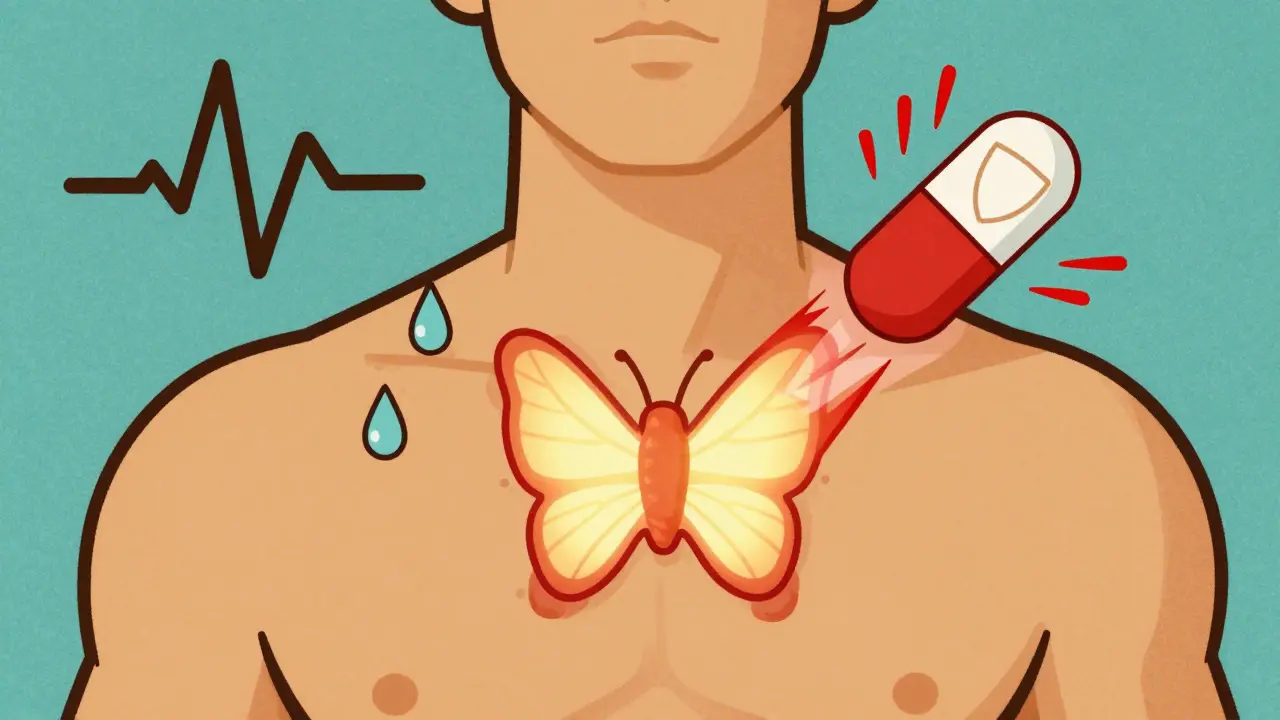
Hyperthyroidism happens when your thyroid gland goes into overdrive, pumping out too much thyroid hormone. This isn’t just about feeling jittery or losing weight without trying-it’s a metabolic firestorm. Your heart races, your hands shake, you sweat through clothes in a cool room, and sleep becomes impossible. The good news? You don’t have to wait weeks for the root cause to be fixed. Beta-blockers step in fast, giving you relief while your body gets the real treatment.
What’s Actually Happening in Your Body?
Your thyroid, a small butterfly-shaped gland in your neck, makes two main hormones: T3 and T4. These control how fast your cells use energy. Too much? Every system in your body speeds up. Your heart beats harder and faster. Muscles twitch. You feel anxious even when there’s nothing to worry about. This is called thyrotoxicosis-the physical result of too much thyroid hormone in your blood. The most common cause? Graves’ disease. It’s an autoimmune disorder where your immune system accidentally attacks your thyroid, tricking it into overproducing hormones. It accounts for 60 to 80% of all cases. Other causes include toxic nodules-lumps in the thyroid that act like little hormone factories-and toxic multinodular goiter, where multiple nodules go rogue. Women are five to ten times more likely to develop it than men, especially between ages 30 and 50. But here’s the catch: the drugs that fix the root problem-like methimazole or radioactive iodine-take weeks to work. You can’t just sit and wait while your heart pounds like a drum. That’s where beta-blockers come in.Why Beta-Blockers Are the First Line of Symptom Relief
Beta-blockers don’t touch your thyroid. They don’t reduce hormone levels. What they do is block the effects of excess thyroid hormone on your body’s beta receptors-especially in your heart, brain, and muscles. Think of it like turning down the volume on a loudspeaker. The speaker is still blasting, but you’re not hearing it as loudly. The American Thyroid Association recommends propranolol as the top choice. Why? Because it’s non-selective. It blocks both beta-1 (heart) and beta-2 (lungs, blood vessels) receptors. And here’s the bonus: at high doses, it also slightly reduces the conversion of T4 into the more active T3 hormone. That’s a rare two-for-one benefit. Other options include nadolol (long-acting, taken once a day) and atenolol (more heart-specific, better for people with breathing issues). Esmolol is used only in emergencies-like thyroid storm-given through an IV in the hospital. Most people start with 10 to 20 mg of propranolol every six hours. That’s four times a day. If symptoms don’t improve in a few days, your doctor may bump it up. In severe cases, doses go as high as 240 to 480 mg per day. That sounds like a lot, but in thyroid storm, your body is in full crisis mode-and your heart needs that kind of support.How Fast Do They Work?
This is the part that changes everything for patients. Antithyroid drugs like methimazole take 3 to 6 weeks to bring hormone levels down. Beta-blockers? They start working within an hour. Heart rate drops. Tremors ease. Anxiety lifts. You can actually feel the difference by the end of the day. A 2021 study showed that starting beta-blockers within 24 hours of diagnosis cut emergency room visits for thyrotoxic symptoms by 37%. That’s not a small win-it’s life-changing. One patient I spoke with, a 42-year-old teacher from Portland, said she went from being unable to hold a coffee cup without spilling it to holding a full class lecture within 48 hours of starting propranolol. She still needed methimazole to fix the root issue-but the beta-blocker gave her back her life while she waited.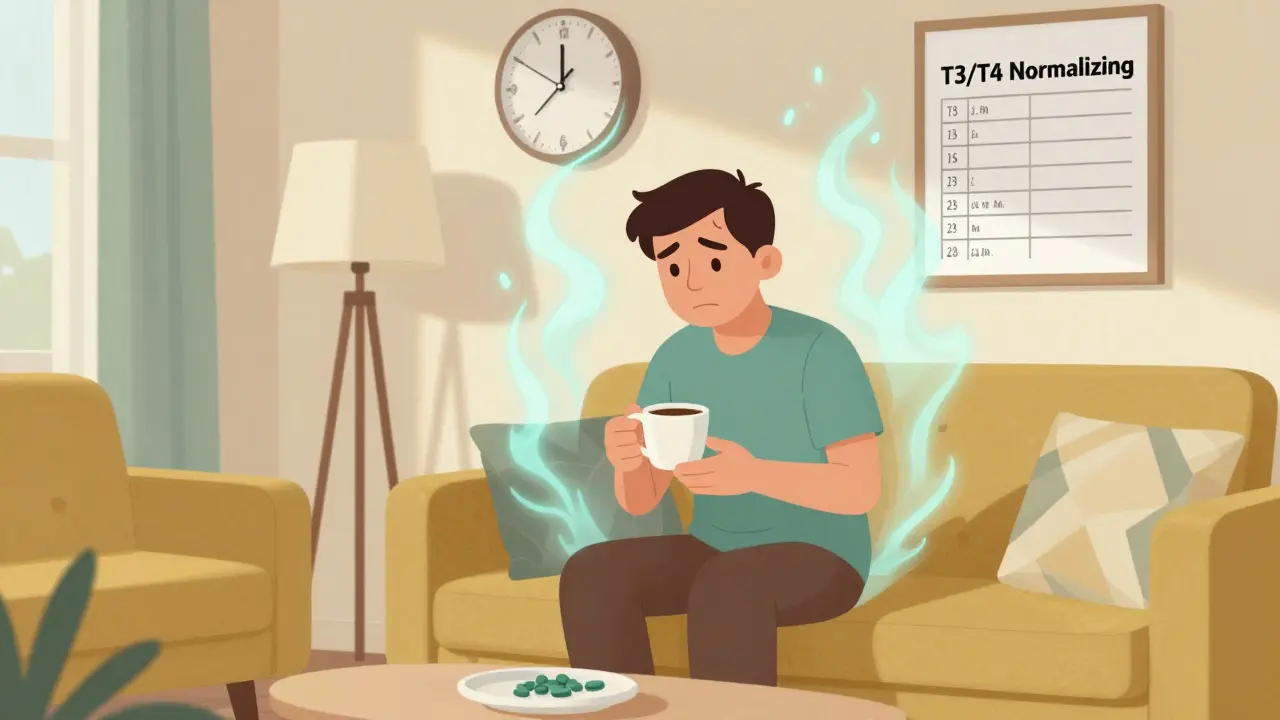
When Beta-Blockers Are Not Enough-or Not Safe
Beta-blockers aren’t for everyone. If you have asthma or severe COPD, blocking beta-2 receptors can trigger bronchospasm. That’s dangerous. In those cases, calcium channel blockers like verapamil or diltiazem are the go-to alternative. They slow your heart rate without touching your lungs. People with heart failure, very low blood pressure, or certain types of heart block also need to be careful. Beta-blockers can make these worse. Your doctor will check your pulse and blood pressure closely before and after starting. Elderly patients often need lower doses. Their bodies process these drugs slower, and their hearts are more sensitive. A 65-year-old with atrial fibrillation and hyperthyroidism might only need 10 mg of propranolol twice a day. And yes-you can’t use beta-blockers alone forever. They’re a bridge, not the destination. If you stay on them for months without treating the underlying cause, you’re just masking the problem. The thyroid keeps overproducing. Your bones thin. Your muscles waste. Your heart weakens over time. That’s why guidelines say: start beta-blockers right away, but start antithyroid drugs, radioactive iodine, or surgery just as fast.What Happens When You Get Radioactive Iodine?
Radioactive iodine (RAI) is the most common definitive treatment in the U.S. It destroys overactive thyroid tissue. But here’s the twist: right after you take it, your thyroid can leak even more hormone into your blood for a few days. That’s when symptoms can spike. The American Thyroid Association says: keep your beta-blockers going during this time. Especially if your T4 level is more than double the normal range, if you’re over 65, or if you have heart disease. Stopping them could lead to dangerous spikes in heart rate or even thyroid storm. Meanwhile, you’ll stop methimazole 2 to 3 days before RAI. Why? Because if you’re still on it, it can trap iodine in your thyroid and make the treatment less effective. Beta-blockers? They don’t interfere. They’re safe to keep.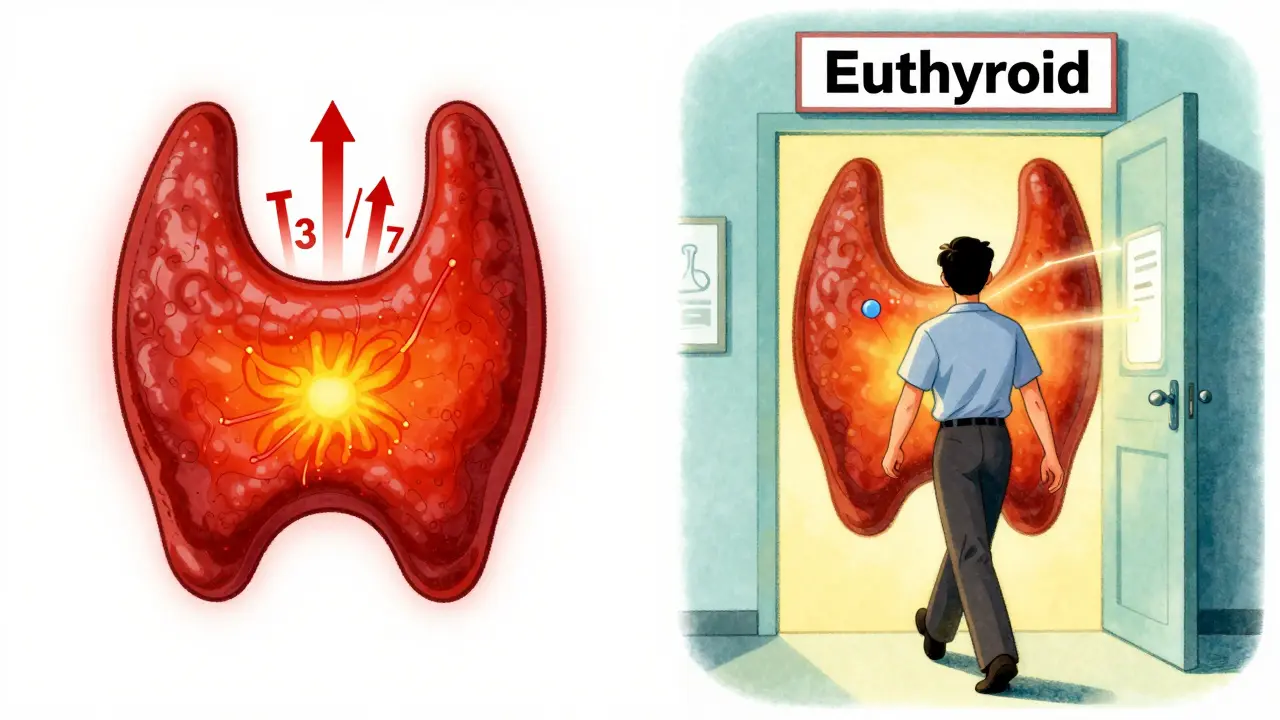
How Long Do You Stay on Beta-Blockers?
This depends on your treatment path. If you’re on antithyroid drugs, you’ll likely stay on beta-blockers for 4 to 8 weeks-until your T3 and T4 levels drop into the normal range. Then you can taper off. No need to quit cold turkey; your doctor will reduce the dose slowly over a week or two. If you go with radioactive iodine, you might be on beta-blockers for 3 to 6 months. That’s how long it takes for the thyroid to fully shut down. During that time, your hormone levels will drop gradually. Beta-blockers keep you stable. If you have surgery, beta-blockers are usually stopped within a day or two after the procedure-once your thyroid hormone levels begin to fall. The key is monitoring. You’ll get blood tests at 6 weeks, then 3 months, and then every 6 months until your levels stabilize. Your doctor will adjust your beta-blocker dose based on your pulse, symptoms, and lab results-not just a fixed schedule.What About Side Effects?
Most people tolerate beta-blockers well. But side effects happen. Common ones: fatigue, cold hands or feet, dizziness, and trouble sleeping. Less common: depression, sexual dysfunction, or worsening of asthma. Rare but serious: very slow heart rate (below 50 bpm), low blood pressure, or sudden drops in blood sugar for diabetics. If you feel dizzy when standing up, or your hands feel numb, tell your doctor. These aren’t normal. Doses can be adjusted. Sometimes switching from propranolol to nadolol helps-less frequent dosing, fewer peaks and valleys. One thing to watch: don’t stop beta-blockers suddenly. Especially if you’ve been on them for more than a week. That can cause rebound tachycardia-your heart races even faster than before. Always taper under medical supervision.What’s New in 2026?
No major guideline changes are expected until the next American Thyroid Association update in late 2026. But research is moving. New studies are looking at whether more selective beta-blockers-like those that only hit beta-1 receptors-can offer the same heart protection without lung side effects. Atenolol is already being used more often for patients with mild respiratory issues. Also, there’s growing interest in using beta-blockers to prevent thyroid storm in high-risk patients before surgery or RAI. Early data shows promise: if you stabilize someone with beta-blockers before a procedure, their risk of crisis drops by over 60%. Bottom line: beta-blockers aren’t a cure. But they’re the fastest, most reliable way to take back control when your body feels like it’s running on fire.Can beta-blockers cure hyperthyroidism?
No. Beta-blockers only manage symptoms like rapid heartbeat, tremors, and anxiety. They don’t reduce thyroid hormone production. To cure hyperthyroidism, you need treatments that target the root cause-like antithyroid drugs, radioactive iodine, or surgery.
How long does it take for propranolol to work for hyperthyroidism?
You’ll usually feel relief within 1 to 4 hours after taking the first dose. Heart rate drops noticeably, tremors lessen, and anxiety eases. Most patients report feeling significantly better by the end of the first day.
Can I take beta-blockers if I have asthma?
Non-selective beta-blockers like propranolol can trigger asthma attacks. If you have asthma, your doctor will likely choose a calcium channel blocker like verapamil or diltiazem instead. In some cases, atenolol-a more heart-selective beta-blocker-may be used cautiously with close monitoring.
Why is propranolol preferred over other beta-blockers?
Propranolol is non-selective, meaning it blocks both heart and lung receptors. More importantly, at high doses, it helps reduce the conversion of T4 into the more active T3 hormone. This dual action makes it uniquely effective for hyperthyroidism compared to other beta-blockers that only affect the heart.
Is it safe to stop beta-blockers once I feel better?
No. Stopping suddenly can cause rebound symptoms like a dangerous spike in heart rate or blood pressure. Always taper off under your doctor’s guidance. Even if you feel fine, your thyroid hormone levels may still be high. Only stop when your labs confirm you’re euthyroid and your doctor says it’s safe.
Can beta-blockers cause weight gain?
Beta-blockers themselves don’t directly cause weight gain. But hyperthyroidism often causes rapid weight loss due to high metabolism. Once you start beta-blockers and your metabolism slows, you may regain weight as your body returns to normal. This is a sign your treatment is working-not a side effect of the drug.
Zoe Brooks
January 18, 2026 AT 02:04Just started propranolol last week for my Graves’ and holy hell, it’s like someone turned down the volume on my nervous system. I was shaking so bad I couldn’t pour coffee. Now? I can hold a cup. Still tired, still waiting for the real fix-but this? This is life-changing. 🙌
Kristin Dailey
January 19, 2026 AT 08:33Stop taking beta-blockers. They’re just masking the problem. Let your body handle it. You’re weak if you need drugs to calm your heart.
Wendy Claughton
January 19, 2026 AT 15:10I love how this post breaks it down so clearly… like, it’s not magic, it’s science-but it *feels* like magic when your hands stop trembling after weeks of it. I’ve been on propranolol for 3 months now, post-RAI, and honestly? I still take it like a daily hug for my nervous system. It’s not the cure, but it’s the gentle hand holding you through the storm. 💛
Pat Dean
January 20, 2026 AT 09:33Of course the medical industry pushes beta-blockers. They make money off bandaids. If you’d just eat less sugar and do yoga, your thyroid wouldn’t go haywire. This is why America is sick.
Jay Clarke
January 21, 2026 AT 12:12Bro, I went from panic attacks every 20 minutes to just… chilling. Like, I watched a whole movie without sweating through my shirt. Propranolol didn’t cure me-but it gave me back my dignity. If you’re telling me to ‘just breathe’ while my heart’s trying to escape my chest, I’m gonna side-eye you into next week.
Max Sinclair
January 21, 2026 AT 12:54This is one of the clearest explanations I’ve ever read on hyperthyroidism management. I appreciate how you distinguish symptom relief from root treatment. Many patients don’t realize beta-blockers are a bridge-not the destination. Also, the note about continuing them post-RAI is critical. I’ve seen too many people stop too soon and end up back in the ER. Solid, science-backed advice. Thank you.
Nishant Sonuley
January 22, 2026 AT 18:10Man, I’ve been treating my hyperthyroidism for 18 months now-started with methimazole, then RAI, now on a low dose of nadolol because my heart still occasionally does the cha-cha. What no one tells you is that the fatigue doesn’t vanish just because the tremors do. Beta-blockers help you function, but they don’t fix the soul-deep exhaustion that comes from your body being hijacked. I still cry sometimes when I realize I’ve forgotten what ‘normal energy’ feels like. But yeah, propranolol? Saved my job. Saved my marriage. Even if it’s just a bandage, it’s the only one that didn’t fall off.
Emma #########
January 23, 2026 AT 15:52Thank you for mentioning the weight gain thing. I thought I was just eating too much after starting beta-blockers-but now I realize it’s just my metabolism slowing down. That’s actually kind of comforting. I didn’t know that was normal.
Andrew McLarren
January 25, 2026 AT 13:43It is imperative to emphasize that abrupt discontinuation of beta-adrenergic blocking agents may precipitate rebound tachycardia, hypertension, or even myocardial ischemia in susceptible individuals. A gradual taper, under clinical supervision, remains the standard of care. Furthermore, the pharmacodynamic profile of propranolol, particularly its ancillary inhibition of peripheral T4-to-T3 conversion, confers a unique therapeutic advantage in thyrotoxic states, as elucidated in this comprehensive exposition.