
When a patient walks into a hospital for surgery, chemotherapy, or an emergency room visit, they expect life-saving medications to be ready-right now. But for hospital pharmacies across the U.S., that expectation is becoming harder to meet. Injectable medication shortages aren’t just inconvenient-they’re putting lives at risk. While community pharmacies might run low on a pill or two, hospital pharmacies are dealing with critical, sterile injectables that can’t be swapped out easily. And they’re bearing the brunt of a crisis that’s been building for years.
Why Injectable Drugs Are the First to Go Missing
Not all drug shortages are the same. Oral medications? They’re easier to make, store, and substitute. Injectable drugs? They’re a different beast. These medications must be made in sterile environments, with no contaminants allowed. One tiny mistake in the manufacturing process can shut down an entire production line. And because they’re often generic drugs with razor-thin profit margins, manufacturers don’t have much incentive to invest in backup systems or quality upgrades. According to the U.S. Pharmacopeia, 89% of the drug shortages in 2024 carried over from 2023. That means many of these shortages aren’t temporary-they’re becoming permanent fixtures. Sterile injectables make up nearly two-thirds of all active shortages. Drugs like normal saline, potassium chloride, and anesthetics like propofol are in constant demand, yet their production is concentrated in just a few factories, mostly overseas. About 80% of the active ingredients for these drugs come from China and India. A single tornado, FDA inspection failure, or political trade disruption can knock out supply for months.How Hospital Pharmacies Are Getting Crushed
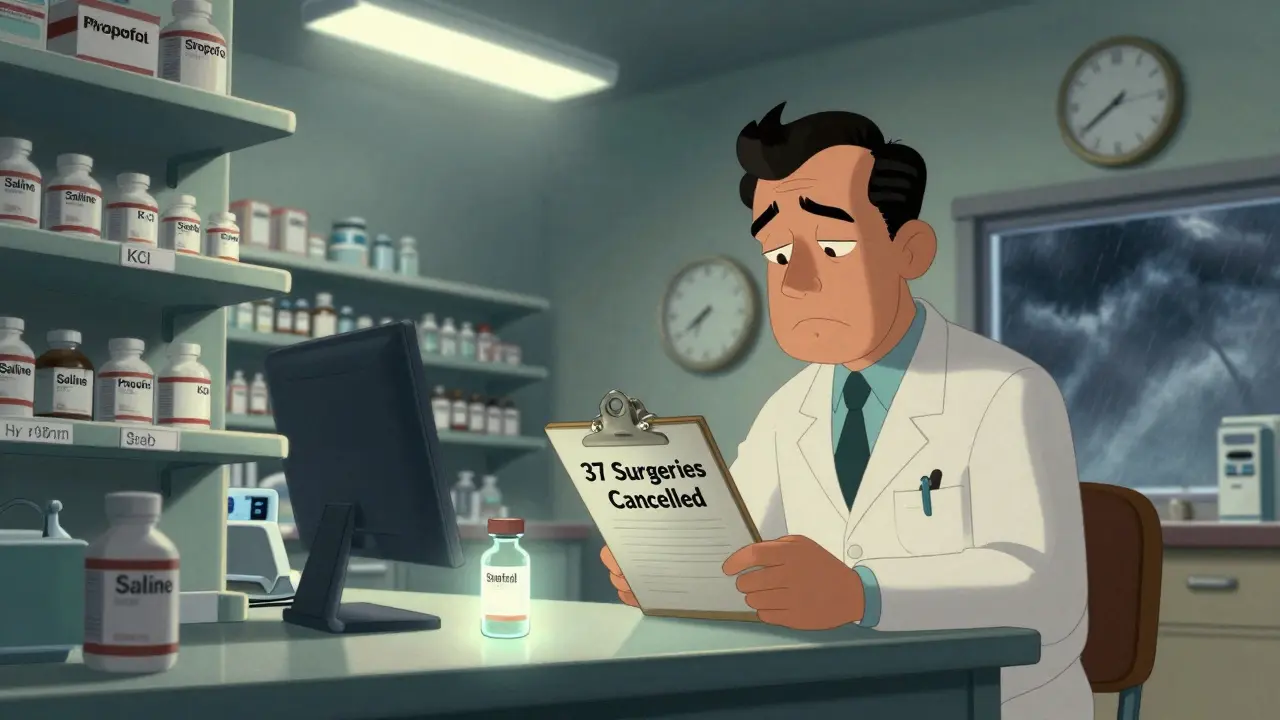
While a retail pharmacy might see 15-20% of its inventory affected by shortages, hospital pharmacies report that 35-40% of their essential medications are in short supply. And 60-65% of those shortages are sterile injectables-drugs that can’t be replaced with pills or creams. Think about it: you can’t give an IV fluid orally. You can’t substitute one chemotherapy drug for another without risking patient safety. The impact isn’t theoretical. A 2025 survey of 350 hospital pharmacy directors found that 92% are spending over 11 hours a week just trying to find alternatives. Pharmacists are calling suppliers, checking other hospitals, and scrambling to get even a few vials of a life-saving drug. At Massachusetts General Hospital, 37 surgical procedures were postponed in just one quarter because anesthetics weren’t available. Patients were rescheduled, anxiety spiked, and staff burned out. Even more troubling? Hospital pharmacists are being forced into impossible choices. Nearly 42% have had to use less effective alternatives because there was no other option. That’s not just inconvenient-it’s dangerous. A patient on a weaker antibiotic might not recover. A child in septic shock might not get the right dose of epinephrine. These aren’t hypotheticals. They’re happening in real hospitals, right now.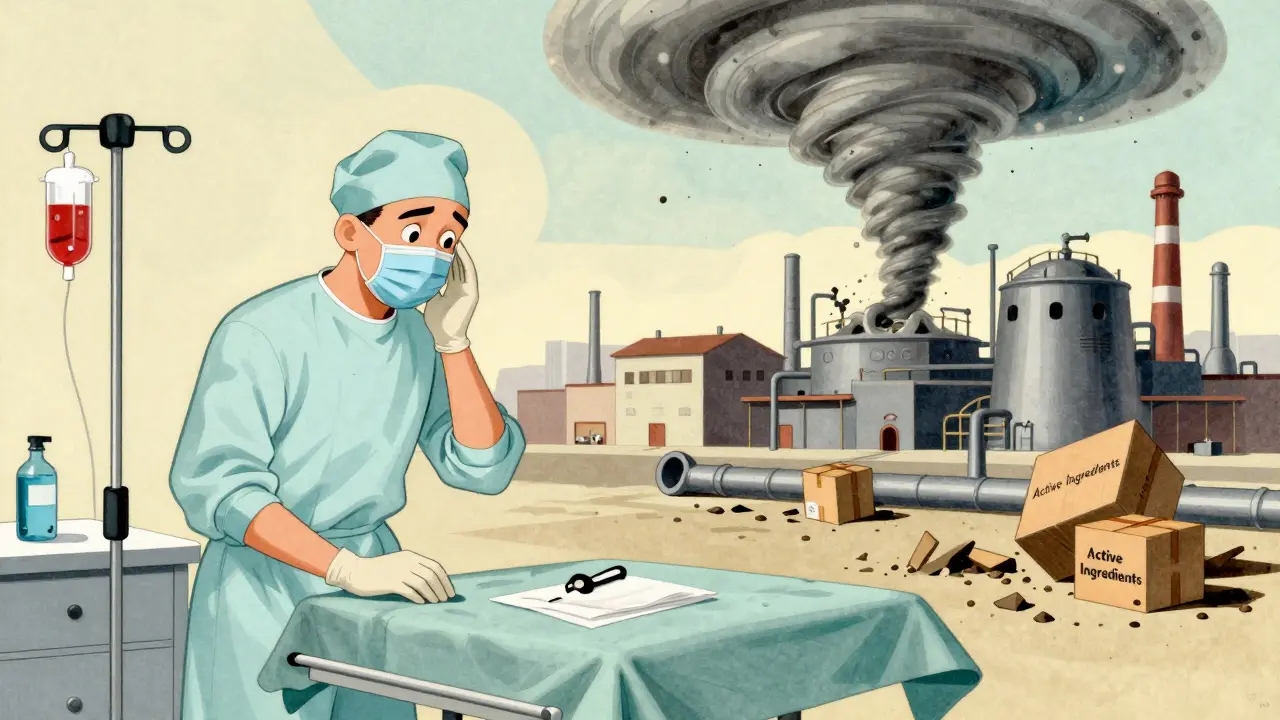
The Most Affected Drugs-and Who Suffers Most
Some drug categories are hit harder than others:- Anesthetics: 87% shortage rate. Surgeries delayed. Emergency intubations compromised.
- Chemotherapeutics: 76% shortage rate. Cancer patients wait. Treatment plans fall apart.
- Cardiovascular injectables: 68% shortage rate. Heart attack and stroke patients at risk.
Why the System Keeps Failing
You’d think the FDA would step in. But here’s the reality: the FDA has limited power to force manufacturers to keep producing. In 2023, only 14% of shortage notifications led to timely fixes. The Drug Supply Chain Security Act requires tracking-but doesn’t prevent shortages. The Consolidated Appropriations Act of 2023 mandated earlier warnings-but only cut shortage duration by 7%. The root problem? Economics. Most sterile injectable manufacturers operate on 3-5% profit margins. That’s not enough to cover the cost of building redundant production lines, upgrading equipment, or hiring extra quality control staff. When a factory shuts down for cleaning or repair, there’s no backup. And with just three companies controlling 65% of the market for basic drugs like saline and potassium chloride, one failure can ripple across the entire country. Even new solutions aren’t moving fast enough. Continuous manufacturing-a technology that could make production more stable and less prone to shutdowns-is only in use at 12% of sterile injectable facilities. The Biden administration’s $1.2 billion investment in domestic drug production sounds promising, but experts say it’ll take 3-5 years to make a dent. Meanwhile, climate disasters and geopolitical instability keep disrupting supply chains from overseas.
Sophia Rafiq
February 26, 2026 AT 21:38Brandie Bradshaw
February 27, 2026 AT 00:26Noah Cline
February 27, 2026 AT 15:17Angel Wolfe
February 27, 2026 AT 19:36Sumit Mohan Saxena
February 28, 2026 AT 20:54Brandon Vasquez
February 28, 2026 AT 23:09Charity Hanson
March 1, 2026 AT 01:02Vikas Meshram
March 1, 2026 AT 06:48Jimmy Quilty
March 3, 2026 AT 00:14Ajay Krishna
March 4, 2026 AT 16:24Brandie Bradshaw
March 5, 2026 AT 01:55