
Body Image Coping Tracker
Daily Coping Actions
Track your daily actions to improve body image confidence. This tool helps you implement the strategies from the article.
Key Actions
Immediate visual confidence
Track lesion changes, adjust treatment
Rewires negative self-talk
Additional Strategies
Shares coping tools, reduces loneliness
Boosts immune system, lowers new lesions
Your Progress
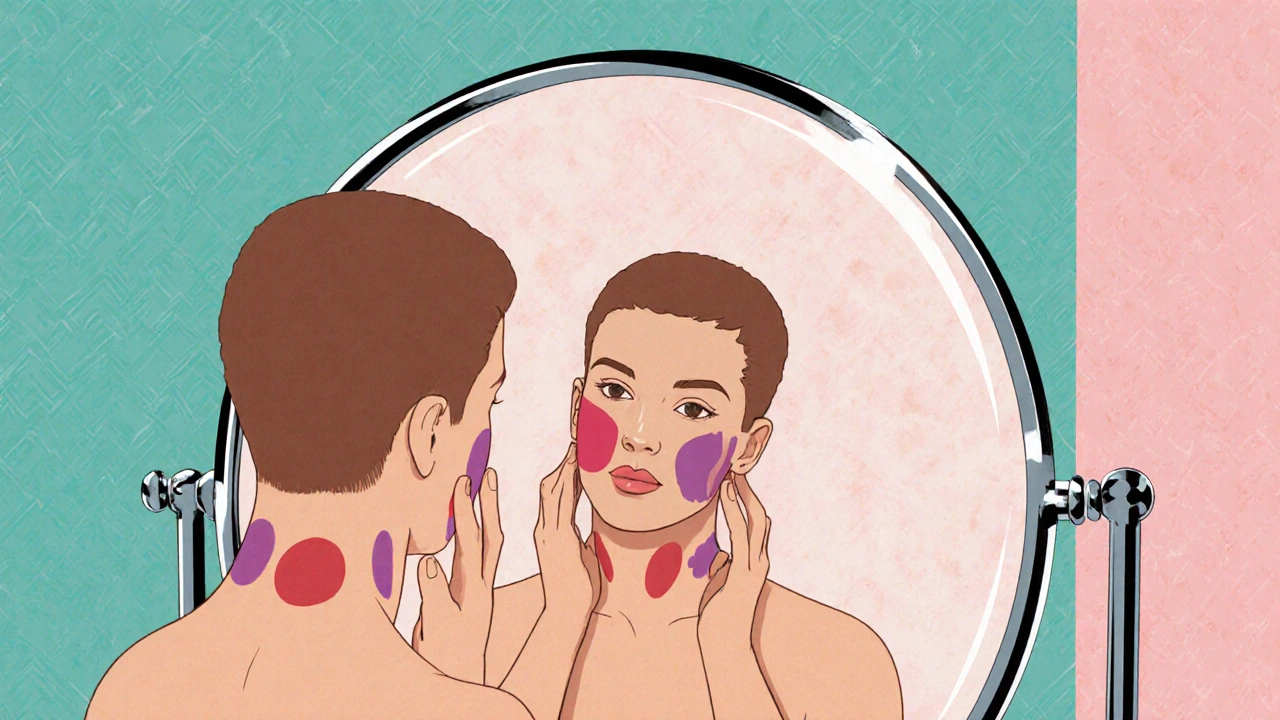
Living with Kaposi sarcoma can reshape how you see your own body, especially when red or purple patches appear on visible areas. This guide walks you through why those changes happen, how they affect your self‑image, and practical steps to feel comfortable again.
What is Kaposi Sarcoma?
Kaposi sarcoma is a vascular tumor that originates from the cells lining blood vessels. It commonly shows up as painless lesions on the skin, mouth, or internal organs. There are four recognized types: classic, endemic, iatrogenic, and epidemic (AIDS‑related). According to the World Health Organization, about 2‑3 % of people living with HIV develop the epidemic form, making it the most studied variant.
How Physical Changes Influence Body Image
Body image is the mental picture you hold of your own appearance. When skin cancer‑related lesions appear on the face, neck, or hands, they can trigger feelings of self‑consciousness, embarrassment, or even depression. Research from the Journal of Psycho‑Oncology (2023) shows that 45 % of patients with visible lesions report a drop in self‑esteem within the first six months of diagnosis.
Emotional and Social Ripple Effects
Beyond the mirror, the emotional fallout can spill into relationships, work, and social life. Many patients notice a reluctance to attend gatherings or a hesitation to be photographed. A 2022 survey of 312 Kaposi sarcoma survivors found that 38 % avoided intimacy due to fear of judgment, while 27 % reported decreased workplace confidence.
Medical Options that Can Help
Addressing the physical aspect often starts with a dermatologist or oncologist who can recommend treatments tailored to lesion size, location, and immune status.
- Local therapies: Cryotherapy, laser ablation, or intralesional chemotherapy can shrink or eliminate isolated patches.
- Systemic therapies: Liposomal‑doxorubicin, paclitaxel, or interferon‑alpha are used for widespread disease, especially in immunocompromised patients.
- Phototherapy: Targeted light treatment can reduce lesion redness and improve skin texture.
For those with HIV‑related disease, antiretroviral therapy (ART) dramatically lowers lesion burden by restoring immune function. Studies show a 70 % reduction in new lesions after two years of effective ART.
Cosmetic Strategies to Boost Confidence
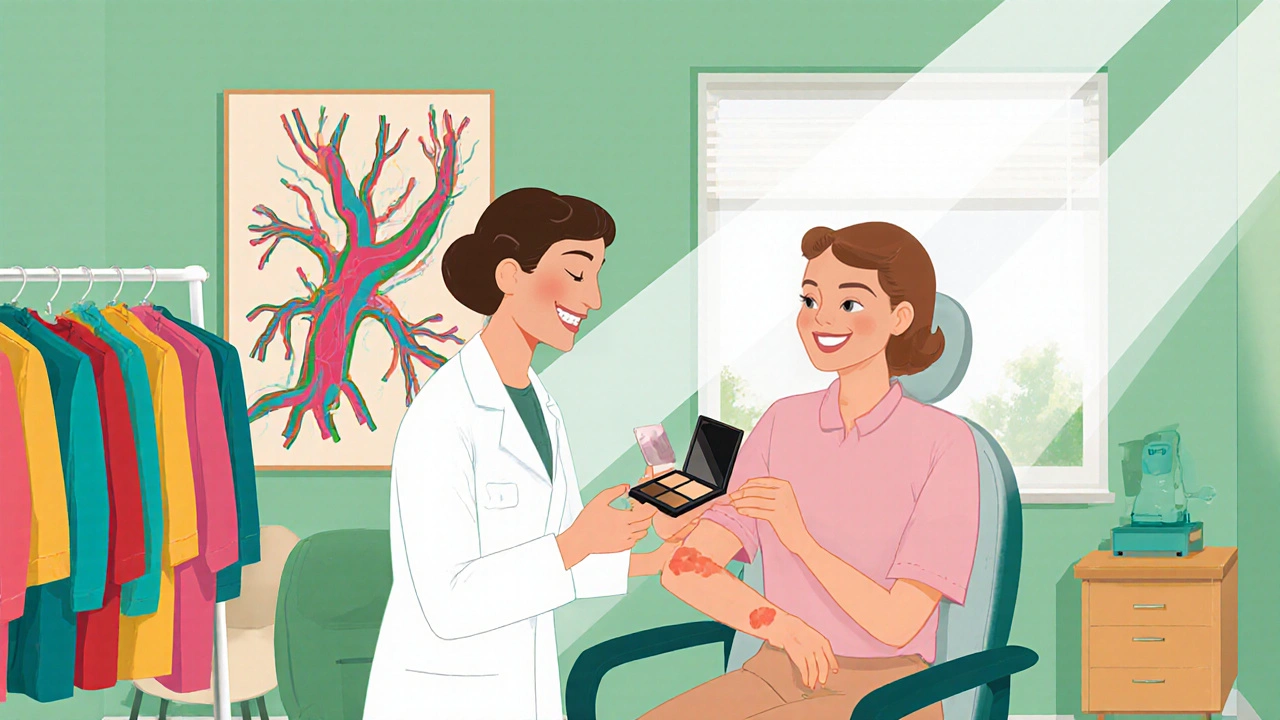
While medical treatment tackles the root cause, cosmetic measures help you feel good day‑to‑day.
- Camouflage makeup: Professional-grade, waterproof products can mask color changes. Brands like Dermablend offer pigments designed for darker skin tones.
- Dermatologic laser resurfacing: Removes superficial pigment and smooths texture, often used after lesions have healed.
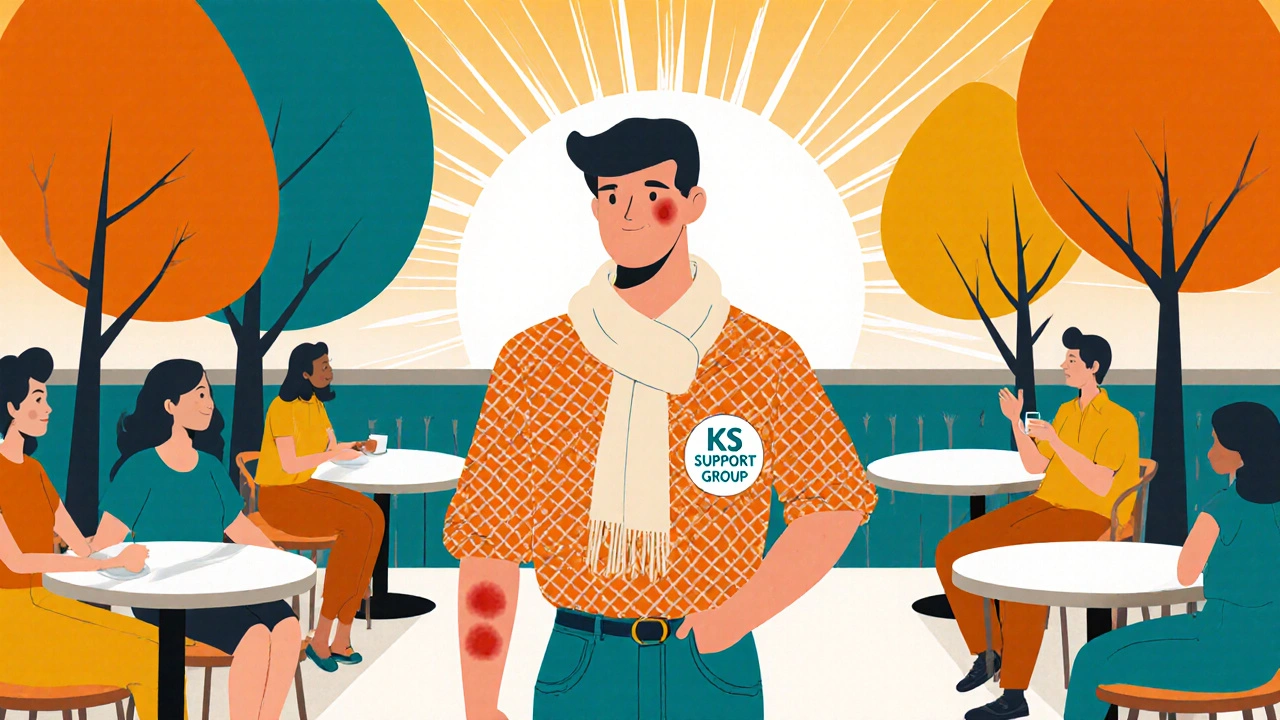
- Clothing choices: Long‑sleeve shirts, scarves, or patterned fabrics can draw attention away from affected areas.
- Sun protection: Broad‑spectrum SPF 30+ reduces further discoloration and protects fragile skin.
Psychosocial Support: Why It Matters
Healing the mind is as crucial as treating the skin. Psychosocial support can come from several sources:
- Therapy: Cognitive‑behavioral therapy (CBT) helps reframe negative thoughts about appearance.
- Support groups: Connecting with fellow Kaposi sarcoma patients provides shared coping tips and reduces isolation.
- Online communities: Forums such as the KS Society offer moderated discussions and resource libraries.
One 2024 randomized trial showed that patients who attended weekly support sessions reported a 30 % increase in body‑image satisfaction scores compared with those receiving standard care alone.
Checklist: Daily Actions for a Better Body Image
| Action | Why It Helps |
|---|---|
| Apply camouflage makeup each morning | Immediate visual confidence |
| Schedule dermatologist visit every 3‑6 months | Track lesion changes, adjust treatment |
| Practice 5‑minute mirror affirmation | Rewires negative self‑talk |
| Join a local or online support group | Shares coping tools, reduces loneliness |
| Maintain ART adherence (if HIV‑positive) | Boosts immune system, lowers new lesions |
When to Seek Professional Help
If you notice rapid lesion growth, bleeding, or pain, contact your healthcare team immediately. Also, reach out if you experience persistent sadness, withdrawal, or thoughts of self‑harm-mental‑health professionals can intervene early.
Resources You Can Trust
- National Cancer Institute (NCI): Comprehensive information on Kaposi sarcoma genetics and treatment trials.
- American Academy of Dermatology (AAD): Tips on skin‑care routines for patients with vascular lesions.
- KS Society Support Network: Lists of regional meet‑ups and online chat rooms.
- Local HIV clinics: Offer integrated oncology and infectious‑disease care.
Bottom Line
Physical changes from Kaposi sarcoma don’t have to dictate how you feel about yourself. By combining medical treatment, cosmetic tactics, and solid psychosocial support, you can regain confidence and enjoy life beyond the lesions.
Frequently Asked Questions
Can Kaposi sarcoma disappear without treatment?
In some cases, especially for classic KS in older adults, lesions can regress slowly over years. However, most medical guidelines recommend active treatment to prevent spread and improve quality of life.
Is camouflage makeup safe on lesions?
Yes, as long as you choose non‑comedogenic, fragrance‑free formulas and apply on clean, dry skin. Avoid heavy pressure that could irritate fragile tissue.
Will ART cure the skin lesions?
ART doesn’t directly eliminate lesions, but by restoring immune competence it often leads to a marked reduction in new lesions and can shrink existing ones.
How often should I see a dermatologist?
Schedule follow‑up every 3‑6 months, or sooner if you notice rapid changes, pain, or bleeding.
What online groups are recommended?
The KS Society’s moderated forum, Reddit’s r/KaposiSarcoma community, and Facebook groups like “Living with KS” provide peer support and up‑to‑date resources.
James Mali
October 18, 2025 AT 17:06Skin changes are just another variable in the equation.
Janet Morales
October 18, 2025 AT 18:46Throwing away the mirror because of a few patches is a surrender to society's shallow yardsticks; you deserve to own your story, scars and all.
Remember, confidence is an interior fire that no external hue can extinguish, and stepping out with your head high rewrites the script that illness tried to dictate.
Rajesh Singh
October 18, 2025 AT 20:26Living with Kaposi sarcoma forces us to confront the fragile theater of our own bodies.
The crimson and violet patches that bloom across the skin are not mere blemishes; they are articulate messengers of a deeper biological discord.
When society hands us a mirror, it often reflects back a distorted narrative that equates appearance with worth.
This narrative must be shattered, for the true measure of a person resides in resilience, not in pigment.
Medical science offers a robust arsenal-from cryotherapy to liposomal‑doxorubicin-to tame the rogue vessels that feed these lesions.
Yet, treating the surface without nurturing the soul is a hollow victory that leaves the wounded spirit gnawing at its own reflection.
Cognitive‑behavioral therapy, as shown in recent trials, rewires the mental circuitry that amplifies self‑criticism, lighting up pathways of self‑acceptance.
Support groups act as sanctuaries where the chorus of shared experience drowns out the solo scream of isolation.
Camouflage makeup, when applied skillfully, can be a bold brushstroke that reclaims the canvas of one’s visage.
However, it is crucial to remember that makeup is a mask, not a cure, and should be complemented by genuine dialogue about one’s feelings.
The act of donning a scarf or a long‑sleeve shirt can be a strategic armor, but it should not become a barricade that hides the person from compassionate eyes.
ART adherence for HIV‑positive patients is not merely a pharmacologic regimen; it is a declaration of self‑respect that fortifies the immune defense against new lesions.
By intertwining medical, cosmetic, and psychosocial threads, we weave a tapestry of holistic healing that honors both skin and spirit.
Let us therefore celebrate each incremental improvement, whether it is a flattened lesion or a reclaimed smile in the mirror.
In the end, the body may bear scars, but the soul can still radiate an unblemished brilliance.
Albert Fernàndez Chacón
October 18, 2025 AT 22:06I get how unsettling those spots can feel, especially when they pop up where you can't hide.
Keeping up with regular dermatologist visits and using a simple moisturizer can soothe the skin while you work on the mental side.
Mike Hamilton
October 18, 2025 AT 23:46In many cultures the body is seen as a canvas of experience, not a billboard for perfection; so maybe this challenge is an invitation to reframe what beauty means.
dont forget that ART is like a silent guardian, slowly rebuilding the immune fortress behind the scenes.
Matthew Miller
October 19, 2025 AT 01:26Every sunrise is a chance to tackle those lesions head‑on and celebrate the wins, no matter how tiny!
Laser or cryo can knock them down, but pairing that with a daily affirmation routine turns the battle into a victory dance.
Grab that confidence like a trophy and let it fuel your next step forward.
Liberty Moneybomb
October 19, 2025 AT 03:06What the pharma giants don’t tell you is that they love keeping the spotlight on “new drugs” while ignoring cheap, effective camouflage tricks that actually help patients blend in and feel normal.
Don’t buy into the hype; use everyday clothing hacks and community support to reclaim your identity without becoming a test subject for endless clinical trials.
Alex Lineses
October 19, 2025 AT 04:46Integrating multimodal therapy-combining systemic agents, localized ablative techniques, and psychosocial interventions-optimizes patient-reported outcomes and mitigates lesion recurrence rates.
Leverage evidence‑based protocols, and consider peer‑led support groups as a critical adjunct to pharmacotherapy, enhancing adherence and overall quality‑of‑life metrics.
Margaret pope
October 19, 2025 AT 06:26you can start with a simple daily skin check and a quick note of how you feel it helps track progress and keeps your mindset in check
Stephanie Zaragoza
October 19, 2025 AT 08:06It is imperative, therefore, to recognize that neglecting consistent broad‑spectrum SPF application, despite clear guideline recommendations, constitutes a preventable oversight; such lapses exacerbate lesion hyperpigmentation, and consequently undermine therapeutic efficacy, which any diligent practitioner would deem unacceptable.