

Switching from a brand-name drug to a generic can save you hundreds of dollars a year. In the U.S., generic medications make up 90% of all prescriptions but cost less than 20% of what brand-name drugs do. That’s a huge win for your wallet. But here’s the catch: not all generics work the same way for everyone. Even though the FDA says they’re bioequivalent, real people report changes in how they feel after switching. Some notice new side effects. Others feel like the medicine just doesn’t work as well. That’s where keeping a medication journal becomes more than just a good idea-it becomes a lifeline.
Why Your Body Might React Differently to Generics
The FDA requires generics to have the same active ingredient as the brand-name drug, and they must be absorbed into your bloodstream within 80-125% of the original. Sounds fair, right? But that’s a wide range. One generic might be absorbed slightly slower than another. The fillers, dyes, or coatings can be different. And those tiny differences matter-especially if you’re taking a drug with a narrow therapeutic index (NTI). These are medicines where even a small change in blood levels can cause big problems: antiseizure drugs like phenytoin, blood thinners like warfarin, thyroid meds like levothyroxine, and immunosuppressants like tacrolimus.
There’s real data behind this. A 2020 study found that 7.3% of people on generic antiseizure drugs had breakthrough seizures after switching manufacturers. That’s more than six times higher than the rate for those who stayed on the same version. In one Cleveland Clinic case, heart transplant patients had dangerous drops in drug levels after switching to a new generic tacrolimus-some ended up in the ICU. These aren’t rare outliers. They’re signals your body is sending you.
What to Write Down in Your Medication Journal
A good medication journal doesn’t just say, “I took my pill.” It answers the question: Did anything change after I switched? Here’s what to track every time you get a new prescription:
- Drug name - Write both the brand name (e.g., Synthroid) and the generic (levothyroxine), plus the manufacturer (e.g., Teva, Mylan, Dr. Reddy’s). Manufacturers matter more than you think.
- Lot number - Found on the bottle or box. If you have a bad reaction, this is how your pharmacist or doctor traces the batch.
- Physical appearance - Color, shape, score lines, imprint codes. 33% of patients in one study said they couldn’t tell which generic they were getting because pills looked too similar. If your pill suddenly looks different, note it.
- Date of switch - When did you get the new version? That’s your baseline.
- Symptoms - Use a scale. Rate pain, fatigue, anxiety, or mood on a 1-10 scale every morning. Use the same scale each day. Don’t just say “I feel worse.” Say “My headache went from a 2 to a 7.”
- Side effects - Dizziness? Nausea? Rash? Note when it started, how long it lasted, and if it got better or worse.
- Objective measures - If you monitor blood pressure, blood sugar, or INR (for warfarin), write those numbers down. A change in your lab values might be the clearest sign something’s off.
- Adherence - Did you miss a dose? Why? Forgot? Ran out? Couldn’t afford it? This helps rule out non-compliance as the cause.
Don’t overcomplicate it. You don’t need to write essays. Just bullet points. One page per week is enough. The goal isn’t perfection-it’s pattern recognition.
Paper vs. Apps: Which Works Better?
You can track your meds on paper, in a spreadsheet, or with an app. Each has pros and cons.
For people over 65, paper wins. A 2022 AARP survey found 62% of seniors prefer handwritten journals. They’re simple, no batteries needed, and easy to bring to appointments. You can even get pre-made templates from the CDC or Cleveland Clinic. The CDC’s tear-off sheets cost under $5 for 100 pages.
Digital tools like Medisafe or MyTherapy are great for people who already use their phones daily. Medisafe has a 4.7-star rating from over 150,000 users. These apps send reminders, let you log symptoms with a tap, and even generate printable reports for your doctor. But they require setup, and not everyone is tech-savvy.
Here’s the key: consistency beats complexity. If you’ll forget to use an app, use paper. If you’ll lose a notebook, use an app. Pick the one you’ll actually stick with.
When Your Journal Reveals a Real Problem
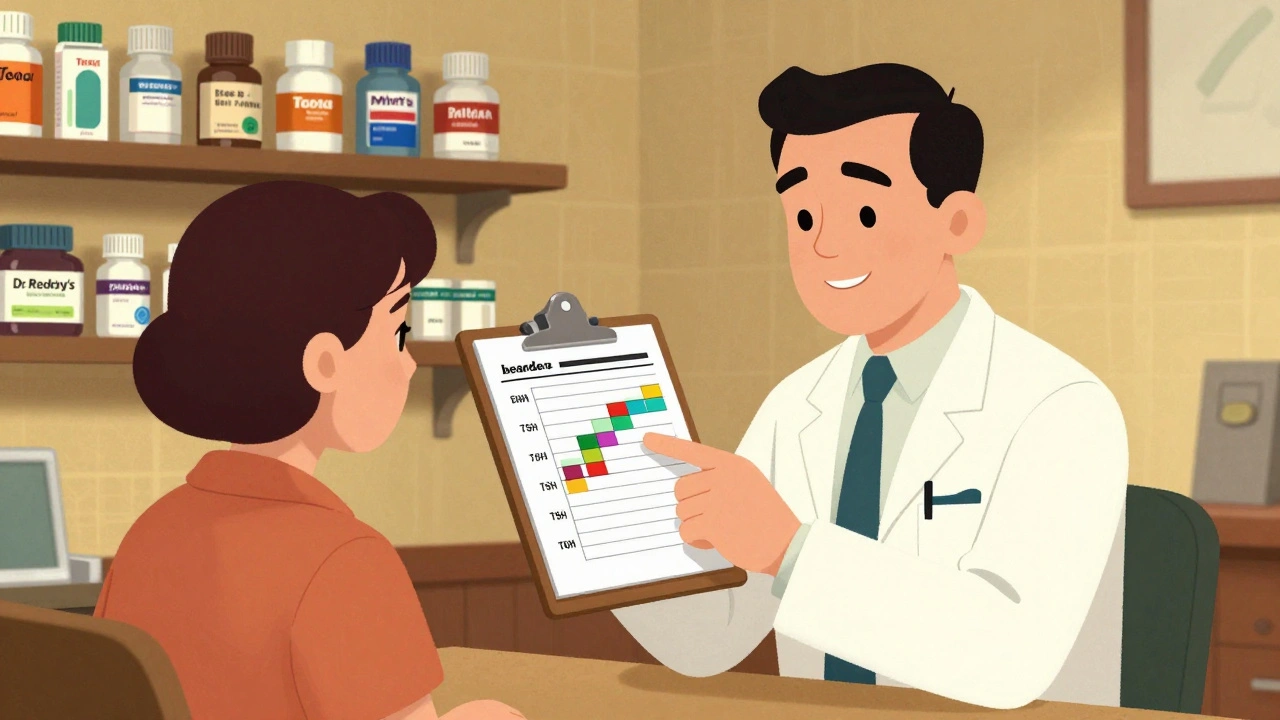
Let’s say you’ve been tracking your levothyroxine for six weeks. Your TSH levels were stable at 2.1 on Synthroid. After switching to a generic from Teva, they jumped to 8.7. You’ve been taking the same dose. No missed pills. You’ve ruled out diet or stress. Your journal shows a clear pattern: every time you get a new batch from that manufacturer, your thyroid numbers go haywire.
That’s not in your head. That’s data. Take your journal to your doctor. Bring the bottle. Point to the lot number. Say: “This version doesn’t work for me.” You’re not being difficult-you’re being smart. In fact, a 2022 University of Michigan study found patients who brought medication journals to appointments had 32% fewer unnecessary medication changes and 27% higher adherence rates. Doctors appreciate this. It saves time and prevents mistakes.
Some people report switching back to brand-name drugs after their journal proves a pattern. Others ask for a specific generic manufacturer that works. Insurance may push back, but with solid data, you have leverage.
What Doesn’t Work (And Why)
Journaling isn’t magic. It doesn’t help for every drug. Antidepressants, for example, take weeks to build up in your system. If you switch from one generic SSRI to another and feel “off” after three days, it’s probably not the drug-it’s your brain adjusting. Don’t panic. Track anyway, but give it time.
Also, don’t assume every change is the medication’s fault. Stress, sleep, diet, other drugs, or even a new supplement can mimic side effects. Your journal helps you separate noise from signal.
And here’s the hard truth: most people quit. A 2019 study showed only 38% kept their journal going past three months. Why? It feels like a chore. That’s why the best success stories involve one simple trick: link journaling to an existing habit. Write your entry right after you take your pill. Set a phone alarm. Put the journal next to your coffee maker. Make it part of your routine.
How Pharmacists Can Help
Your pharmacist is your secret weapon. They see every generic switch before you do. They know which manufacturers have had quality issues. Many pharmacies now offer free medication reviews. Bring your journal. Ask: “Has this generic had any reports of problems?”
Kaiser Permanente ran a program where pharmacists reviewed patient journals and found that 44% fewer medication changes were needed when patients brought in their logs. Why? Because pharmacists spotted patterns doctors missed-like a sudden spike in dizziness after switching to a new batch of a generic statin.
Don’t wait for your doctor to ask. Take the initiative. Pharmacists are trained to help with this exact thing.
The Bigger Picture: Why This Matters
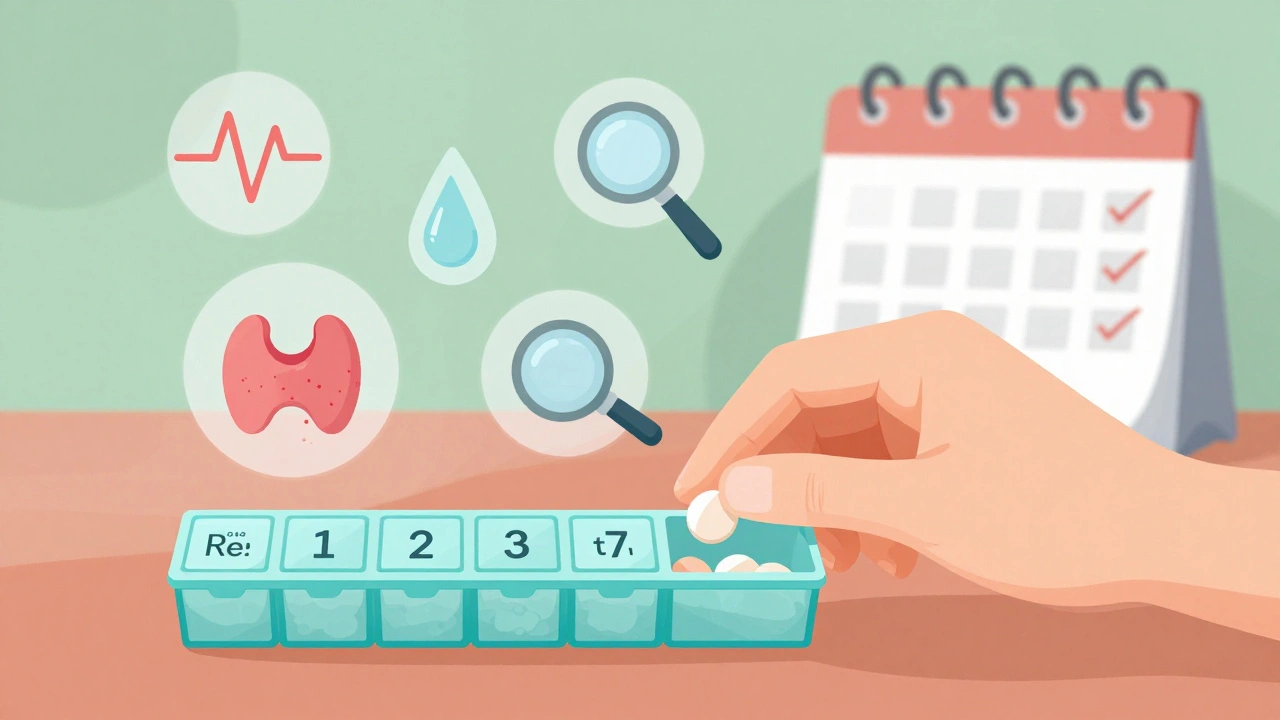
The FDA says 90% of generic switches cause no clinical difference. That’s true. But that 10%? That’s you. That’s your life. Your journal isn’t just about you-it’s part of a growing system of patient-reported data that’s starting to change how drugs are monitored. Between 2020 and 2023, 142 cases of adverse events were flagged through patient journals, leading to manufacturer alerts or label updates.
The FDA is now testing new tools to make this easier. Apple Health is rolling out standardized medication tracking templates in iOS 17. Drug makers are putting QR codes on packaging that link to bioequivalence data. AI tools are being tested to predict when a patient might have a bad reaction based on symptom trends.
But none of that replaces your own observations. No algorithm can feel your fatigue. No lab test can capture your anxiety. Only you know how your body responds. And when you document it, you’re not just helping yourself-you’re helping everyone who takes that same drug next.
Getting Started in 15 Minutes
Here’s your quick action plan:
- Grab a notebook or open a blank spreadsheet.
- Write down your current meds: name, dose, manufacturer, lot number.
- Set a daily reminder: “Log meds” at the same time you take your pills.
- Start with just three things: symptom score (1-10), any new side effects, and whether you took the pill.
- After two weeks, review: Did anything change after a switch?
You don’t need to be perfect. You just need to be consistent. One page a week. That’s all it takes.
Do I need to track every generic I take?
No. Focus on drugs with a narrow therapeutic index-like thyroid meds, blood thinners, antiseizure drugs, and immunosuppressants. For most other medications (like statins or antibiotics), the risk of noticeable differences is low. But if you’ve ever felt something changed after switching, track it anyway. Trust your body.
Can I use my phone’s notes app?
Yes, but be careful. Notes apps don’t organize data the way a structured journal does. It’s easy to miss patterns if entries are scattered. Use a template-even a simple one with headings like “Date,” “Med,” “Symptom,” “Side Effects.” Or use a free app like Medisafe or MyTherapy, which are designed for this.
What if my insurance won’t cover the brand-name drug?
With solid journal data, you can ask your doctor to file a prior authorization. Many insurers will approve the brand-name drug if you can prove the generic doesn’t work for you. Your journal is your evidence. Don’t be afraid to use it. Doctors see this often and know how to help.
How long should I track before deciding a generic doesn’t work?
For most medications, give it at least 2-4 weeks. For NTI drugs, 4-6 weeks is better. Some effects take time to show up. But if you notice a sharp, consistent drop in how you feel right after a switch, don’t wait. Bring your journal in sooner.
Is it worth it if I’m only on a generic for a short time?
Yes. Even short-term switches can reveal patterns. If you’re on a generic for a month and feel worse, you might avoid that manufacturer next time. You’re not just tracking your health-you’re learning what works for you. That knowledge stays with you.
Final Thought: Your Body Knows
Medicine is science. But healing is personal. You know your body better than any lab report. If something feels off after a switch, it’s not “all in your head.” It’s a signal. A medication journal turns that signal into data-and data gives you power. Power to speak up. Power to choose. Power to protect your health. Start today. Just one page. One week. One change at a time.
Shannara Jenkins
December 3, 2025 AT 13:31I started keeping a meds journal after my thyroid numbers went wild following a generic switch. Just writing down my symptoms every morning made me feel like I wasn’t crazy. Now I bring it to every appointment - my endo actually asks for it. 😊
Elizabeth Grace
December 3, 2025 AT 16:05Ugh I switched to a generic for my seizure med and felt like a zombie for two weeks. Then I noticed the pill was a different shade of blue. Turns out it was a different manufacturer. I went back to the old one and my brain came back. This post is everything.
Steve Enck
December 5, 2025 AT 09:04While anecdotal evidence is compelling, it is imperative to acknowledge the statistical insignificance of individual variability within the context of population-level bioequivalence standards. The FDA’s 80–125% confidence interval is not a loophole-it is a rigorously validated pharmacokinetic boundary. To elevate personal experience above aggregated clinical data is to misunderstand the epistemological foundations of evidence-based medicine.
Jay Everett
December 7, 2025 AT 02:27Bro. I was skeptical until I tracked my warfarin INR after switching generics. Went from 2.4 to 4.1 in 10 days. No diet changes, no alcohol, no missed doses. Just a new bottle from a different maker. I brought my spreadsheet to my hematologist. He said, ‘Holy crap, this is exactly why we need patient data.’ Now I use Medisafe + a little notebook. 🙌 You’re not paranoid-you’re proactive. Keep going.
मनोज कुमार
December 8, 2025 AT 07:06Joel Deang
December 8, 2025 AT 08:19OMG YES. I switched my levothyroxine and felt like i was in a fog for 3 weeks. Thought it was stress or my cat being a jerk. Then i noticed the pill was a diff color and i checked the lot num. Switched back and boom. Energy returned. I use google docs now. Typos everywhere but it works 😅
Roger Leiton
December 9, 2025 AT 20:31Just started my journal last week after reading this. Took me 5 minutes to set up a simple table in Notion: Date | Med | Manufacturer | Symptom (1-10) | Side Effects. Already caught that my blood pressure spikes every time I get Teva’s version of my BP med. I’m so glad I didn’t ignore it. This is the kind of info that should be standard. 🙏
Arun kumar
December 11, 2025 AT 00:52My uncle took generic tacrolimus after transplant and got sick. No one believed him until he showed his handwritten log with dates and symptoms. Now his doctor only prescribes the brand he used before. We all thought he was overreacting. Turns out he was just paying attention. This is real. Don’t ignore your body. Write it down. Even if it’s messy.