

Imagine your kidneys-the body's natural filtration system-dropping to less than 15% of their normal capacity. For thousands of people, this isn't a hypothetical; it's a daily reality called end-stage renal disease. While dialysis is a lifesaver, a kidney transplant is a surgical procedure where a healthy kidney from a living or deceased donor replaces a diseased one. It isn't just about swapping an organ; it's about reclaiming a quality of life that dialysis simply can't provide. With a 5-year survival rate of around 85% compared to just 50% for those remaining on dialysis, the stakes for getting this right are incredibly high.
Who Actually Qualifies for a Transplant?
Getting on the list isn't automatic. Doctors look at a specific set of numbers and health markers to ensure the surgery won't do more harm than good. The primary trigger is the Glomerular Filtration Rate (GFR), which measures how much blood your kidneys filter every minute. Most centers require a GFR of 20 mL/min or lower. However, if your kidney function is plummeting rapidly-say, dropping by 10 mL/min a year-or if you have a living donor ready to go, some clinics might consider you eligible even if your GFR is as high as 25 mL/min.
Physical health goes beyond just the kidneys. Weight plays a massive role because extreme obesity complicates surgery and slows recovery. For example, a BMI over 45 is often a deal-breaker at places like the Mayo Clinic. There's a real clinical reason for this: data shows that a BMI of 30 or more can increase surgical complications by 35% and raise the risk of the new kidney failing by 20%.
Your heart and lungs also need to be up for the challenge. If you have severe pulmonary hypertension-specifically if your right ventricle systolic pressure exceeds 50 mm Hg-you might be disqualified. Doctors also check your heart's ejection fraction; if it's below 35-40%, the anesthesia and surgical stress could be too risky. Essentially, the goal is to make sure your body can handle the trauma of a major operation.
The Evaluation Process: More Than Just Blood Work
The journey to a transplant starts with a grueling evaluation. It's not just a quick check-up; it's a deep dive into your medical, psychological, and social life. You'll undergo blood tests, cancer screenings, EKGs, and tissue-typing to see how well a potential donor kidney would match your system.
For patients over 60, clinics often use a frailty assessment. They look at things like your grip strength, walking speed, and whether you've had unintentional weight loss. This helps them determine if you're "strong" enough to survive the recovery process. But it's not all medical. You'll need a designated care partner. Why? Because you can't manage the complex medication schedules and frequent follow-up appointments alone. If you have a history of substance abuse or untreated psychiatric conditions that make it impossible to stick to a strict drug regimen, you may be deemed ineligible until those issues are stabilized.
| Criteria | Typical Threshold/Requirement | Impact of Exceeding Limit |
|---|---|---|
| GFR (Kidney Function) | ≤ 20 mL/min | Too high: Not yet needed |
| BMI (Body Mass Index) | Usually < 35-45 | Higher graft failure & surgical risk |
| Heart Ejection Fraction | > 35-40% | High risk of cardiac failure during surgery |
| Social Support | Required Care Partner | Poor medication adherence post-op |
Understanding the Surgery
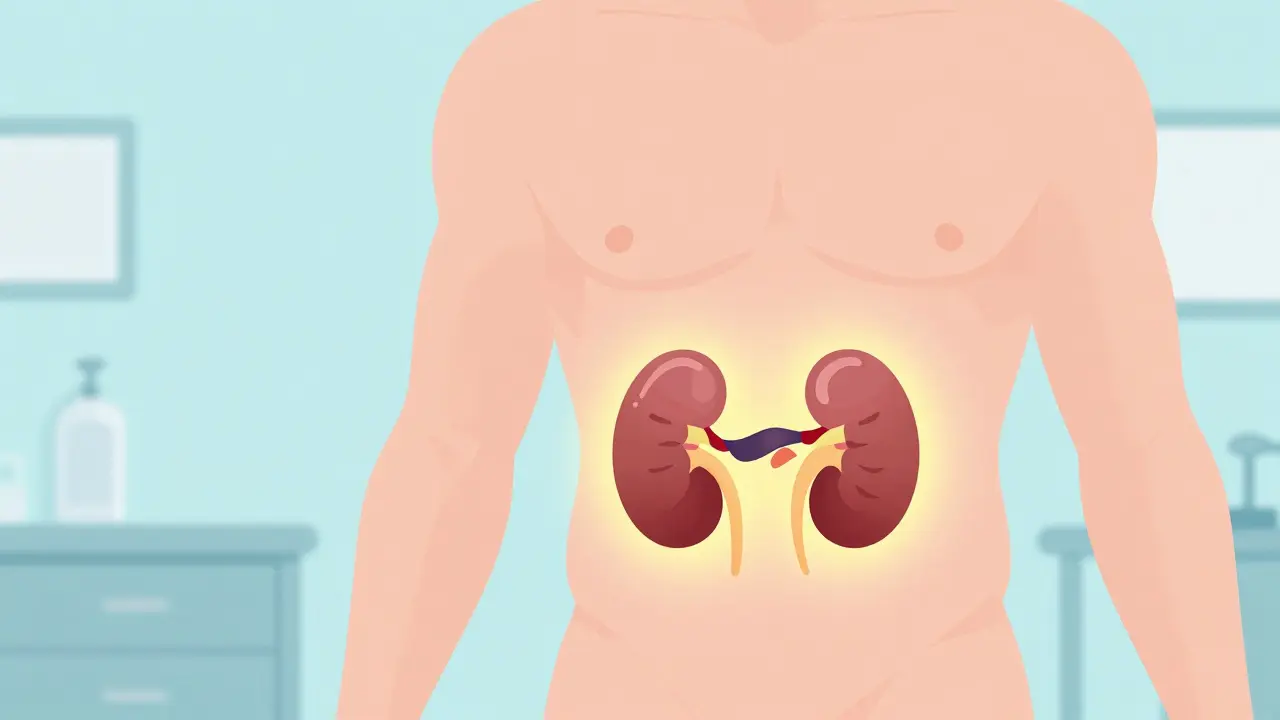
The actual surgery typically lasts between 3 and 4 hours under general anesthesia. One of the most common misconceptions is that the surgeons remove your old, failing kidneys. In most cases, they don't. Unless the original kidneys are causing severe infections or high blood pressure, they stay right where they are. The new kidney is placed in the lower abdomen, and its blood vessels are sewn into your existing vessels, while the ureter is connected to your bladder.
Depending on the donor, the new kidney might start working the second the blood flow is restored. However, this isn't always the case. About 20% of people receiving kidneys from deceased donors experience delayed graft function. If this happens, you'll need to stay on dialysis for a short while longer until the new organ "wakes up." It's a frustrating waiting game, but it's a known part of the process.

The Long Haul: Managing Your New Kidney
The surgery is the beginning, not the end. To stop your immune system from attacking the foreign organ, you must commit to lifelong immunosuppressive therapy. This usually involves a cocktail of drugs: a calcineurin inhibitor (like tacrolimus), an antiproliferative agent (like mycophenolate mofetil), and corticosteroids. If you miss doses, you risk rejection, which can lead to the loss of the organ.
The monitoring schedule is intense. For the first month, you'll likely see your doctor weekly. This transitions to monthly visits for a few months, and eventually quarterly check-ups. This isn't just to check the kidney, but to manage the side effects of the medications, which can affect your blood pressure and blood sugar levels.
Not all transplants are created equal. A living donor kidney generally performs better and lasts longer than one from a deceased donor. The 1-year graft survival rate for living donors is a staggering 95%, compared to 92% for deceased donors. Over five years, that gap widens (85% vs 78%). This is why hospitals push for living donation whenever possible.
Modern Advances and the Future of Renal Health
The way we match donors and recipients has evolved. The Kidney Donor Profile Index (KDPI) is now used to pair the best kidneys with the patients who need them most, based on donor age, health history, and ethnicity. This ensures that high-quality organs aren't "wasted" on patients who might have better long-term outcomes with a slightly less ideal kidney.
Looking ahead, the goal is to move away from lifelong medication. Researchers at places like Stanford are working on tolerance-inducing protocols. The dream is to teach the recipient's immune system to accept the new kidney as its own, potentially eliminating the need for immunosuppressants entirely within the next decade. Until then, strict adherence to medical protocols remains the only way to ensure the longevity of the graft.
Can I get a transplant if I have cancer?
Generally, active malignancy is an absolute contraindication. If cancer is likely to worsen after the immune-suppressing drugs are started, you won't be eligible. However, depending on the type of cancer, there may be a required waiting period after you've been cancer-free before you can be listed.
Do I have to remove my old kidneys?
No, the original kidneys are usually left in place. They are only removed if they are causing complications like chronic infections, severe hypertension, or are too large to fit the new kidney in the pelvic area.
What happens if my body rejects the kidney?
Rejection happens when the immune system attacks the donor organ. This is why immunosuppressive drugs are vital. Early signs include fever, pain over the graft site, or a decrease in urine output. Most early rejections can be treated with adjusted medication, but chronic rejection can lead to graft failure.
How long does a transplanted kidney usually last?
It varies. Living donor kidneys have higher success rates, with an 85% 5-year survival rate. Deceased donor kidneys are slightly lower at 78% over 5 years. Many kidneys can last 10-20 years, but longevity depends heavily on medication adherence and overall health.
Is there an age limit for getting a kidney transplant?
There is no universal absolute age cutoff. Some centers view age 75+ as a relative contraindication, meaning they are more cautious. Eligibility for older adults is usually decided on a case-by-case basis focusing on their general health and frailty rather than just the number on their birth certificate.
Robin Walton
April 12, 2026 AT 03:36Sending so much love to everyone dealing with kidney failure right now. It's such a heavy burden to carry, and the wait for a donor can be emotionally draining. Just remember you aren't alone in this fight.
Simon Jenkins
April 13, 2026 AT 21:34The sheer audacity of assuming a basic summary suffices for such a complex biological orchestration! It is absolutely tragic that the nuances of immunology are reduced to a few bullet points. We are talking about the delicate dance of HLA matching and the catastrophic potential of hyperacute rejection, yet here we are with a "guide" that reads like a brochure from a budget clinic! Truly, the intellectual vacuum of modern internet health content is a void that swallows all sophistication whole!
Peter Meyerssen
April 14, 2026 AT 06:03The ontological shift from biological autonomy to pharmacological dependence is quite the paradox :) Essentially, we are trading one form of systemic failure for a chemically induced homeostasis. It's just the Hegelian dialectic of medicine-thesis, antithesis, and the synthesis being a lifelong prescription of tacrolimus. 💊
Will Gray
April 16, 2026 AT 02:12Funny how they mention the Mayo Clinic but don't mention who actually controls the waiting lists. Follow the money. These "criteria" are just a way for the globalist medical elite to decide who is "worthy" of survival based on their own twisted social engineering projects. Wake up people, the medical industrial complex is just another arm of the surveillance state.
Ben hogan
April 16, 2026 AT 21:22Imagine thinking that a list of BMI thresholds is a revolutionary insight into medical ethics. This is just basic clinical triage. Absolute waste of bandwidth to post this as if it's some kind of hidden knowledge. Pathetic.
Sarina Montano
April 16, 2026 AT 22:43The bit about the kidneys staying in place is a total game-changer for most people's mental imagery of the surgery! I've seen some fascinating case studies where the old kidneys are actually left to avoid the massive blood loss associated with a nephrectomy. It's like adding a new engine to a car without bothering to rip out the old rusted one since it's not actually in the way. Such a clever bit of surgical pragmatism to keep the patient stable!
danny Gaming
April 17, 2026 AT 01:50basically just sayin u cant be fat or heart failur and get a kidney lol. simple as. why make it so long... ppl just want the facts not a novel
Rakesh Tiwari
April 18, 2026 AT 00:42Oh, look at that! A guide that tells us we need a "care partner." How wonderfully convenient for the hospitals to outsource the actual nursing care to unpaid family members while charging thousands for the surgery. Truly a pinnacle of human compassion here.
Julie Bella
April 19, 2026 AT 17:45Omg!! If u dont have a partner u r basically saying u dont love ur family enough to let them help u!! 🙄 It is so selfish to try and do this alone when ur body is literally failing u!! Get ur priorities straight!! 😡
emmanuel okafor
April 19, 2026 AT 20:01life is a cycle and the gift of an organ is the highest form of peace between two strangers. we should all think about how we can give to others before we leave this earth
kalpana Nepal
April 21, 2026 AT 08:07The strength of a nation is found in the health of its people. We must ensure our medical systems are the best in the world to protect our citizens.
Chad Miller
April 23, 2026 AT 07:19honestly why even bother with the long wait list when the system is broken anyway... totaly pointless if u dont have money lol
Camille Sebello
April 24, 2026 AT 13:36Which hospital did u go to???!! Need to know the city!!! I bet the doctors there are way too strict with the BMI thing!!!