

You wake up with puffy eyes. By afternoon, your socks leave deep marks on your ankles. These aren't just normal fluctuations; for those living with Chronic Kidney Disease is a progressive loss of kidney function that affects how the body filters waste and balances fluids, these are classic signs of fluid retention, medically known as edema. When kidneys lose their filtering capacity, typically dropping below an estimated glomerular filtration rate (eGFR) of 60 mL/min, they struggle to remove excess sodium and water. This imbalance forces fluid into your tissues, causing swelling that ranges from mild discomfort to severe respiratory distress.
The good news is that modern nephrology offers a proven three-pronged strategy to manage this swelling without necessarily relying solely on aggressive medication that could stress your kidneys further. As we move through 2026, treatment protocols have become more nuanced, blending careful drug selection with lifestyle adjustments and physical therapy techniques. The goal isn't just to dry you out, but to reach a stable "dry weight" where your heart works efficiently and your legs feel comfortable, all while preserving whatever kidney function remains.
Understanding Fluid Overload in Kidney Patients
To treat swelling effectively, you need to understand why it happens in the first place. In healthy bodies, kidneys act as precision filters, constantly adjusting urine output to match your salt and water intake. However, in Edema in CKD refers to the abnormal accumulation of fluid in body tissues caused by impaired sodium excretion, this system breaks down. The primary driver is usually "salt appetite." Your body holds onto sodium because it thinks you're low on volume, triggering thirst and water retention even when your cells are swimming in fluid.
This trapped fluid increases pressure in your blood vessels, specifically the capillaries in your lower extremities and abdomen. According to data from the American Kidney Fund, approximately 68% of non-dialysis CKD patients report visible swelling in their lower legs before reaching end-stage renal disease. It often starts as puffy eyelids in the morning due to overnight fluid redistribution, progressing to swollen calves and ankles by evening. If left unchecked, this fluid can leak into the lungs, causing shortness of breath, or accumulate in the abdomen as ascites.
Monitoring this condition requires more than just weighing yourself. Bioimpedance spectroscopy (BIS) is increasingly becoming the standard for measuring total body water, though simple daily weights at home remain the most practical tool for patients. A sudden jump of 2 to 3 pounds overnight is a red flag that indicates significant fluid retention rather than food consumption, signaling that your current regimen needs adjustment.
The Role of Diuretic Medications
When lifestyle changes aren't enough, medications become necessary. Diuretics help your kidneys flush out extra salt and water. The choice of diuretic depends heavily on how much kidney function you have left, measured by your eGFR. For patients with early-stage CKD (eGFR above 30 mL/min), thiazide-type diuretics like hydrochlorothiazide are often the starting point. They work on a different part of the nephron than loop diuretics and are effective for moderate fluid overload.
Furosemide a potent loop diuretic commonly used for edema in advanced kidney disease takes center stage when kidney function declines below an eGFR of 30 mL/min. Standard oral doses range from 40 to 80 mg daily, but many patients require higher amounts-sometimes up to 160 mg or more-to see results. Recently, in March 2025, the FDA approved a specialized intravenous formulation specifically targeting CKD-related edema, showing 38% better fluid clearance in patients with severe function loss compared to traditional oral routes. While oral tablets are easier to take, the IV option provides a crucial lifeline for those who no longer absorb medication effectively from their gut due to severe congestion.
However, there is a delicate balancing act involved. Pushing too hard with diuretics can lead to Acute Kidney Injury (AKI). The NIH documented that high-dose diuretic use correlates with a faster decline in kidney function over time if not monitored closely. Doctors often look for a negative sodium balance of about 0.5 kg per day during active decongestion phases. You shouldn't feel dizzy or experience rapid weight drops; a slow, steady reduction in swelling is safer for long-term organ preservation. Always communicate with your nephrologist if you notice increased dizziness, as this often signals dehydration.
| Type | Best For | Typical Dosage | Risk Factors |
|---|---|---|---|
| Loop Diuretics | eGFR <30 mL/min | 40-160 mg daily | Electrolyte loss, AKI risk |
| Thiazide Diuretics | eGFR >30 mL/min | 12.5-25 mg daily | Hypokalemia, glucose spikes |
| Spironolactone | Resistant edema, Heart Failure | 25-50 mg daily | Hyperkalemia (High Potassium) |
A third option, spironolactone, is particularly useful if you also have heart failure issues. It saves potassium, which is great, but dangerous for kidney patients who already struggle to filter out excess potassium. With stages 4 and 5 CKD, the risk of hyperkalemia exceeds 25%, so this requires frequent blood work to ensure safety.

Mastering Sodium Restriction
Many patients underestimate how much salt they eat. The National Kidney Foundation recommends limiting intake to 2,000 mg per day, but strict adherence means treating sodium like a medication. One teaspoon of table salt contains about 2,300 mg of sodium alone, but 75% of your intake comes from processed foods, not the shaker. Bread, canned soups, and deli meats are the silent culprits. Two slices of bread can push you past your daily limit instantly.
To manage this without feeling deprived, focus on label reading. Look for products labeled "low sodium" or "no salt added." Fresh ingredients allow you to control seasoning with herbs and spices rather than salt cubes. The Mayo Clinic suggests that for patients with significant edema, total fluid intake should also be tracked, limiting drinks to 1,500-2,000 mL per day. Don't forget that foods with high water content, like melons and soups, count toward your liquid allowance too. Staying under these limits for 2-4 weeks can reduce swelling by 30% to 40% without increasing your medication dosage.
It is helpful to carry a small notepad or use a phone app to log your grams of sodium daily for the first month. Once your body adjusts to lower levels, you may find you naturally crave less salty food. This transition period is challenging socially; eating out becomes difficult as restaurant meals often exceed 2,000 mg in a single serving. Asking for sauces on the side or avoiding pre-made seasonings is essential for maintaining progress.
Physical Interventions and Compression
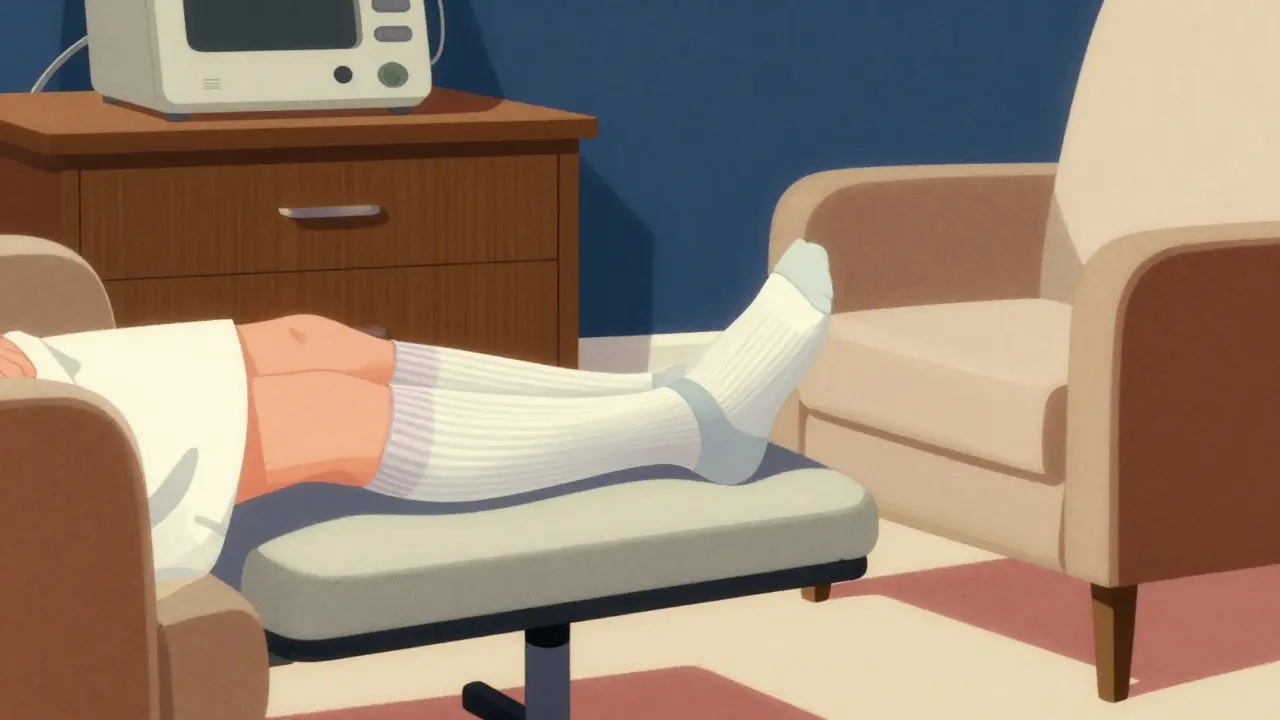
While medication and diet address the chemical side of edema, physical mechanics play a vital role in moving fluid back toward the kidneys. Gravity works against your circulation, especially after sitting all day. Simply elevating your legs above the level of your heart during rest can reduce dependent edema by roughly 25%. Doing this for 30 minutes, twice a day, utilizes gravity to encourage venous return without pharmacological side effects.
Graduated compression stockings are another powerful tool. These apply the most pressure at the ankle and taper upward, forcing blood out of the pooled veins. Medical-grade stockings offering 30-40 mmHg compression are often prescribed for resistant edema. Studies show they can reduce leg volume by 15% to 20% over four weeks of consistent use. However, patient surveys indicate adherence drops significantly after three months due to discomfort and difficulty putting them on. Choosing the right size and learning how to roll them on gradually is key. Some newer brands offer open-toe designs that accommodate swollen feet better, making wearing them throughout the day more feasible.
Movement itself acts as a pump for your legs. Walking for 30 minutes five days a week engages calf muscles, which squeeze the lymphatic vessels and help drain excess fluid. Even gentle movements like ankle pumps while seated on the couch can stimulate flow. For severe cases involving large volumes of abdominal fluid, doctors may use intermittent pneumatic compression devices, which rhythmally inflate sleeves around the limb to mechanically push fluid backward into circulation.
Safety Monitoring and Risks
Treating edema carries inherent risks, primarily involving the stability of your kidneys. Removing fluid too quickly can cause a drop in blood pressure that starves the kidneys of perfusion, leading to acute injury. Watch for warning signs like excessive urination followed by fatigue, dark urine, or confusion. These suggest you may be drying out too fast. Regular monitoring of electrolytes, specifically potassium and magnesium, is mandatory since diuretics flush these minerals alongside the water you want to get rid of.
If you experience persistent dizziness upon standing, it's a signal that your blood volume has dropped too low. This postural hypotension puts you at risk for falls, which can be dangerous if you have underlying bone health issues associated with CKD. In such cases, pacing diuretic dosing or lowering the dose until stability returns is safer than pushing through the symptoms. Always consult your care team before changing your medication routine, even if you feel fine.
As we look toward late 2026, emerging therapies like vaptans are showing promise for refractory cases, though toxicity concerns remain. For now, the combination of evidence-based diuretic therapy, disciplined dietary salt limits, and mechanical offloading via compression and movement remains the gold standard. Managing edema is not just about fixing a symptom; it is about optimizing your entire circulatory environment to support remaining kidney health.
How do I know if my swelling is dangerous?
Swelling becomes dangerous if accompanied by shortness of breath, chest pain, or a sudden weight gain of more than 3 lbs in two days. These signs suggest fluid overload that may affect the heart or lungs, requiring immediate medical attention.
Can I stop taking diuretics if the swelling goes away?
Never stop diuretics abruptly without consulting your doctor. Swelling often returns quickly, and sudden cessation can rebound dangerously. Dosage adjustments should always be guided by lab work and clinical assessment.
Is salt restriction really necessary if I take pills?
Yes, absolutely. High salt intake counteracts diuretic effectiveness. Without limiting salt, you would likely need much higher doses of medication, which increases the risk of kidney damage and electrolyte imbalances.
What kind of compression stockings should I buy?
For kidney-related edema, look for graduated compression stockings with 30-40 mmHg pressure. Medical-grade compression requires prescription sizing to ensure they fit correctly and apply pressure safely without cutting off circulation.
Does drinking less water cure edema in CKD?
Restricting fluid helps, but the main driver is sodium. If you drink plenty of water but eat low salt, you will produce enough urine to handle it. Limiting fluid is only strictly necessary in later stages where kidney filtering ability is very low.
Rohan Kumar
March 27, 2026 AT 21:21Another day another pill scheme 🙄💊 they really want us hooked on furosemide forever right 🤩 why does it always feel like the doctors benefit more than our kidneys anyway 🤔 maybe just drink lemon water instead of trusting the FDA approvals from 2025 🍎🚫
Sabrina Herciu
March 28, 2026 AT 23:21Managing fluid overload requires serious dedication to daily weighing and sodium tracking. It is imperative that patients monitor their eGFR levels regularly to prevent acute injury. The data on intravenous formulations shows promising results for advanced stages. We must prioritize electrolyte stability throughout the entire treatment cycle. Safety precautions are non-negotiable when navigating these medical adjustments!
Monique Ball
March 30, 2026 AT 03:22I have personally witnessed how quickly the legs swell when gravity takes over during long work shifts. It is so encouraging to see protocols evolving to include physical therapy alongside medication regimens now. Remember that reaching your dry weight is absolutely achievable even when you feel discouraged about the swelling. Every single step you take towards lowering your sodium intake counts towards better long-term heart health. Compression stockings can feel weird at first but trust me they make a massive difference in how your legs feel later in the day. I know elevating your feet seems tedious but it utilizes gravity in such a brilliant way without any side effects! Please keep in mind that slow steady reduction is always better than rushing the process with aggressive doses. Your nephrologist wants you to feel safe and stable rather than dehydrated and dizzy during treatment phases. Communication is key so never hesitate to report dizziness immediately so they can adjust your medication plan safely. You are stronger than you realize when you commit to reading labels and tracking your water intake consistently. Fresh ingredients taste so much better than processed foods and help you control seasoning naturally without guilt! Let’s support each other in staying under those liquid limits because it really helps reduce that 30% to 40% swelling statistic. You deserve to walk comfortably without socks leaving deep marks on your ankles every single time you sit down. Keep fighting this battle with positivity because modern therapy is designed to preserve your remaining kidney function efficiently! You got this and I am cheering for you every step of the way along this journey together! ❤️✨🙏
gina macabuhay
March 31, 2026 AT 04:29People who ignore these dietary guidelines are essentially sabotaging their own survival prospects unnecessarily. It is irresponsible to continue eating processed meats while claiming adherence to kidney safety standards. One must understand that salt is the primary antagonist in this complex physiological equation. You cannot blame the medication if you refuse to discipline your consumption habits properly. This negligence creates unnecessary strain on an already compromised filtration system. Respect the biology and stop expecting miracles from pills alone.
Austin Oguche
March 31, 2026 AT 22:22In many cultures we rely heavily on traditional soups which contain significant amounts of hidden sodium. It is important to acknowledge how regional diets impact overall fluid retention outcomes significantly. The advice regarding bread slices is universally applicable regardless of where one resides globally. Community support plays a vital role in maintaining strict dietary restrictions over long periods. Sharing knowledge helps everyone navigate the complexities of chronic disease management more effectively.
Debra Brigman
April 1, 2026 AT 13:25The interplay between biological necessity and modern convenience creates a fascinating tension within the human experience. Salt becomes a shadow puppeteer dancing on the stage of our vascular pathways demanding attention constantly. We must view this fluid balance not merely as chemistry but as a dialogue between body and soul seeking equilibrium. Sometimes the simplest act of walking becomes a meditation on lymphatic flow and gratitude for movement. Let us embrace the elasticity of our healing potential rather than rigidly fearing the swelling metrics.
tyler lamarre
April 2, 2026 AT 19:35It is amusing how quickly laypersons latch onto conspiracy theories involving pharmaceutical companies. The FDA approval process is rigorous yet critics dismiss clinical data as mere corporate propaganda. Reading a summary is one thing but understanding renal hemodynamics requires actual expertise. Most patients simply do not possess the cognitive capacity to interpret eGFR nuances accurately. Relying on lemon water instead of furosemide demonstrates a lack of basic medical literacy.
Tony Yorke
April 4, 2026 AT 16:15Elevate those legs and watch the swelling fade away quickly.