

Imagine you’ve been taking a specific brand of medication for years. It works. Your symptoms are managed, your life is stable. Then, one day, the pharmacy hands you a different bottle with a different name but the same active ingredient. It’s cheaper. It’s legal. But does it work the same way? For most patients, the answer is yes. For others, especially those with complex neurological or oncological conditions, the answer is far more complicated.
This tension sits at the heart of medical society guidelines regarding official positions on generic drug use established by professional organizations to balance cost savings with patient safety. These aren't just bureaucratic suggestions; they are formal stances that influence how doctors prescribe, how pharmacists dispense, and how insurance companies cover medications. While federal law allows widespread substitution, specialty medical societies often push back, citing risks that generic regulatory standards might overlook in specific clinical contexts.
The Foundation: Hatch-Waxman and the FDA Standard
To understand why some societies resist generic substitution, we first need to look at the baseline rule. The modern era of generics began with the Drug Price Competition and Patent Term Restoration Act, also known as the Hatch-Waxman Act, passed in 1984. This legislation created the pathway for generic manufacturers to prove their products were equivalent to brand-name drugs without repeating expensive clinical trials.
The Food and Drug Administration (FDA) enforces this through the Abbreviated New Drug Application (ANDA) process. To get approved, a generic must demonstrate bioequivalence, meaning it delivers the same amount of active ingredient into the bloodstream over the same period as the brand-name drug. The FDA accepts a confidence interval of 80-125% for this ratio. In practical terms, if the brand releases 100 units of drug, the generic might release between 80 and 125 units and still be considered equivalent.
For most medications-like antibiotics for an ear infection or blood pressure pills for mild hypertension-this variance is negligible. The body absorbs the slight difference without issue. According to FDA data from 2023, generic substitution rates hover around 90% when a generic equivalent exists. This massive shift has saved the healthcare system billions, with generics representing only 23% of total drug expenditures despite making up the vast majority of prescriptions filled.
The Neurology Exception: Why the AAN Says No
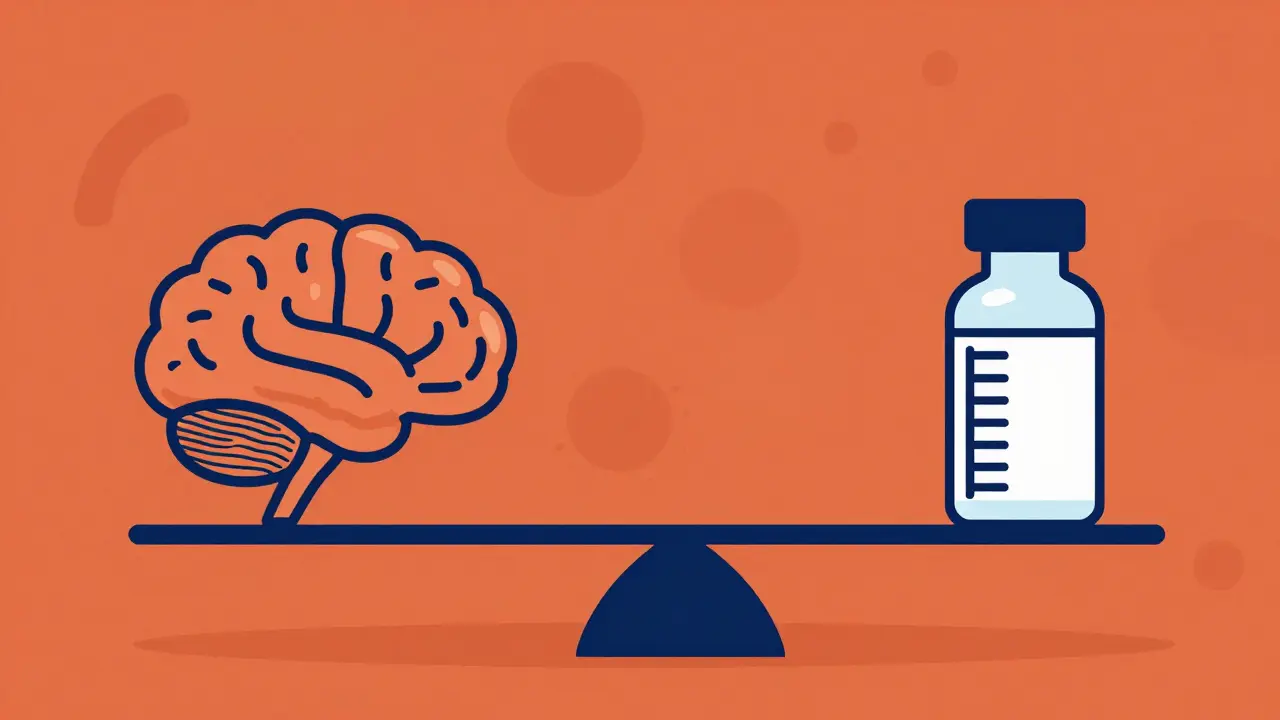
However, "most" does not mean "all." This is where medical society guidelines diverge sharply from general policy. The American Academy of Neurology (AAN) maintains an explicit official position opposing the generic substitution of anticonvulsant drugs. Why? Because epilepsy management operates on a razor's edge.
Anticonvulsants, or anti-seizure medications, often have what experts call a Narrow Therapeutic Index (NTI). These are drugs where the difference between a therapeutic dose and a toxic dose-or a sub-therapeutic dose leading to seizures-is very small. Even minor variations in bioavailability can trigger breakthrough seizures or cause toxicity.
The AAN’s stance isn't based on anecdote; it’s rooted in clinical reality. Approximately 3.4 million Americans live with active epilepsy (CDC, 2022). For these patients, consistency is survival. Surveys indicate that nearly 68% of neurologists have observed treatment complications linked to switching between generic and brand formulations of antiepileptic drugs. When a patient’s brain chemistry is stabilized on a specific formulation, changing the manufacturer-even within the FDA’s 80-125% equivalence window-can disrupt that balance.
This position has influenced state legislation. Some states now require prescriber consent before substituting NTI drugs, recognizing that the "one-size-fits-all" approach of federal law doesn't account for the high stakes of neurological care.
Oncology and Off-Label Flexibility
In contrast to neurology’s rigid caution, oncology presents a different landscape. Cancer treatment evolves rapidly, and new uses for existing drugs emerge constantly. Here, the National Comprehensive Cancer Network (NCCN) plays a pivotal role. The NCCN Guidelines are the gold standard for cancer care in the U.S., and they frequently include off-label uses of generic drugs.
A 2022 report titled *Clearing the Path for New Uses for Generic Drugs* highlighted that the NCCN Compendia is the only accepted disease-specific compendium for Medicare coverage decisions. About 42% of drug uses listed in NCCN guidelines are considered off-label. This creates a unique ecosystem where generic substitution is not just accepted but facilitated. If multiple generic versions of a chemotherapy agent are therapeutically equivalent, oncologists view them as interchangeable for these new indications.
This flexibility benefits patients by reducing costs and ensuring access to effective treatments that might otherwise be too expensive. However, it relies heavily on the assumption that all generics meeting FDA standards perform identically in complex cancer regimens-a assumption that holds true in most cases but requires vigilant monitoring.
Naming Matters: The AMA and Patient Safety
Beyond substitution policies, another critical area where medical societies exert influence is nomenclature. Confusing drug names are a leading cause of medication errors. The American Medical Association (AMA), through its United States Adopted Names (USAN) Council, established in 1964, sets the rules for how generic drugs are named.
The USAN Council’s primary criterion is safety. As Dr. Karet, a representative of the council, noted, the goal is to "reduce the risk of medication errors." The council avoids prefixes that create names too similar to other drugs in the same class or different classes. For example, they ensure that a new generic antibiotic doesn’t sound like an existing beta-blocker.
This naming convention directly impacts substitution safety. If a doctor orders "Drug A" and the pharmacist dispenses "Drug B" because the names look alike, the patient suffers. By standardizing names, the AMA helps prevent these mix-ups. The council also provides a list of stems and pronunciation guides to help practitioners identify drug classes quickly. While assigning a new stem is rare, reserved for truly novel agents, the existing framework ensures that when generics enter the market, their names don’t invite confusion.
Navigating the Conflict: State Laws vs. Society Guidelines
So, what happens when a medical society says "no" but federal law says "yes"? The result is a patchwork of regulations that varies by state and specialty.
| Specialty / Organization | Official Position on Substitution | Key Concerns | Impact on Practice |
|---|---|---|---|
| American Academy of Neurology (AAN) | Opposes substitution for anticonvulsants | Breakthrough seizures due to bioequivalence variance | Requires prescriber consent in many states; higher cost for patients |
| National Comprehensive Cancer Network (NCCN) | Supports substitution for therapeutically equivalent products | Cost containment while maintaining efficacy in off-label uses | Facilitates access to affordable oncology treatments |
| FDA (General Policy) | Supports broad substitution | Ensuring 80-125% bioequivalence range | 90% substitution rate nationwide; significant cost savings |
| American Medical Association (AMA) | Focuses on naming safety | Preventing medication errors via clear nomenclature | Standardized generic names reduce dispensing mistakes |
Pharmacists often find themselves in the middle. They must follow state laws, which may prohibit substitution of NTI drugs without doctor approval, while also managing inventory and insurance mandates that favor generics. For providers, understanding these nuances is essential. Ignoring a society guideline like the AAN’s can lead to adverse patient outcomes, while blindly following them might increase out-of-pocket costs for patients who could safely take generics.
What This Means for You and Your Care
If you are a patient, here is the bottom line: Generic drugs are safe for the vast majority of people and conditions. They save money and maintain quality. However, if you fall into a high-risk category-such as having epilepsy, thyroid disorders, or certain heart conditions-you should advocate for yourself.
Ask your doctor about the therapeutic index of your medication. If it’s narrow, discuss whether staying on a specific manufacturer’s product is worth the potential cost difference. Don’t hesitate to ask your pharmacist if a switch has occurred. Consistency matters more than price when your health hangs in the balance.
For providers, stay updated on your specialty society’s guidelines. The AAN’s opposition to anticonvulsant substitution isn’t just opinion; it’s evidence-based practice. Incorporate these positions into your prescribing habits, and document your rationale clearly. This protects your patients and aligns your practice with the highest standards of care.
Do all medical societies support generic drug substitution?
No. While the FDA and many general medical organizations support broad substitution, specialty societies like the American Academy of Neurology (AAN) oppose it for specific drug classes, particularly anticonvulsants, due to concerns about narrow therapeutic indices and seizure control.
What is a Narrow Therapeutic Index (NTI) drug?
An NTI drug is a medication where the difference between a helpful dose and a harmful dose is very small. Small changes in how much of the drug enters your bloodstream can lead to treatment failure or toxicity. Examples include certain antiseizure medications, thyroid hormones, and immunosuppressants.
Why does the American Academy of Neurology oppose generic substitution for anticonvulsants?
The AAN opposes substitution because even minor variations in bioequivalence allowed by FDA standards (80-125%) can trigger breakthrough seizures in patients with epilepsy. Clinical surveys show that a significant percentage of neurologists have seen complications arising from such switches.
How does the AMA influence generic drug safety?
The American Medical Association, through its USAN Council, establishes naming conventions for generic drugs. By ensuring names are distinct and not easily confused with other medications, the AMA helps prevent medication errors during prescribing and dispensing.
Can I refuse a generic substitution if my doctor prescribed a brand name?
Yes. In many states, you can request the brand name, though you may have to pay the full cost. Additionally, for NTI drugs, some states require your doctor’s explicit consent before a pharmacist can substitute a generic. Always communicate your preferences and medical history to both your doctor and pharmacist.