
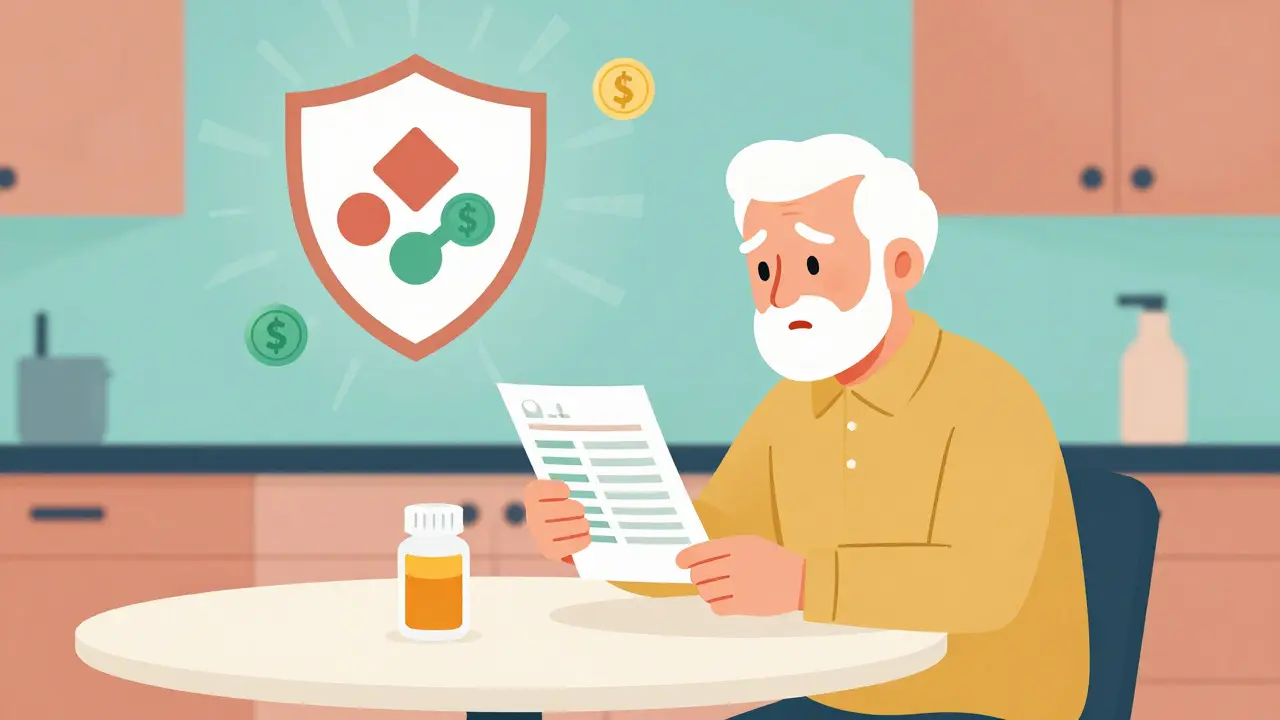
Have you ever looked at your monthly statement and wondered why a specific pill costs so much? For decades, the answer was simple but frustrating: Medicare couldn't negotiate. Since 2003, federal law barred the government from haggling with pharmaceutical companies over prices. That changed with the Inflation Reduction Act, which gave Medicare the power to negotiate directly for high-cost drugs. Starting January 1, 2026, this new system goes live. If you are on Medicare, this shift means lower out-of-pocket costs for certain medications. But how does it actually work behind the scenes? And more importantly, will it help you?
The End of the "No Negotiation" Rule
To understand the change, we have to look at what came before. For twenty years, private insurers handled drug pricing for Medicare Part D beneficiaries. They negotiated rebates, yes, but they were often limited by rules like "best price" constraints. The result? High list prices that trickled down to patients through deductibles and copays. The Veterans Health Administration (VA), which has long had negotiating power, paid about 40% less for similar drugs compared to Medicare, according to a 2021 RAND Corporation study. This gap highlighted a massive inefficiency in the system.
The Inflation Reduction Act (IRA) signed into law in August 2022 broke that barrier. It established the Medicare Drug Price Negotiation Program. This program targets single-source drugs-meaning those without generic or biosimilar competition-that have been on the market for a while. The goal is straightforward: establish a Maximum Fair Price (MFP) that caps what Medicare pays. Think of the MFP as a ceiling. No matter what the manufacturer wants, Medicare will not pay more than this calculated limit.
How the Negotiation Process Works
You might imagine these negotiations happening in smoke-filled rooms, but the process is highly structured and transparent. It follows a strict statutory timeline managed by the Centers for Medicare & Medicaid Services (CMS). Here is the step-by-step breakdown of how CMS determines the price:
- Drug Selection: CMS identifies high-expenditure drugs that meet specific criteria. These must be small-molecule drugs approved at least seven years ago or biologics approved at least eleven years ago. This "waiting period" ensures that newer innovations aren't penalized immediately.
- Initial Offer: CMS sends an initial price offer to the manufacturer. This isn't a random number. It’s based on complex calculations involving the drug's average non-Federal Average Manufacturer Price (non-FAMP) and plan-specific enrollment data.
- Counteroffer: Manufacturers have exactly 30 days to respond. They can accept the offer or propose a counteroffer with their own justification.
- Negotiation Meetings: If there is no immediate agreement, CMS holds up to three negotiation meetings with each company. During these sessions, both sides present evidence. CMS looks at therapeutic alternatives, clinical evidence, and utilization patterns. Manufacturers argue for higher prices based on R&D costs or unique benefits.
- Final Decision: If talks stall, CMS sets the final price unilaterally. This is known as the "walk-away" position. For the first cycle, five drugs reached agreements during meetings, while the other five were set via written final offers.
The key metric here is the Maximum Fair Price. Statutorily, this price cannot exceed the lesser of two values: the sum of plan-specific enrollment weighted amounts (net of rebates) or a percentage of the drug's non-FAMP. This formula prevents prices from skyrocketing even if the drug is the only option available.
What Drugs Are Covered in 2026?
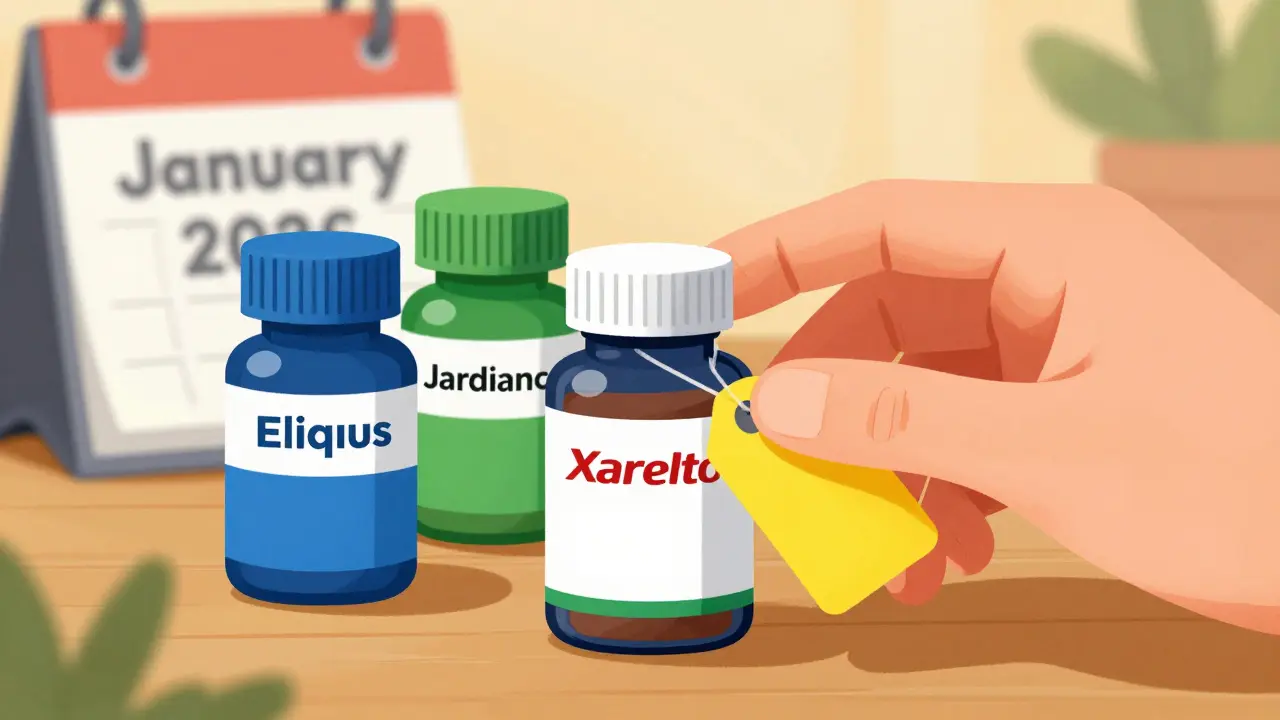
If you are wondering if your medication is included, check the list. The first batch of ten drugs takes effect on January 1, 2026. These represent some of the highest-spending medications in Medicare Part D. Here is a quick look at the initial lineup:
| Drug Name | Generic Name | Primary Use | Negotiated Discount Range |
|---|---|---|---|
| Eliquis | apixaban | Blood thinner | 38% - 79% |
| Jardiance | empagliflozin | Type 2 Diabetes | 38% - 79% |
| Xarelto | rivaroxaban | Blood thinner | 38% - 79% |
| Farxiga | dapagliflozin | Type 2 Diabetes | Included in 2027 cycle |
| Stelara | ustekinumab | Autoimmune conditions | Included in 2027 cycle |
Note that Farxiga and Stelara are part of the second wave, scheduled for 2027. The discounts reported by the Department of Health and Human Services range significantly, from 38% to 79% off previous prices. Eliquis alone accounted for $6.3 billion in Medicare spending in 2022, so even a modest discount translates to billions in savings.

Impact on Your Wallet and Care
So, what does this mean for you? The direct benefit is lower costs. The Congressional Budget Office (CBO) estimates the program will save $98.5 billion between 2022 and 2031. But where do those savings show up?
- Coverage Gap (Donut Hole): If you are in the coverage gap, you pay 25% of the drug's cost. With the Maximum Fair Price lowering the base cost, your share drops accordingly. This is where most beneficiaries will feel the immediate relief.
- Catastrophic Phase: Once you hit catastrophic coverage, you pay a small coinsurance. Because the negotiated price is lower, your coinsurance amount decreases too, though the impact is smaller here.
- Formulary Changes: Your Part D plan may update its formulary to prefer negotiated drugs. This could mean your doctor switches you to a cheaper alternative if one is available and clinically appropriate.
However, there are nuances. Patient advocacy groups like the Arthritis Foundation have raised concerns about therapeutic substitution. If a doctor prefers a specific brand because of its side-effect profile, will the insurance force a switch? Generally, no. Doctors still make clinical decisions. But insurers might require prior authorization for non-negotiated alternatives, making the negotiated drug the path of least resistance.
Expansion to Part B and Future Cycles
This is just the beginning. The program expands rapidly. In 2027, fifteen more drugs will be added. By 2028, another fifteen. After that, twenty new drugs every year. Crucially, the program also expands to Medicare Part B drugs starting in 2028. Part B covers drugs administered in clinics, like infusions for cancer or rheumatoid arthritis.
This expansion brings a twist for doctors. Currently, physicians are reimbursed at the Average Sales Price (ASP) plus 6%. Under the new rule, reimbursement for negotiated Part B drugs will shift to the Maximum Fair Price plus 6%. Since the MFP is lower than the ASP, physician practices will receive less revenue per dose. The American Medical Association estimates this could reduce practice revenue by $1.2 billion annually for the first cohort. Some experts worry this might discourage doctors from prescribing these life-saving treatments, though CMS is working on guidance to mitigate this risk.
Legal Challenges and Industry Pushback
It hasn't been smooth sailing. Pharmaceutical companies argued that the IRA violates the Fifth Amendment's Takings Clause, claiming the government is seizing property without just compensation. Four manufacturers filed lawsuits challenging the program's constitutionality. However, on August 2, 2024, U.S. District Court Judge Carl Nichols dismissed these cases. Appeals are ongoing, but the legal trajectory currently favors implementation.
Industry groups like PhRMA warn that the program could stifle innovation, claiming it would reduce biopharmaceutical R&D by $112 billion over ten years. Critics, including the Office of Management and Budget, dispute these figures as overstated. The reality is likely somewhere in the middle. Companies will adjust their pricing strategies, potentially investing more in early-stage pipeline drugs rather than extending patents on older ones.
What You Should Do Now
As we approach the 2026 rollout, stay informed. Check with your Part D plan provider in late 2025 to see if your formularies are updating. Ask your doctor if any of your current medications are on the negotiated list. If you take Eliquis, Jardiance, or Xarelto, expect a noticeable drop in your copay next year. For others, keep an eye on the annual announcements for new additions. This is a historic shift in healthcare economics, and understanding it empowers you to manage your health costs better.
When do the negotiated drug prices take effect?
The first round of negotiated prices for ten drugs takes effect on January 1, 2026. Subsequent rounds will apply in 2027, 2028, and annually thereafter.
Does this affect all my prescriptions?
No. Only specific high-cost, single-source drugs selected by CMS are included. Generic drugs and those with biosimilar competitors are not subject to this negotiation program.
Will my doctor stop prescribing certain drugs?
Doctors retain prescribing authority. However, for Part B drugs starting in 2028, reduced reimbursement rates might influence practice preferences. For Part D drugs, insurers may prioritize negotiated options in formularies.
How is the Maximum Fair Price calculated?
The Maximum Fair Price is capped at the lesser of two values: the drug's plan-specific enrollment weighted amounts (net of rebates) or a percentage of its average non-Federal Average Manufacturer Price (non-FAMP).
Are the lawsuits against the program successful?
As of August 2024, federal courts have dismissed major constitutional challenges to the program. While appeals continue, the legal framework currently supports full implementation.