
Statin Monitoring Calculator
When You Need Tests
Based on latest ACC/AHA guidelines (2024)
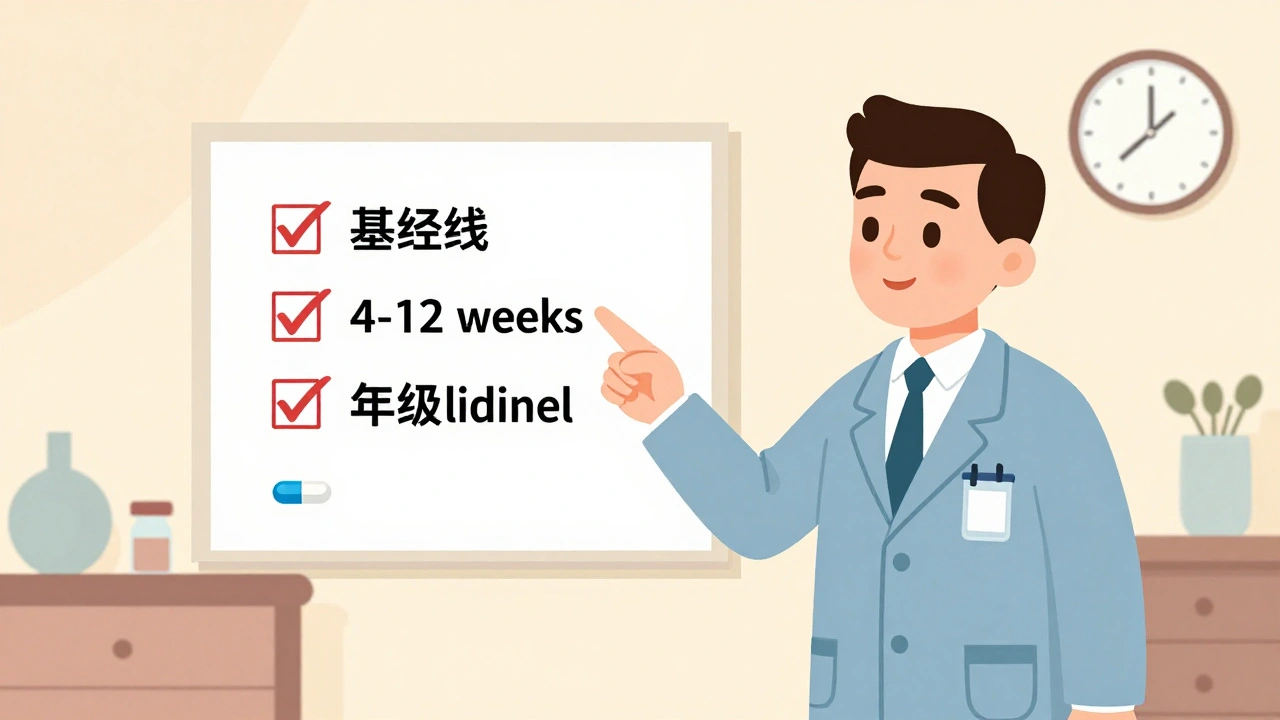
Baseline: Before starting statin
ALT, AST, creatinine, lipids, HbA1c
4-12 weeks after starting:
LDL reduction check (aim for 30-50%) + liver enzymes
Yearly after that:
Lipid panel only (unless symptoms or high risk)
Your Personalized Results
Important: This tool is for educational purposes only. Always consult your doctor.
When you start taking a statin, your doctor doesn’t just hand you a prescription and say, "Take this and call if you feel weird." There’s a plan - but it’s not what most people think. For years, patients were told to get blood tests every few months to check liver enzymes and muscle damage. That’s still happening in many clinics. But the science has changed. A lot.
What Statins Actually Do - and Why Monitoring Matters
Statins lower LDL (bad) cholesterol by blocking an enzyme your liver uses to make cholesterol. Lower LDL means less plaque in your arteries, which reduces your risk of heart attack and stroke. That’s why over 260 million statin prescriptions are filled in the U.S. every year. But statins can affect other parts of your body. The most common concerns are liver enzyme changes and muscle pain. That’s why monitoring exists - not to catch serious harm, but to make sure you’re not having a rare reaction. The key is knowing what’s real and what’s noise.The Three Real Lab Tests You Need (and the Ones You Don’t)
Forget monthly blood draws. You don’t need them. Here’s what you actually need:- Baseline test - before you start the statin. This includes: ALT and AST (liver enzymes), creatinine (kidney function), HDL and non-HDL cholesterol, triglycerides, and HbA1c (to check for diabetes risk). Blood pressure and BMI are also recorded.
- 4 to 12 weeks after starting - this is the only important follow-up. You’re checking if your LDL dropped by 30% to 50%. That’s the goal. If it didn’t, your dose might need adjusting. This test also checks liver enzymes again to catch any early spike.
- Once a year after that - unless something changes. Lipid panel only. No need to check liver enzymes again unless you have symptoms.
That’s it. No quarterly tests. No routine CK (creatine kinase) unless you’re having persistent muscle pain. And absolutely no monthly liver enzyme checks.
Why Routine Liver Tests Are Mostly Useless
Many patients get alarmed when their ALT or AST goes from 30 to 50. That’s still within normal range. Normal ALT is 7 to 55 U/L - depending on the lab. A small rise doesn’t mean damage. In fact, a 2013 study of 143 patients found that even when liver enzymes rose, they never went above three times the upper limit - and none of those patients had real liver injury. The FDA removed the requirement for routine liver enzyme monitoring in 2012. Why? Because a review of 83,000 patients across 33 studies showed no difference in serious liver problems between those on statins and those on placebo. Statin-related liver injury is rarer than being struck by lightning. Yet, 38% of U.S. doctors still order quarterly liver tests. Why? Habit. Outdated EHR systems that auto-populate those tests. Fear of lawsuits. And patients who Google “statin liver damage” and come away terrified.What About Muscle Pain? When to Worry
Muscle aches are the most common complaint. But here’s the truth: most of the time, it’s not the statin. Stress, vitamin D deficiency, or just aging can cause it. The real red flag is persistent pain - not a sore leg after hiking, but aching muscles that don’t go away after a few days. If you have that, get a CK test. But don’t get it right after working out. Exercise spikes CK levels naturally. Wait a few days. If CK is more than 10 times the upper limit, stop the statin immediately. That’s the only time it’s an emergency. For CK levels under 10× ULN, you don’t need to quit. Try switching statins. Reduce the dose. Or try a different one. Most people can tolerate another statin even after muscle pain.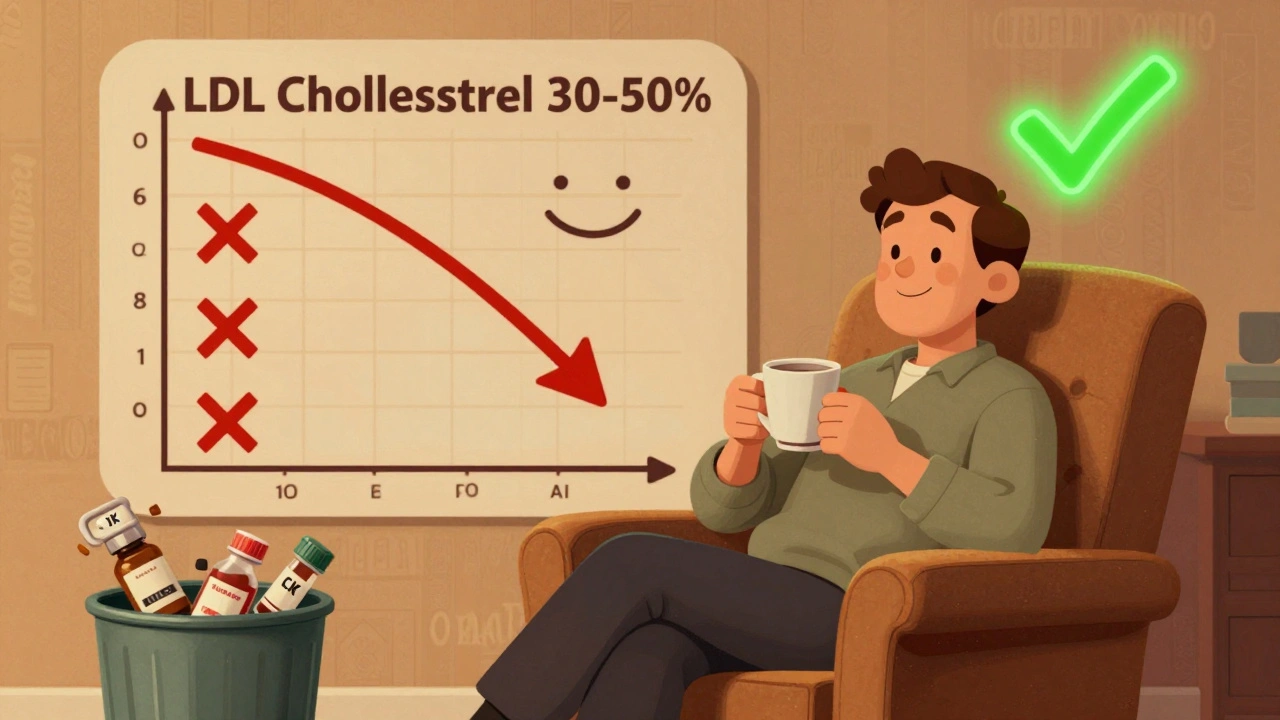
Diabetes Risk? Don’t Panic
Statins slightly increase the chance of developing type 2 diabetes - especially if you’re already at risk (overweight, high triglycerides, prediabetes). But the heart benefits far outweigh the risk. The American Diabetes Association says to check HbA1c every 3 to 6 months if you’re at risk. But NICE (UK guidelines) says no routine glucose testing is needed. The truth? If you’re at risk, monitor HbA1c once a year. If you’re not, don’t bother. The statin won’t suddenly turn you diabetic.What’s Missing? Lp(a) and ApoB
Most doctors don’t check these - but they should. Lp(a) is a genetic cholesterol particle that increases heart attack risk. It’s not affected by statins. If you’ve had early heart disease or a family history, ask for one-time Lp(a) testing. It’s not routine, but it’s important. ApoB measures the number of cholesterol-carrying particles. It’s more accurate than LDL for people with high triglycerides or diabetes. The 2022 ACC guidelines say ApoB can replace LDL as a monitoring tool. If your numbers are confusing, ask your doctor about it.What Happens If You Stop Statins Because of a Lab Result?
This is the biggest danger. A 2017 JAMA Internal Medicine study found that patients who stopped statins over minor liver enzyme spikes had a 10% to 20% higher risk of heart attack or stroke. That’s not a small risk. That’s life-changing. A single ALT of 58 U/L? Normal. A CK of 400? Probably just from gardening. Stopping the statin over that is worse than the side effect.
What About Genetic Testing?
In 2023, the FDA approved testing for the SLCO1B1 gene variant. People with this variant are more likely to get muscle pain from simvastatin. The gene is found in 12% of Caucasians and 4% of Asians. If you’ve had bad muscle pain on statins before, ask your doctor about this test. It can help you pick a safer statin.What’s Changing in 2025?
AI tools are starting to analyze EHR data to flag who really needs extra monitoring. By 2027, experts predict routine liver tests will drop by half. The focus is shifting from blanket testing to smart, risk-based checks. Right now, only 42% of U.S. providers follow the minimal monitoring guidelines. The rest are still stuck in 2008. You can change that. Bring this info to your next appointment.What to Say to Your Doctor
If your doctor orders quarterly liver tests, say this:- "I read that routine liver tests aren’t needed anymore unless I have symptoms. Can we follow the ACC/AHA guidelines?"
- "I’m worried about stopping my statin over a slightly high ALT. Is that really dangerous?"
- "Can we check ApoB or Lp(a) instead of repeating the same lipid panel every few months?"
Most doctors will agree - if you come prepared. You’re not arguing. You’re collaborating.
Bottom Line
You don’t need to be a lab rat to stay safe on statins. Three tests - baseline, 4-12 weeks after starting, and yearly after that - are enough for most people. Stop worrying about minor enzyme changes. Focus on whether your LDL dropped. If it did, you’re doing great. If you have real muscle pain, get CK checked. Otherwise, keep taking your pill. The real danger isn’t the statin. It’s stopping it over a number that doesn’t mean anything.Do I need to get blood tests every 3 months on statins?
No. Routine blood tests every 3 months are outdated. You only need a baseline test before starting, then one at 4 to 12 weeks after starting or changing your dose. After that, a lipid panel once a year is enough unless you have symptoms or are at high risk. Liver enzymes only need checking again if you feel unwell or your doctor has a specific concern.
Can statins damage my liver?
Serious liver damage from statins is extremely rare - less than 1 case per million patient-years. Minor, temporary rises in liver enzymes (ALT/AST) happen in some people but almost never cause harm. If levels are below 3 times the upper limit of normal, you don’t need to stop the statin. The risk of stopping the medication and having a heart attack is far greater than the risk of liver damage.
My doctor stopped my statin because my ALT was 58. Was that right?
No. Normal ALT ranges are typically 7 to 55 U/L, so 58 is only slightly above normal and not a reason to stop. Isolated, mild elevations are common and not linked to liver injury. Stopping statins over this can increase your risk of heart attack by 10-20%. Ask for a repeat test in a month. If it’s still high but under 3× ULN, continue the statin and monitor.
I have muscle aches. Should I stop my statin?
Not necessarily. Muscle aches are common and often unrelated to statins. If the pain is mild and goes away, keep taking it. If you have persistent, unexplained muscle pain, get a creatine kinase (CK) test. Only stop the statin if CK is more than 10 times the upper limit. Otherwise, try switching to a different statin or lowering the dose.
Do statins cause diabetes?
Statins slightly increase the risk of type 2 diabetes in people already at risk - like those who are overweight, have high triglycerides, or prediabetes. But the heart benefits are far greater than this small risk. If you’re at risk, check your HbA1c once a year. If you’re not, no routine glucose testing is needed. Don’t stop your statin over this - the risk of heart disease is much higher.
May .
December 3, 2025 AT 12:54Just stop the quarterly labs already.
Jessica Ainscough
December 4, 2025 AT 23:36This is exactly why I love reading posts like this. I’ve been on statins for 8 years and my doctor kept ordering liver tests every 3 months until I showed him this exact info. He actually thanked me. Turns out he hadn’t updated his protocol since 2015. It’s wild how much outdated stuff still runs in clinics just because it’s automated in the EHR. I’m not a doctor, but I read. And now I’m the one reminding my docs what the guidelines actually say. Small wins.
Sara Larson
December 6, 2025 AT 01:58YES. 🙌 I had a doctor stop my statin over an ALT of 56 and I was FURIOUS. I went back with this article printed out and he apologized. I’ve been on a different statin since and my LDL is down 47%. No more panic over numbers that don’t mean anything. You’re not a lab rat. You’re a human with a heart that needs protecting. Keep taking your pill. 💪❤️
Josh Bilskemper
December 7, 2025 AT 15:00It’s embarrassing that this needs to be explained in 2025. The FDA removed routine liver monitoring in 2012. The ACC/AHA guidelines have been clear since 2018. If your doctor still orders quarterly enzymes you’re being overmonitored not undermonitored. The data is not ambiguous. It’s overwhelming. Your doctor is either lazy or afraid of liability. Either way it’s not your fault you’re getting bad care.
Storz Vonderheide
December 9, 2025 AT 00:00As someone who grew up in a household where statins were the only thing keeping my dad alive after his 2014 heart attack, I can’t tell you how relieved I am to see this. My mom used to stress over every single lab result like it was a death sentence. We didn’t know any better. Now I’m the one educating my extended family. I’ve shared this post with 7 relatives already. If you’re on statins and you’re scared of the numbers - you’re not alone. But you’re also not in danger. This is the kind of info that saves lives. Thank you for writing it.
dan koz
December 9, 2025 AT 01:58Man in Nigeria here. We don’t even have access to most of these tests. My cousin in Lagos got his statin prescription without any baseline blood work. He’s been on it for 2 years. No labs. No follow-up. Just pills and prayers. I wish I could send him this. But he doesn’t even have internet. Still, I’m glad someone is fighting this fight in the US. The global health gap is insane. If you’re getting tested at all - count your blessings.
Kevin Estrada
December 9, 2025 AT 03:58OMG I JUST GOT MY LABS AND MY ALT WAS 62. I THOUGHT I WAS GONNA DIE. I WAS ABOUT TO QUIT STATINS. THANK GOD I SCROLLED DOWN. I’M KEEPING IT. I’M A LIVING PROOF THAT GOOGLE IS A TERRIBLE DOCTOR. ALSO I JUST GOT A NEW DOG AND MY MUSCLES ARE SORE. IT’S THE DOG. NOT THE STATIN. I’M NOT STOPPING.
Katey Korzenietz
December 10, 2025 AT 20:35How is this even still a debate? The science is settled. Doctors who still order quarterly liver tests are practicing 1990s medicine. They’re not just outdated-they’re dangerous. Patients die because they stop statins over meaningless numbers. And the doctors? They just shrug and say "better safe than sorry." Sorry isn’t a medical protocol. It’s a cop-out. Shame on them.
Pooja Surnar
December 11, 2025 AT 16:54you people are so naive. statins are poison. they mess with your mitochondria. your liver enzymes rise because your body is screaming for help. you think a 10% higher heart attack risk is worth it? what about the 50% increased risk of dementia? you’re all brainwashed by big pharma. stop taking it. go keto. go raw. go back to nature. your body knows better than some stupid guideline.
Sandridge Nelia
December 12, 2025 AT 16:47Thanks for this. I’m a nurse and I’ve been trying to educate my colleagues for years. We have EHR alerts that auto-populate liver tests every 3 months. I had to go through 3 meetings and show 5 studies just to get our clinic to change the default order set. It’s exhausting. But when patients come back saying "I didn’t have to get blood drawn every time" and they’re still healthy? That’s the win. Keep pushing. The system is slow-but it can change.