
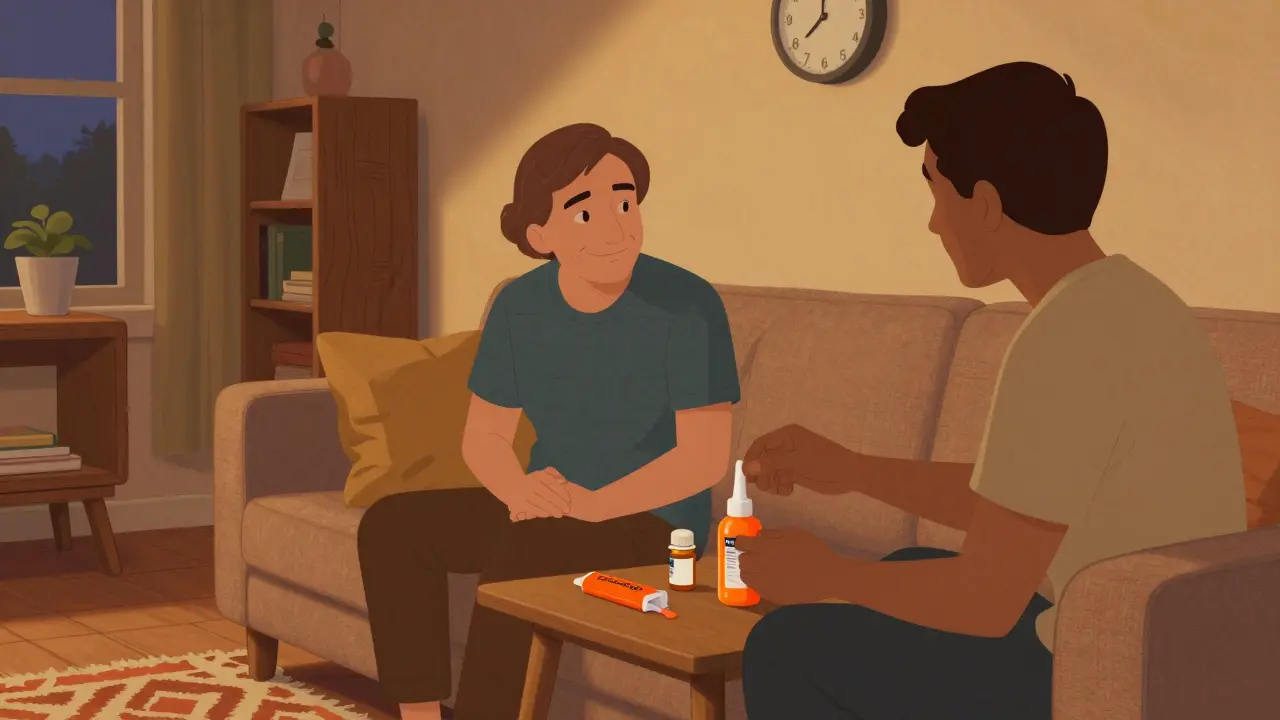
Naloxone Readiness Calculator
This calculator helps you determine if you should have naloxone on hand based on CDC and AAFP guidelines. The CDC recommends naloxone for anyone prescribed more than 50 MME per day, and the AAFP recommends it for anyone on opioids for more than 3 days.
When someone is prescribed opioids for chronic pain, the goal is relief - not risk. But the reality is, even when taken exactly as directed, opioids can be dangerous. In 2022, nearly 71,000 people in the U.S. died from opioid overdoses. Many of those deaths happened to people who weren’t using drugs illegally - they were taking their prescribed medication and still didn’t make it. That’s why a naloxone readiness plan isn’t optional. It’s the difference between life and death.
What Naloxone Does - and Doesn’t Do
Naloxone is not a cure for addiction. It doesn’t treat pain. It doesn’t make someone feel better. What it does is simple: it reverses an opioid overdose. When someone stops breathing because opioids have slowed their system too much, naloxone kicks in fast. It grabs the opioid receptors in the brain, pulls the opioids off, and lets the person breathe again - often within 2 to 3 minutes.
Here’s the key: naloxone only works on opioids. If someone overdoses on alcohol, benzodiazepines, or cocaine, naloxone does nothing. But if it’s fentanyl, oxycodone, heroin, or hydrocodone, it can save them. And here’s the best part - if you give naloxone to someone who hasn’t taken opioids, it won’t hurt them. No side effects. No danger. Just safety.
Who Needs a Naloxone Readiness Plan?
You might think this only matters for people with opioid use disorder. But data shows otherwise. The CDC found that 86.7% of opioid overdose deaths happen to people who were not using street drugs. They were taking prescriptions - maybe for back pain, arthritis, or after surgery. Some took more than prescribed. Others took it as directed, but their body reacted differently. Some mixed it with sleep aids or alcohol without realizing the risk.
That’s why medical groups like the American Medical Association and the CDC now say: if you’re prescribed more than 50 morphine milligram equivalents (MME) per day - that’s about 15 oxycodone 5mg pills - you should have naloxone on hand. But even lower doses carry risk. A 2023 update from the American Academy of Family Physicians recommends naloxone for anyone on opioids for more than 3 days. Why? Because overdoses can happen the first time someone takes a high dose. Or the tenth. Or the hundredth. You can’t predict who it’ll happen to.
What a Real Naloxone Readiness Plan Looks Like
A readiness plan isn’t just keeping a box in the medicine cabinet. It’s a system. Here’s what it includes:
- Have two doses ready. One isn’t enough. Fentanyl and carfentanil are so strong that one spray might not work. The Wisconsin Department of Health Services recommends at least two 4mg nasal sprays - or four 0.4mg vials - for every patient on long-term opioids.
- Keep it within 30 seconds. If someone collapses, you don’t have time to dig through drawers. Store the kit with the patient’s keys, wallet, or near their bed. Workplaces with more than 15 employees should have kits within 100 feet of common areas, per National Safety Council guidelines.
- Check the expiration date. Naloxone lasts 18 to 24 months. After that, it loses potency. Replace it before it expires. Don’t wait until it’s too late.
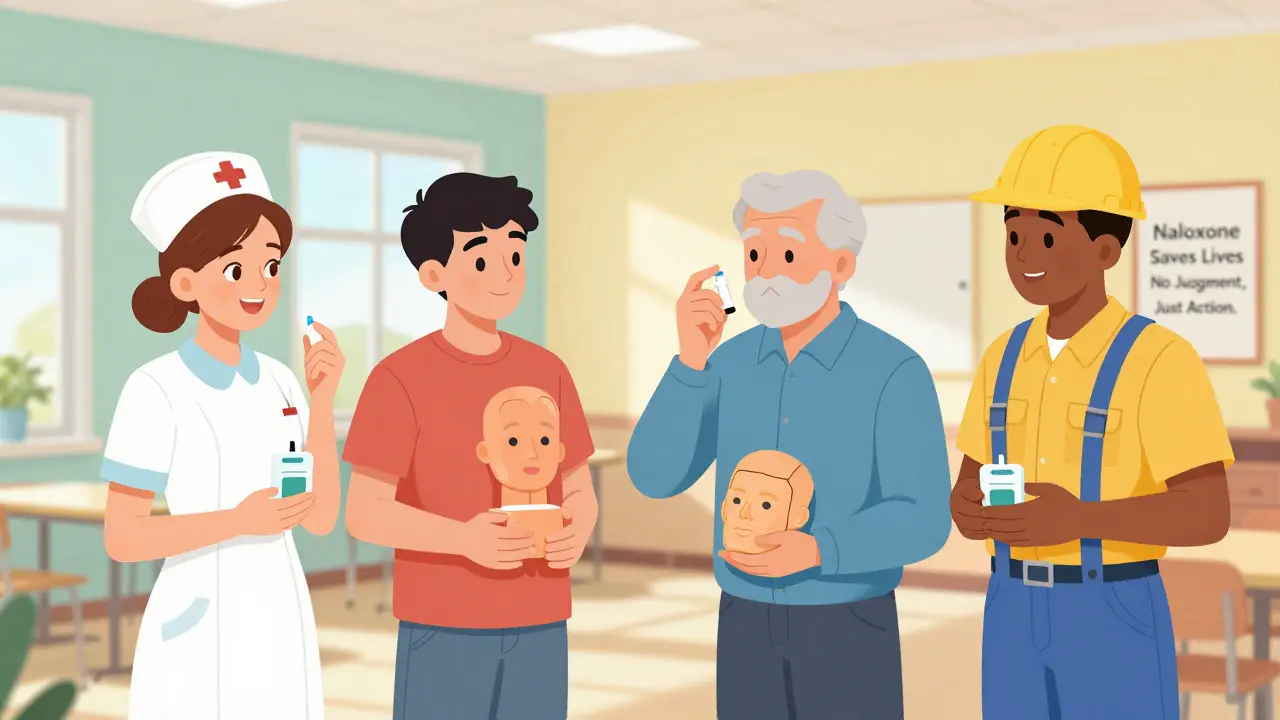
- Train everyone who might need to use it. Family members, caregivers, coworkers - they all need to know how. A 20-minute hands-on training session gets 92% of people to administer it correctly. That’s better than most CPR courses.
- Know the steps during an overdose. 1) Call 911. 2) Give naloxone. 3) Start rescue breathing. 4) Wait. 5) Give a second dose if needed. 6) Stay with them until EMS arrives. Even if they wake up, they can slip back into overdose. Naloxone wears off in 30 to 90 minutes. Opioids can last longer.
How to Get Naloxone - And Why Cost Still Matters
In March 2023, the FDA approved the first over-the-counter naloxone nasal spray: NARCAN®. It hit pharmacy shelves in September 2023. You can buy it without a prescription at CVS, Walgreens, Rite Aid, and many grocery stores. Without insurance, it costs $130 to $150. That’s expensive - but cheaper than the $4,500 auto-injectors from years ago.
Still, 41.7% of uninsured people in the 2023 National Survey on Drug Use and Health said they couldn’t afford it. That’s why many states have standing orders - laws that let pharmacists give out naloxone without a prescription. Forty-seven states have them. In Pennsylvania, 68% of pharmacy staff needed training before they could confidently hand it out. That’s still a barrier.
Free options exist. Community health centers, harm reduction programs, and even some churches give out kits for free. South Carolina distributed over 12,000 free kits in just three months in 2023. Oklahoma gave away 37,000 in a year. If you’re on Medicaid or Medicare, naloxone is often covered with no copay.
What Happens After You Use It
Using naloxone isn’t the end. It’s the beginning of a medical emergency. After giving it:
- Call 911 - even if they wake up. They’re not out of danger.
- Keep doing rescue breathing. One breath every 5 seconds. Tilt the head back, lift the chin. Oxygen drops below 90% in under 3 minutes during an overdose.
- Stay with them. Renarcotization - when the naloxone wears off and the opioids take over again - is real. It’s why monitoring for 2 to 3 hours is critical.
- Don’t assume they’re fine. Some overdose deaths happen after naloxone because of complications like aspiration, heart issues, or muscle breakdown. Naloxone saves breathing, but it doesn’t fix everything.
The Hidden Problem: Stigma and Silence
Why don’t more doctors talk about naloxone? Because of stigma. A 2022 survey found only 32.4% of primary care doctors routinely discuss it with patients on opioids. Patients don’t ask because they’re afraid of being judged. “Do you think I’m a drug addict?” one patient told a clinician in a Johns Hopkins study. “I just have chronic pain.”
That’s the lie we’ve been told: that naloxone is only for people who misuse drugs. But the data says otherwise. In 2021, 38.2% of opioid overdose deaths involved prescription opioids alone. That’s not addiction. That’s a medical risk. And it’s preventable.
Doctors, pharmacists, and patients need to stop treating naloxone like a last resort. It’s a safety tool - like seatbelts, smoke detectors, or fire extinguishers. You don’t wait until the car crashes to put on your seatbelt. You don’t wait until the house is on fire to buy a smoke alarm. Why wait until someone stops breathing to get naloxone?
Real Stories, Real Impact
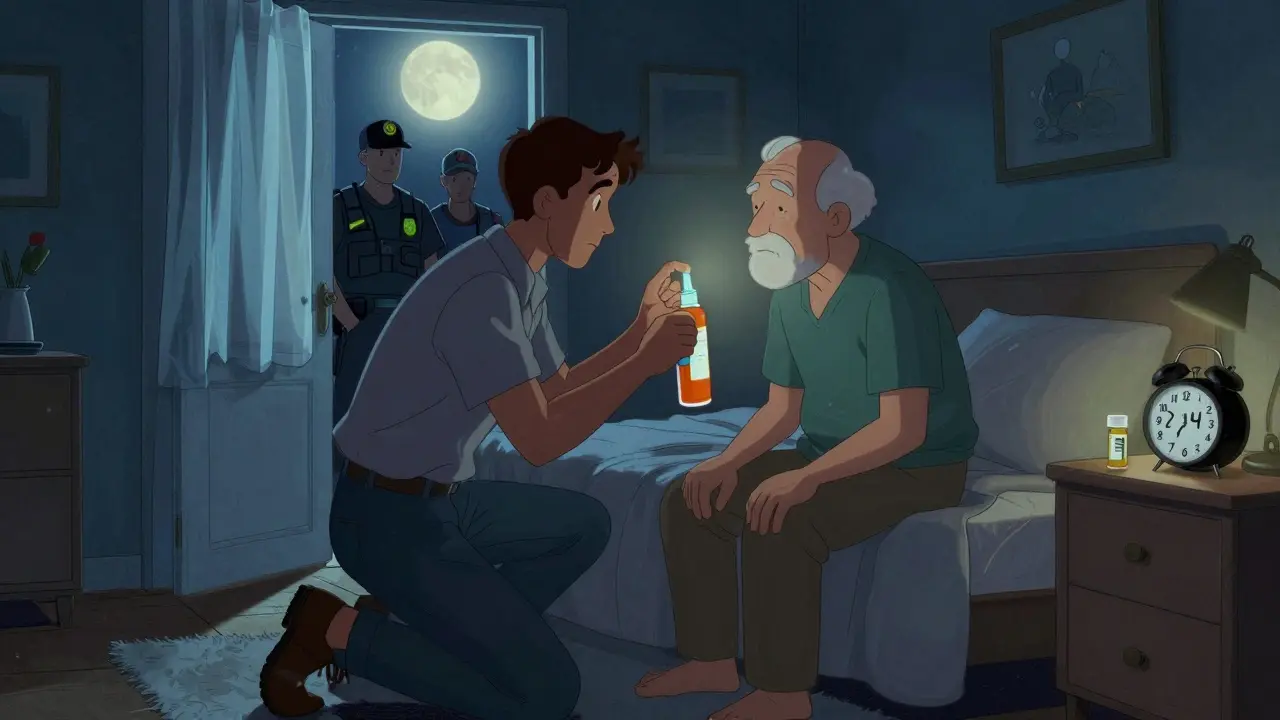
Reddit’s r/OpiatesRecovery community shared 87 stories of home reversals. In 62% of them, naloxone brought someone back. In 29%, family members struggled to get the spray into the nose because the person was unconscious. In 78%, rescue breathing made the difference. One man in Ohio said he gave two doses to his 68-year-old father, who was on oxycodone after hip surgery. He woke up. He went to the hospital. He’s alive today. No one blamed him. No one judged him. He just acted.
That’s what readiness looks like. Not fear. Not shame. Just action.
What’s Next?
The opioid crisis isn’t slowing. Fentanyl now shows up in nearly 9 out of 10 overdose deaths. That means higher doses of naloxone are needed. The FDA is working on new formulations that last longer. Some states are pushing for naloxone in schools, public transit, and libraries. The Biden administration wants it in all federal buildings by December 2024.
But here’s the truth: no policy, no law, no new spray will save lives if we don’t change how we think about naloxone. It’s not a tool for addicts. It’s a tool for patients. For families. For workplaces. For anyone who takes opioids - even once.
If you or someone you care about is on opioids, get a naloxone kit today. Know how to use it. Teach the people around you. Keep it close. And never, ever wait for someone to stop breathing before you act.
Can I give naloxone to someone who isn’t overdosing?
Yes. Naloxone has no effect on people who haven’t taken opioids. It won’t cause harm, trigger withdrawal, or make someone feel sick. If you’re unsure whether someone is overdosing, it’s safer to give it than to wait. The only risk is wasting a dose - and that’s better than losing a life.
How long does naloxone last, and why might I need more than one dose?
Naloxone typically works for 30 to 90 minutes. But many opioids - especially fentanyl - last much longer. That means the person can slip back into overdose after the naloxone wears off. That’s why you need at least two doses on hand. If the person doesn’t respond after 3 minutes, give a second dose. Some overdoses need three or more, especially with synthetic opioids.
Do I need a prescription to get naloxone?
No. Since September 2023, NARCAN® nasal spray has been available over-the-counter at pharmacies like CVS and Walgreens. You can buy it without a prescription. Many states also have standing orders that let pharmacists give out naloxone freely. Some community programs give it away for free.
Can naloxone be used for children or elderly patients?
Yes. Naloxone is safe for all ages, including children and older adults. The dose doesn’t change based on weight or age. One 4mg nasal spray is the standard dose for adults and children. For infants or very small children, the same dose is used - because naloxone’s job is to block opioids, not to match body size. Always call 911 after giving it, regardless of age.
What should I do if the person doesn’t wake up after naloxone?
Keep giving rescue breathing and call 911 immediately. If there’s no response after 3 minutes, give a second dose of naloxone. Continue rescue breathing until help arrives. Sometimes, multiple doses are needed - especially with fentanyl. Don’t stop. Even if they don’t respond right away, every breath you give keeps oxygen flowing to the brain.
Is naloxone covered by insurance?
Yes. Most insurance plans, including Medicaid and Medicare, cover naloxone with little or no copay. Even without insurance, the over-the-counter nasal spray costs $130-$150 - far less than hospital costs after an overdose. Many states and nonprofits offer free kits. Check with your local health department or harm reduction center.
Jessica Klaar
February 9, 2026 AT 00:08I’ve had naloxone in my car for two years now, ever since my neighbor’s son overdosed in his driveway. He was on oxycodone after a car accident-no street drugs, just a prescription. I didn’t even know he was at risk until it happened. Now I keep two sprays in my glovebox and teach every new patient I meet how to use them. It’s not about judgment-it’s about being ready.
Anyone who says ‘I don’t need it because I’m not an addict’ is just ignoring statistics. The data doesn’t care about your moral stance. It just shows who lives and who doesn’t.
Tori Thenazi
February 10, 2026 AT 21:13Wait… wait… wait… so you’re telling me the government is pushing this because they want us to think opioids are safe??
It’s a trap!!
Naloxone is just the first step to normalizing opioid use-then they’ll lower the dosage limits, then they’ll make it legal for minors, then they’ll start giving it out in public schools like flu shots!!
And don’t even get me started on how the pharmaceutical companies are funding these ‘free kit’ programs… it’s all a psyop!!
They want you to think you’re safe… but you’re not!!
I’ve seen the documents!!
They’re just waiting for the right moment to… *insert ominous music*…
Jonah Mann
February 11, 2026 AT 22:21Just got my first naloxone kit today from CVS. Paid $120, no prescription needed. Took me 10 mins. The pharmacist was super chill, didn’t even ask why I needed it. I’m keeping one at home, one in my truck. My buddy’s on hydrocodone for his back-told him to stop being a dummy and get one too.
Also, side note: if you’re using it, you gotta know how to do rescue breathing. It’s not magic. You can’t just spray and walk away. You gotta breathe for them. Like, slow breaths, every 5 secs. I took a 20-min online class. It’s easy. Google ‘naloxone rescue breathing’.
Also, check the expiration date. I saw a guy on TikTok use an expired one. Dude was lucky. Don’t be that guy.
Tricia O'Sullivan
February 12, 2026 AT 15:11While I appreciate the pragmatic approach outlined in this piece, I must respectfully note that the cultural framing of naloxone as a mere 'safety tool' risks minimizing the broader social determinants of opioid use. The issue is not merely pharmacological but deeply entwined with economic precarity, lack of mental healthcare access, and systemic neglect of chronic pain sufferers.
It is not enough to distribute kits without addressing why individuals are being prescribed opioids in the first place. We are treating symptoms, not causes. While I commend the practical advice, I urge a more holistic policy framework that prioritizes prevention over reaction.
Brandon Osborne
February 13, 2026 AT 23:49Oh my GOD. I can’t believe people are still acting like this is normal.
You know what’s worse than opioids? PEOPLE WHO DON’T THINK THIS IS A CRISIS.
I’ve seen people on Reddit say ‘I just take it for my back’ like it’s Advil. Your back pain is NOT worth risking your life. Or your kid’s life. Or your spouse’s life.
And guess what? If you don’t have naloxone, you’re part of the problem. You’re saying ‘I’m fine with death’.
Get. It. Now.
And if you’re a doctor who doesn’t offer it? You’re negligent. You’re a murderer by omission.
Stop being polite. Start being responsible.
Patrick Jarillon
February 15, 2026 AT 16:34Let me guess-this whole thing was pushed by Big Pharma to sell more naloxone after they made billions off opioids.
It’s a classic cycle: they create the problem, then sell you the solution.
And now they’re making it OTC so they can jack up the price even more? $130? For a nasal spray? That’s a scam.
Why not just fix the prescribing culture? Why not ban opioids entirely? Why not give people real pain management?
Instead, we get this performative safety theater. Naloxone isn’t prevention. It’s damage control. And they’re profiting from both.
Kathryn Lenn
February 15, 2026 AT 23:48So let me get this straight: we’re telling people to keep a drug that reverses opioid effects… on hand… so they can keep taking opioids?
That’s like giving someone a fire extinguisher so they can keep lighting candles in a paper house.
It’s not safety. It’s enabling.
And don’t even get me started on the ‘no stigma’ nonsense. There’s a reason people don’t talk about this. Because it’s embarrassing. Because it’s dangerous. Because it’s a sign you’re one bad decision away from death.
Stop pretending this is just a medical issue. It’s a moral failure wrapped in a nasal spray.
John Watts
February 16, 2026 AT 20:27Hey everyone-I’m not a doctor, but I’ve been in recovery for 8 years, and I’ve seen naloxone save lives. Not just addicts. Not just ‘problem users.’ My cousin? 72, on oxycodone after knee surgery. Had a bad reaction. His daughter used the spray. He woke up. He’s still here.
Here’s the truth: naloxone doesn’t enable addiction. It enables *time*. Time to get help. Time to call 911. Time to breathe.
If you’re scared to talk about this? You’re not protecting anyone. You’re just avoiding the hard stuff.
Go get the spray. Teach your family. Put it next to your toothbrush. It’s not weird. It’s smart.
And if you’re a provider? Stop waiting for permission. Start saving lives. Today.
Angie Datuin
February 18, 2026 AT 00:43My mom’s on long-term opioids. I got her two kits last month. She didn’t want to talk about it. But I left one on her nightstand with a sticky note: ‘In case. Love you.’ She didn’t say anything. But she used it last week. She’s alive. And she didn’t say thank you. But I know.
THANGAVEL PARASAKTHI
February 18, 2026 AT 19:27in india we dont have naloxone easy to get. but i heard its good. my uncle take painkiller for back pain. i tell him to get it but he say its for junkies. i dont know what to do. maybe we need more awareness here too.
also, i think if we can get it for free like in usa, more people will take it serious. here people think its like buying a weapon. sad.
Frank Baumann
February 19, 2026 AT 22:47I’ve been thinking about this for weeks. I’m a nurse. I’ve seen 14 overdoses in the last year. Eight of them were people on prescriptions. One was a 19-year-old college student. He was on oxycodone after a sports injury. His mom didn’t even know he was taking it. He didn’t have naloxone. He didn’t make it.
Here’s what no one tells you: when someone overdoses, their body doesn’t just stop breathing. Their brain starts dying. Every second counts. You don’t have time to call 911 first. You don’t have time to Google how to use it. You have 90 seconds. Maybe less.
That’s why I’ve started training every patient I see. Not just the ones on high doses. Everyone. I hand them the spray. I show them. I make them practice on a dummy. I make them promise they’ll teach someone else.
And I don’t ask if they’re ‘addicts.’ I don’t care. I just care if they live.
One day, I’ll look back and realize I saved 50 people. Maybe more. But I won’t know. Because most of them will never say thank you. They’ll just keep living. And that’s the point.
Scott Conner
February 20, 2026 AT 06:41so wait, if naloxone works on fentanyl, why do they say you might need 3 doses? is it because fentanyl sticks to receptors longer? or is it because the body absorbs it differently? also, does body weight matter? i read somewhere that heavier people need more, but the article says dose is same for everyone. confused.