
Opioid Nausea Timing Calculator
How to Use This Tool
Based on clinical evidence: Take antiemetics 30-60 minutes BEFORE opioid dose. This ensures maximum effectiveness when opioids peak.
Article Reference: "Take your antiemetic 30–60 minutes before your opioid dose. That way, the anti-nausea drug is already working when the opioid hits its peak."
When you start taking opioids for pain, nausea isn’t just a nuisance-it can stop you from taking the medicine you need. About 30-40% of people new to opioids get sick to their stomach within the first few days. It’s not weakness or bad luck. It’s biology. Opioids bind to receptors in the brainstem, triggering the body’s vomiting reflex. For many, this passes in a week. But for others, it lingers, making pain management impossible.
Why Opioid Nausea Happens (And Why It Doesn’t Always Go Away)
Opioid-induced nausea and vomiting (OINV) isn’t the same as food poisoning or motion sickness. It’s a direct effect on the brain’s chemoreceptor trigger zone. This area doesn’t care if you ate something bad-it just responds when opioids flood in. That’s why nausea often hits hardest when you first start a new opioid or increase the dose.
Most people build tolerance. By day 3 to 7, the nausea fades. But not everyone. Some patients keep struggling even after weeks. Why? It’s not always the opioid itself. Sometimes, it’s constipation slowing digestion, or the opioid slowing stomach emptying. Other times, it’s the antiemetic you’re using not matching the cause.
First-Line Antiemetics: What Actually Works
Not all nausea meds are created equal when it comes to opioids. Here’s what works-and what doesn’t-based on real patient data.
- Prochlorperazine (5-10 mg, up to 3 times a day): A phenothiazine that blocks dopamine receptors in the brain. Often the first choice because it’s cheap, effective, and works well for opioid-triggered nausea. Cost: under $0.20 per tablet.
- Haloperidol (0.5-2 mg daily): An antipsychotic used off-label. Works well for severe nausea but carries a risk of movement problems, especially in older adults. Avoid if you have Parkinson’s or are over 65 without close monitoring.
- Metoclopramide (5-10 mg every 6-8 hours): The only prokinetic available in the U.S. It speeds up stomach emptying. Great if your nausea comes with bloating or delayed digestion. But it can cause muscle spasms in 10-15% of users at higher doses.
- Ondansetron (4-8 mg every 8 hours): Blocks serotonin, which helps with chemo nausea. But for opioid-induced nausea? Only moderately effective. It’s expensive-up to $3.50 per tablet-and often overused because it’s well-known.
Studies show dopamine blockers like prochlorperazine and haloperidol are more reliable than ondansetron for OINV. But here’s the catch: prophylactic antiemetics-giving them before nausea starts-don’t prevent it. A 2019 review of 619 patients found no benefit in giving antiemetics upfront. They only help once nausea is already there.
Timing Matters: When to Take the Antiemetic
Taking your antiemetic at the wrong time makes it useless. Opioids like morphine or oxycodone peak in your blood 60-90 minutes after you swallow them. That’s when nausea hits hardest.
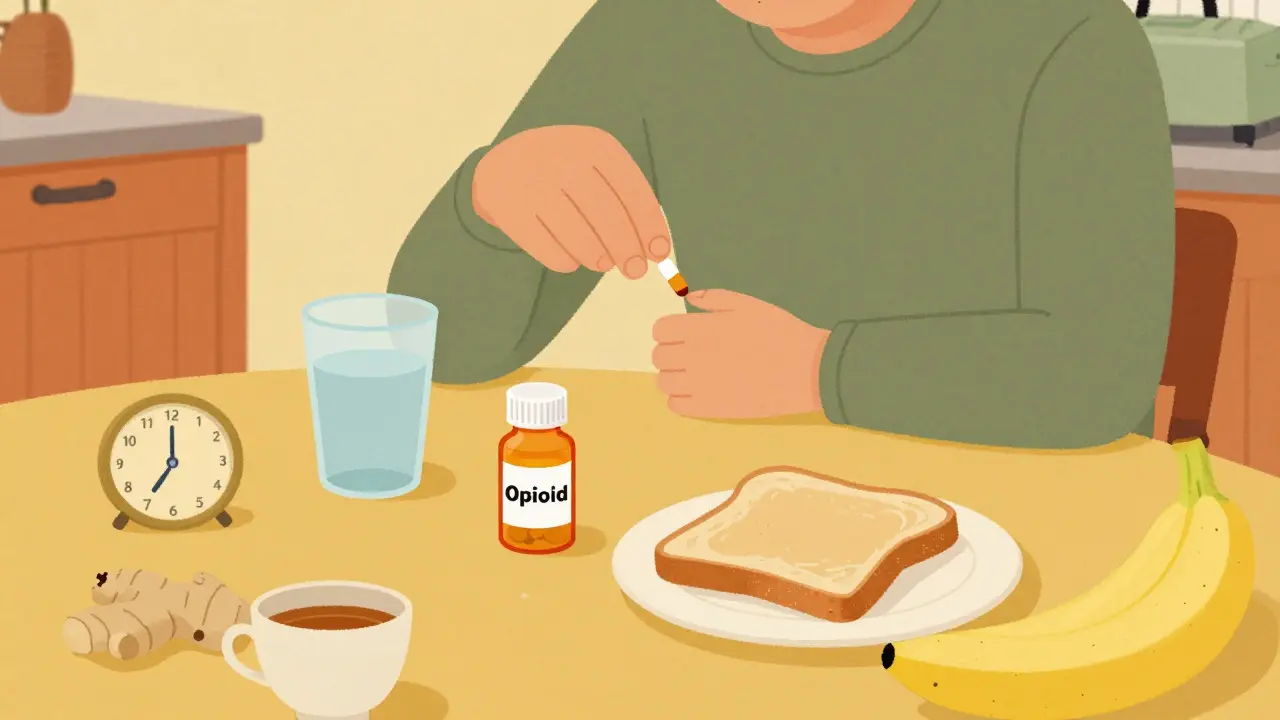
So take your antiemetic 30-60 minutes before your opioid dose. That way, the anti-nausea drug is already working when the opioid hits its peak. Don’t wait until you feel sick. By then, it’s harder to catch up.
For example: If you take oxycodone at 8 a.m., take prochlorperazine at 7:15 a.m. Do this for the first 7-10 days. After that, if your pain is under control and nausea has faded, you can stop the antiemetic.
Diet Adjustments: What to Eat (and Avoid)
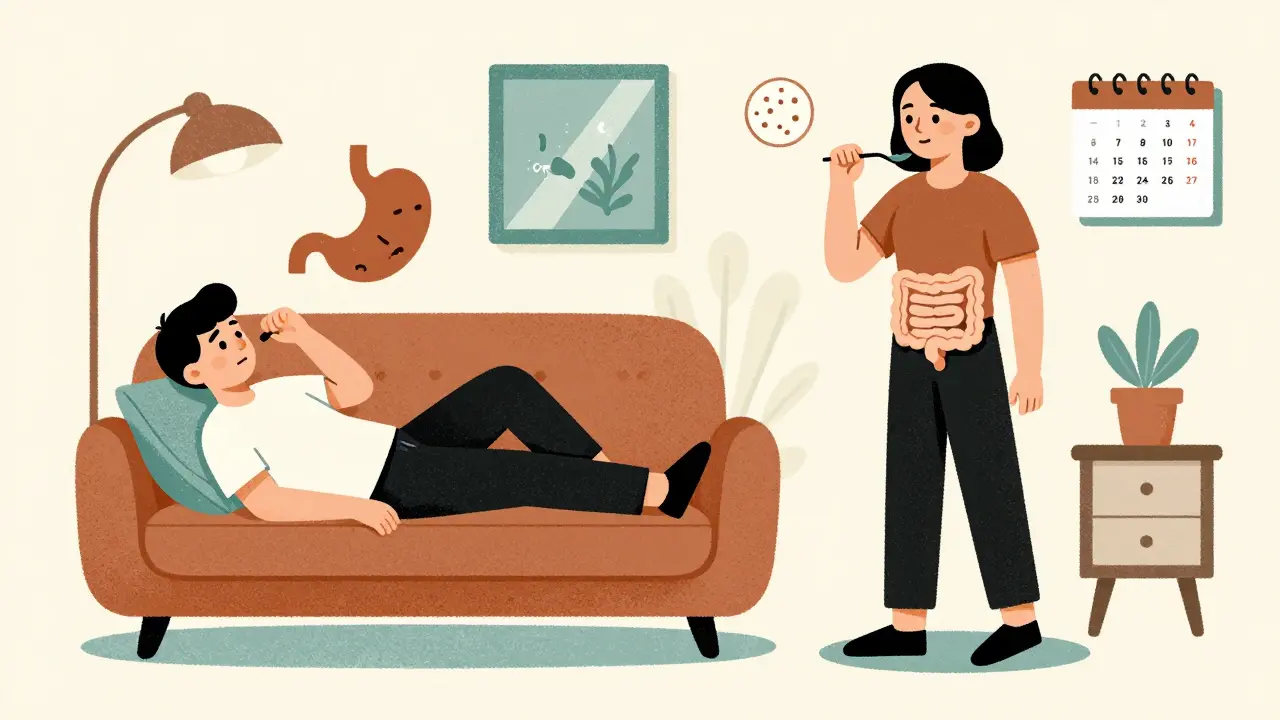
Diet doesn’t cure opioid nausea-but it can make it much worse or better.
- Avoid heavy, greasy meals. Opioids slow digestion. Fatty foods sit longer in your stomach, making nausea worse.
- Choose small, frequent meals. Six small snacks a day beat three big meals. Less volume = less pressure on a sluggish stomach.
- Try ginger. Studies show ginger (500-1,000 mg capsules or tea) reduces nausea in cancer patients on opioids. It’s safe, natural, and works alongside meds.
- Stay upright after eating. Don’t lie down for at least 30 minutes. Gravity helps keep food moving.
- Watch for constipation. Opioids cause it. Constipation backs up your digestive system, which can trigger nausea. Use stool softeners like docusate daily, not just when you’re backed up.
One study found that patients who ate small, bland meals (like toast, rice, bananas) and avoided dairy and caffeine reported 40% less nausea than those who didn’t adjust their diet.
Opioid Rotation: Switching to a Different Painkiller
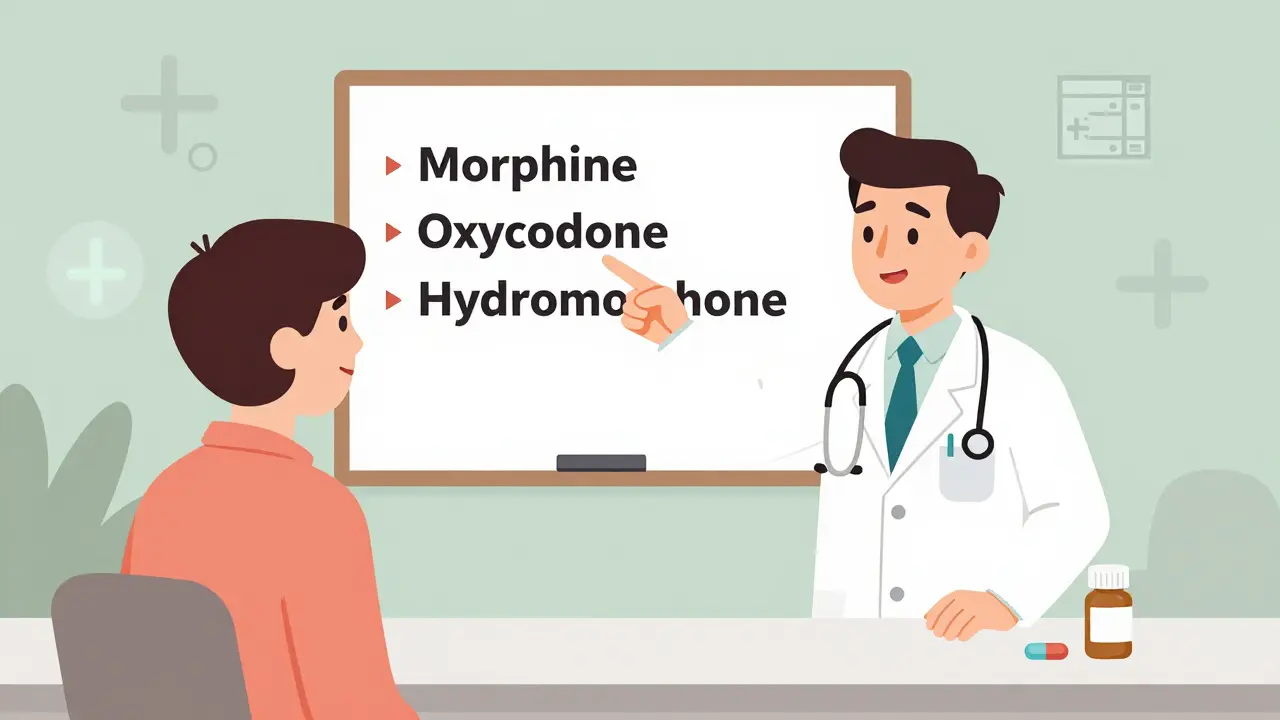
If nausea won’t quit even after trying antiemetics and diet changes, switching opioids might help. Not all opioids cause the same level of nausea.
- Morphine → Oxycodone: Some patients feel better. Evidence is weak, but it’s low-risk.
- Morphine → Hydromorphone: A 2023 NCCN update found this switch reduces nausea in 40-50% of cancer patients.
- Morphine or Oxycodone → Methadone: This one’s more complex. Methadone has different receptor effects and may cause less nausea. But switching requires careful dosing-do this only under a pain specialist’s supervision.
Don’t switch just because you’re nauseated. Try antiemetics and diet first. But if you’ve tried everything for 10 days and still can’t tolerate the opioid, rotation is a real option.
What Not to Do
Many patients make these mistakes:
- Stopping the opioid because of nausea. This leaves pain uncontrolled. Nausea usually fades. Pain doesn’t.
- Using ondansetron as the first choice because it’s “for nausea.” It’s not the best for opioids.
- Waiting to take the antiemetic until they feel sick. Timing is everything.
- Ignoring constipation. It’s a silent trigger for nausea.
One 2018 study found that 42% of cancer patients quit opioids entirely because of nausea-even after trying antiemetics. That’s not because the meds didn’t work. It’s because the management wasn’t systematic.
When to Call Your Doctor
Call if:
- Nausea lasts longer than 7-10 days despite antiemetics
- You’re vomiting more than once a day
- You’re losing weight or can’t keep fluids down
- You develop muscle stiffness, tremors, or confusion (signs of dopamine blocker side effects)
Don’t push through severe symptoms. There are options. But they need to be tailored.
The Bottom Line
Opioid nausea is common, but it’s not inevitable. You don’t have to suffer through it to get pain relief. Start low with your opioid dose. Pair it with the right antiemetic-prochlorperazine or metoclopramide-taken 30-60 minutes before your pain pill. Eat small, bland meals. Treat constipation daily. And if it doesn’t improve in a week, talk about switching opioids.
Most people find relief within days. But only if they act early and use the right tools. Don’t wait for nausea to get worse. Take control from day one.
How long does opioid-induced nausea usually last?
For most people, nausea from opioids lasts 3 to 7 days after starting or increasing the dose. Tolerance develops as the body adjusts. If nausea continues beyond 10 days despite antiemetics and diet changes, it’s time to reassess your treatment plan with your doctor.
Can I take ginger with my antiemetic?
Yes. Ginger (500-1,000 mg daily in capsule or tea form) is safe to use alongside antiemetics like prochlorperazine or metoclopramide. Studies show it reduces nausea in opioid users, especially when paired with dietary changes. It’s not a replacement, but a helpful addition.
Why is metoclopramide not always the first choice?
Metoclopramide helps when nausea is tied to slow stomach emptying, which is common with opioids. But it carries a risk of muscle side effects like tremors or spasms-especially at higher doses or in older adults. For this reason, prochlorperazine is often preferred as a first-line option because it’s equally effective with fewer movement-related risks.
Is it safe to stop my opioid if nausea is bad?
No-not without talking to your doctor. Stopping opioids abruptly can cause withdrawal and leave your pain uncontrolled. Nausea usually fades within a week. Instead of quitting, work with your provider to adjust your antiemetic, timing, or try a different opioid. Most people can stay on opioids safely with the right support.
Do I need to take antiemetics forever?
No. Antiemetics are meant for the first 7-10 days of opioid therapy, or until your body adjusts. Once nausea stops, you can stop the antiemetic. Continuing them longer than needed adds side effect risks without benefit. Always check with your doctor before stopping any medication.
Marie Mee
December 17, 2025 AT 02:27Naomi Lopez
December 17, 2025 AT 12:04Nishant Desae
December 18, 2025 AT 16:52Meghan O'Shaughnessy
December 19, 2025 AT 06:59Kaylee Esdale
December 19, 2025 AT 15:50Anu radha
December 19, 2025 AT 20:02Jigar shah
December 21, 2025 AT 06:18Joe Bartlett
December 22, 2025 AT 03:02Salome Perez
December 23, 2025 AT 17:35Kent Peterson
December 23, 2025 AT 20:44Sam Clark
December 25, 2025 AT 14:35Jessica Salgado
December 27, 2025 AT 13:01Chris Van Horn
December 29, 2025 AT 06:28Steven Lavoie
December 30, 2025 AT 14:36