
What if the number on the scale doesn’t tell you the whole story? You’ve been eating better, moving more, sleeping deeper-but the scale hasn’t budged in weeks. Maybe it even went up. Does that mean you’re failing? Non-scale victories say no. And they’re not just feel-good fluff-they’re the real markers of lasting health change.
Why the Scale Lies to You
The scale measures weight, not health. That’s it. It doesn’t know if you’ve lost belly fat and gained muscle. It doesn’t care if your blood pressure dropped from 145/90 to 122/78. It doesn’t notice you’re no longer winded walking up two flights of stairs or that you’re finally sleeping through the night. Daily weight swings of 2 to 5 pounds are normal-and completely unrelated to fat loss. They’re caused by water retention from salt, hormones during your cycle, how much you drank the night before, or even what time of day you stepped on it. If you’re judging your progress by a number that jumps around like a pinball, you’re setting yourself up for frustration, not success. A 2023 study from Dietitians On Demand found that many people working on their health make real, measurable improvements-like better blood sugar control, stronger grip strength, or reduced anxiety around food-without seeing any change on the scale. And yet, they often feel like they’ve failed because the scale didn’t move.What Counts as a Non-Scale Victory?
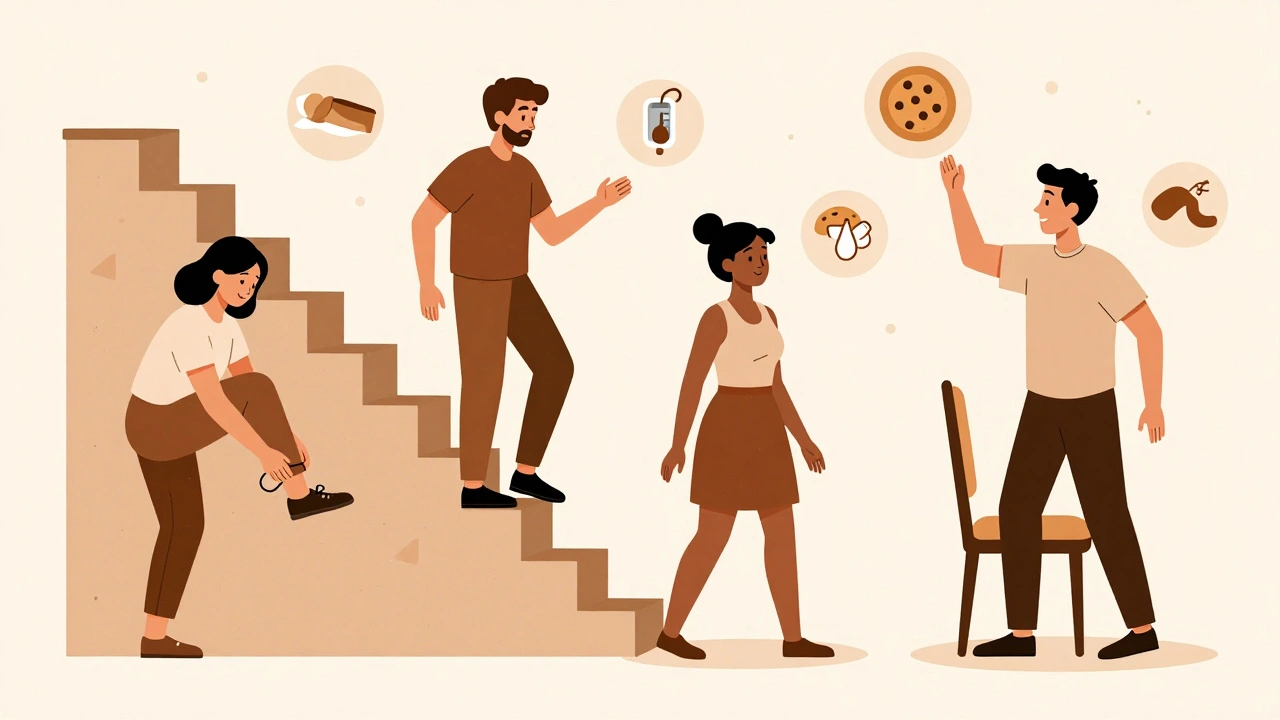
Non-scale victories are any improvements in your health, energy, function, or mindset that have nothing to do with pounds. They’re specific, personal, and deeply meaningful. Here’s what they look like in real life:- Physical function: You can now tie your shoes without bending over awkwardly. You no longer need a seatbelt extender on flights. You’re climbing stairs without stopping.
- Energy and sleep: You wake up feeling rested, not drained. You don’t need caffeine after 3 p.m. to stay awake.
- Food relationship: You ate a cookie without guilt. You stopped checking your blood sugar every hour. You cooked dinner at home four times last week.
- Clothing and comfort: Your jeans feel looser around the waist. Your favorite shirt buttons easily. You can sit cross-legged on the floor with your kids.
- Lab markers: Your A1C dropped from 6.8% to 6.1%. Your triglycerides went down. Your blood pressure normalized.
- Mental and emotional health: You stopped obsessing over food. You feel calmer. You say no to social events that drain you. You’re proud of your choices-even if no one else notices.
How to Start Tracking Non-Scale Victories
If you’ve only ever tracked weight, this might feel strange at first. But tracking non-scale victories is simple. You don’t need an app. You don’t need a journal. Just start noticing. Start by picking three areas to focus on:- Physical: What movement used to hurt or exhaust you? Now, what feels easier?
- Food: What habits have you changed? Are you drinking more water? Eating more veggies? Skipping late-night snacks?
- Emotional: Do you feel less stressed about food? Less guilty after eating? More in control?
- Specific: Instead of “I want to feel better,” try “I want to walk 20 minutes without stopping.”
- Measurable: “I’ll cook three home-cooked meals this week.”
- Achievable: Don’t aim for running a marathon if you haven’t walked in months.
- Relevant: Pick goals that matter to YOU, not what you think you “should” do.
- Time-bound: “I’ll get off my blood pressure medication by June-with my doctor’s approval.”
Why Non-Scale Victories Work Better Than the Scale
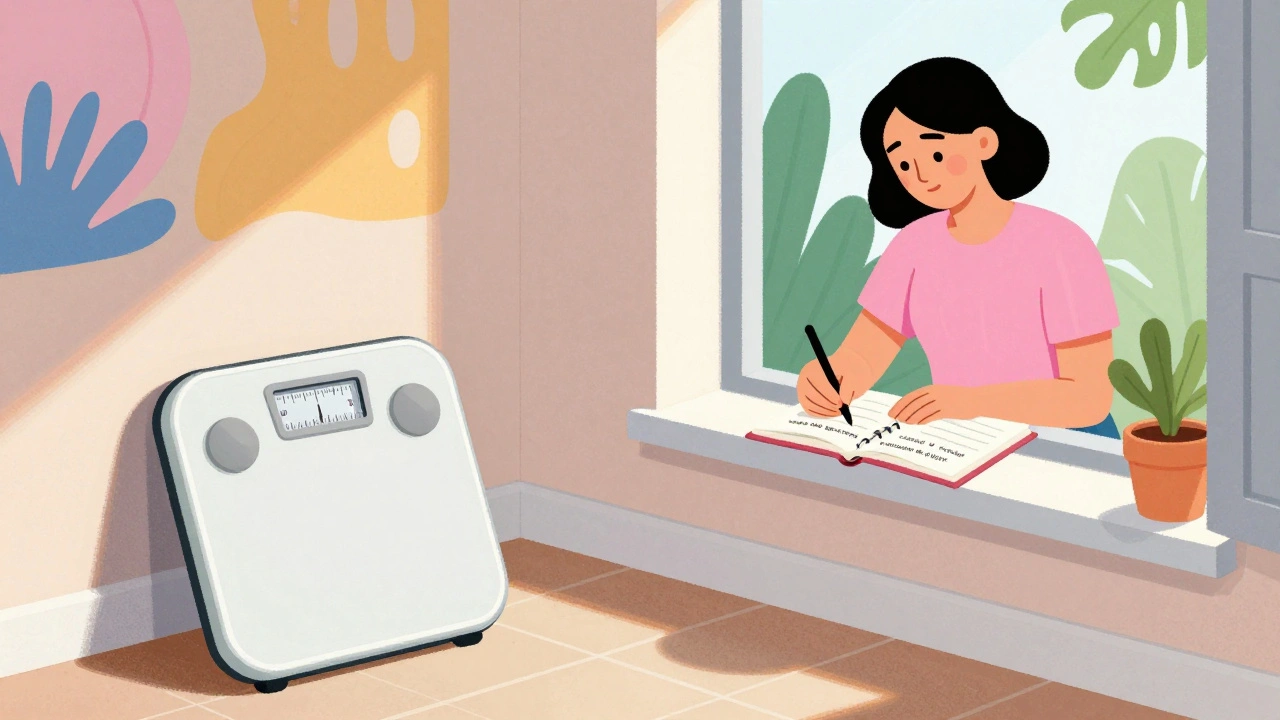
The scale is a single, unstable number. Non-scale victories are a tapestry of real change. When you focus on weight, you’re chasing a moving target. But when you focus on how you feel, what you can do, and how your body is healing, you’re building a life-not just losing weight. A National Institutes of Health study found that people in obesity treatment programs rated non-scale victories as equally important to weight loss. Why? Because they’re tied to real quality-of-life improvements. People who feel more energy, less pain, and better mood are more likely to stick with healthy habits long-term. Weight loss often plateaus. But strength, sleep, mood, and blood markers don’t. They keep improving-even when the scale stops.What to Do When You Hit a Plateau
Plateaus happen. They’re normal. And they’re not failures. If the scale hasn’t moved in four weeks, don’t panic. Look back at your non-scale victories list. Have you slept better? Are you moving more? Do you feel less bloated? Have you cut out soda? If yes, you’re still winning. A 2023 report from Serenity MD Chino showed patients who shifted focus from weight to energy and mood during plateaus stayed committed to their plans 68% longer than those who kept obsessing over the scale. Ask yourself: “What’s one thing I did this week that I couldn’t do six months ago?” That’s your victory. Write it down. Say it out loud. Own it.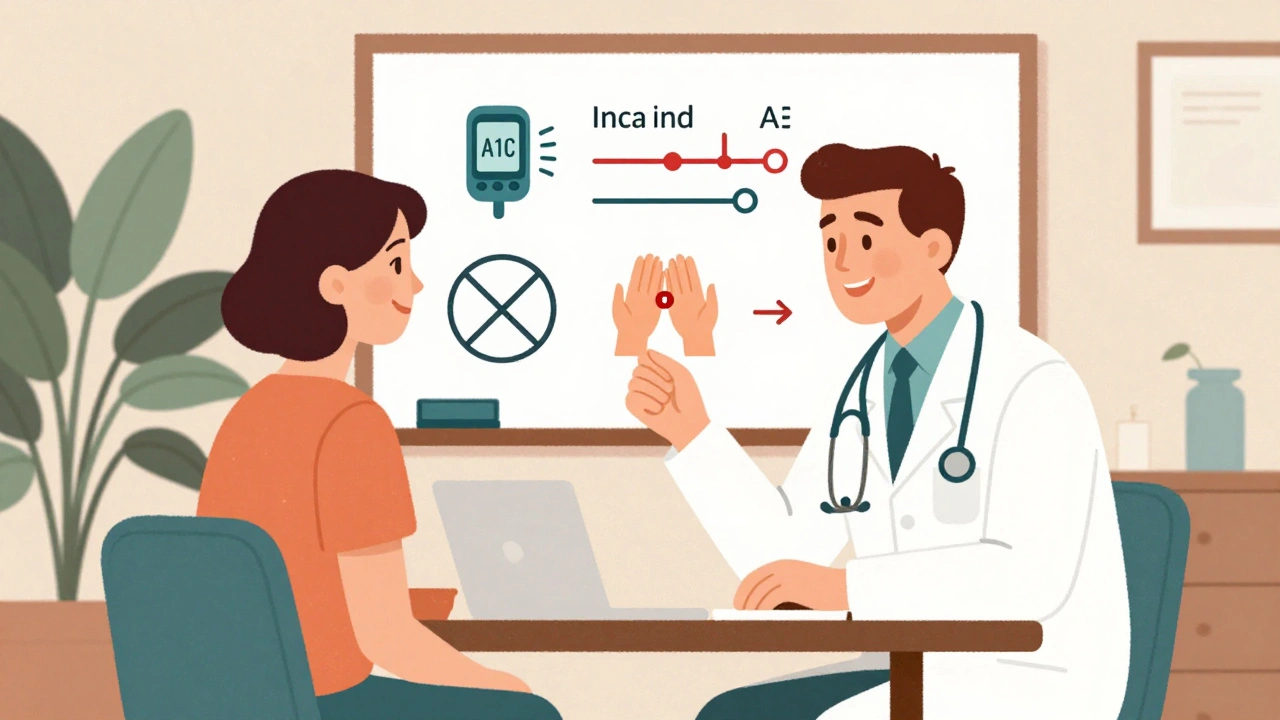
Real Stories, Real Wins
One woman in Aurora, who’d struggled with prediabetes for years, stopped weighing herself for six months. Instead, she tracked:- Walking her dog every morning without getting out of breath
- Replacing soda with sparkling water
- Not checking her blood sugar five times a day
- Her A1C dropping from 6.4% to 5.7%
How to Talk to Your Doctor About Non-Scale Victories
Many doctors still focus on weight. But you can change that conversation. Next time you visit, say: “I’ve been working on my health, and I’m proud of these changes: I’m sleeping better, my blood pressure is down, and I’m cooking more meals at home. Can we look at my lab results and how I’m feeling, not just my weight?” Most providers are open to it. The American College of Lifestyle Medicine now recommends tracking non-scale outcomes as part of standard care. You’re not asking for special treatment-you’re asking for better care.Final Thought: Progress Isn’t Linear, But It’s Real
You don’t need to lose 10 pounds to be healthier. You don’t need to fit into a size 6 to be strong. You don’t need to look like someone else to be proud of yourself. Non-scale victories are proof that your hard work is paying off-even when the world can’t see it. They’re the quiet, daily wins that add up to a life that feels lighter, freer, and more alive. Stop waiting for the scale to validate you. Start celebrating the things it can’t measure.Can I still weigh myself if I focus on non-scale victories?
Yes, but don’t let it control your mood or motivation. Weigh yourself once a week at most, at the same time of day, in the same clothes. Use it as a data point-not a verdict. Let your non-scale victories be your main source of motivation.
What if I don’t see any non-scale victories after a few weeks?
It’s normal to feel stuck at first. Start small. Did you drink one extra glass of water today? Did you take a 10-minute walk? Did you eat breakfast without rushing? Those count. Progress isn’t always dramatic. Sometimes, it’s quiet. Keep showing up. The wins will come.
Are non-scale victories only for people trying to lose weight?
No. Anyone improving their health-whether they’re gaining muscle, managing diabetes, reducing stress, or just wanting more energy-can benefit. Non-scale victories are about how you feel and function, not your weight.
How long does it take to notice non-scale victories?
Some show up in days: better sleep, less bloating, more energy. Others take weeks or months: improved lab results, stronger muscles, reduced medication use. Be patient. Your body is healing on its own timeline.
Do I need a dietitian to track non-scale victories?
Not at all. You can track them on your own. But if you’re managing a chronic condition like diabetes or high blood pressure, a registered dietitian can help you identify which victories matter most and how to measure them accurately.
Saurabh Tiwari
December 2, 2025 AT 04:08Victoria Graci
December 2, 2025 AT 08:09Chris Wallace
December 3, 2025 AT 13:20william tao
December 3, 2025 AT 18:23Sandi Allen
December 4, 2025 AT 10:21Shubham Pandey
December 5, 2025 AT 06:04Elizabeth Farrell
December 5, 2025 AT 19:52Sheryl Lynn
December 6, 2025 AT 00:00Paul Santos
December 6, 2025 AT 04:55Eddy Kimani
December 8, 2025 AT 04:41Chelsea Moore
December 9, 2025 AT 10:27John Morrow
December 9, 2025 AT 12:50Kristen Yates
December 9, 2025 AT 22:08Girish Padia
December 11, 2025 AT 13:48Chris Wallace
December 12, 2025 AT 21:51