
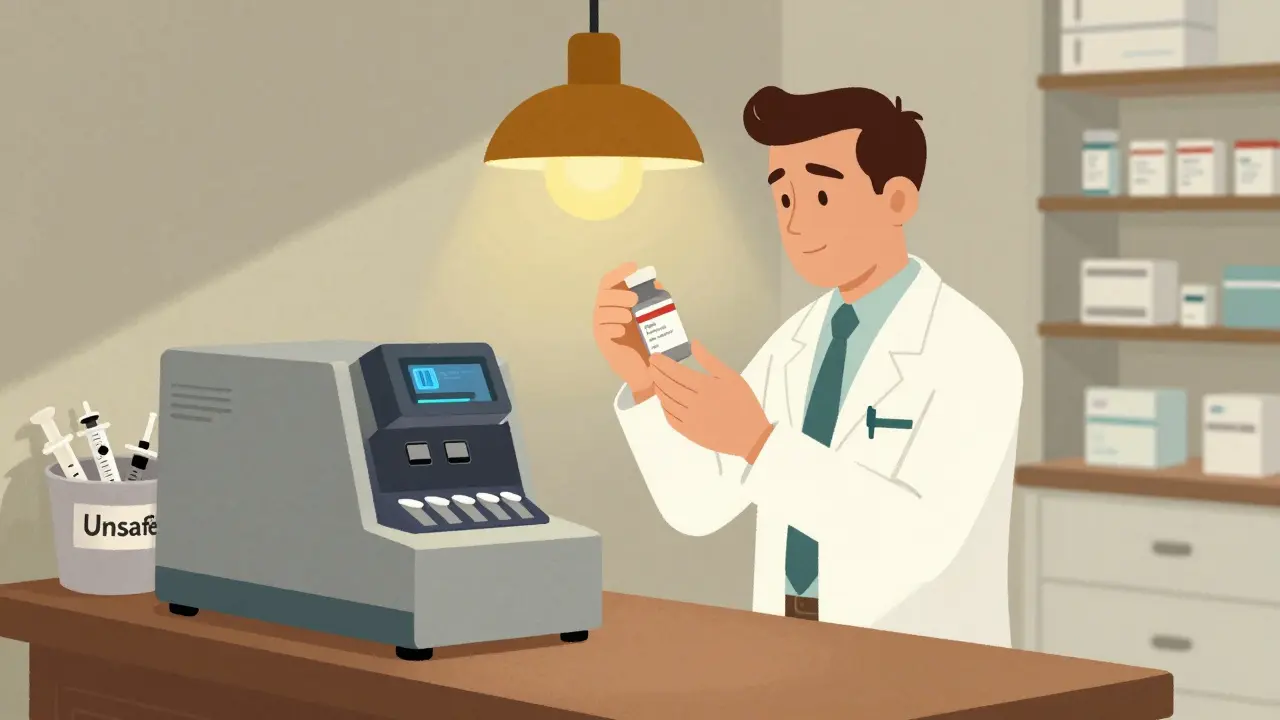
Every year in the U.S., medication errors contribute to more than 250,000 deaths. That’s not a statistic from decades ago-it’s from recent data still shaping how pharmacies operate today. Most of these errors happen during dispensing: the wrong drug, wrong dose, wrong patient, or a label that’s unclear. And while pharmacists and nurses work tirelessly to prevent them, the real problem isn’t human error-it’s broken systems. The National Patient Safety Goals (NPSGs), set by The Joint Commission, exist to fix those systems. But compliance isn’t just about checking boxes. It’s about building a culture where safety is built into every step, not just remembered at the last second.
What Are the National Patient Safety Goals (NPSGs) and Why Do They Matter?
The NPSGs are not suggestions. They’re mandatory for nearly every hospital and pharmacy in the U.S. that wants to be accredited by The Joint Commission. First introduced in 2003, they’ve evolved from basic checklists into detailed standards targeting the most dangerous gaps in care. The most critical area? Medication safety. In fact, medication-related errors are responsible for 1 in every 131 outpatient deaths and 1 in every 8,548 inpatient deaths, according to AHRQ data from 2021.
There are six core goals, but three directly impact pharmacy practice:
- NPSG.03.04.01: Label all medications, containers, and solutions-on and off the sterile field-with the drug name, strength, concentration, and expiration date. Font size must be at least 10-point. No exceptions. In operating rooms, unlabeled syringes still exist in 27% of facilities, and that’s not an oversight-it’s a legal violation.
- NPSG.03.05.01: Reduce harm from anticoagulants like warfarin and heparin. This means standardized protocols for INR monitoring, patient education, and documentation. Compliance must hit 95% quarterly. Miss it, and your facility risks losing accreditation.
- NPSG.03.06.01: Improve the safety of high-alert medications. These include insulin, opioids, IV potassium, and chemotherapy drugs. They’re called high-alert because a mistake can kill someone in minutes. The Joint Commission now requires automated dispensing cabinets (ADCs) to lock down access to these drugs unless a pharmacist approves override requests.
These aren’t theoretical. A 2023 study found that hospitals with full NPSG compliance saw 51% fewer serious medication errors. That’s not luck. That’s systems working.
The Five Rights Are Not Enough-Here’s Why
You’ve heard them: right patient, right drug, right dose, right route, right time. It’s taught in every pharmacy school. But here’s the hard truth: 83% of medication errors happen even when all five rights are confirmed. Nurses in a 2023 American Journal of Nursing survey said they were trained to memorize the Five Rights but never given the tools to verify them during 12-hour shifts with eight patients each.
The problem isn’t the staff. It’s the assumption that human vigilance alone can prevent errors. Real safety comes from redundancy. Barcode scanning. Double-checks. Electronic alerts. Automated dispensing cabinets with audit trails. At Children’s Hospital of Philadelphia, they added a second pharmacist verification for high-risk pediatric doses. Result? A 91% drop in weight-based dosing errors.
What works isn’t more training. It’s better design. Systems that force verification before the drug leaves the cabinet. Systems that don’t rely on memory, focus, or fatigue.
Automated Dispensing Cabinets: A Double-Edged Sword
Automated dispensing cabinets (ADCs) were supposed to reduce errors. They did-by 60% in some units. But they created a new one: override abuse.
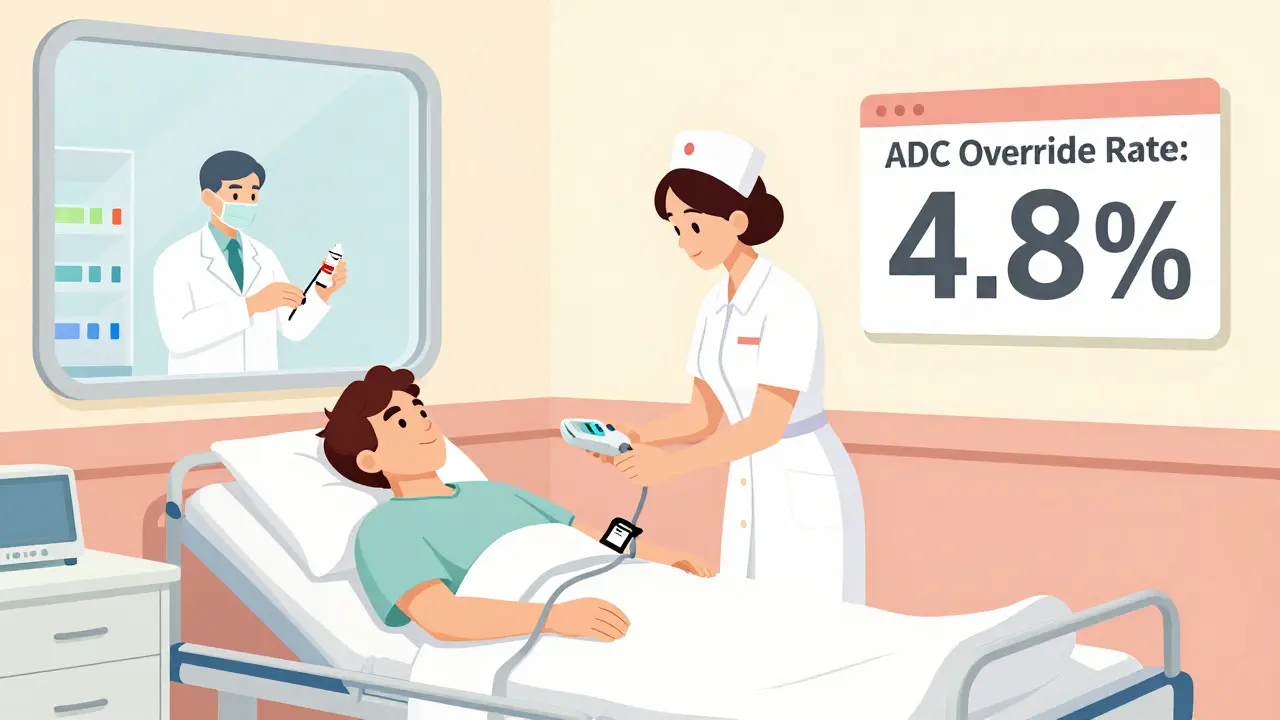
When a nurse needs a stat medication and the system says “no,” they can override it. But if they do it too often, the system breaks. The Joint Commission says override rates should stay under 5%. Yet, 34% of pharmacists report their facility exceeds that. Why? Emergency cases. Staff shortages. Poor workflow design.
Here’s what happens when overrides spike: facilities with override rates above 5% have 3.7 times more medication errors. That’s not correlation-it’s causation. Overriding isn’t just a shortcut. It’s a bypass of every safety layer built into the system.
Successful hospitals don’t ban overrides. They manage them. They track which drugs are overridden most. They require a pharmacist to review every override within 24 hours. They train staff on when it’s truly an emergency-and when it’s just a busy day.
High-Alert Medications: The Silent Killers
Some drugs are so dangerous that even a small mistake can cause amputation, cardiac arrest, or death. The Institute for Safe Medication Practices (ISMP) lists 19 high-risk scenarios. Here are two you won’t forget:
- Promethazine injections: If given into an artery instead of a vein, it causes tissue death. Between 2006 and 2018, 37 patients lost limbs because of this. Now, hospitals must use clear labeling, dedicated IV lines, and mandatory double-checks.
- Opioids: Giving opioids to someone who’s already on a high dose can stop breathing. New guidelines require pharmacists to check the patient’s opioid history before dispensing-even for a single tablet.
These aren’t rare. They’re predictable. And they’re preventable-if systems are in place. That means electronic alerts in the EHR, color-coded labels, and mandatory pharmacist verification before dispensing.
One hospital in Ohio reduced opioid overdoses by 76% after implementing a real-time opioid exposure tracker. It didn’t require new staff. Just better software.
What the Best Pharmacies Do Differently
The top-performing pharmacies don’t just follow the NPSGs. They go beyond them. They use the Model Strategic Plan for Medication Safety, developed by ISMP, which includes seven long-term goals:
- Leadership-driven safety culture
- Standardized high-risk processes
- Improved error reporting without blame
- Controlled formularies based on safety-not cost
- Staff training with real-world scenarios
- Community and patient involvement
- Response systems that learn from mistakes
Johns Hopkins Hospital adopted this model. They didn’t just install barcode scanners. They created a Medication Safety Committee led by the Director of Pharmacy. They reviewed every error-not to punish, but to fix. They removed low-safety drugs from the formulary, even if they were cheaper. Result? A 68% drop in preventable adverse drug events in three years.
Another key difference? They involve patients. At Mayo Clinic, patients are asked to confirm their medication list before discharge. Facilities that do this report 42% fewer errors. Patients aren’t just recipients of care-they’re safety partners.
Implementation Isn’t Optional-It’s a Process
Trying to roll out NPSG compliance in a month? You’ll fail. The Joint Commission recommends 12 to 18 months. Here’s what it looks like:
- Assessment (2-4 weeks): Audit current practices. How many unlabeled syringes are in your OR? What’s your ADC override rate? How many staff have had training in the last year?
- Planning (1-3 months): Prioritize. Fix labeling first. Then tackle high-alert meds. Then ADC overrides.
- Training (8-12 hours per staff member): Don’t use PowerPoint. Use simulations. Show nurses what happens when they skip a barcode scan.
- Integration (6-12 months): Connect your EHR, ADCs, and barcode systems. Make sure alerts trigger before the drug is dispensed.
- Monitoring (ongoing): Track metrics quarterly. If override rates creep up, investigate. If labeling errors spike, retrain.
One pharmacy in Arizona spent $180,000 on new systems. But they saved $1.2 million in the first year by avoiding adverse events and reducing liability claims.
The Future: AI, Regulations, and What’s Coming in 2026
The 2025 NPSGs added new rules: bedside specimen labeling. Labels must be applied in front of the patient, using two identifiers. Why? Mislabeled specimens cause 160,000 errors a year-wrong blood tests, wrong diagnoses, wrong treatments.
By 2026, ISMP will add 25 targeted safety practices. New focus areas: vaccine errors (21% of pediatric incidents) and transition-of-care reconciliation (when patients move from hospital to home).
And AI? It’s here. Mayo Clinic’s pilot program used machine learning to predict which patients were at highest risk for adverse drug events. It cut potential errors by 47%. That’s not science fiction. It’s now.
But technology alone won’t save lives. Culture will. Leadership will. Systems will.
What You Can Do Right Now
If you’re a pharmacist, technician, or nurse:
- Check your facility’s ADC override rate. Is it above 5%? If yes, start asking why.
- Look at your high-alert medications. Are they labeled clearly? Are they double-checked?
- Ask: When was the last time we reviewed a medication error-not to blame, but to fix?
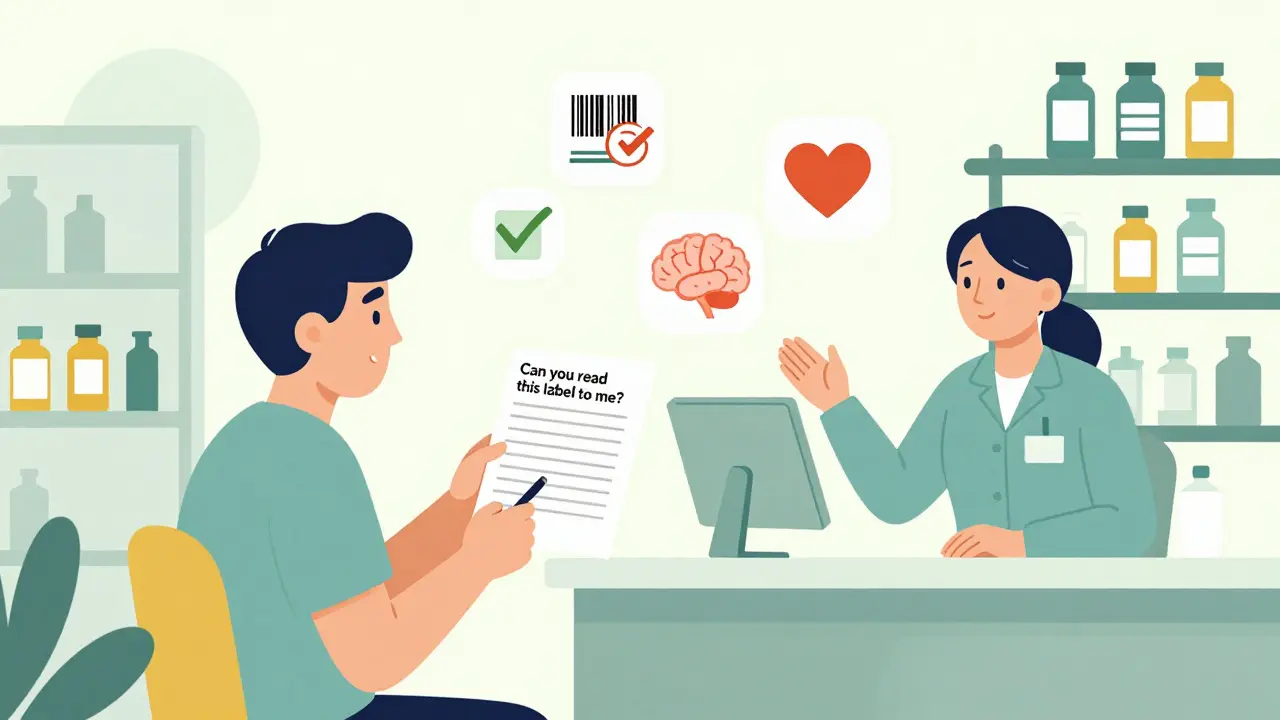
- Encourage patients to speak up. “Can you read this label to me?” is a simple question that saves lives.
Medication safety isn’t about perfection. It’s about layers. One layer fails? Another catches it. That’s how you stop 250,000 deaths a year. Not by hoping someone remembers the Five Rights. But by building a system where forgetting doesn’t kill.
What are the most common medication dispensing errors in pharmacies?
The most common errors include wrong drug selection (often due to look-alike/sound-alike names), incorrect dosing (especially with pediatric or high-alert medications), unlabeled syringes or containers, mislabeled specimens, and bypassing safety checks like barcode scanning or double verification. Overriding automated dispensing cabinets without proper justification is also a growing issue.
Are the Joint Commission’s NPSGs mandatory for all pharmacies?
Yes, if the pharmacy is part of a hospital or healthcare organization seeking Joint Commission accreditation-which includes 96% of U.S. acute care facilities. While standalone retail pharmacies aren’t directly accredited, many follow NPSGs as industry best practices because insurers and regulators expect them. Non-compliance in hospital pharmacies can lead to loss of accreditation and Medicare/Medicaid funding.
What’s the difference between NPSGs and ISMP Best Practices?
NPSGs are mandatory standards set by The Joint Commission for accredited facilities. ISMP Best Practices are voluntary, evidence-based recommendations developed by pharmacists and safety experts. While NPSGs focus on minimum compliance, ISMP guidelines aim for optimal safety. Many top hospitals follow both: using NPSGs as the baseline and ISMP as the target.
Why are high-alert medications so dangerous?
High-alert medications-like insulin, opioids, IV potassium, and chemotherapy drugs-can cause serious harm or death even with a small mistake. A 10% overdose of insulin can trigger a life-threatening hypoglycemic event. A wrong IV push of potassium can stop the heart. These drugs have narrow safety margins, meaning there’s little room for error. That’s why they require extra layers of protection: double-checks, restricted access, and electronic alerts.
How can patients help prevent medication errors?
Patients can ask three simple questions: What is this medication for? What does it look like? What side effects should I watch for? They should also bring a complete list of all medications (including supplements) to every appointment and confirm their list at discharge. Facilities with active patient engagement programs report 42% fewer medication errors because patients catch mistakes staff might miss.
What role does technology play in reducing dispensing errors?
Technology is essential. Barcode scanning reduces wrong-drug errors by up to 86%. Electronic prescribing cuts handwriting errors. Automated dispensing cabinets with audit trails prevent unauthorized access. Clinical decision support systems flag dangerous interactions before the drug is dispensed. But tech only works if it’s integrated, used consistently, and not overridden without cause. The goal isn’t to replace people-it’s to support them with smarter tools.
Next Steps for Pharmacy Teams
Start with an audit. Don’t guess-measure. Count how many unlabeled syringes you find. Track your ADC override rates for a week. Survey staff on how often they feel rushed during dispensing. Use the ECRI Institute’s self-assessment tool-it’s free and designed for this exact purpose.
Then, pick one thing to fix. Don’t try to fix everything at once. Fix labeling first. Or ADC overrides. Or double-checks for insulin. Once that’s stable, move to the next. Sustainable change happens one layer at a time.
Medication safety isn’t a project. It’s a promise. And every time a pharmacist double-checks a label, every time a nurse scans a barcode, every time a patient asks a question-they’re keeping someone alive.
Akshaya Gandra _ Student - EastCaryMS
January 6, 2026 AT 04:34Angie Rehe
January 6, 2026 AT 16:12Enrique González
January 8, 2026 AT 13:53Aaron Mercado
January 10, 2026 AT 13:47Dee Humprey
January 10, 2026 AT 13:58John Wilmerding
January 11, 2026 AT 23:41Peyton Feuer
January 12, 2026 AT 08:12Siobhan Goggin
January 13, 2026 AT 22:49Vikram Sujay
January 15, 2026 AT 15:31Jay Tejada
January 17, 2026 AT 12:42Shanna Sung
January 17, 2026 AT 22:33