
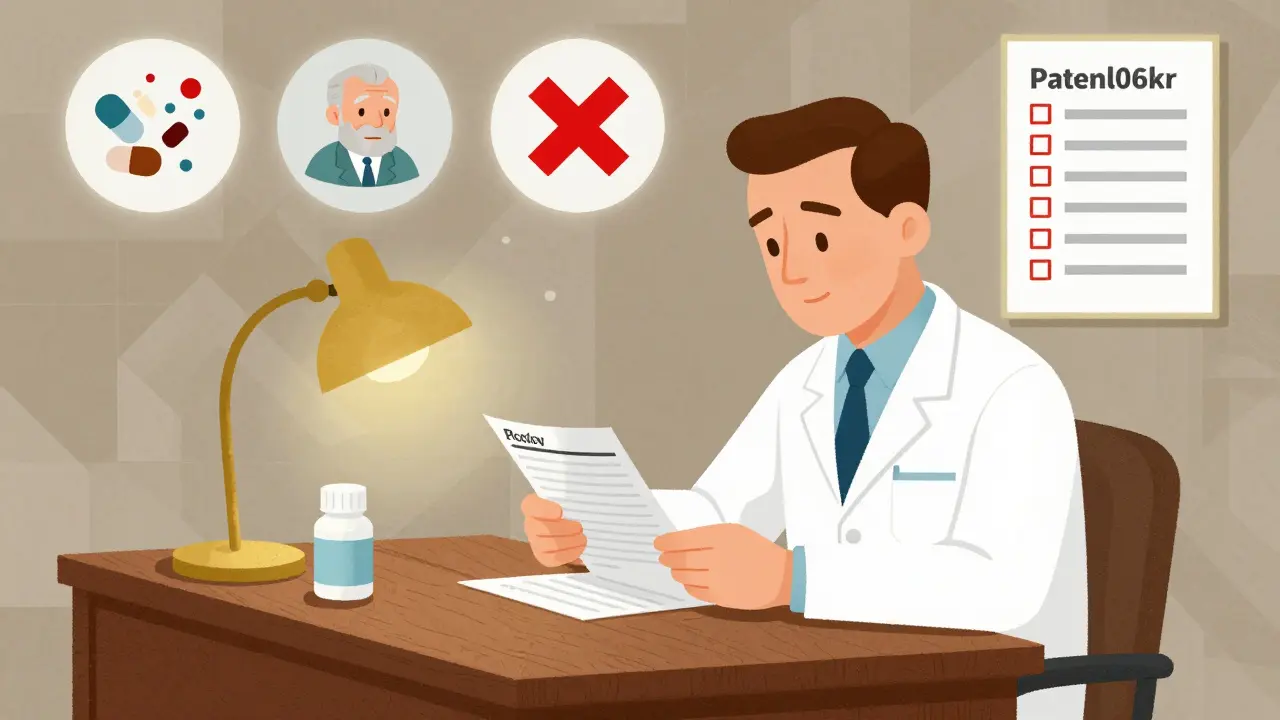
Every year, over 1 million Americans are sent back to the hospital within 30 days of discharge-not because their condition got worse, but because of a simple mistake: the wrong medication, the wrong dose, or no medication at all. These aren’t random errors. They’re preventable. And the people best positioned to stop them? Pharmacists.
What Are Pharmacist-Led Substitution Programs?
Pharmacist-led substitution programs are structured services where pharmacists review a patient’s full medication list during hospital admission, discharge, or care transitions. Their job? Find mismatches, remove dangerous drugs, replace costly or ineffective ones with safer alternatives, and make sure the patient leaves with a clear, accurate, and practical plan.
This isn’t just about checking boxes. It’s about catching what others miss. A patient might say they take “blood pressure pills,” but the pharmacist discovers they’re actually on three different drugs, one of which was stopped six months ago but never removed from the list. Or a senior on five medications for arthritis might be taking an anticholinergic drug that increases their risk of falls by 40%. Pharmacists spot these red flags.
These programs grew out of the 2006 Joint Commission mandate for medication reconciliation. But it wasn’t until 2010-2012 that hospitals realized pharmacists weren’t just dispensers-they were clinical decision-makers. Today, 87% of U.S. academic medical centers and 63% of community hospitals run formal programs. And the data doesn’t lie: these programs cut adverse drug events by 49%, reduce 30-day readmissions by 11%, and save $1,200 to $3,500 per patient.
How They’re Set Up in Real Hospitals
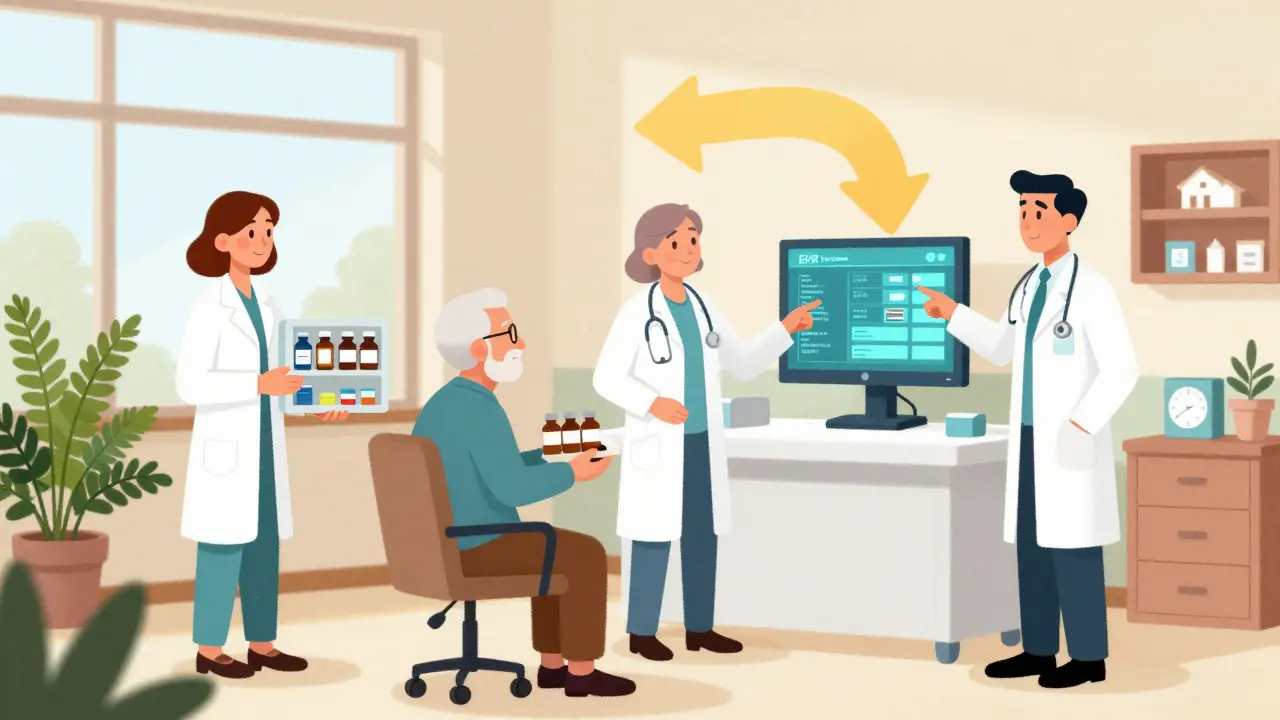
A typical program doesn’t rely on one person. It’s a team. One pharmacist, supported by two full-time medication history technicians and a few interns working weekends. The technicians gather the patient’s full medication list-home prescriptions, OTC drugs, supplements, even what’s in the medicine cabinet. The pharmacist reviews it.
Here’s how it works in practice:
- Data collection: Technicians interview the patient or family, check pharmacy records, and enter everything into the electronic health record (EHR).
- Discrepancy detection: The pharmacist compares the patient’s reported list with the hospital’s admission orders. On average, they find 3.7 discrepancies per patient. One patient might be taking a drug that’s been discontinued. Another might be on a non-formulary medication that costs 10 times more than a generic.
- Substitution decision: If a drug isn’t on the hospital’s formulary, the pharmacist suggests a clinically equivalent alternative. Studies show 68.4% of non-formulary drugs are successfully swapped out-often saving hundreds per dose.
- Deprescribing: For older adults, the focus is often on removing drugs that do more harm than good. Anticholinergics, proton pump inhibitors, and sedatives are common targets. In one study, 52% of pharmacist recommendations involved stopping a medication entirely.
- Communication: The pharmacist updates the electronic record, flags changes for the care team, and explains the plan to the patient in plain language.
Training is strict. Technicians must complete five eight-hour supervised shifts and pass a competency test. After training, they achieve 92.3% accuracy in medication history collection. That’s better than most nurses or doctors do on their first try.
Why Pharmacists Outperform Other Teams
When you compare pharmacist-led programs to physician-only or nurse-led efforts, the difference is stark. A review of 123 studies found that 89% of pharmacy-led initiatives reduced readmissions, compared to just 37% of non-pharmacy efforts.
Why? Three reasons:
- Time: Pharmacists spend an average of 67 minutes per patient on full reconciliation. Most physicians spend under 5 minutes.
- Expertise: Pharmacists are trained to know drug interactions, side effects, and cost equivalencies. A doctor might know a drug treats hypertension. A pharmacist knows which one causes confusion in elderly patients or interacts with their statin.
- Focus: Pharmacists don’t juggle 20 other tasks. Their entire job is medication safety.
The OPTIMIST trial showed a 38% lower risk of readmission for patients who got full pharmacist intervention. The number needed to treat? Just 12. That means for every 12 patients who get this service, one hospital readmission is prevented.
And it’s not just hospitals. Skilled nursing facilities have seen a 134% increase in deprescribing programs since 2020. Why? Because pharmacists are the only ones consistently asking: “Do you still need this?”
The Real Barriers-And How Top Programs Beat Them
It sounds simple. But implementation isn’t easy. Three big problems keep popping up:
1. Physician Resistance
Doctors don’t always agree with pharmacist recommendations. In 43% of hospitals, physicians reject substitution or deprescribing suggestions. Why? Lack of trust, time pressure, or habit.
Successful programs fix this with EHR alerts. Instead of a pharmacist emailing a note, the system automatically flags: “Patient on Pantoprazole. No GI indication. Suggest discontinuation.” The doctor sees it right in their workflow. Acceptance rates jump from 30% to over 70% when the suggestion is embedded in the chart.
2. Time Constraints
Most pharmacists say they don’t have enough time. A full reconciliation takes nearly an hour. In a busy ER, that’s impossible.
The fix? Delegation. Technicians collect data. Pharmacists only review and decide. One hospital cut pharmacist time per patient from 67 minutes to 22 minutes by shifting data entry to trained technicians. The pharmacist’s role? Clinical judgment-not data entry.
3. Reimbursement Gaps
Medicare Part D covers medication therapy management for 28.7 million beneficiaries, but the paperwork is brutal. Medicaid only fully reimburses these services in 32 states. Community pharmacies? Only 32% get paid for pharmacist-led substitution.
That’s changing. The 2022 Consolidated Appropriations Act requires medication reconciliation for all Medicare Advantage patients. That’s a $420 million market. And CMS’s 2024 interoperability proposal could boost reimbursement by 18-22% if pharmacists document substitutions properly in the EHR.
What’s Working Now-and What’s Next
AI tools are now being tested at 14 major hospitals. One system reduces medication history collection time by 35% by pulling data from pharmacy databases, insurance records, and even patient portals. It flags inconsistencies before the pharmacist even logs in.
Deprescribing is the biggest growth area. A recent study found that removing anticholinergic drugs from elderly patients cut falls by 41%. Stopping unnecessary proton pump inhibitors reduced C. difficile infections by 29%. These aren’t small wins-they’re life-saving.
And the trend is clear: more ACOs (Accountable Care Organizations) are tying pharmacist performance to quality metrics. 63% now include reduction in medication-related readmissions as a key indicator. That means hospitals are finally investing in pharmacists-not just as cost-savers, but as clinical leaders.
Where the Gaps Still Exist
Not every hospital has this. Rural areas are falling behind. Only 22% of critical access hospitals have full programs, compared to 89% in urban academic centers. Why? Pharmacist shortages. Many rural hospitals can’t afford even one full-time pharmacist.
Also, some technicians aren’t trained for complex cases. Dr. Mark H. Ebell warns that not all pharmacy technicians can handle high-level reviews. Training matters. Certification matters. Skipping it risks patient safety.
And while 94% of pharmacy residency programs now include this training, it’s still not required in all states. Standardization is the next frontier.
What This Means for Patients
If you or a loved one is being discharged from the hospital, ask: “Will a pharmacist review my medications?” If the answer is no, ask why. If the answer is yes, ask what changes were made.
These programs don’t just cut costs. They cut confusion. They cut danger. They cut trips back to the ER.
One woman in Ohio, 78, was on seven medications after her heart surgery. Her pharmacist found three she didn’t need-including a drug that caused dizziness and falls. After stopping those, she went from 3 ER visits in 6 months to zero in the next year.
That’s not magic. It’s medicine.
What is a pharmacist-led substitution program?
A pharmacist-led substitution program is a clinical service where pharmacists review a patient’s full medication list during hospital admission, discharge, or care transitions. They identify discrepancies, remove unsafe or unnecessary drugs, replace non-formulary medications with better alternatives, and ensure patients leave with a clear, accurate, and affordable medication plan. These programs are proven to reduce adverse drug events by 49% and 30-day hospital readmissions by 11%.
How do pharmacist-led programs differ from doctor-led medication reviews?
Doctors often focus on diagnosing and treating conditions, with limited time to review every medication. Pharmacists specialize in drug interactions, side effects, cost, and adherence. A pharmacist-led program typically spends 67 minutes per patient, compared to under 5 minutes for most physicians. Studies show 89% of pharmacy-led programs reduce readmissions, while only 37% of non-pharmacy efforts do.
Do these programs actually save money?
Yes. Each patient who receives a full pharmacist-led substitution program saves between $1,200 and $3,500 on average by avoiding preventable hospital readmissions. Hospitals that implement these programs see 11.3% lower penalties under CMS’s Hospital Readmissions Reduction Program. The U.S. market for these services reached $1.87 billion in 2022 and is projected to hit $3.24 billion by 2027.
What is deprescribing, and why is it part of these programs?
Deprescribing is the process of safely stopping medications that are no longer needed or are doing more harm than good-especially in older adults. Common targets include anticholinergics (which increase fall risk), proton pump inhibitors (linked to C. difficile infections), and sedatives. In pharmacist-led programs, over half of recommendations involve stopping a drug. Studies show deprescribing reduces falls by 41% and infections by 29%.
Are these programs available in all hospitals?
No. While 87% of academic medical centers and 63% of community hospitals have formal programs, only 22% of rural critical access hospitals do. The biggest barriers are pharmacist shortages and lack of reimbursement. Medicare Part D covers these services for 28.7 million beneficiaries, but Medicaid reimbursement varies by state-only 32 states fully pay for them.
Can I request a pharmacist-led medication review if I’m being discharged?
Yes. Ask your care team: “Will a pharmacist review my medications before I leave?” If they say no, ask if they can connect you with a medication therapy management (MTM) pharmacist. Many hospitals offer this service even if it’s not part of a formal program. You can also ask your community pharmacist to perform a medication review after discharge-many offer it free or at low cost.
phyllis bourassa
March 6, 2026 AT 07:09Roland Silber
March 7, 2026 AT 04:16Adebayo Muhammad
March 8, 2026 AT 13:37Joey Pearson
March 10, 2026 AT 07:57Patrick Jackson
March 10, 2026 AT 23:27Pranay Roy
March 11, 2026 AT 11:42Joe Prism
March 12, 2026 AT 06:15Bridget Verwey
March 12, 2026 AT 18:55Andrew Poulin
March 14, 2026 AT 01:28Weston Potgieter
March 15, 2026 AT 08:52Vikas Verma
March 16, 2026 AT 02:22Sean Callahan
March 17, 2026 AT 20:44