
Heartburn Risk Calculator
Your Risk Factors
Heartburn Risk Assessment
Heartburn isn’t just a nuisance after a big meal-it’s a signal your body is struggling with something deeper. If you’re eating spicy foods and taking medications like aspirin, ibuprofen, or even blood pressure pills, you might be stacking two triggers that make heartburn worse. And while antacids give quick relief, they don’t fix the root problem. The real solution? Understanding how these triggers interact and adjusting both your diet and medication habits to protect your digestive system.
Why Spicy Food Makes Heartburn Worse
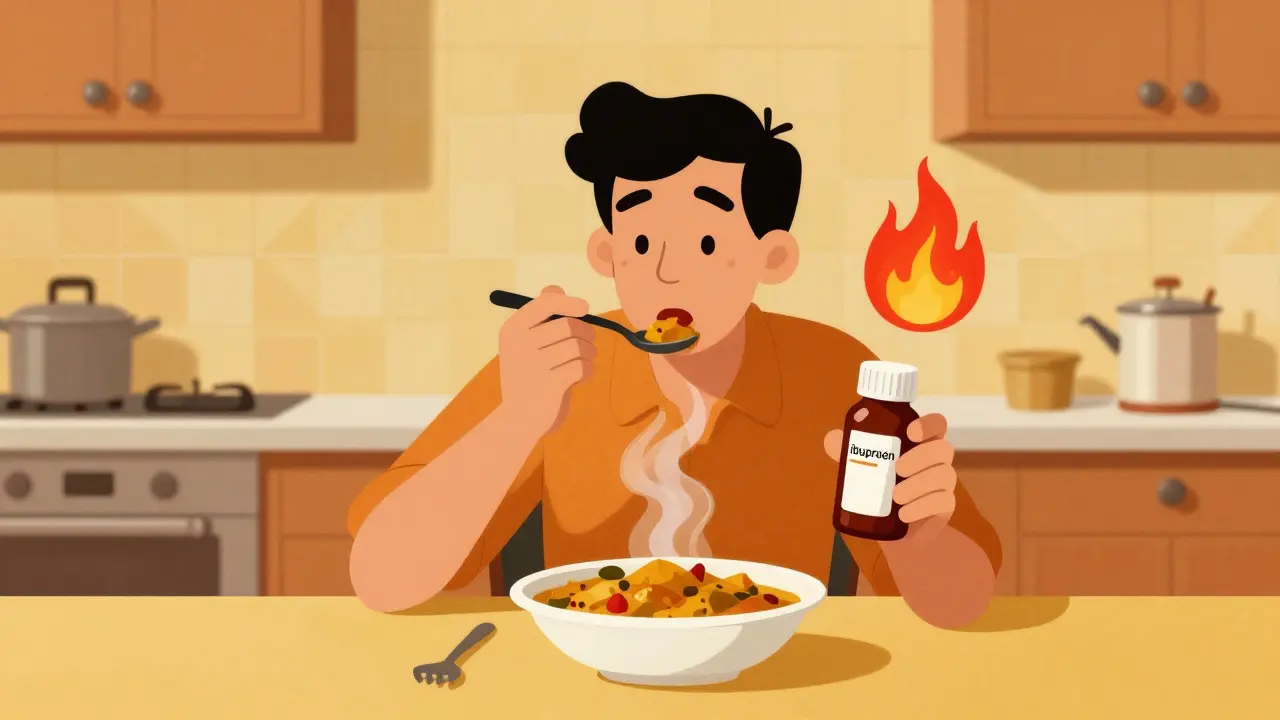
It’s not just about the heat. The compound that makes chili peppers spicy-capsaicin-directly affects the muscle that keeps stomach acid where it belongs: the lower esophageal sphincter (LES). When this muscle relaxes too much, acid flows back into your esophagus, causing that burning sensation. Studies show capsaicin can drop LES pressure by 30-40% in sensitive people within 30 minutes of eating. That’s why even a small bite of hot salsa can trigger symptoms for some, while others eat buffalo wings without issue.
The NIH says there’s not enough evidence to ban spicy food for everyone with GERD. But clinical experience tells a different story. Dr. Kyle Staller from Massachusetts General Hospital found that 65-75% of GERD patients report worse symptoms after eating spicy meals. It’s not a universal rule, but it’s common enough to warrant testing. If you notice heartburn after chili, curry, or hot sauce, it’s worth cutting it out for 3-7 days to see if things improve.
Medications That Make Heartburn Worse
Many common drugs aren’t designed to hurt your stomach-but they do. Aspirin and ibuprofen (NSAIDs) can cause tiny erosions in the esophagus and increase acid production. Regular use raises GERD risk by 40-60%. Beta blockers, often prescribed for high blood pressure, relax the LES and increase heartburn risk by 22%, according to the Framingham Heart Study. Even medications for asthma (theophylline) and chest pain (nitrates) can loosen the LES by up to 45%.
Anticholinergics, used for motion sickness or overactive bladder, are another hidden culprit. A University of Michigan study found they reduce LES pressure in 68% of users. And if you’re taking bisphosphonates for osteoporosis, you’re at risk for esophagitis-especially if you take them lying down or with too little water.
It’s not just about what you take-it’s when. Taking these meds right before bed or on an empty stomach increases the chance of acid damage. Always take NSAIDs with food and water, and avoid lying down for at least 30 minutes after swallowing them.
How Medications Like Pantoprazole Lose Their Edge
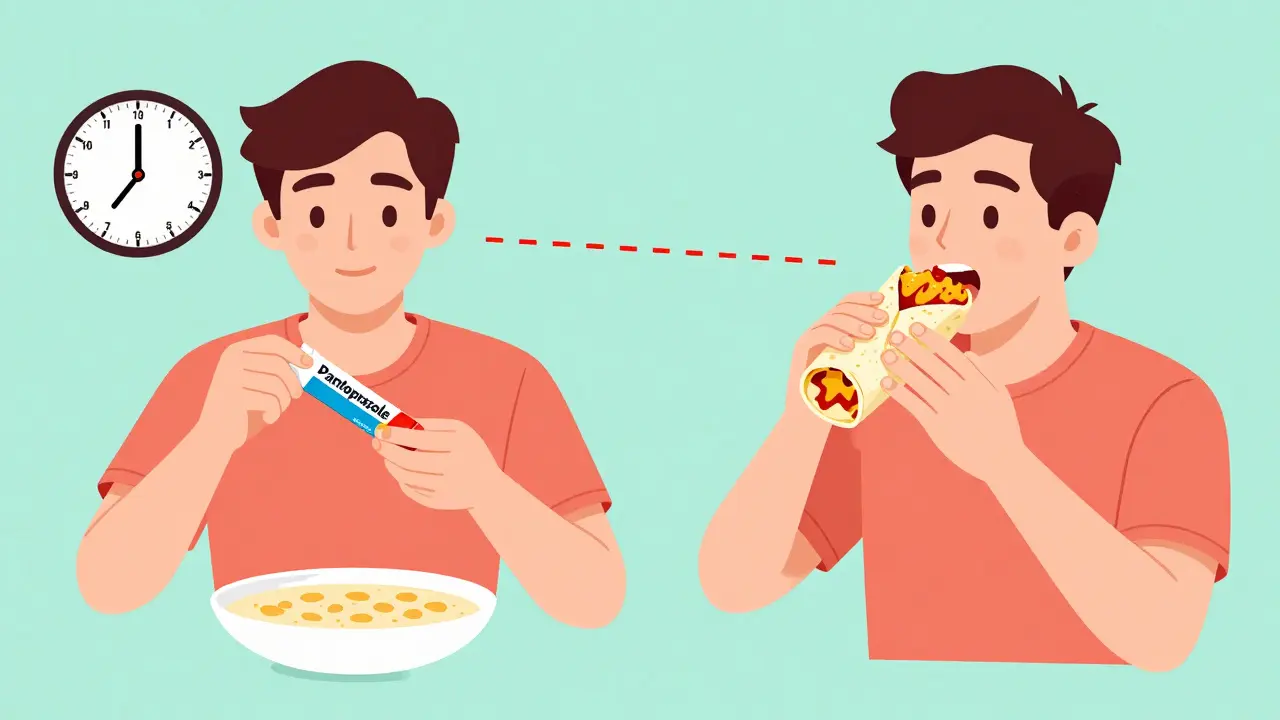
Pantoprazole, a proton pump inhibitor (PPI), is one of the most prescribed drugs for heartburn. But it doesn’t work the same way if you eat spicy, fatty, or acidic foods soon after taking it. Research shows its absorption drops by 18-23% when taken within two hours of trigger foods. That means you might be taking your pill correctly-but eating a spicy burrito an hour later, and your medication isn’t doing its job.
For maximum effect, take pantoprazole 30-60 minutes before your first meal of the day. Don’t wait until after breakfast. And avoid pairing it with coffee, chocolate, alcohol, or mint-these also interfere with absorption. If you’re still having symptoms despite taking your PPI, your diet might be sabotaging it.
Also, don’t rely on PPIs long-term without checking in with your doctor. Chronic use has been linked to increased risks of kidney disease, bone fractures, and nutrient deficiencies. The FDA has flagged potential heart attack risks, too. That’s why more doctors are now pushing for lifestyle changes before increasing medication doses.
Antacids: Quick Fix, Long-Term Risk
When heartburn hits, Tums or Rolaids feel like magic. They neutralize acid in 2-5 minutes. But their effect lasts only 30-60 minutes. That’s why so many people end up taking them repeatedly after spicy meals. The problem? Overusing antacids can cause electrolyte imbalances, especially if you’re using aluminum- or magnesium-based ones daily.
Worse, antacids interfere with other meds. Aluminum in Tums can cut tetracycline antibiotic absorption by half. Fluoroquinolones like Cipro lose up to 90% of their strength if taken with antacids. The Cleveland Clinic recommends spacing antacids at least four hours apart from other medications. If you’re on multiple prescriptions, this timing matters.
And here’s a hidden danger: antacids mask symptoms. If you’re popping them after every spicy meal, you might be ignoring a hiatal hernia, Barrett’s esophagus, or even early signs of esophageal damage. Heartburn that keeps coming back isn’t just annoying-it’s a warning.
What Actually Works: A Practical Plan
There’s no one-size-fits-all fix. But a proven approach combines timing, testing, and smart habits.
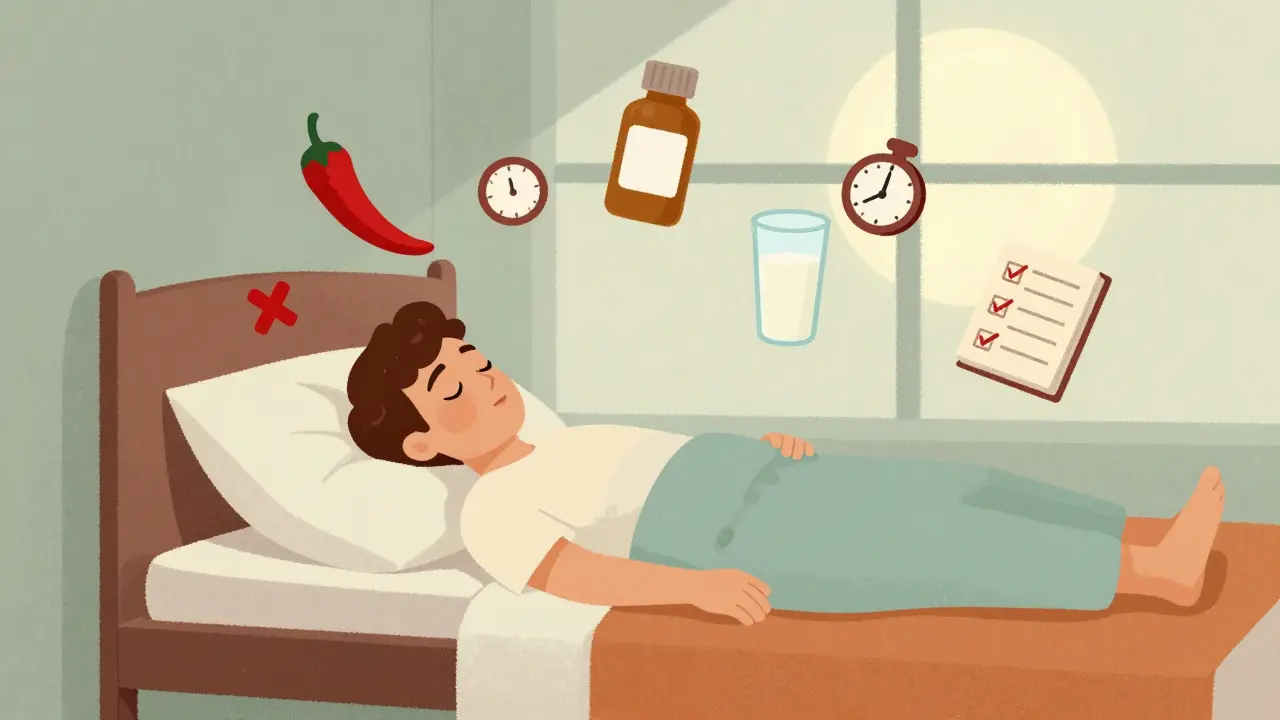
- Track your triggers. Keep a food and symptom diary for two weeks. Note everything you eat, when you took meds, and if heartburn followed. Look for patterns-not just spicy food, but also timing, portion size, and posture after eating.
- Eliminate and reintroduce. Cut out spicy foods, caffeine, alcohol, and chocolate for 7 days. Then add one back every 3 days. If symptoms return, you’ve found your trigger.
- Time your meds right. Take PPIs 30-60 minutes before breakfast. Take antacids at least 4 hours after other pills. Avoid NSAIDs on an empty stomach.
- Change your habits. Don’t lie down for 3 hours after eating. Elevate the head of your bed by 6-8 inches. Eat smaller meals spaced 3 hours apart. This reduces stomach pressure and helps your body empty food properly.
- Try capsaicin desensitization. If you love spicy food, some people can rebuild tolerance. Start with very mild heat (like paprika) and slowly increase over weeks. Johns Hopkins research showed 65% of participants improved their tolerance without flare-ups after 12 weeks.
Patients who follow this personalized plan have a 78% success rate controlling symptoms, according to Dr. Lauren B. Gerson’s 2023 meta-analysis. Those who rely only on meds? Only 42% get lasting relief.
What’s New in GERD Treatment
The field is shifting away from blanket restrictions. The American Gastroenterological Association’s 2023 guidelines now support “precision nutrition”-tailoring advice to your body, not a list of forbidden foods. And new drugs are emerging. Vonoprazan (Voquezna), approved by the FDA in August 2023, works faster and more consistently than traditional PPIs, even in people who don’t respond well to older meds.
At the same time, the market is changing. Prescription PPI sales are growing slowly, while diet and lifestyle programs are booming. Hospitals that hire dietitians to work with GERD patients see 27% lower medication costs and 33% better outcomes. The future of heartburn care isn’t just more pills-it’s smarter eating, better timing, and personal insight.
When to See a Doctor
Heartburn that happens more than twice a week, wakes you up at night, or doesn’t respond to OTC meds needs evaluation. So does trouble swallowing, unexplained weight loss, or vomiting blood. These aren’t normal. They could signal Barrett’s esophagus, a precancerous condition, or a hiatal hernia.
If you’re on long-term PPIs, ask your doctor about getting off them safely. Stopping suddenly can cause rebound acid hypersecretion-where your stomach overproduces acid, making symptoms worse than before. A gradual taper, paired with dietary changes, is safer.
Can spicy food cause permanent damage to the esophagus?
Spicy food itself doesn’t cause permanent damage, but chronic acid reflux from repeated triggers can. Over time, stomach acid eroding the esophagus lining can lead to Barrett’s esophagus, a condition that increases cancer risk. Spicy food is a trigger, not the direct cause-but if it’s making your reflux worse, it’s contributing to the damage.
Is it safe to take antacids every day?
No. Taking antacids more than 2-3 times a week can lead to electrolyte imbalances, kidney problems, or interfere with other medications. They’re meant for short-term relief, not daily management. If you need them often, talk to your doctor about underlying causes and better long-term options.
Does drinking water help reduce heartburn after spicy food?
Water can help wash acid down and dilute it slightly, but it won’t neutralize capsaicin or fix a relaxed LES. Milk or yogurt may offer more relief because they contain fats that bind to capsaicin. Still, the best strategy is prevention-avoiding triggers or spacing them from medications.
Can I still eat spicy food if I’m on pantoprazole?
You might, but it depends. If your PPI isn’t working as well, spicy food could be why. Try taking your pill 30-60 minutes before your meal, then wait at least 2 hours before eating anything spicy. If symptoms still happen, you may need to reduce your spice level or find alternatives like smoked paprika instead of cayenne.
How long does it take to see improvement after changing my diet?
Most people notice improvement within 1-2 weeks of eliminating triggers and adjusting medication timing. Full symptom control often takes 3-4 weeks, especially if you’re also tapering off PPIs. Consistency is key-track your meals and symptoms daily to spot patterns.
Final Thought: Your Body, Your Rules
Heartburn isn’t something you just have to live with. It’s not a punishment for loving spicy food or taking necessary meds. It’s a clue. Your body is telling you that something in your routine isn’t working. The goal isn’t to give up everything you love-it’s to find your personal balance. Test your triggers. Time your meds. Listen to your body. And don’t settle for masking symptoms with pills when real change is possible.
Herman Rousseau
December 22, 2025 AT 17:11Been dealing with this for years. Took me 3 months of tracking to realize my nightly ibuprofen for back pain was wrecking my esophagus. Switched to acetaminophen and cut out spicy dinners after 7pm. No more midnight burning. PPIs are not a license to eat tacos at midnight.
Art Van Gelder
December 23, 2025 AT 18:49Let me tell you about my cousin in Mumbai-he eats ghost peppers for breakfast, takes aspirin like candy, and still runs marathons at 68. Meanwhile, I ate one slice of jalapeño pizza and spent three hours on the toilet crying. There’s no universal rule here. Your body isn’t broken-it’s just different. The real tragedy isn’t the heartburn, it’s the one-size-fits-all medical dogma that tells you to quit what you love. Maybe the problem isn’t the spice. Maybe it’s the system.
Tarun Sharma
December 25, 2025 AT 03:14Thank you for the detailed analysis. The evidence-based approach to dietary triggers and medication timing is commendable. I will follow the 7-day elimination protocol as suggested.
Johnnie R. Bailey
December 27, 2025 AT 01:11People forget that the esophagus isn’t designed to handle acid reflux-ever. It’s a delicate tube lined with squamous cells, not the tough stomach mucosa. NSAIDs? They’re like sandpaper on raw nerves. And capsaicin? It doesn’t burn you-it tricks your nerves into screaming ‘FIRE!’ even when there’s no flame. The real hack? Reduce pressure. Don’t lie down. Don’t overeat. Don’t treat your stomach like a trash compactor. Your body isn’t asking for miracles. Just respect.
Sai Keerthan Reddy Proddatoori
December 28, 2025 AT 00:52Big Pharma doesn't want you to know this. PPIs are a trap. They make you dependent. Then they sell you more pills. And they push spicy food as the villain so you don't ask why your blood pressure med is causing heartburn. The FDA knows. Doctors know. But they won't tell you. Eat plain rice. Stop taking everything. Your body will thank you.
Candy Cotton
December 28, 2025 AT 15:12Actually, the NIH study referenced is outdated. The 2024 meta-analysis in The Lancet Gastroenterology shows no significant correlation between capsaicin and LES relaxation in non-GERD populations. Your anecdotal 65-75% figure is cherry-picked from small cohorts. Also, Vonoprazan isn't 'new'-it's been standard in Japan since 2015. You're presenting old data as breakthrough.
Ajay Brahmandam
December 30, 2025 AT 04:08I used to think spicy food = bad. Then I tried eating mild curry every night for two weeks while taking my PPI 45 mins before dinner. No heartburn. Zero. Turns out it’s not the spice-it’s the timing, the portion, and the fact I was eating it at 11pm while scrolling TikTok. Changed my habits, not my taste buds. Life’s better now.
jenny guachamboza
December 30, 2025 AT 11:25OMG I KNEW IT!! 😱 The government is hiding the truth about antacids!! They’re secretly making us weak so we need MORE pills!! 🤫💊 And PPIs? They’re from the Illuminati!! I stopped taking mine and now I’m healed!! 🌈✨ Also I only eat kale and drink lemon water now. My dog can feel my energy shift. 🐶💛
Nader Bsyouni
January 1, 2026 AT 02:40How quaint. You treat the body like a machine that needs tuning. But the real problem isn’t capsaicin or NSAIDs-it’s the modern obsession with control. We’ve lost the ability to suffer. To feel. To let the body find its own equilibrium. You want relief? Stop medicating. Stop tracking. Stop optimizing. Let the fire burn. Maybe then you’ll finally be still enough to hear what your body is saying.
Jim Brown
January 1, 2026 AT 06:06The human organism is not a chemical reactor to be calibrated with pharmaceutical precision. The reductionist paradigm that treats heartburn as a solitary biochemical malfunction-ignoring circadian rhythms, psychological stress, gut microbiota, and ancestral dietary patterns-is not merely incomplete; it is profoundly misleading. To isolate capsaicin or pantoprazole absorption is to mistake the shadow for the substance. The true pathology lies in the dissonance between our Paleolithic physiology and our hyperprocessed, chronically overstimulated modern existence. Healing, then, is not a matter of dosage timing or elimination diets-but of reintegration. Of returning to rhythm. Of silence. Of eating as if your life depends on it-because it does.
Julie Chavassieux
January 1, 2026 AT 18:12So... you're saying... if I just... wait... 30 minutes... after my pill... and don't eat... spicy stuff... it works? I mean... that's it? No magic? No secret? No supplement? No cleanse? Just... patience? And... food timing? That's... kind of... boring.
Jeremy Hendriks
January 2, 2026 AT 10:13You talk about 'precision nutrition' like it's some revolutionary concept. Newsflash: every culture in history figured this out before the FDA existed. Indians use yogurt with curry. Mexicans eat avocado with salsa. Koreans drink kimchi juice after spicy meals. It’s not rocket science-it’s tradition. We didn’t need a 2023 guideline to tell us that fat binds capsaicin. Our grandmothers knew. And they didn’t need a PPI to live to 90.
Kathryn Weymouth
January 3, 2026 AT 11:46Thank you for citing Dr. Gerson’s 2023 meta-analysis. I’ve been using your five-step plan for six weeks now. I reduced my PPI dose by 25% last month and haven’t had a single episode of nighttime heartburn. I still eat curry-just not at midnight. The key was consistency, not elimination. Your post changed my relationship with food and medication. I’m not just symptom-free-I’m empowered.
Vikrant Sura
January 4, 2026 AT 18:20Interesting. But did you control for BMI? Or sleep apnea? Or alcohol consumption? Probably not. This feels like a blog post dressed up as a medical review.