
Blood Thinner Safety Calculator for Athletes
Your Sport Selection
Your Blood Thinner Type
Your Personal Safety Assessment
Recommended to continue with standard precautions
Safety Recommendations
Wear protective gear during all activities and follow your doctor's advice.
Playing sports while on blood thinners isn’t just risky-it’s a calculated decision. If you’re an athlete taking anticoagulants, whether for atrial fibrillation, a history of blood clots, or a mechanical heart valve, you’re not just managing a condition-you’re managing a potential life-threatening conflict between performance and safety. The question isn’t whether you can still play. It’s how you can play safely.
Why Athletes on Blood Thinners Face Higher Risks
Anticoagulants-commonly called blood thinners-don’t actually thin your blood. They slow down the clotting process to prevent dangerous clots from forming. That’s great for preventing strokes or pulmonary embolisms. But when you’re diving for a ball, getting tackled, or falling off a bike, that same mechanism turns into a liability. Studies show athletes on anticoagulants have a 3 to 5 times higher risk of major bleeding compared to non-athletes. In high-contact sports like rugby or ice hockey, the chance of a significant injury is over 90%. One hard hit to the head or a bad fall can lead to internal bleeding that’s hard to detect until it’s too late. Even in sports like soccer or basketball, where contact is frequent but not always violent, the bleeding risk jumps to 22.7% among anticoagulated players, according to one 2018 study. The problem isn’t just the sport-it’s the medication. Warfarin, the older blood thinner, has a narrow window of effectiveness. Too little, and clots form. Too much, and you bleed. Its effects swing wildly based on diet, other medications, or even a bad night’s sleep. For an athlete training hard and traveling often, that’s a nightmare.Classifying Sports by Risk Level
Not all sports are created equal when you’re on anticoagulants. Experts group them into three clear categories:- High-risk sports: These involve direct, forceful contact with a greater than 90% chance of trauma. Examples: American football, rugby, boxing, ice hockey, wrestling. These are generally contraindicated for anyone on therapeutic anticoagulation. Even one collision can cause fatal bleeding in the brain or abdomen.
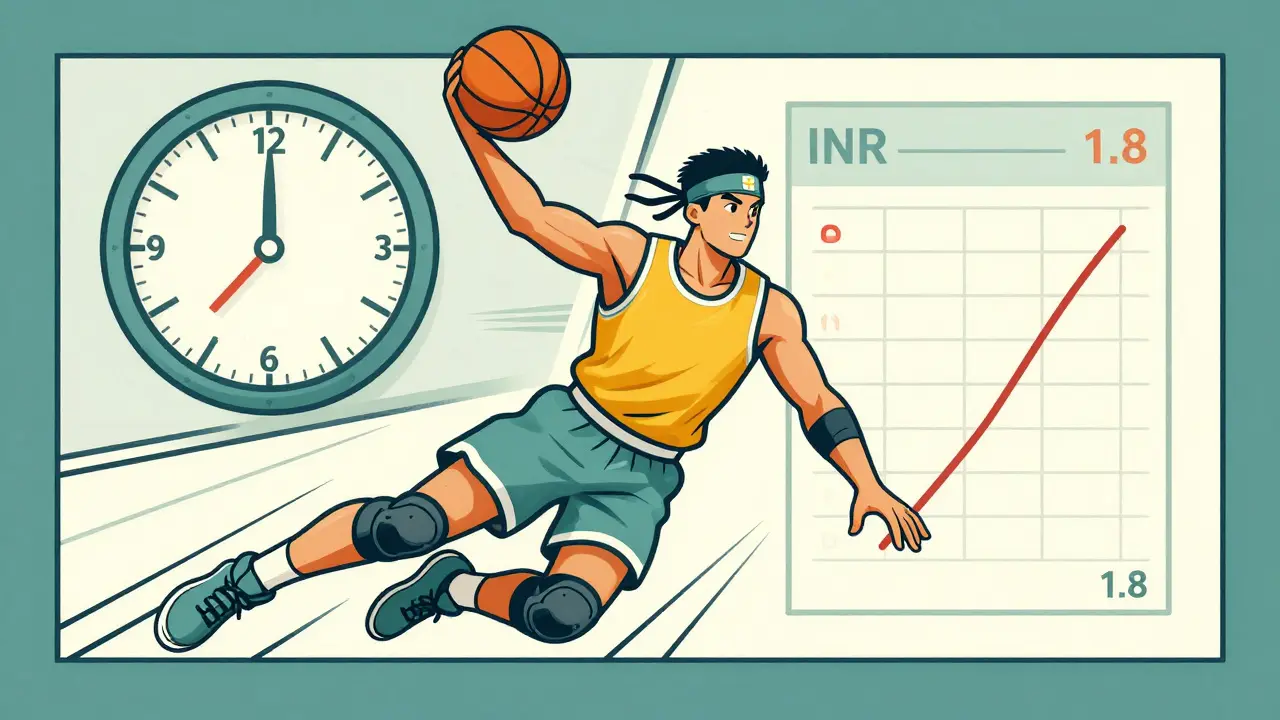
- Intermediate-risk sports: These have a 30-60% chance of impact. Examples: basketball, soccer, lacrosse, alpine skiing, martial arts. Participation here requires careful planning, protective gear, and often medication adjustments.
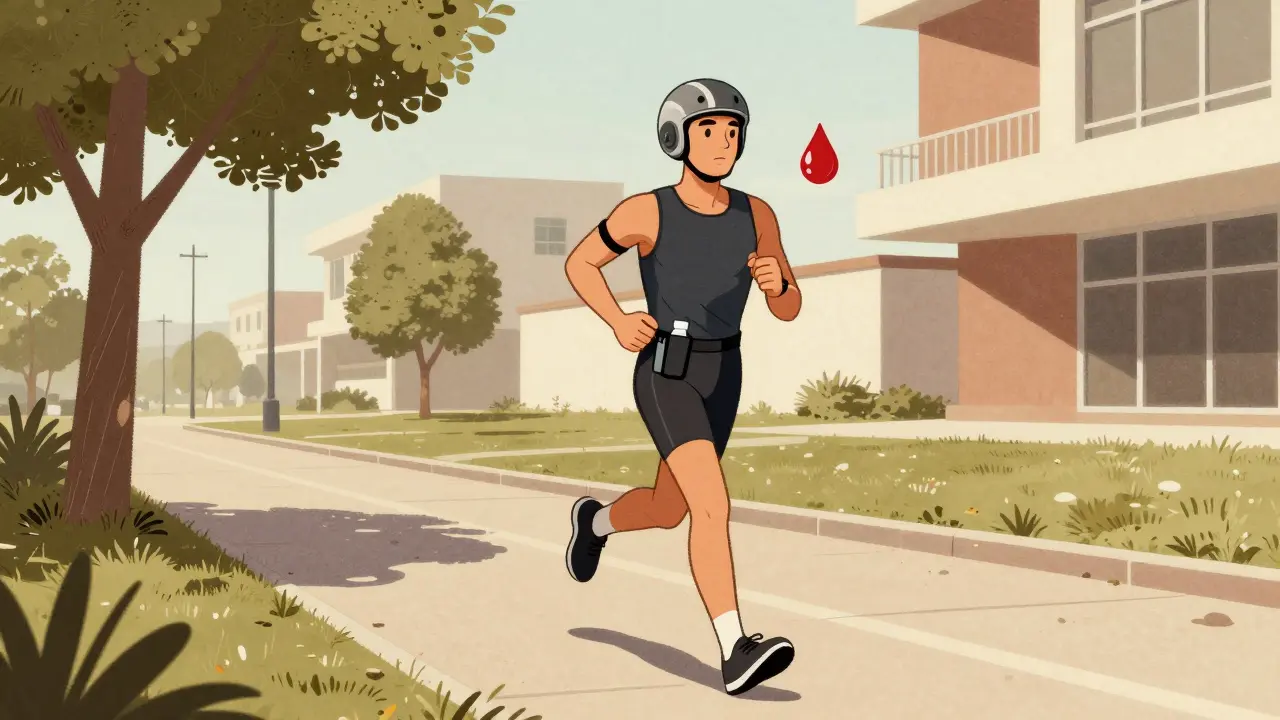
- Low-risk sports: These involve minimal trauma risk-less than 10%. Examples: running, cycling, swimming, rowing, yoga, golf. These are usually safe to continue with minimal changes.
Choosing the Right Blood Thinner
Not all anticoagulants are the same. The two main types are warfarin and direct oral anticoagulants (DOACs), which include apixaban, rivaroxaban, dabigatran, and edoxaban. Warfarin requires regular blood tests (INR checks) to make sure you’re in the safe zone-usually between 2.0 and 3.0. But it interacts with vitamin K-rich foods (like spinach and kale), antibiotics, and even alcohol. For athletes with irregular schedules, that’s hard to manage. Plus, its half-life is 36-72 hours. You can’t easily turn it off before a game. DOACs are different. They have shorter half-lives-apixaban clears in 8-15 hours, rivaroxaban in 5-13. That means you can time your dose. Take it 24 hours before competition, and by game time, your blood’s clotting ability is closer to normal. Studies show this reduces bleeding risk by 37% without increasing clot risk. A 2025 JAMA study of over 160,000 patients found apixaban had the lowest risk of major bleeding compared to other anticoagulants. It also reduced recurrent clots better than warfarin and rivaroxaban. For athletes, that makes apixaban the preferred DOAC-if you’re eligible. There’s one big exception: if you have a mechanical heart valve, DOACs are off-limits. Warfarin is still the only approved option. That puts athletes with mechanical valves in a tough spot. Most are advised to retire from contact sports.Four Proven Strategies to Stay Active
If you’re cleared for low- or intermediate-risk sports, here’s how athletes successfully manage their medication:- Switch to low-impact sports: Runners and cyclists who switch from basketball or soccer reduce their major bleeding risk from 8.2% to just 1.9%. Add a helmet, padded shorts, or elbow pads, and you’re even safer. Many athletes find they enjoy these sports more long-term.
- Temporarily lower your warfarin dose: Some athletes reduce their warfarin 3-4 days before a competition to bring their INR down to 1.5-1.8. This lowers bleeding risk but raises clot risk slightly-from 0.2% to 0.8% per event. Only do this under strict medical supervision.
- Use low molecular weight heparin (LMWH) with timing: Enoxaparin (Lovenox) is an injectable anticoagulant with a 12-24 hour window. Athletes can take their daily shot, then skip the dose 24 hours before competition. This keeps clot protection strong while reducing bleeding risk by 42%.
- Time your DOAC dose around events: This is the most advanced and effective strategy. A professional cyclist in a 2023 case study took apixaban at 8 a.m. on the day before a race. By race day at 10 a.m.-26 hours later-his drug levels were below the therapeutic threshold. He had no clots and no bleeding. This requires specialized blood tests (anti-Xa assays) and close monitoring with a hematologist.
Protective Gear and Environmental Adjustments
Even in low-risk sports, you can’t ignore protection. A simple fall on concrete can cause a subdural hematoma. That’s why many athletes on anticoagulants wear:- Headgear (even in cycling or running)
- Padding on hips, tailbone, and shins
- High-visibility clothing to avoid collisions
- Non-slip footwear for wet or icy conditions
What the Experts Say
Dr. Paul D. Thompson, who helped write the AHA/ACC guidelines, says: “The athlete’s thrombotic risk isn’t the same as a sedentary person’s. Endurance athletes face inflammation, dehydration, and long flights-all of which raise clot risk. But their sport adds bleeding risk. You can’t ignore either.” Dr. Matteo Palamà, lead author of a 2023 European review, supports DOACs as the first choice for athletes: “Their short half-life lets us turn the anticoagulant effect on and off like a switch. That’s a game-changer.” But there’s a gap. Only 0.3% of participants in major anticoagulant trials were athletes. That means most guidelines are based on data from older, less active people. Your doctor is making educated guesses.What’s Changing in 2025
New tools are making this easier. The CoaguChek INRange device, cleared by the FDA in March 2023, lets you check your INR at home with 95% accuracy. No more clinic visits. Just a finger prick and a 60-second result. Researchers are also testing wearable sensors in sports gear to measure impact forces in real time. Imagine a football helmet that tells your doctor how hard you were hit-then adjusts your medication automatically. Pilot studies are underway. The World Anti-Doping Agency confirmed in 2020 that anticoagulants aren’t banned, as long as you have proper documentation. That means you can compete legally, as long as you’re transparent with officials.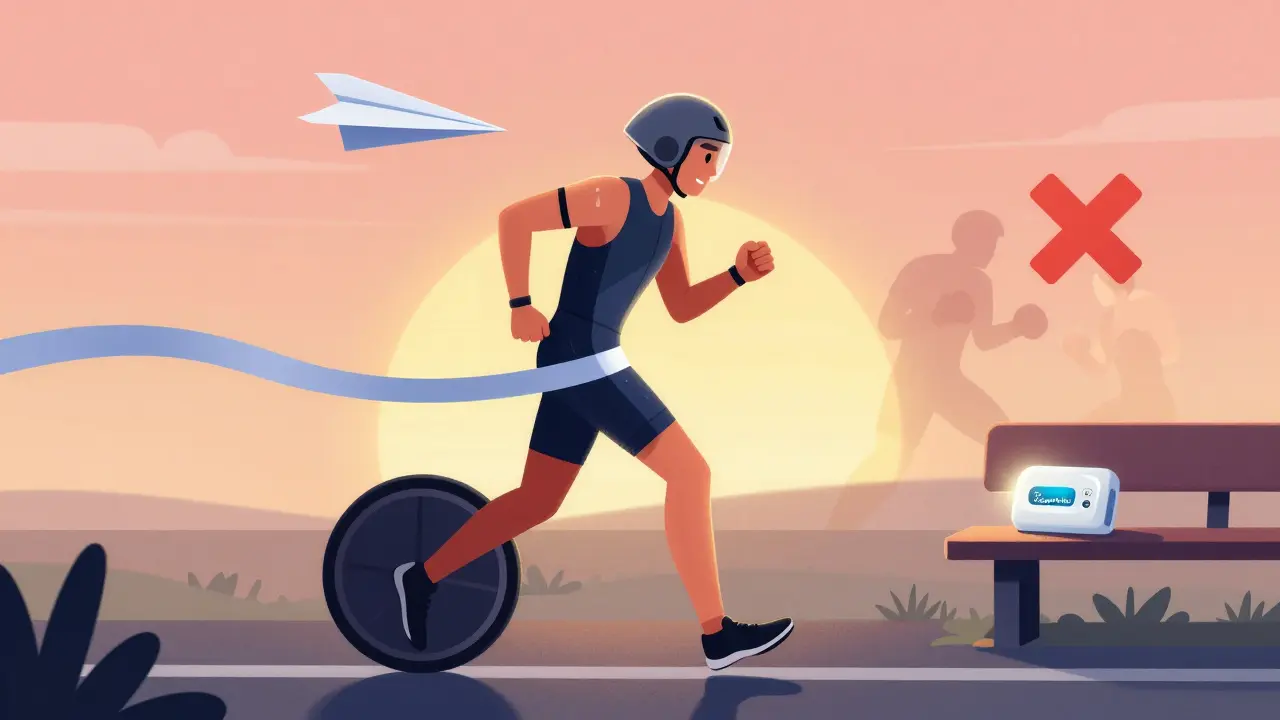
When to Stop
Some athletes are told to stop competing. That’s not failure-it’s survival. If you’re on warfarin for a mechanical valve, or if you’ve had a brain bleed before, continuing contact sports is not worth the risk. The goal isn’t to be the best athlete you can be. It’s to be alive to be an athlete tomorrow. Many athletes who stop high-risk sports find new passions. Triathlons, trail running, kayaking, even competitive archery-these can be just as fulfilling. And they’re safe.Final Checklist for Athletes on Blood Thinners
- Know your exact diagnosis and why you’re on anticoagulants.
- Know your medication type and half-life.
- Know your sport’s risk category.
- Never compete in high-contact sports without explicit clearance from a hematologist and cardiologist.
- Use protective gear-even in “safe” sports.
- Time your DOAC dose 24 hours before competition if approved by your doctor.
- Keep emergency contact info and medication list with you at all times.
- Report any bruising, swelling, headaches, or unusual fatigue immediately.
Being on blood thinners doesn’t mean you can’t be active. It means you have to be smarter. The right combination of medication choice, timing, protection, and medical oversight lets many athletes keep doing what they love-without putting their lives on the line.
Can I still play soccer if I’m on a blood thinner?
Soccer is classified as an intermediate-risk sport due to frequent contact and falls. While some athletes on DOACs continue playing with modifications-like timing their dose 24 hours before games and wearing protective padding-it’s not recommended without expert clearance. The bleeding risk is real: studies show over 20% of anticoagulated soccer players experience major bleeding events. Always consult a hematologist and cardiologist before returning to play.
Are DOACs safer than warfarin for athletes?
Yes, for most athletes. DOACs like apixaban have more predictable effects, fewer food interactions, and shorter half-lives, allowing you to time your dose around competition. A 2025 JAMA study found apixaban reduced major bleeding by 19% compared to rivaroxaban and 26% compared to warfarin. Warfarin requires frequent blood tests and is harder to adjust quickly, making it less ideal for active individuals.
Can I stop my blood thinner before a game?
You should never stop your blood thinner without medical supervision. However, for DOACs like apixaban, your doctor may advise skipping your dose 24 hours before a competition. This lowers your bleeding risk while still maintaining protection against clots. Warfarin cannot be safely stopped this way-it takes days to clear from your system. Never adjust your dose on your own.
What sports are safest for someone on anticoagulants?
Low-risk sports with minimal impact and no collision are safest: running, cycling, swimming, rowing, yoga, golf, and walking. These have less than a 10% chance of trauma. Even in these sports, use protective gear like helmets and padding. Avoid activities with sudden stops, falls, or overhead movements (like tennis or rock climbing) unless cleared by your doctor.
Do I need to tell my coach or team I’m on blood thinners?
Yes. Your coach and athletic trainer should know so they can recognize signs of internal bleeding-like unusual bruising, dizziness, or swelling-and respond quickly. Many sports organizations now require disclosure of anticoagulant use for liability and safety reasons. Keep an emergency card with your medication and doctor’s contact info in your gear.
Is it safe to travel for competitions while on anticoagulants?
Traveling is generally safe but requires planning. Long flights increase clot risk, so stay hydrated, move your legs, and wear compression socks. Carry your medication in your carry-on with a copy of your prescription. If you’re on warfarin, arrange for INR testing at your destination. DOAC users should stick to their schedule and avoid missing doses. Always have a backup plan in case of delays.
Aaron Bales
January 1, 2026 AT 02:15DOACs are a game-changer for athletes. I switched from warfarin to apixaban last year and finally got back on the bike without sweating every fall. Timing the dose 24 hours before a ride? Life-saving. No more clinic visits. Just take it, train hard, live.
Sara Stinnett
January 2, 2026 AT 05:33Oh please. You're all just glorifying pharmaceutical convenience while ignoring the fundamental absurdity of risking your life for a sport. You call apixaban a 'switch'? It's a chemical compromise wrapped in marketing fluff. The body wasn't designed to be tinkered with like a car engine-especially not by men in white coats who've never felt a tackle.
linda permata sari
January 3, 2026 AT 17:33From Jakarta to the Rockies-I’ve seen athletes push limits everywhere. But this? This is real. I watched my cousin, a pro volleyball player in Bali, swap spikes for swim fins after her valve replacement. She cried. Then she started coaching kids in open-water swimming. Now she’s got a whole team of survivors. You don’t give up your spirit-you just change the battlefield.
Brandon Boyd
January 4, 2026 AT 19:39Look-I’ve coached athletes on blood thinners for over a decade. The ones who thrive? They don’t fight the rules. They master them. Protective gear? Non-negotiable. Timing meds? Sacred. And they don’t just play-they inspire. If you’re on DOACs and still chasing goals, you’re not broken. You’re upgraded.
Branden Temew
January 5, 2026 AT 23:12So we’re telling athletes to ‘be smarter’-but the real question is: why does being an athlete require a pharmaceutical hack just to survive? We’ve turned sports into a bioengineering project. Where’s the poetry in that? When did ‘living’ become a risk-adjusted algorithm?
Frank SSS
January 7, 2026 AT 14:58Yeah but like… how many of these guys actually die? I mean, I’ve seen 17-year-olds get hit by cars and walk it off. Is this just fear porn dressed up as medicine? Also, why does everyone act like warfarin is some ancient curse? I’ve been on it for 8 years. I eat kale, I drink beer, I play pickup basketball. Still breathing.
Paul Huppert
January 8, 2026 AT 12:09I’ve got a mechanical valve and I ride my bike every morning. Just avoid the trails after rain. Wear the helmet. Check my INR at home. Took me a year to adjust, but now it’s just part of my routine. No drama. Just consistency.
Hanna Spittel
January 9, 2026 AT 21:45⚠️ ALERT: Big Pharma is pushing DOACs to replace warfarin so they can charge $500/month. Warfarin costs $4. They don’t care if you live-they care if you’re subscribed. 🚨 Also, helmets are fake safety. The real danger? Coach yelling ‘GO HARD!’ 🤡
Brady K.
January 10, 2026 AT 17:42Let’s not romanticize this. We’re talking about pharmacokinetic optimization in dynamic physiological environments. DOACs offer superior pharmacodynamic predictability, especially with exercise-induced hypercoagulability and hemodynamic stressors. Apixaban’s non-linear clearance profile makes it ideal for intermittent high-impact exposure. Stop calling it ‘timing’-it’s precision medicine in motion.
Kayla Kliphardt
January 11, 2026 AT 23:51I’m on rivaroxaban. I swim. I walk. I don’t play soccer. I just… wonder if I’ll ever feel safe again.
John Chapman
January 13, 2026 AT 17:27YOU CAN DO THIS. 🙌 I was told I’d never lift again after my clot. Now I powerlift with a helmet and a 24-hour dosing schedule. It’s not easy-but it’s possible. And yeah, I cry sometimes. But I’m ALIVE. 💪🔥
Urvi Patel
January 15, 2026 AT 17:20Why do Americans always think they can outsmart biology with pills? In India we just avoid sports if you’re on blood thinners. Simple. No fancy timing. No gadgets. Just wisdom. You want to live? Don't play.
anggit marga
January 15, 2026 AT 20:14USA thinks it owns medicine now. In Nigeria we have real athletes who play through pain without a single pill. You take warfarin and still play soccer? That’s not bravery. That’s arrogance. We don’t need your science. We need respect for the body.
Joy Nickles
January 17, 2026 AT 13:38Okay so… wait-so if I skip my apixaban before a game, am I technically… not on blood thinners? Like, for 24 hours? Is that like… a loophole? And what if I just… don’t tell my coach? 😬 I mean, I’m not gonna die, right? I’ve got a helmet!!
Emma Hooper
January 18, 2026 AT 05:21Let’s be real-this whole thing is just a fancy way of saying ‘stop being reckless.’ But hey, if you wanna play soccer with a blood thinner, fine. Just don’t come crying when you end up in the ER with a brain bleed. I’ve seen it. It’s not pretty. And no, your helmet won’t save you. You’re not in a video game. You’re a human with a ticking clock.