
API Manufacturing: How Drugs Are Made and Why It Matters for Your Health
When you pick up a pill at the pharmacy, the real magic isn’t in the color or shape—it’s in the active pharmaceutical ingredient, the pure chemical compound that actually treats your condition. Also known as API, it’s the reason your antibiotic kills bacteria, your blood pressure pill lowers your numbers, or your pain reliever stops the ache. Without API manufacturing, none of these medicines would exist. But most people never think about where these ingredients come from—or how they’re made.
API manufacturing isn’t just mixing powders in a lab. It’s a precise, multi-step process that starts with raw chemicals and ends with a pure, tested substance ready to be turned into pills, injections, or patches. The quality of that process directly affects whether your medicine works, how safe it is, and even how much it costs. For example, if the API isn’t purified properly, you could end up with impurities that cause side effects. That’s why the FDA and other global regulators inspect these facilities closely. And it’s why generic drugs, identical in effect to brand-name versions but often 80% cheaper. Also known as off-patent medicines, they rely on the same API manufacturing standards as the originals. The difference isn’t in the active ingredient—it’s in the brand name and packaging.
Some APIs are made in the U.S., but many come from countries like India and China, where large-scale production keeps costs low. That doesn’t mean they’re less safe—if the manufacturer follows Good Manufacturing Practices (GMP), the API is just as reliable. But when quality control slips, the risks are real: contaminated heparin, fake cancer drugs, or unstable insulin have all made headlines. That’s why knowing where your medicine’s API comes from matters. It’s not about nationalism—it’s about transparency and trust.
API manufacturing also ties into bigger issues like drug shortages and pricing. If one factory has a problem—say, a power outage or a supply chain delay—it can ripple across the country. That’s why Congress is looking at bills like the Drug Shortage Prevention Act to make production more resilient. And when generic drug makers can produce high-quality API efficiently, they help save the system billions each year.
In this collection, you’ll find clear, practical guides on how API quality affects everything from your pill’s appearance to whether it works at all. You’ll learn why generics look different but act the same, how storage and heat can ruin even the best-made medicine, and what to watch for when your prescription changes. These aren’t theoretical discussions—they’re real stories from people who’ve seen the impact firsthand. Whether you’re taking a daily pill, managing a chronic condition, or just trying to understand your prescription, knowing how API manufacturing works gives you real power over your health.
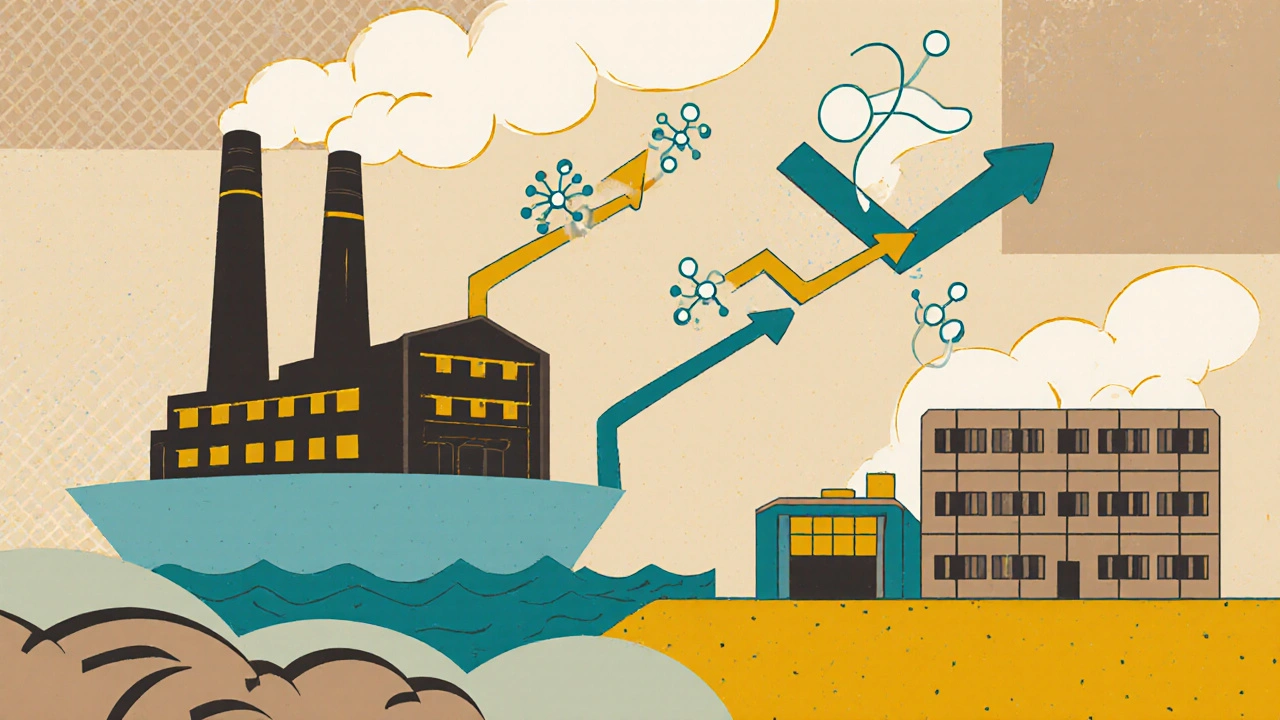
Generic Drug Supply Chain: How Medicines Reach Pharmacies
Discover how generic drugs travel from factories in China and India to your local pharmacy, and why the system that keeps prices low is also pushing manufacturers and pharmacies to the brink.