
AST: What It Is, Why It Matters, and How It Relates to Your Health
When your doctor orders a blood test and sees AST, aspartate aminotransferase, a liver enzyme that leaks into the bloodstream when liver cells are damaged. Also known as SGOT, it's one of the first clues doctors use to spot trouble in your liver. It’s not a disease itself—it’s a signal. Think of it like a smoke alarm: it doesn’t cause the fire, but it tells you something’s wrong.
AST doesn’t work alone. It’s usually checked with ALT, alanine aminotransferase, another liver enzyme that’s more specific to liver injury. When both are high, it’s a red flag. But if AST is higher than ALT, that can point to other issues—like alcohol use, heart problems, or muscle damage. That’s why doctors don’t look at AST in a vacuum. They compare it to other markers: bilirubin, alkaline phosphatase, and sometimes even cholesterol or blood sugar. A single number means little without context.
What actually raises AST? Common causes include heavy drinking, certain painkillers like acetaminophen (Tylenol), statins for cholesterol, and even some herbal supplements. Viral hepatitis, fatty liver disease from obesity, and autoimmune conditions can also push AST up. Even intense exercise or severe muscle injury can spike it—so a high result doesn’t always mean your liver is failing. That’s why follow-up tests and a full health picture matter.
You won’t feel AST going up. No pain, no nausea, no warning signs—until the damage is serious. That’s why routine blood work is so important. Someone with early fatty liver might have no symptoms at all, but their AST could already be climbing. Catching it early means you can change your diet, cut back on alcohol, or adjust meds before things get worse.
The posts below dive into real-world situations where liver health, enzyme levels, and medication safety intersect. You’ll find guides on how common drugs like Tylenol, statins, or even herbal supplements can affect liver enzymes. You’ll see how conditions like fatty liver, hepatitis, or chronic pain management tie into AST readings. And you’ll learn how to interpret your own lab results—not to self-diagnose, but to ask smarter questions when you talk to your doctor.
Whether you’re managing a chronic condition, worried about side effects from meds, or just trying to understand why your doctor ordered that blood test, this collection gives you the facts—no fluff, no jargon, just what you need to know.
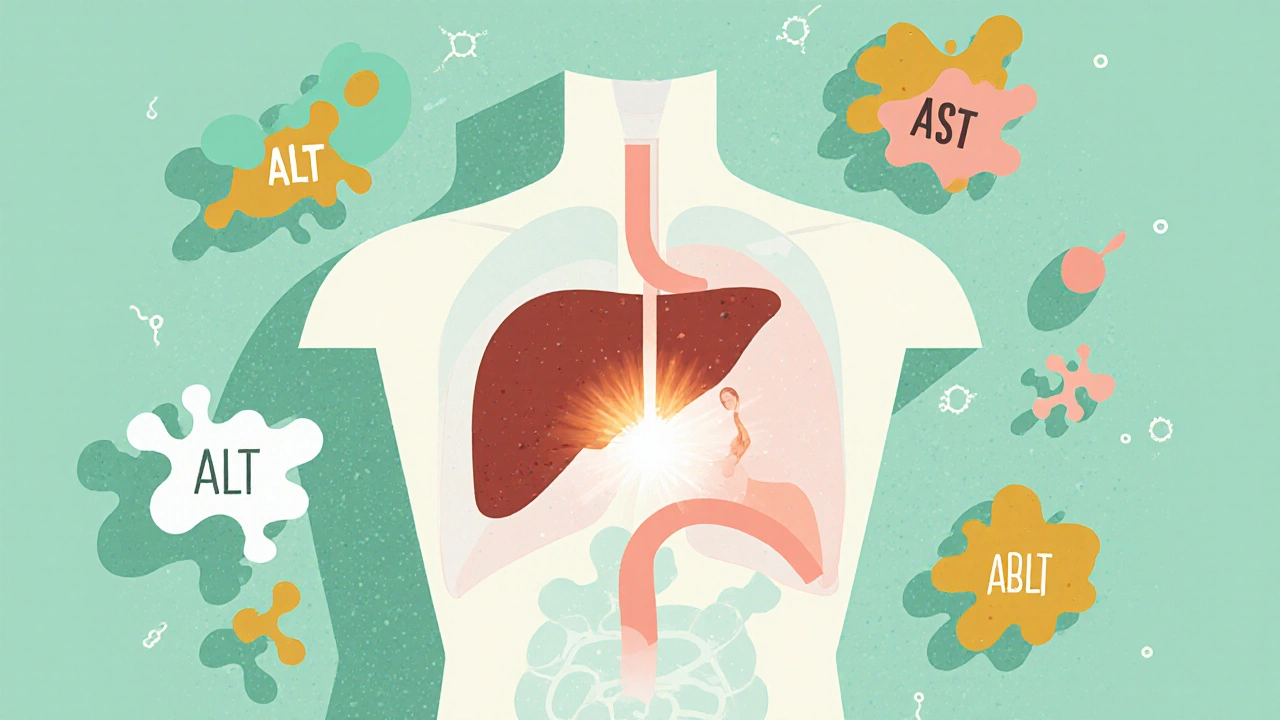
Liver Function Tests Explained: ALT, AST, Bilirubin, and What They Really Mean
Understand what ALT, AST, and bilirubin levels mean in liver function tests. Learn how patterns, not single numbers, reveal liver damage, fatty liver, alcohol injury, or bile blockage.